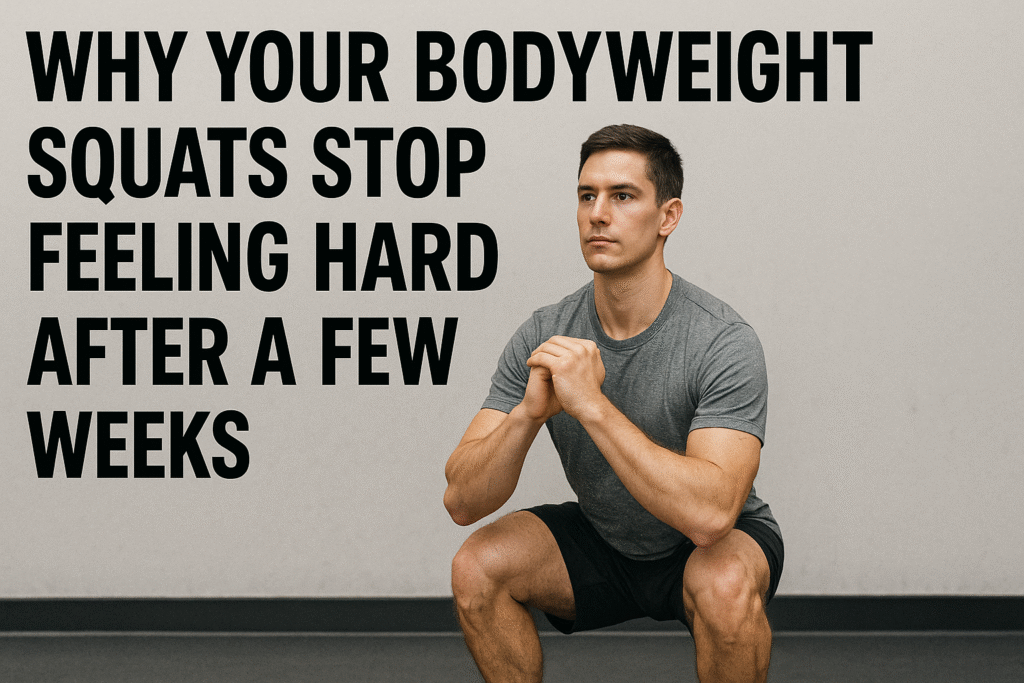
I can still picture the moment I realized something weird was happening with my squats.
Not dramatic, not heroic — just me, in my living room, halfway through a set, thinking, “Wait… why is this suddenly kind of easy?”
Three weeks earlier the same exact squats felt like I was paying off a karmic debt.
My quads burned.
My breathing was chaotic.
My soul briefly left my body.
But now?
Smooth.
Predictable.
Almost… friendly.
And it felt suspicious.
If you’ve had that same moment, you’re not imagining things.
Your body is just doing exactly what it’s built to do — adapt faster than you expect.
Your Body Adjusts to Bodyweight Squats Faster Than You Think
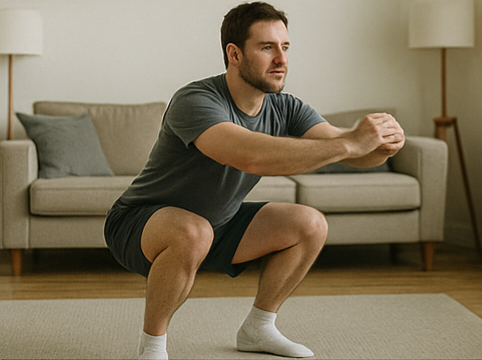
Squats feel familiar to your body from the start.
You’ve basically been doing watered-down versions your whole life — every time you sit, stand, or hover above a kitchen chair while deciding if it’s clean enough to actually sit on.
So when you begin training them intentionally, your nervous system upgrades the movement before your muscles do.
You get better coordination.
Better timing.
Better stability.
And suddenly the whole squat becomes one clean pattern instead of twelve mini-crises stacked together.
How Long It Takes for Squats to Stop Feeling Hard
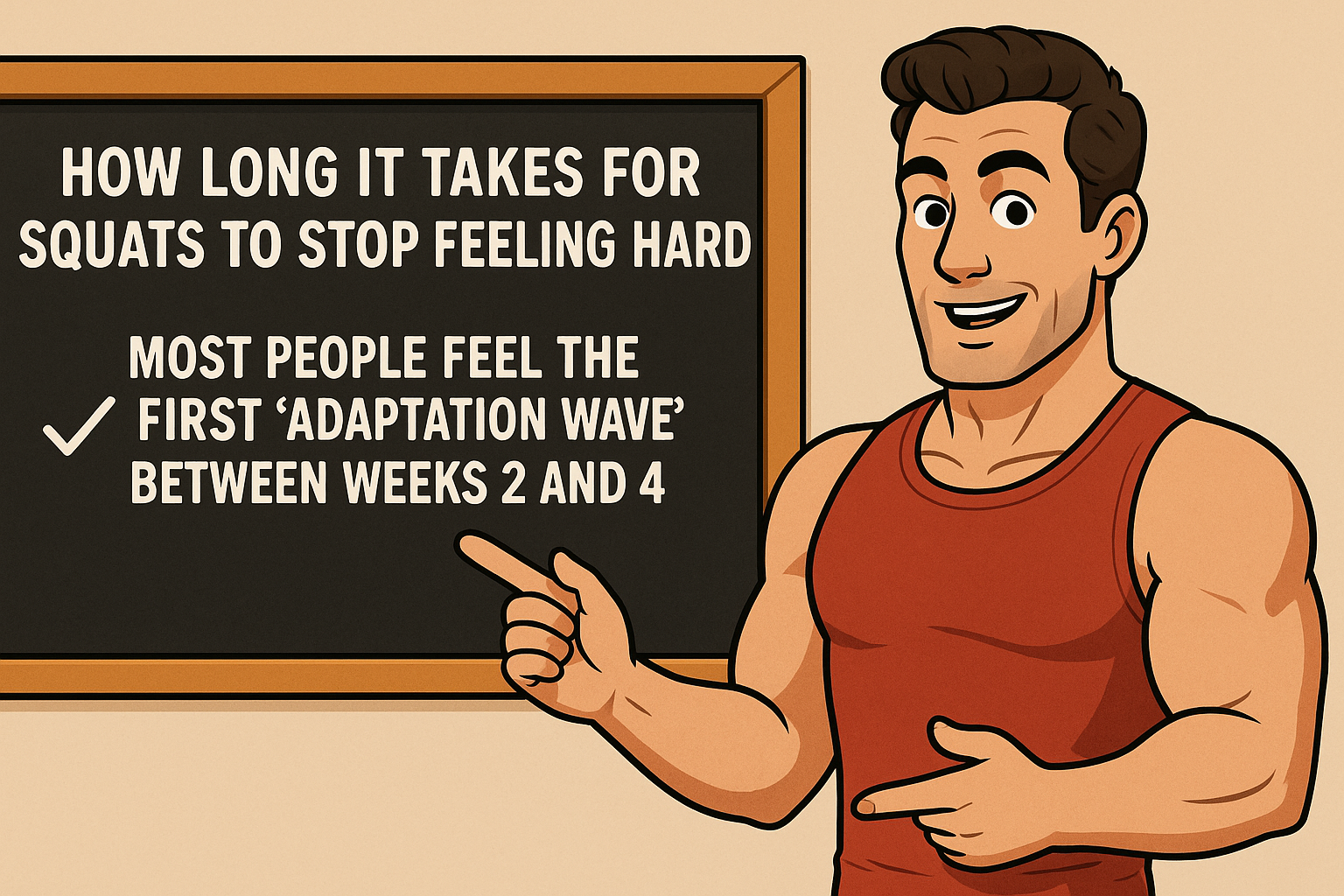
Most people feel the first “adaptation wave” somewhere between week 2 and week 4.
That’s the window where your system settles in.
Your form stabilizes.
Your breathing finds a rhythm.
Your quads stop panicking like they’re being audited by the IRS.
So if squats go from brutal to “weirdly fine” around this timeframe, congratulations — you’re right on schedule.
The Strength Gains You Feel Aren’t Just Muscle
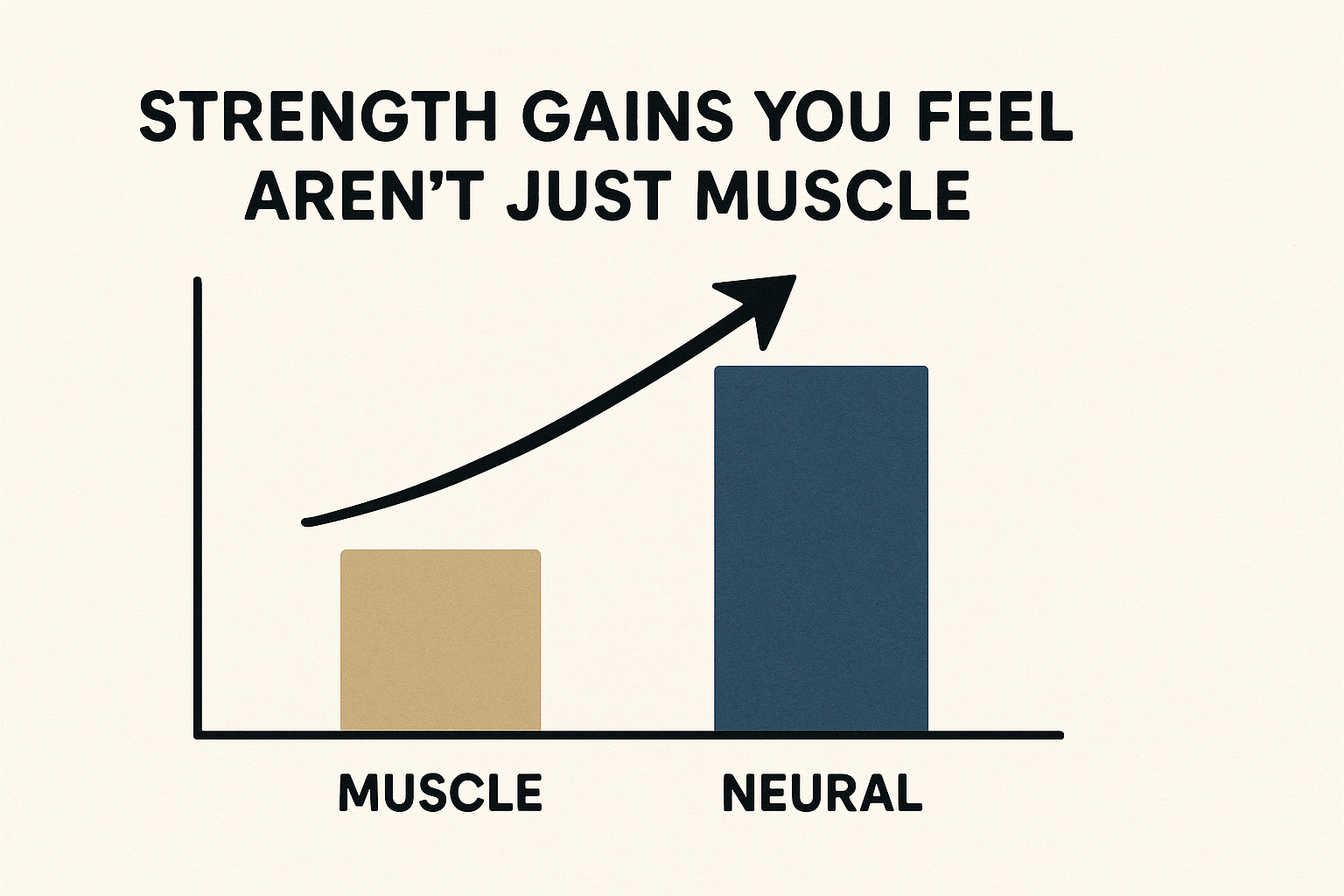
People assume strength equals muscle.
Not at the beginning.
Early strength gains come from your brain learning how to recruit fibers better.
It’s like switching from a slow Wi-Fi connection to a clean Ethernet cable.
No extra muscle — just better communication.
This is why the same squat feels easier without your legs looking any different.
You upgraded the software, not the hardware.
Why Bodyweight Squats Lose Their Bite Faster Than Weighted Moves
This part is simple math.
Your strength improves every week.
Your bodyweight doesn’t.
So your capacity goes up while the resistance stays flat.
If you were adding even a tiny 2.5-pound plate to a barbell each workout, the difficulty would rise automatically.
But with bodyweight?
Your legs get stronger and the load never changes.
That gap is why the challenge fades.
Even Your Technique Gets More Economical Over Time
In the beginning, every rep feels like balancing on a wobbly ladder during a storm.
After a few weeks, your hips, knees, and ankles sync up like they finally exchanged phone numbers.
You waste less energy.
You hit depth without negotiating with gravity.
Your core braces instinctively instead of desperately.
All that efficiency reduces how hard the movement feels, even if you’re working just as much.
Endurance vs Strength: Why One Improves Faster
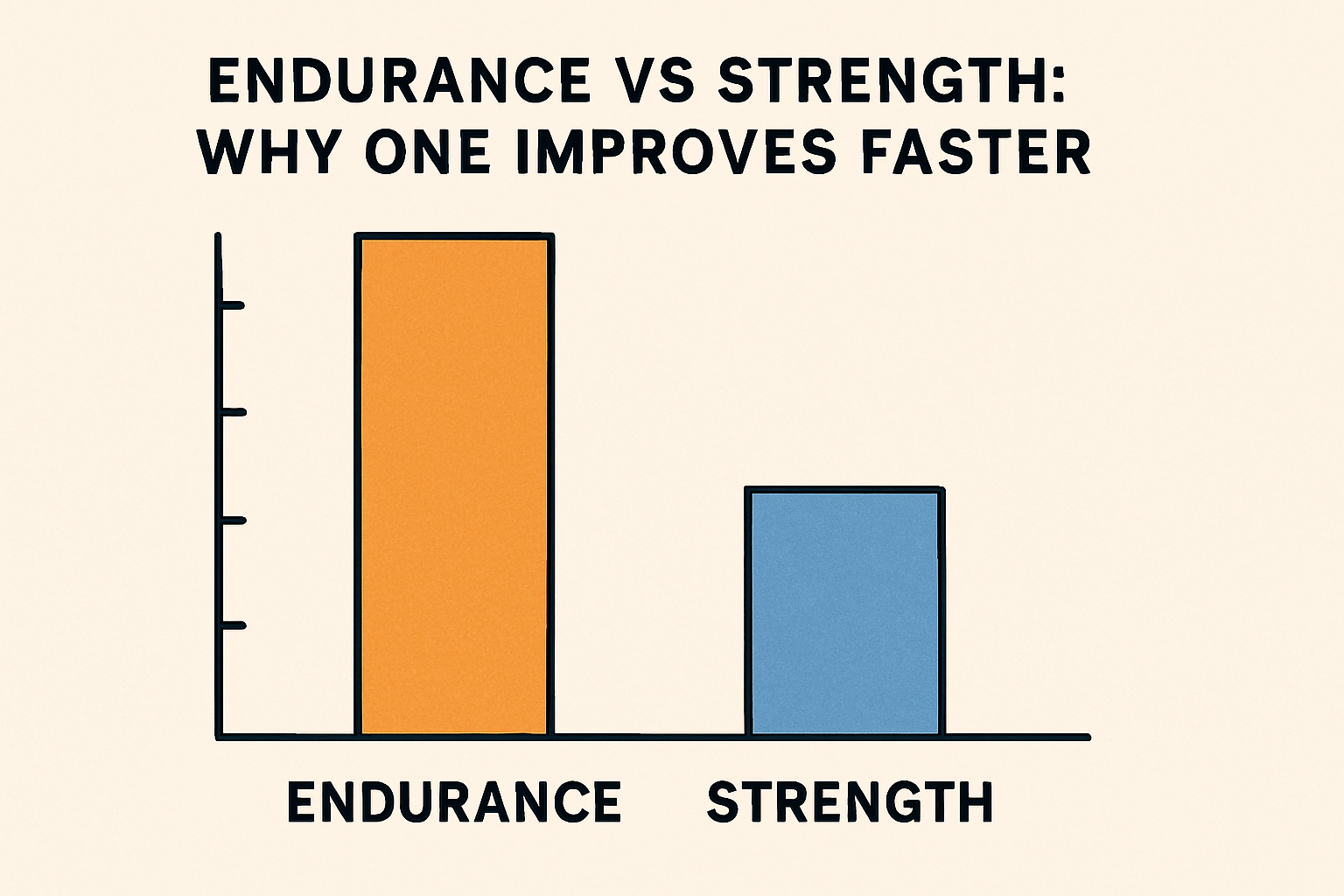
Here’s a part most people overlook.
Your muscular endurance improves faster than your muscular strength.
Meaning:
You can keep doing more reps even if actual force output hasn’t skyrocketed.
So while your quads aren’t dramatically stronger, they recover faster inside each set.
This makes the squat feel smoother, lighter, and less draining.
The burn fades sooner.
The fatigue shows up later.
Your legs feel like they got promoted without warning.
Your Cardiovascular System Adapts Too
High-rep squats are low-key cardio in disguise.
So after a few weeks, your lungs stop protesting.
Your heart rate doesn’t skyrocket.
Your breathing becomes steady instead of “Did someone turn off the oxygen in this house?”
A huge part of why squats feel easier is simply that you’re no longer drowning internally.
When Squats Stop Feeling Hard but Your Progress Stalls
This is where people get confused.
“Why do squats feel easy but my legs look the same?”
Because feeling easy doesn’t always mean progressing.
If nothing changes — reps, tempo, variation, range — your body coasts.
Also:
When intensity drops, form sometimes gets lazy.
Your depth shortens.
Your knees drift forward.
Your hips rise first.
Not enough to notice… but enough to slow results.
And when that happens, the solution isn’t panic.
It’s progression.
Real, intentional, structured progression.
How to Make Bodyweight Squats Hard Again (Without Equipment)
You don’t need to buy a squat rack.
You don’t need to balance a backpack full of canned soup.
You just need to manipulate the variables that matter: tempo, leverage, range, and unilateral loading.
Some ideas that hit hard — in different ways:
• Tempo Squats — Slow descent, controlled pause, steady rise.
Lower for 3–5 seconds, pause briefly, then stand up smoothly.
• Pause Squats — Stop at the bottom just long enough to question your decisions.
Drop into your squat, hold for 1–2 seconds, then drive up hard.
• Split Squats — The civilized way to destroy your quads one leg at a time.
Step one foot forward, drop straight down, and push through the front leg.
• Cossack Squats — Mobility plus strength in a single humbling package.
Shift your weight side to side, sinking into one hip while the other leg stays straight.
• Squat Jumps — Perfect if you want your floor to wonder what it did wrong.
Dip into a small squat and explode upward, landing softly.
• Pistol Squat Progressions — The final boss of bodyweight leg training.
Work through assisted, box, or partial pistols until you hit full depth on one leg.
These aren’t gimmicks.
They increase time under tension, shift center of mass, challenge stability, or isolate each leg.
That’s how you create difficulty without needing extra weight.
RELATED:》》》 Why Your Bulgarian Squats Aren’t Working
A Small Moment Anyone Who Squats Knows Too Well
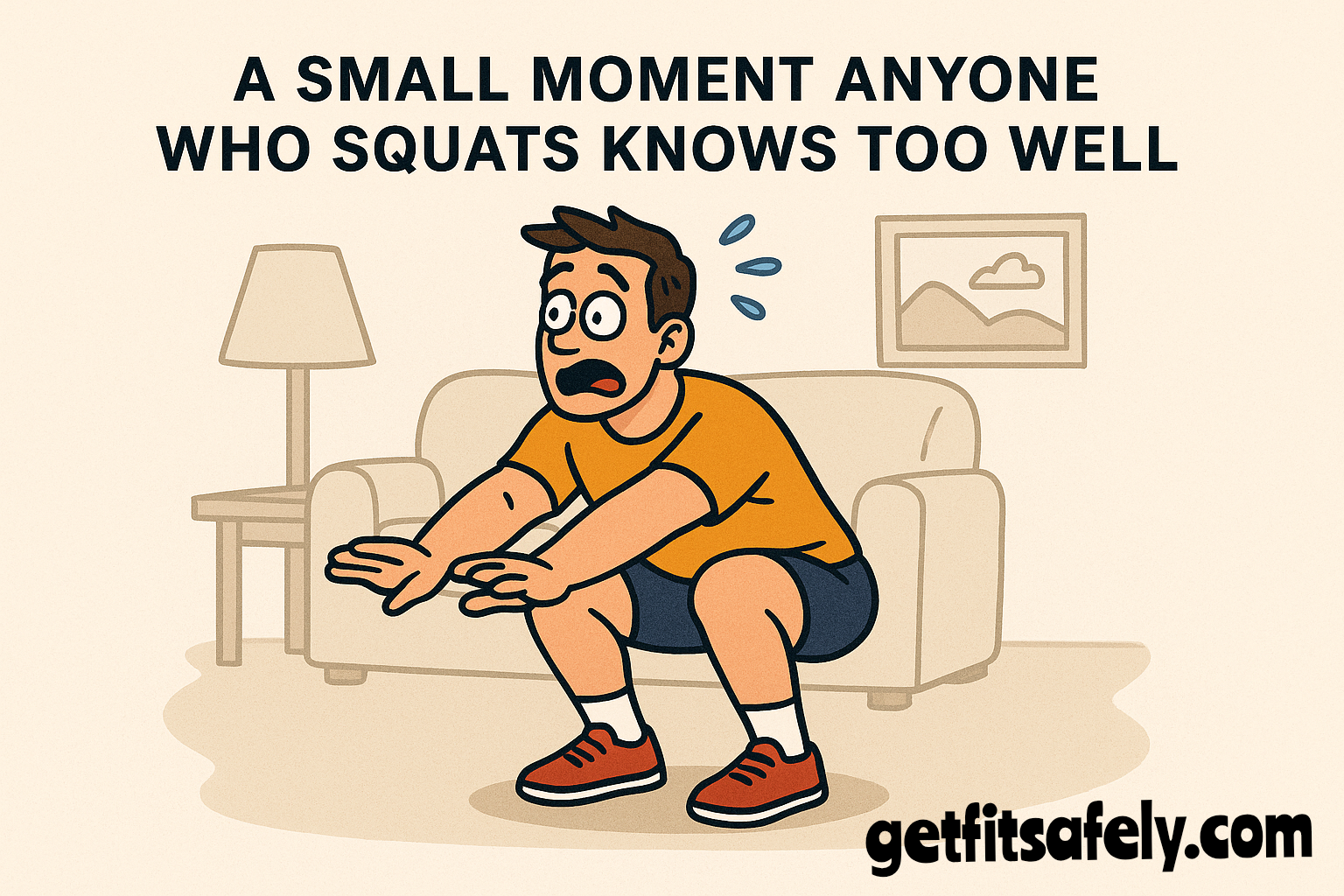
There’s always that one day where you start a set thinking, “This is nothing,” and suddenly rep number twenty-five feels like stepping on a LEGO emotionally.
That’s the perfect illustration of how adaptation works.
The first half of the set feels effortless because your technique and endurance handle it easily.
But the back half exposes whether you’re actually challenging yourself.
If you want consistent gains, that second half needs to feel alive — not sleepy.
How to Keep Your Squats Evolving Instead of Drifting Into “Maintenance Mode”
Here’s the part nobody tells you.
Your squats didn’t stop feeling hard because you hit your genetic limit.
They stopped feeling hard because you ran out of structure.
So here’s a progression that doesn’t require equipment, a PhD, or selling your soul to Bulgarian squat programs.
Week 1–2: Build Control
• 3 sets of 10–15 bodyweight squats
• Keep the tempo slow
• Hit full depth every time
Your job here isn’t to suffer.
It’s to move like a human who actually owns their joints.
Week 3–4: Add Time Under Tension
• 3–4 sets of 12–20
• Add a 3–5 second descent
• Add a 1–2 second pause at the bottom
If you’re not questioning your life decisions by rep 15, slow down another second.
Week 5–6: Shift to Unilateral Strength
• Split squats or assisted pistols
• 3–4 sets of 8–12 per leg
Unilateral work is like taxes — painful, necessary, and better handled one side at a time.
Week 7+: Combine Everything
• One slow-tempo day
• One single-leg day
• One explosive day (jumps, if your flooring forgives you)
This keeps every system — strength, coordination, endurance — awake instead of asleep at the wheel.
Now you’re not just squatting.
You’re progressing.
And your legs feel that immediately.
RELATED:》》》 Are deep squats outpacing regular squats for killer gains?
The Invisible Mistakes That Make Squats Feel Easy (But Kill Your Gains)
Some mistakes don’t scream.
They whisper.
And they make your squat feel “fine”… while secretly deleting your progress like a corrupted file.
Mini-Depth Syndrome
You think you’re hitting parallel.
You’re actually hitting “almost-Apple-Store-stool height.”
Your quads notice.
Speed Creep
Your reps gradually turn into little jumps.
Not explosive.
Just… too fast to be considered training.
Lazy Core, Lazy Everything
Your torso leans more every week.
Not enough to alarm you.
But enough to dump the work into your hips and steal it from your legs.
Knee Drift
A tiny slide forward each rep.
Feels harmless.
Adds up like compound interest in the wrong direction.
These mistakes don’t make the movement easier — they make the movement worse.
Cleaning them up instantly makes the squat feel challenging again, without even changing reps.
The “Feel Test” That Tells You If Your Squat Is Actually Doing Something
Sometimes your brain doesn’t need paragraphs.
It needs a short list to not overthink this whole squat situation.
✔ Depth stays consistent
✔ Core stays tight
✔ Knees track like they have a GPS
✔ Tempo doesn’t drift
✔ Quads feel involved, not bypassed
✔ You finish the set feeling “challenged,” not “nothing happened”
If you hit all six boxes, you’re on the right path.
If you miss one, that’s your new focus.
How to Know If You’re Actually Getting Better
Progress doesn’t always show up as soreness or muscle growth right away.
Sometimes it’s sneaky.
You breathe less aggressively between sets.
You wobble less on the way up.
Your feet stay planted instead of tap dancing.
Your reps stop feeling like twelve separate movements stitched together with chaos.
These are the small signs your squat is leveling up even when the mirror hasn’t caught on yet.
Trust them — they always show up before visible changes do.
RELATED:》》》Can You Get Truly Strong with Just Bodyweight?
Conclusion: Your Squats Didn’t Get Easier by Accident — You Got Better
If squats stopped feeling hard, that’s not a red flag.
That’s proof you adapted.
Proof you learned the movement.
Proof your legs, lungs, and technique leveled up quietly in the background.
Now comes the fun part — building on that foundation.
Add progression.
Try variations.
Challenge yourself in small, sustainable ways.