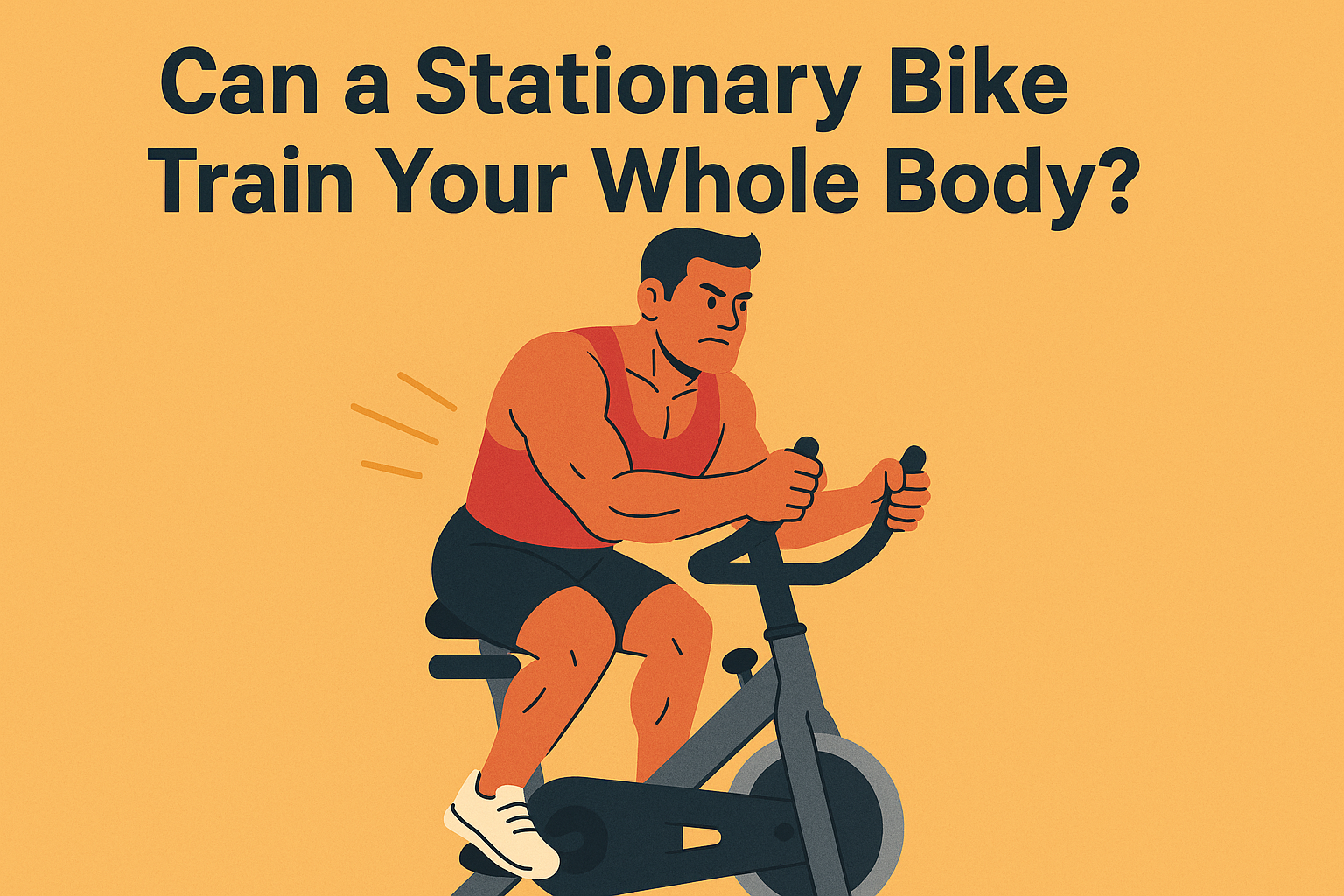
I’ve done a lot of workouts that made me feel strong.
But the stationary bike?
That one just made me question my life choices.
I thought I’d cruise through an easy 20 minutes — music on, legs spinning, no big deal.
Five minutes in, I was sweating like I owed someone money.
My legs were on fire, my lungs were confused, and I couldn’t figure out why my arms were getting tired too.
That’s when it hit me — this isn’t “light cardio.”
It’s sneaky full-body training wearing a friendly disguise.
The Myth of “Legs Only”
For years, the stationary bike has been boxed into one category: leg day lite.
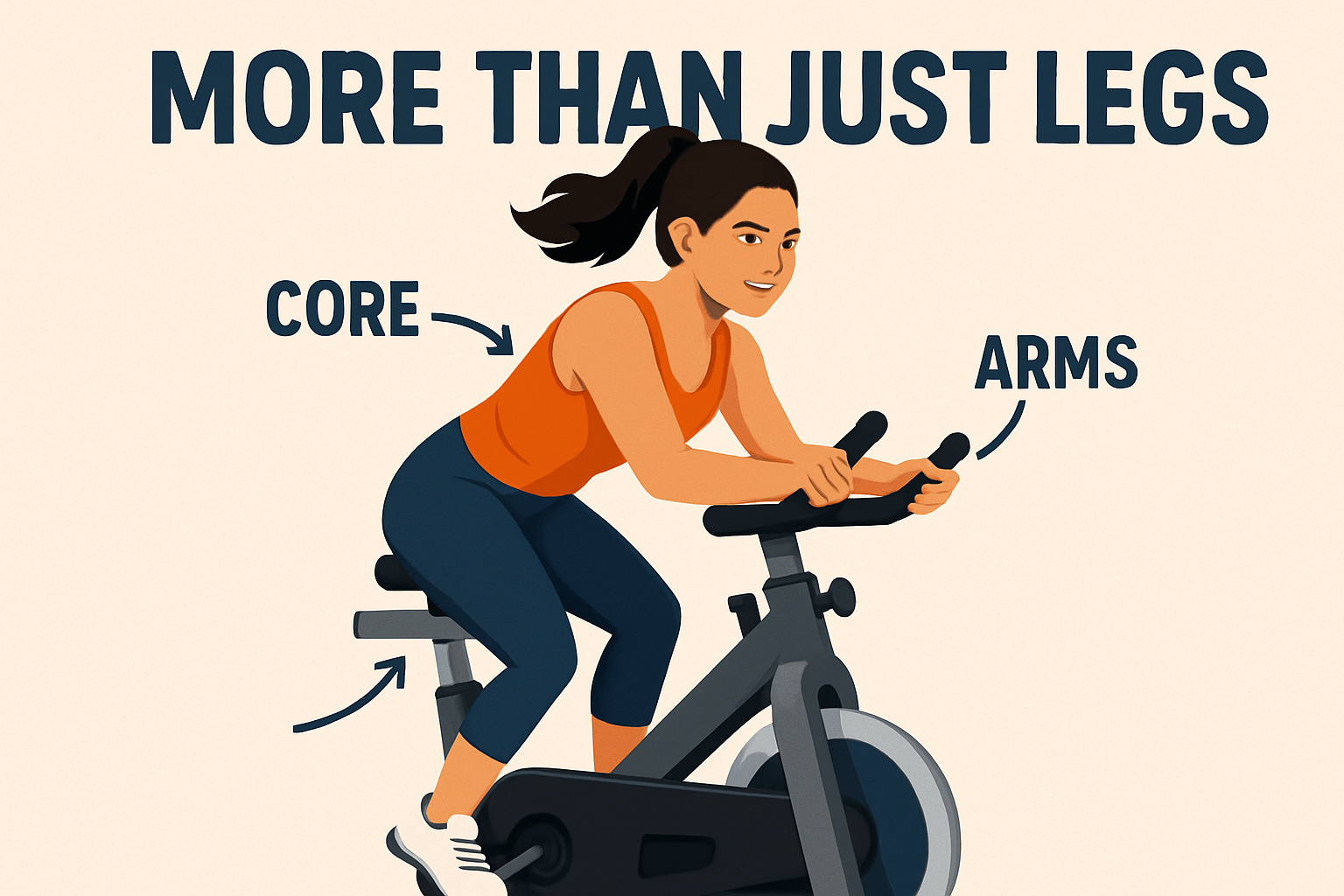
Sure, cycling targets your quads, hamstrings, and glutes — but if you’re doing it right, your entire kinetic chain is on duty.
Your core stabilizes your posture.
Your arms engage when you pull lightly on the handlebars during sprints or climbs.
Your back works to keep your torso upright and balanced.
And your heart?
That thing is clocking overtime like it’s trying to escape your chest.
A lot of people don’t realize this: the stationary bike isn’t just lower-body cardio — it’s full-body control in disguise.
When you ride with proper form, you activate stabilizers that lifting sessions often miss.
It’s not about spinning faster — it’s about tension management.
Posture Is Everything
Ever notice that after 20 minutes, your neck starts to feel like it’s holding a bowling ball?
That’s posture talking.
Your position on the bike can completely change which muscles get the work.
When your core collapses, your lower back takes the hit.
When your shoulders round forward, your traps and neck overwork.
But when you lock in good posture — neutral spine, slight lean, engaged core — everything clicks.
You stop muscling through it and start pedaling efficiently.
Cycling becomes a coordination game, not just cardio.
Good form doesn’t just protect you — it improves your output.
You can literally generate more power when your hips, knees, and ankles align correctly.
The Core Connection
If you’ve ever done a long ride, you’ve probably felt your abs screaming halfway through.
That’s no coincidence.
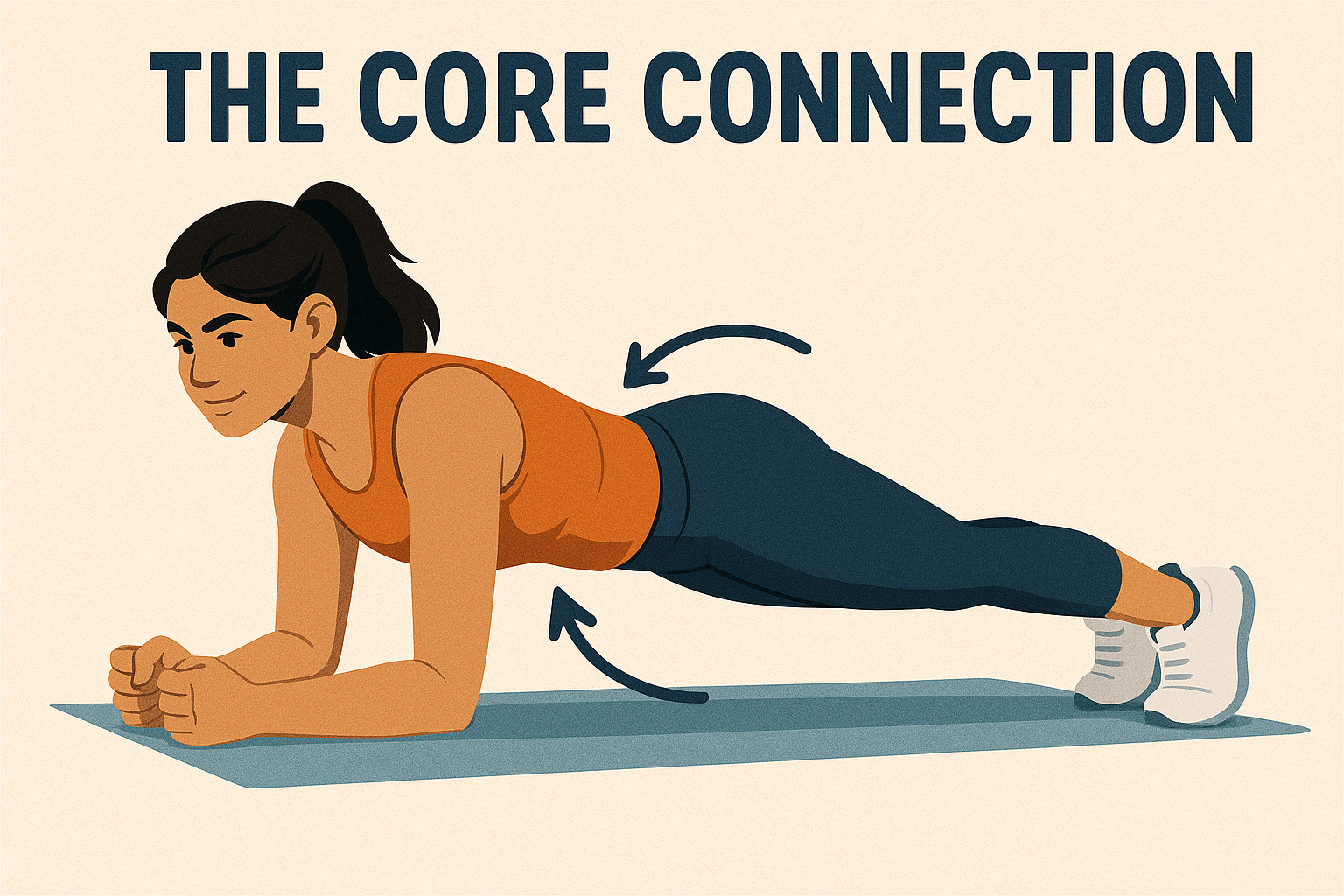
Every pedal stroke demands core stability to keep your body from wobbling side to side.
Your abs, obliques, and lower back are constantly firing to stabilize you against the downward push of your legs.
Think of it like doing a plank that moves — every second.
If you relax your midsection, you waste power and stress your lower back.
The secret to a strong ride isn’t more leg speed — it’s better core engagement.
Arms and Shoulders
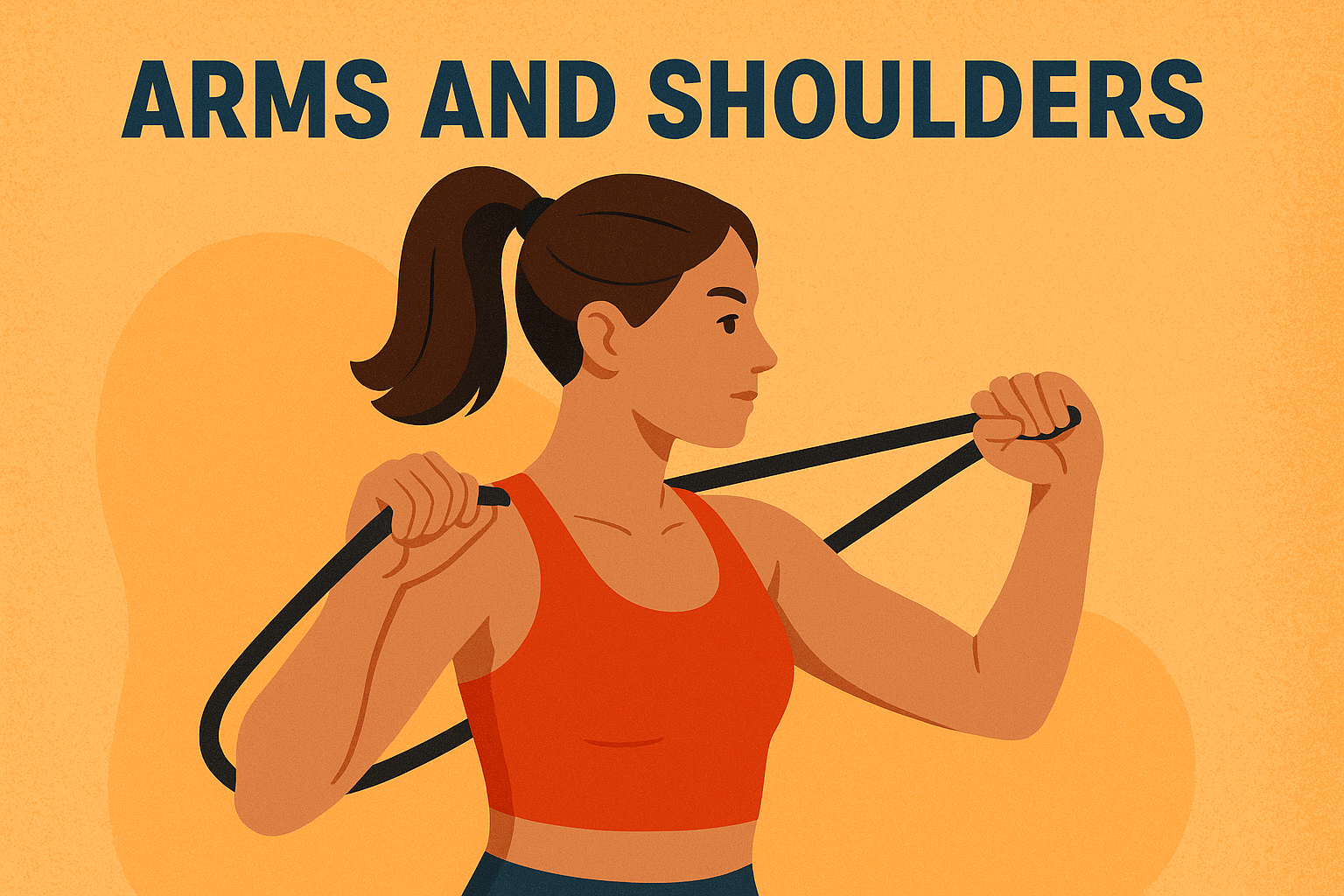
You might not be curling dumbbells, but your arms aren’t off-duty.
Each time you climb, sprint, or adjust resistance, your shoulders, triceps, and forearms engage to stabilize the handlebars.
Even light grip tension recruits your upper body.
The trick is moderation: too tight, and you overload your arms; too loose, and you lose balance.
It’s like steering strength training — subtle, but constant.
That’s why elite cyclists spend time on upper-body mobility and grip endurance.
They know a solid upper frame keeps the ride smoother and safer.
Why the Stationary Bike Can Be a Fat-Burning Machine
Let’s talk numbers.
A 45-minute spin session can burn anywhere from 400 to 700 calories, depending on resistance and intensity.
But the real secret is how the bike keeps your heart rate in the fat-burning and endurance zone longer than high-impact workouts.
Because cycling is low-impact, you can push intensity without destroying your joints.
Your muscles recover faster, which means you can train more often — and consistency beats intensity every time.
If you’ve ever felt “flat” after long cardio sessions, it’s probably because you weren’t mixing intensity levels.
Interval cycling — alternating between sprints and recovery — keeps your metabolism fired up long after the ride ends.
That’s what they call EPOC: excess post-exercise oxygen consumption.
Basically, you’re still burning calories while scrolling your phone after the workout.
Muscle Activation — More Than Meets the Eye
Every pedal stroke involves concentric and eccentric contractions across multiple muscle groups.
Your glutes fire at the top of the stroke, your quads drive down, your hamstrings pull through, and your calves finish the movement.
That’s a 360° muscle sequence happening dozens of times per minute.
And if you stand up during climbs?
Boom — you’ve added full-body isometric tension.
Even your arms brace harder, your lats tighten, and your core locks down.
It’s a symphony of muscle engagement that feels deceptively simple — until the soreness hits.
Why Form Beats Speed
I used to think the harder I pedaled, the better.
Spoiler: wrong.
Blasting away at max resistance with sloppy form just wrecks your knees and burns you out faster than a cheap pre-workout.
Smooth, consistent motion always beats frantic pedaling.
Your knees should track forward, not cave in.
Your hips should stay level, not bounce around like you’re dancing at a wedding.
When you move right, you feel it — power, not pain.
The Role of Resistance and Cadence
This is where science meets sweat.
Resistance isn’t just “hard mode” — it changes your muscle recruitment pattern.
Low resistance, high speed?
Great for endurance and cardiovascular output.
High resistance, slow grind?
Welcome to strength and hypertrophy territory.
That’s why mixing both in your program gives the best of both worlds.
A 30-minute ride with alternating intensity levels builds power, endurance, and even core strength.
Your body learns to adapt to multiple energy systems — aerobic and anaerobic — making you more efficient overall.
What the Stationary Bike Really Teaches You
Ever tried holding 90 RPMs for five straight minutes?
It’s not just your legs that give up — it’s your brain.
Cycling builds an insane level of focus and grit.
You learn pacing, patience, and pain tolerance.
And that mental toughness bleeds into every other kind of training.
When you can stay calm during a brutal climb, deadlifts suddenly feel less scary.
You realize endurance isn’t just physical — it’s emotional control.
That’s something few workouts teach as well as the bike does.
How to Ride with Purpose (Not Just Sweat)
You don’t need two-hour rides to see progress.
You need structured effort.
Try this three-phase plan:
Warm-Up (5 minutes) — light spin, open your joints, increase cadence.
Main Set (20–25 minutes) — alternate between 60 seconds of high resistance sprint and 90 seconds recovery.
Cool Down (5 minutes) — reduce tension, stretch, breathe.
That’s a 35-minute total-body cardio workout that challenges both strength and stamina.
Do it three to four times per week, and your conditioning will skyrocket.
When to Mix Strength Training with Cycling
Here’s where the magic happens.
Cycling builds endurance and mobility, but it can’t replace all resistance work.
Adding weight training balances your muscle development and improves your riding mechanics.
Leg presses, glute bridges, and rows complement your pedal power perfectly.
Most pros alternate bike and lifting days to avoid fatigue overlap.
That way, each system — strength and endurance — gets its turn to grow.
The Long-Term Game
Think of stationary biking as an investment, not a quick fix.
Over time, it transforms your cardiovascular efficiency, strengthens your posterior chain, and boosts your VO₂ max — the gold standard for endurance.
It’s also the perfect gateway workout for anyone rehabbing from injury or easing back into fitness.
Low impact, high control, endless scalability.
You can make it as easy or brutal as you want.
Advanced Progressions for the Dedicated
Once you’ve built a base, experiment.
Try one-legged drills to correct imbalances.
Use heart rate zones for smarter pacing.
Test interval ladders — 30s, 45s, 60s, 90s — to build power endurance.
Add resistance bands around your thighs to fire up your glutes even more.
These tweaks turn a simple spin session into performance training.
Final Thoughts
The stationary bike doesn’t just train your legs — it trains your patience, posture, lungs, and mindset.
It’s not the flashiest machine in the gym, but it’s one of the smartest tools you can use.
You get out what you put in.
So next time someone says, “It’s just cardio,” smile — and keep pedaling.
Because you know the truth: this machine builds more than endurance.
It builds resilience.