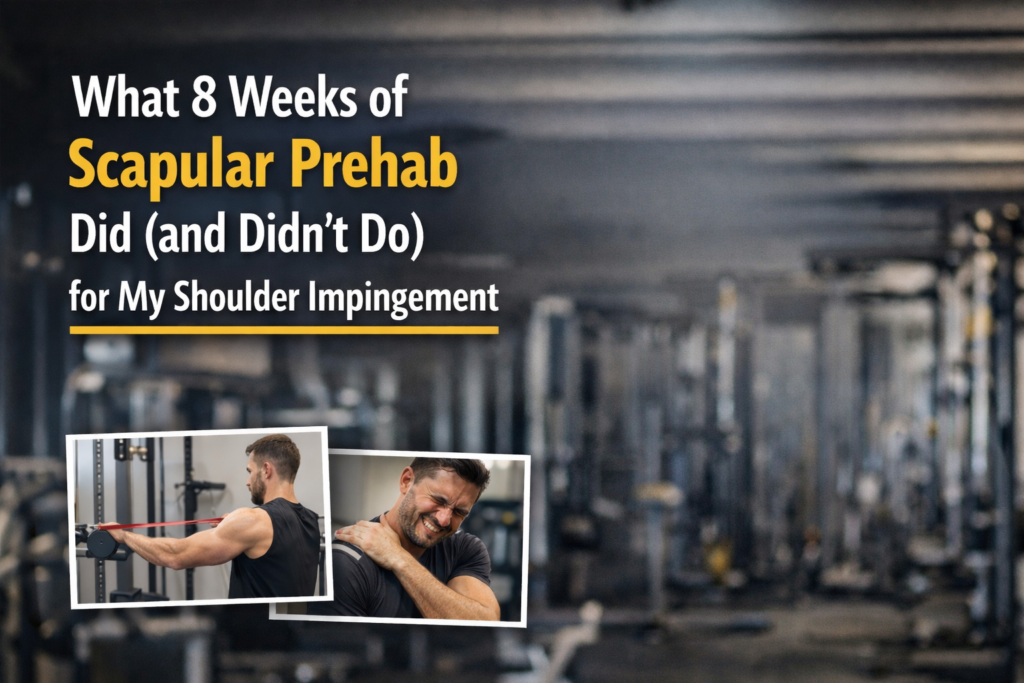
For a while, my shoulder just doesn’t feel right.
Nothing serious, but every time I raise my arm overhead or press, I feel a small pinch in the front of the shoulder.
The pain isn’t constant.
It only shows up in certain movements, which makes it even more confusing.
Some days training feels almost normal.
Other days the same shoulder complains during simple things, like reaching or opening a door.
That’s what pushes me to focus on scapular work for eight weeks.
Not a magic fix.
Just a simple, consistent routine while paying attention to what changes and what doesn’t.
Quick Disclaimer (So Nobody Thinks This Is a Medical Spell Book)
I’m not diagnosing anyone through the screen.
I’m describing what I did, what I tested, and what I noticed.
Shoulder pain can come from different sources that feel similar.
Impingement-like symptoms can overlap with rotator cuff irritation, biceps tendon issues, neck referral, or just angry tissues that hate your current training choices.
If pain is severe, progressing fast, or messing with sleep and basic life, a qualified physio is the smart move.
Still, if someone is in the “it hurts but I can still move” category, this kind of structured prehab experiment can teach a lot.
Even if it doesn’t magically cure everything.
What I Mean by “Scapular Prehab” (In Plain English)
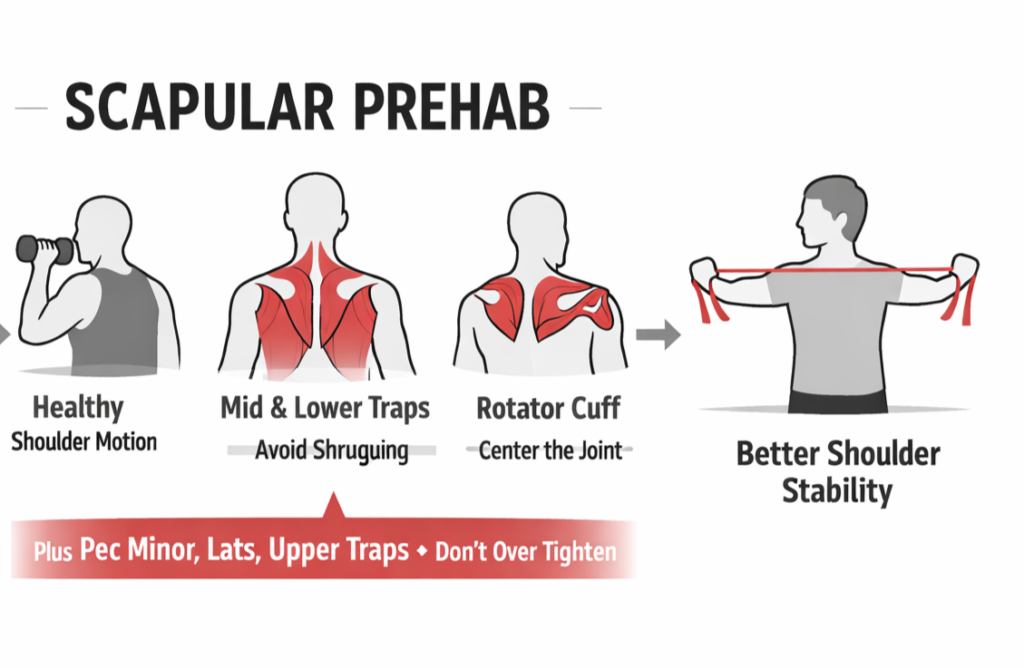
The scapula is the shoulder blade.
It’s not a decorative bone that just hangs out for anatomy posters.
It’s more like the foundation of a moving crane.
The arm is the crane arm.
The shoulder joint is the hinge.
The scapula is the base that has to glide, tilt, rotate, and stay stable at the right times, or the hinge gets stressed.
Scapular “prehab” is basically training the muscles that control the scapula so the shoulder joint doesn’t have to compensate.
That includes muscles like:
The serratus anterior (the “keep the shoulder blade flush” muscle).
The lower and mid traps (the “don’t shrug everything” muscles).
The rotator cuff (the “center the shoulder ball” muscles).
And even the pec minor, lats, and upper traps, because if they’re stiff or over-dominant, they can pull the scapula into less friendly positions.
So this wasn’t just random band flapping.
It was targeted work to improve how the shoulder blade moves during real shoulder motion.
Baseline: What I Measured Before Day One (So I Couldn’t Lie to Myself Later)
I didn’t want the classic “I think it feels better” situation.
That’s how people end up worshipping exercises that did nothing except give them a pump.
So I picked a few repeatable tests.
None of these are perfect medical diagnostics.
They were consistency tools.
A way to measure change in symptoms and movement quality.
Test 1: Overhead Reach in the “Problem Angle”
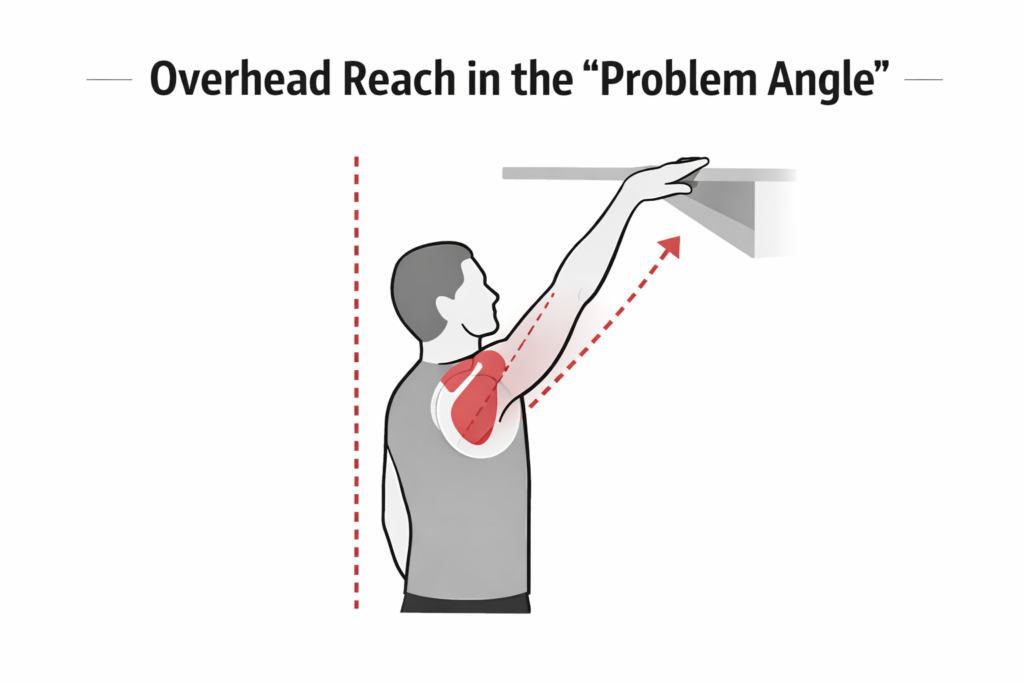
I raised the arm in front of me, slightly out to the side (kind of like reaching to a high shelf).
Then I repeated it with the thumb turned down, because that position used to trigger the pinch faster.
I rated pain from 0 to 10.
I also noted where I felt it.
Front shoulder pinch was my main sign.
Test 2: The “Painful Arc” Check
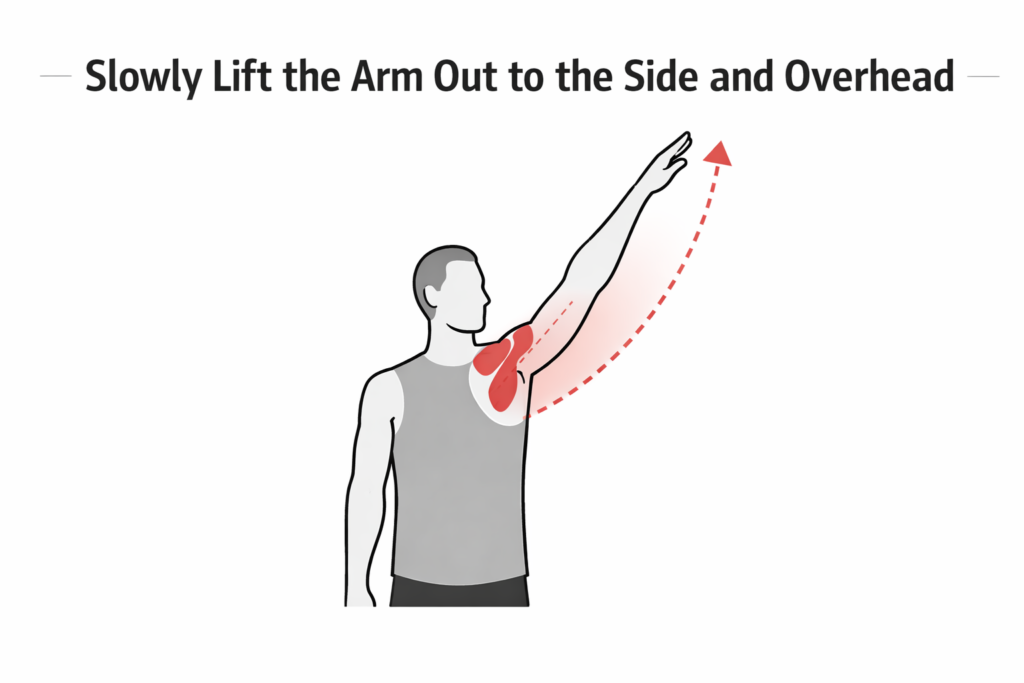
I slowly lifted the arm out to the side and overhead.
Impingement-like pain often shows up in a mid-range arc, not at the start and not at the top.
For me, the danger zone was around shoulder height and a bit above.
If the pain spiked there, I wrote it down.
Test 3: Push-Up Position Shoulder Feel
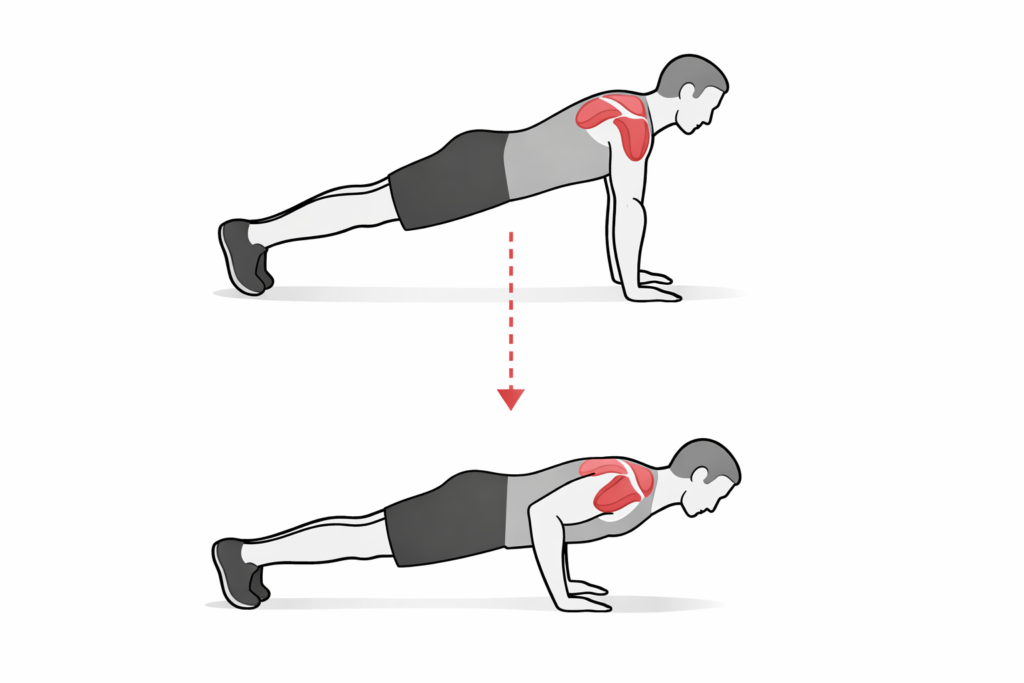
I held the top of a push-up.
Then I did a few slow push-ups.
Not for reps.
Just to see if the front shoulder felt cranky, unstable, or pinch-y.
Push-ups were a great “real-world” test because they load the shoulder while the scapula has to move well.
Test 4: Hanging Tolerance
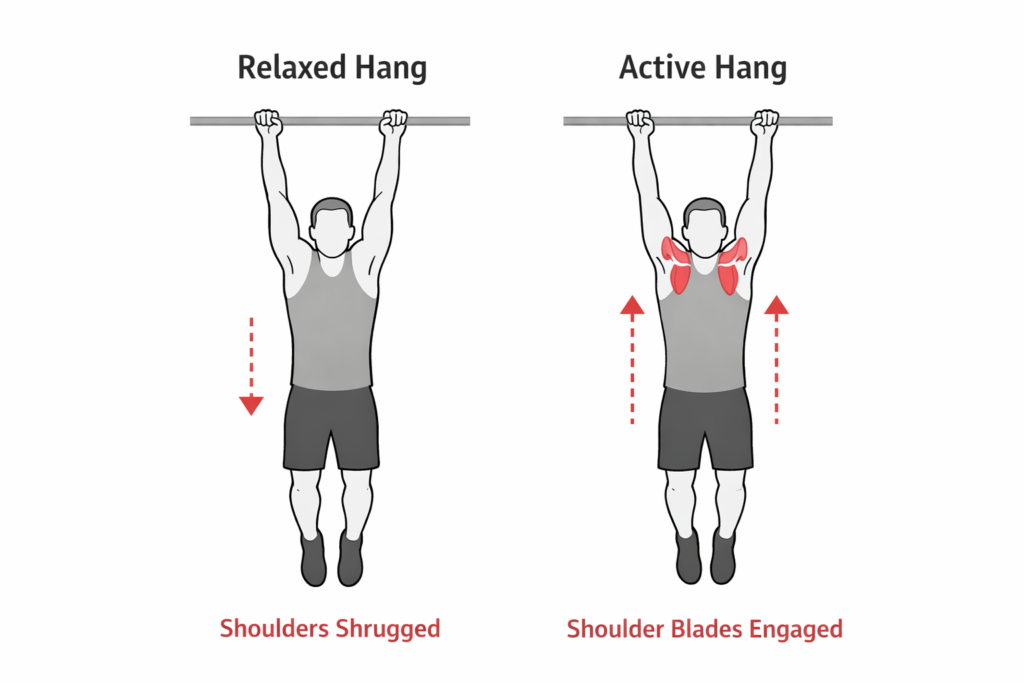
I hung from a bar with a relaxed grip.
Then I tried an “active hang,” where the shoulders stay away from the ears and the shoulder blades are slightly engaged.
I tracked discomfort and whether it felt like compression in the front.
Test 5: Sleep and Next-Day Irritation
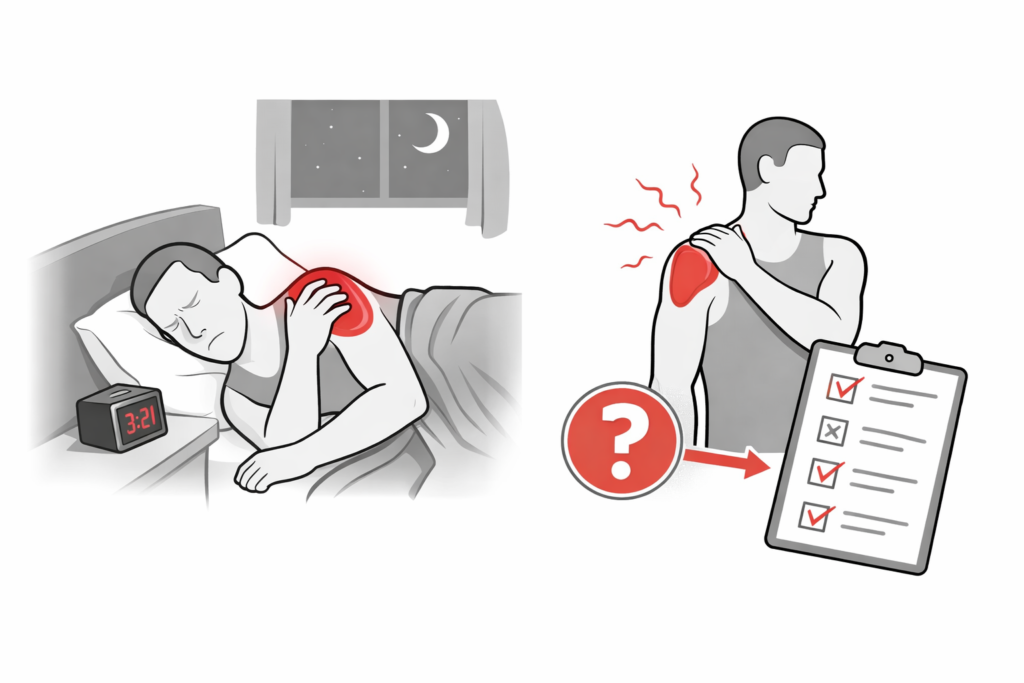
This one mattered more than it sounds.
If a shoulder is irritated, it often complains at night or the next morning.
So I tracked whether it woke me up.
Then I tracked morning stiffness or pinching during simple movements.
That became a surprisingly honest metric.
The Starting Point: What Was Bad, What Was Tolerable, What Was Weird
At week zero, overhead motion wasn’t impossible.
It was just unreliable and sharp in the wrong angle.
Pain in the overhead reach test was usually a 4 to 6 out of 10 depending on the day.
The painful arc was consistent, like my shoulder had scheduled office hours for being annoying.
Push-ups were tolerable but had a “front shoulder pressure” feeling, especially with elbows flaring even slightly.
Hanging felt sketchy unless I actively controlled the shoulder blades.
Sleeping on that side was basically a prank I played on myself.
The weird part was strength.
Strength was mostly there.
I could still do some pressing and pulling.
But the joint didn’t feel smooth, and I had that constant sense that the shoulder was “not centered.”
Like a door that still opens, but scrapes the frame every time.
The Plan: The Scapular Prehab Routine I Followed for 8 Weeks
I kept it simple on purpose.
If you change twelve variables at once, you learn nothing.
So I used a routine that took about 15 to 25 minutes, 4 to 6 days per week.
I also did a shorter “minimum dose” version on lazy days, because consistency beats perfection.
Here’s what I used most consistently.
1) Scapular Push-Ups (Serratus Focus)
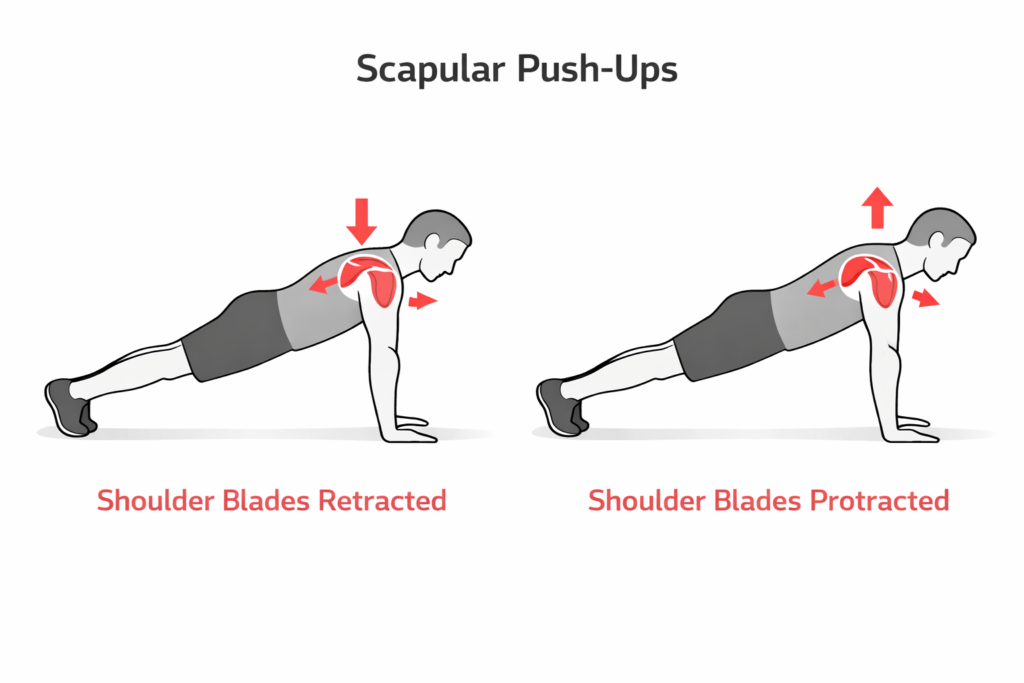
This is not a normal push-up.
You stay in the top plank position with straight elbows.
Then you let the chest sink slightly as the shoulder blades come closer together.
After that, you push the floor away and spread the shoulder blades apart without rounding the lower back.
The movement is small.
The burn is not small.
I did 2 to 3 sets of 8 to 15 slow reps.
If the neck took over, I reduced range and slowed down.
Goal was a smooth glide of the scapula, not shrugging like I was trying to become a turtle.
2) Wall Slides With “Lift-Off” (Upward Rotation Control)
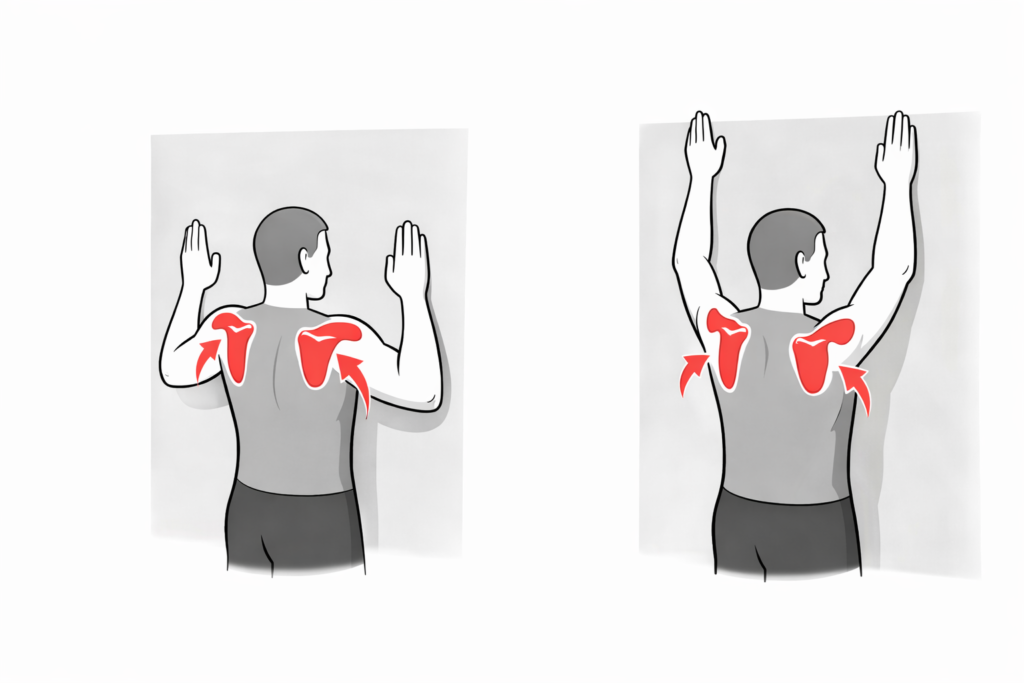
I stood facing a wall with forearms on the wall.
Elbows around shoulder height.
Then I slid the arms upward while trying to keep the ribs down and the neck relaxed.
At the top, I gently lifted the hands off the wall for a second if possible.
That lift-off forces the serratus and lower traps to cooperate.
If the lower back arches, it becomes a fake shoulder win.
I did 2 to 3 sets of 6 to 10 slow reps.
3) Band External Rotations (Rotator Cuff Basics)
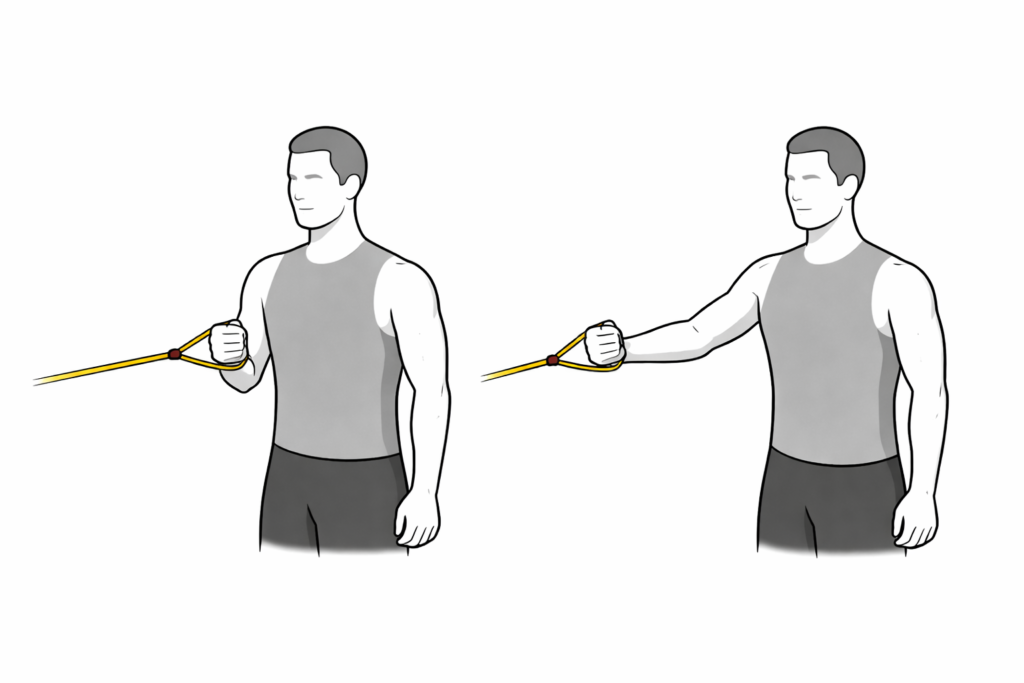
This one is classic for a reason.
Elbow tucked against the side, bent at 90 degrees.
Band pulling inward.
Then rotate the forearm outward without the elbow drifting away.
I kept it light enough to feel control, not strain.
I did 2 to 4 sets of 10 to 20 reps.
If I felt it in the front of the shoulder, I reduced range and focused on a gentler motion.
4) Face Pulls (But Done Like a Control Drill, Not an Ego Lift)
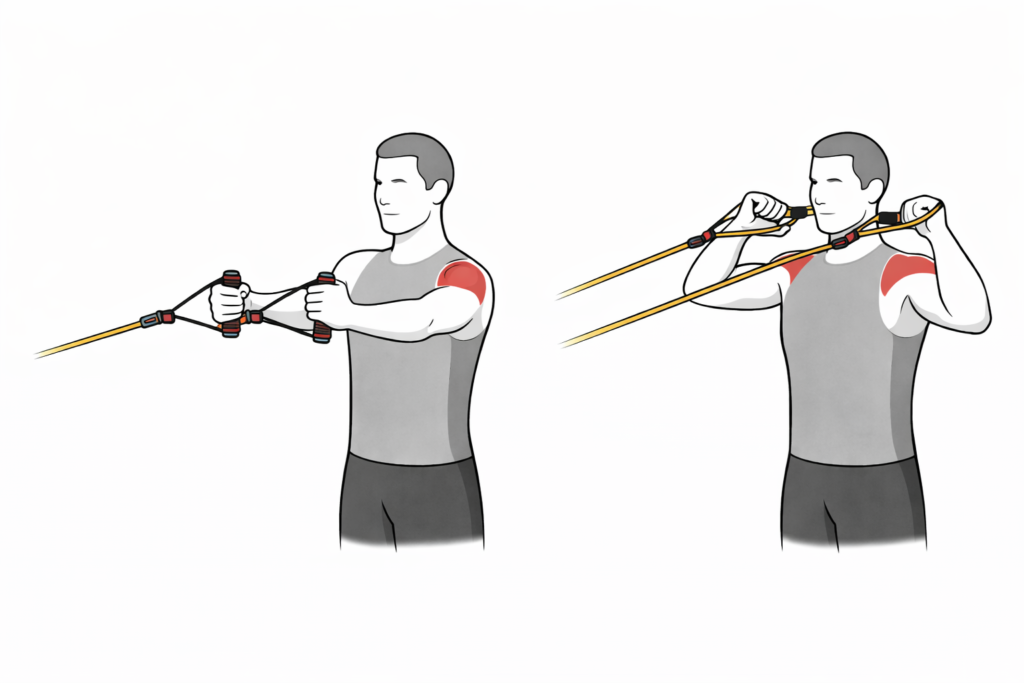
Band anchored around face height.
Pull toward the face while keeping elbows slightly high.
Then finish by rotating so knuckles go back and hands separate slightly.
This hits rear delts and upper back, but it also trains scapular retraction and external rotation together.
If I turned it into a heavy row, the shoulder didn’t love it.
I did 2 to 3 sets of 12 to 20.
Slow on the return.
5) Prone Y Raises (Lower Trap Wake-Up Call)
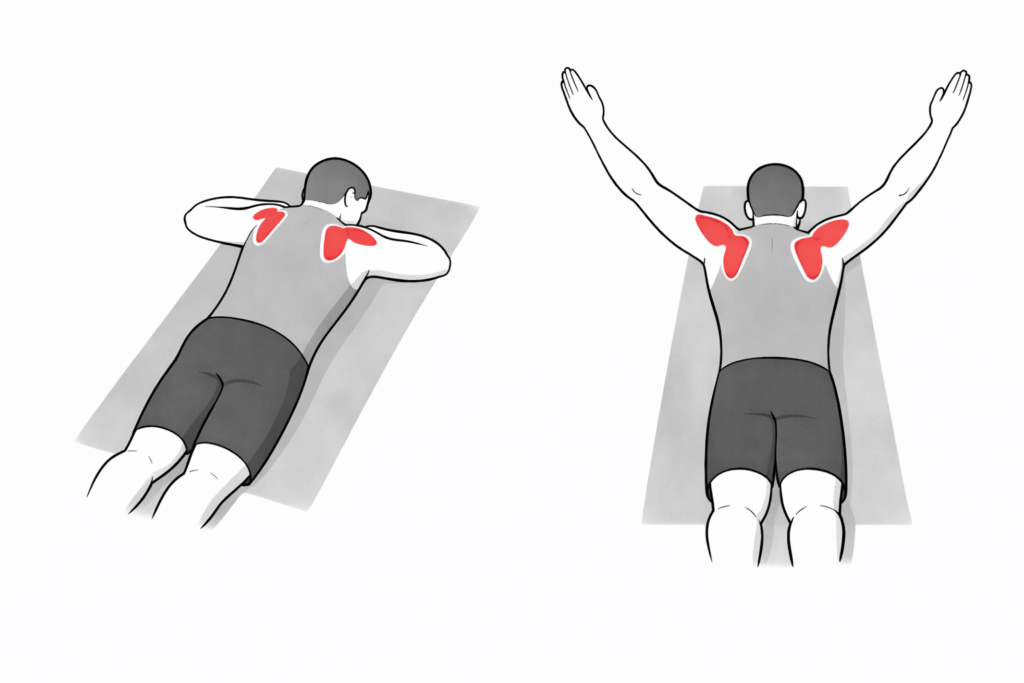
Lying face down on a bench or on the floor.
Arms overhead in a Y shape.
Thumbs pointing up.
Then lift the arms slightly while keeping shoulders away from ears.
This is humbling.
If the upper traps dominate, it feels like neck tension.
If the lower traps engage, it feels like a gentle burn under the shoulder blade.
I did 2 to 3 sets of 6 to 12 controlled reps.
6) Thoracic Extension Work (Because the Upper Back Is Part of the Shoulder)
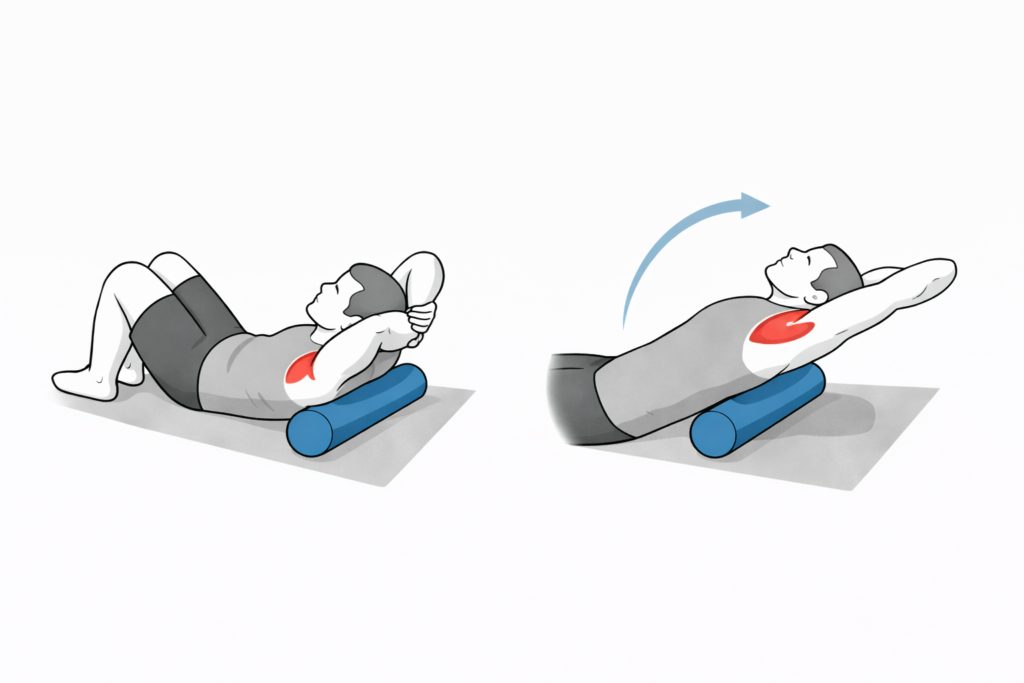
I used a foam roller across the upper back.
Then I extended gently over it.
Not a dramatic backbend.
More like opening the mid-upper spine so overhead motion doesn’t force the shoulder to compensate.
I did 1 to 2 minutes total, with slow breathing.
This didn’t “fix” the shoulder by itself.
But it often made overhead motion feel smoother immediately after.
The Other Half of the Experiment: What I Changed in Training (Because Prehab Alone Is Not a Force Field)
Here’s the part that made the biggest difference, and it annoyed me because it’s not sexy.
Load management mattered as much as the prehab.
Overhead pressing volume got reduced.
I kept some pressing, but I avoided the painful angles and the heavy grinders.
I swapped some movements.
Dumbbell press with a more neutral grip replaced barbell variations that forced a fixed path.
Landmine press became a friend, because it’s angled and often more shoulder-friendly.
Rows became stricter.
No more yanking the weight and letting the shoulder glide forward at the bottom like it was trying to escape the socket.
I also paid attention to elbow flare in push-ups and pressing.
A slightly tucked elbow often reduced that front shoulder pinch instantly.
So yes, I did prehab.
But I also stopped poking the bear every session.
Week 1–2: What Changed Fast (And What Didn’t)
The first two weeks gave me the classic early improvement that can be misleading.
The shoulder felt “warmer” and more stable after the routine.
Overhead reach test dropped from around 5/10 pain to maybe 3/10 on good days.
Push-up position felt less crunchy.
Hanging felt slightly more tolerable if I actively engaged the scapula.
Still, the painful arc was absolutely still there.
The pinch didn’t vanish.
It just showed up a little later in the range.
That’s progress, but it’s also not a miracle.
The biggest early win was awareness.
I started noticing when my shoulder blade wasn’t moving.
Before, I only noticed the pain.
Now I noticed the mechanics leading up to the pain.
That alone changed how I moved during training.
Week 3–4: The “Plateau With Benefits” Phase
Weeks three and four were less exciting.
Pain levels didn’t drop dramatically.
Instead, movement quality improved.
Overhead reach felt smoother before the pinch.
The shoulder felt less “jammed,” more like it had room.
Push-ups improved the most in this phase.
The top position felt strong, and the shoulder felt supported rather than irritated.
The surprise was sleep.
Night discomfort reduced noticeably around this time.
Not completely gone.
But I could lie on that side longer without waking up annoyed.
If you’ve had shoulder irritation, you know that’s basically a luxury upgrade.
The painful arc still existed, but the intensity dropped.
Instead of sharp 6/10, it might be a 3 to 4/10.
That difference changes your whole mood around training.
Week 5–6: The First Real “Oh, This Might Be Working” Moment
Around week five, overhead motion started feeling less dramatic.
Not perfect.
Not pain-free every day.
But less like a trap.
The overhead reach test with thumb down improved a lot.
That used to be an instant pinch.
Now it was often just a mild discomfort, maybe 1 to 3/10 depending on fatigue.
Hanging improved too, especially the active hang.
That told me scapular control was translating into real positions.
Pressing was still the trickiest.
Heavy pressing was not fully back.
But I could do controlled dumbbell pressing in a neutral grip without the front shoulder yelling.
That was a big deal, because it meant I wasn’t stuck in “forever rehab mode.”
Progress felt practical.
Not magical.
Practical progress is the kind that actually sticks.
Week 7–8: The Honest Results (What Improved, What Stayed Stubborn)
By week eight, the overall pattern was clear.
Scapular prehab helped.
It also didn’t solve everything by itself.
What Improved Clearly
Overhead reach was smoother and less painful.
Painful arc reduced in intensity and showed up less consistently.
Push-up tolerance improved a lot, especially when keeping good scapular control.
Hanging felt more stable and less compressive.
General “shoulder feels fragile” anxiety dropped.
That alone made training easier because I wasn’t constantly bracing for pain.
What Improved Only Partially
Heavy pressing still needed respect.
If I ramped intensity too fast, the front shoulder would flare up again.
Long sessions with lots of upper body volume still created next-day irritation.
So endurance capacity of the tissue was still catching up.
What Didn’t Improve Much (And This Was Important)
If I slept in a bad position, the shoulder still complained the next day.
If I did too much overhead work in one week, symptoms came back.
If I ignored thoracic stiffness and trained with a “collapsed” upper back posture, overhead motion got worse again.
So scapular prehab wasn’t a permission slip to do everything.
It was more like upgrading the suspension on a car.
It handles bumps better now.
Still not a great idea to drive into a wall on purpose.
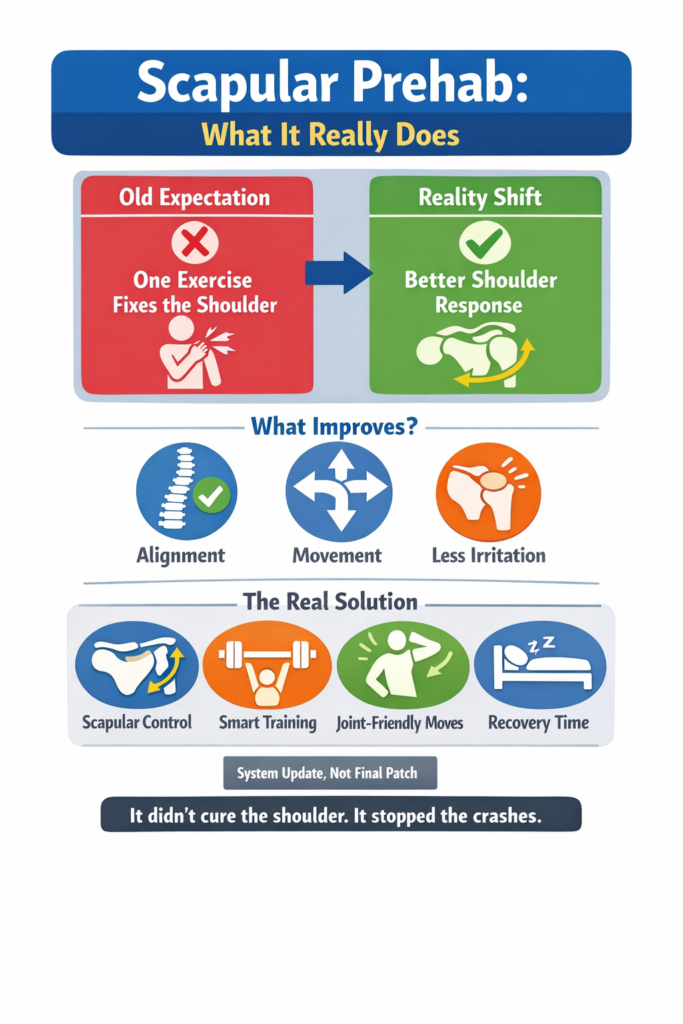
The Most Useful Lesson: Scapular Prehab Was a Translator, Not a Cure
This was the big mental shift.
I kept hoping for one exercise to “fix” the shoulder.
Instead, scapular prehab made my shoulder more responsive to good training choices.
It gave me better alignment and movement options.
It reduced the baseline irritation.
But the real solution was the combination of:
Better scapular control.
Smarter training volume.
More shoulder-friendly movement choices.
Enough recovery that tissues could calm down and adapt.
In nerd terms, the prehab wasn’t the final patch.
It was the update that stopped the system from crashing every time I opened a new program.
What Didn’t Go Right (So You Don’t Have to Learn the Hard Way)
Mistake 1: Doing Prehab, Then Training Like Nothing Happened
Early on, I did the routine and then went right back into the same patterns.
That slowed everything down.
Prehab helps the shoulder tolerate load better.
Prehab doesn’t erase overload.
Mistake 2: Going Too Hard on “Corrective” Work
I tried heavier bands and more volume thinking it would speed things up.
That sometimes irritated the shoulder more.
These muscles respond to quality reps.
Not to punishment.
Mistake 3: Ignoring Thoracic Mobility Like It Was Optional
When the upper back is stiff, overhead motion demands more from the shoulder joint.
That’s like forcing a door to open wider when the frame is crooked.
Thoracic work didn’t feel heroic.
Thoracic work made everything else work better.
Mistake 4: Skipping the “Boring” Form Details
Elbow angle in push-ups mattered.
Grip angle in pressing mattered.
Rib position in wall slides mattered.
Those details aren’t aesthetic.
They’re the difference between training the right muscles and rehearsing the same problem.
How All This Could Be Tested Safely
If someone reading this has impingement-like symptoms and wants a simple plan, this is the cleanest version I’d recommend.
Do it for 4 weeks minimum before judging.
Minimum Dose (10–12 Minutes, 4–5 Days/Week)
Scapular push-ups: 2 sets of 10 slow reps.
Wall slides with lift-off: 2 sets of 8 reps.
Band external rotations: 2 sets of 15 reps per side.
Thoracic extensions: 1 minute total.
That’s it.
If someone can’t commit to a long routine, commit to consistency.
Add-On Version (20–25 Minutes)
Add face pulls: 2 sets of 15–20.
Add prone Y raises: 2 sets of 8–12.
Add an easy stretch for pec minor or lats if they feel tight, but keep it gentle.
If any movement creates sharp pain, reduce range or skip it.
The goal is training, not provoking.
What Eight Weeks Actually Changed — and What Stayed the Same
Scapular prehab gave me a better shoulder environment.
Less pinching.
More control.
More confidence overhead.
Better tolerance for hanging and push-ups.
Still, it didn’t make me invincible.
It didn’t remove the need for smart loading.
It didn’t cancel out bad sleep positions or reckless volume.
What it did do was restore the feeling that my shoulder was improving instead of slowly falling apart.
That feeling matters.
Because once training feels safe again, consistency returns.
If someone is dealing with the same “pinch in the front when I raise my arm” situation, scapular prehab is worth trying.
Track the tests.
Respect the load.
Let the shoulder learn that it can move without being threatened.
That’s just how irritated tissues calm down and rebuild trust.