Some lifters have a back that loves drama.
No matter how clean their form looks, one wrong twist or breathless rep and that familiar twinge creeps in — the “Hey, remember me?” signal from the lumbar zone.
When the pain keeps returning, the belt hunt begins.
Not for style or personal records — but for safety.
Yet the real question isn’t “Which belt is best?”
It’s which belt actually feels safe when your lower back already has trust issues.
Beyond Leather vs. Nylon
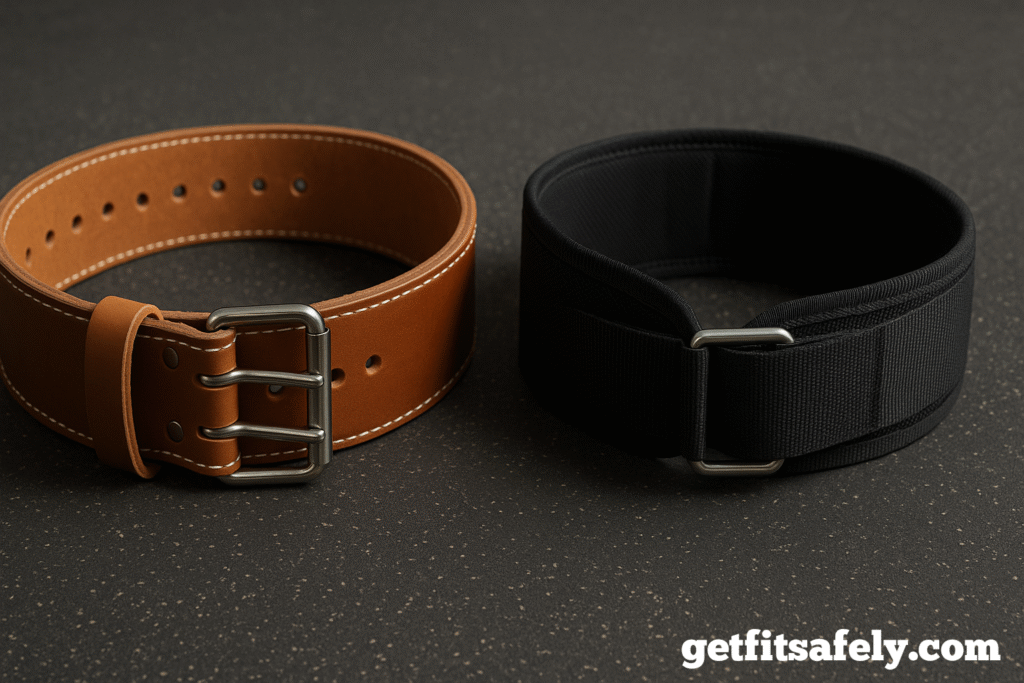
Most belt debates sound like a fashion war — leather versus nylon, lever versus velcro.
But if your lower back has a history, those details are just the surface.
The real safety features are often invisible:
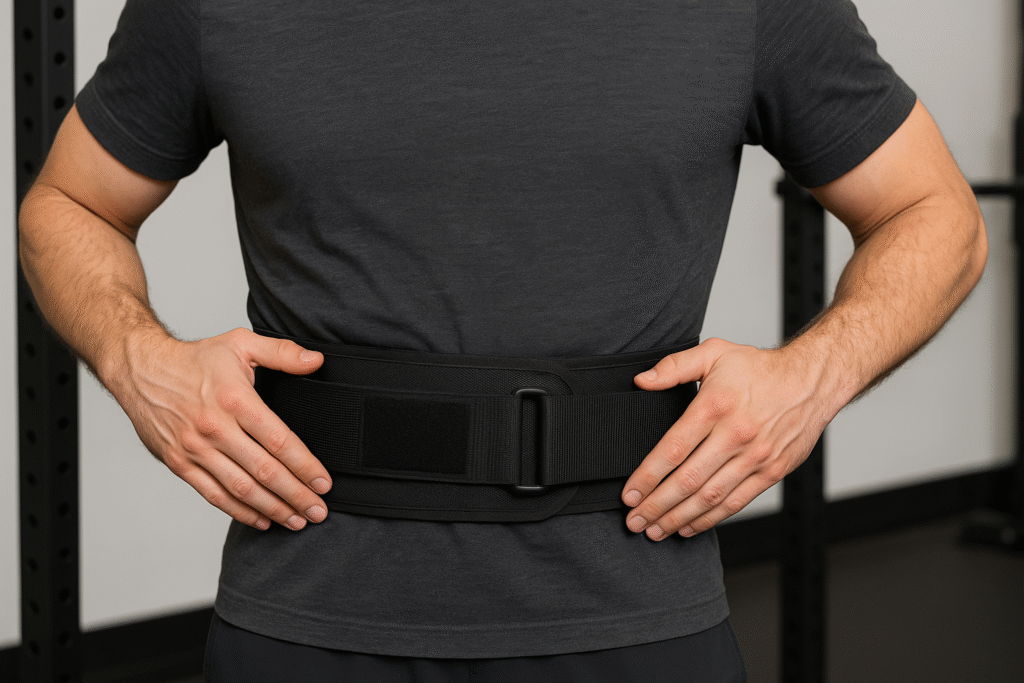
- Inner cushioning or a soft liner that reduces direct pressure on vertebrae.
- Rounded edges that won’t dig into the hips when you hinge forward.
- Flexible front panels that move naturally with the torso instead of cutting into it.
- Slight tapering to keep it supportive in the back but gentle at the ribs and belly.
In short, safety for a reactive back isn’t about stiffness — it’s about adaptability.
A belt should move with you, not against you.
Not Every Back Fits the Same Belt
Most belts are sold as “one-size-for-all,” which makes about as much sense as one-size lifting shoes.
Someone with a deep lumbar curve needs a different contour than someone with a flat back.
A shorter torso may feel choked by a belt that fits perfectly on a taller athlete.
What to look for instead:
- Adjustable or custom-cut models that can be trimmed or tailored to body proportions.
- Short-torso versions (often marketed as “female fit”) that sit higher and prevent compression near the ribs.
- Belts with variable stiffness — firm at the lumbar zone, flexible at the sides.
Comfort Under Movement, Not Under the Mirror
A safe belt isn’t one that looks good in a selfie — it’s one that passes the motion test.
Here’s how to test it before committing:
- Put it on and perform a light hinge or bodyweight squat.
Feel for any digging, pinching, or uneven pressure. - Breathe deep into your belly.
If your breath stops at your chest, it’s too tight or poorly shaped. - Wear it for 15–20 minutes, then remove it.
If you feel tingling or soreness where the belt sat, it’s a red flag.
Recommended read
Top Belt Types That Play Nice with Irritated Lower Backs
While everyone’s anatomy is unique, certain designs tend to be gentler on sensitive spines:
- Rogue USA Nylon Belt — light, soft-edged, easily adjustable. Great for dynamic workouts and people with recurring stiffness.
- Pioneer Cut Leather Belt — traditional feel with micro-adjustable notches for a more forgiving fit.
- Schiek 2004 Contour Belt — features curved shape and lumbar padding for better spinal alignment.
- Element 26 Self-Locking Nylon Belt — supportive yet flexible, good for mixed training styles.
How to Ease Into Using a Lifting Belt
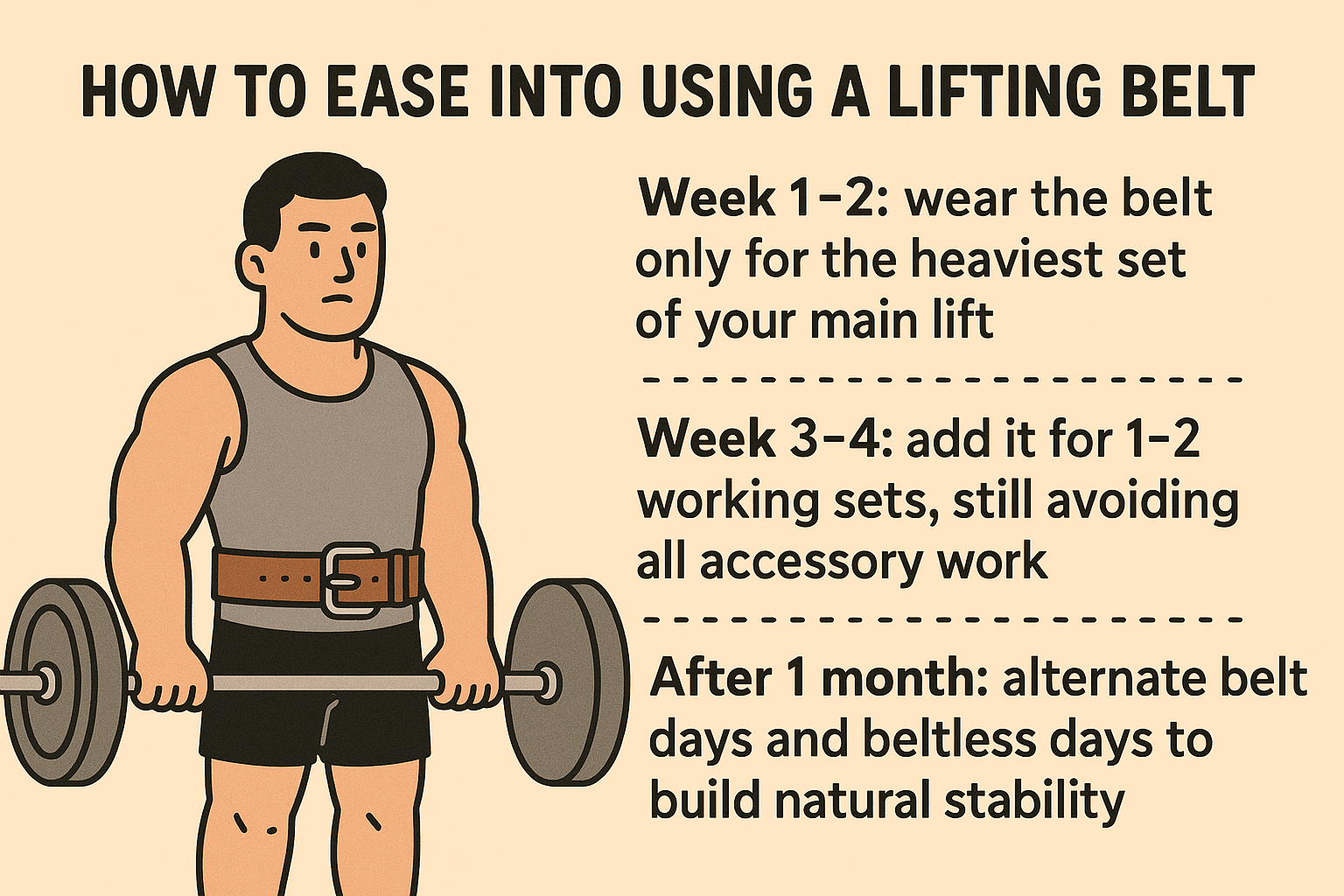
Even the safest belt can backfire if introduced too fast.
Think of it like a physical therapy tool, not a fashion statement.
Start with a phased protocol:
- Week 1–2: wear the belt only for the heaviest set of your main lift.
- Week 3–4: add it for 1–2 working sets, still avoiding all accessory work.
- After 1 month: alternate belt days and beltless days to build natural stability.
This approach lets your core adapt rather than become dependent.
Belt Pressure That Holds You Back
Even the right belt can feel wrong if misused.
Here are the most common traps for lifters with sore lower backs:
- Wearing the belt too low — putting pressure on the hips instead of stabilizing the midsection.
- Over-tightening — cuts off diaphragmatic breathing, which is crucial for core bracing.
- Ignoring asymmetries — uneven tightness or hip shift during lifts keeps pain lingering.
- No belt-free training at all — the core loses its ability to stabilize on its own.
If the belt feels like a brace instead of a partner, it’s being used wrong.
When the Problem Isn’t the Belt
Sometimes, no belt will feel “safe” — and that’s the body’s way of asking for a different solution.
Persistent pain, numbness, or tightness that worsens post-lift often signals deeper issues:
- Weak glute activation
- Pelvic instability
- Nerve compression or disc irritation
In those cases, combining proper belt use with targeted mobility or physiotherapy work is smarter than chasing “the perfect belt.”
Related read
Are Budget Weightlifting Belts Safe for Beginners or Should I Go Premium? →
What Physical Therapists Really Say About Using Belts
After a few trips to physical therapy — the kind where they make you question how you’ve been breathing your whole life — I realized something: the belt isn’t the enemy.
Most people just use it wrong.
No therapist ever told me to throw my belt away.
They just said, “Use it as a tool, not a crutch.”
It sounds cliché, but it’s the difference between building strength and just pretending you have it.
When you wear a belt for every single lift, even for warm-ups, your brain starts outsourcing stability.
It stops asking your core to do its job and lets the belt “think” for you.
That’s why the moment you take it off, you feel like a pudding with a barbell.
Some therapists talk about what they call “smart bracing” — alternating between:
- Heavy, belted sessions for safety and support.
- Belt-free training days to retrain your stabilizers and breathing patterns.
It’s like using training wheels on a bike — helpful at first, but useless if you never learn balance.
One of the best things a PT ever told me was this:
“If you take the belt off and your stability disappears, you don’t need a tighter belt — you need a stronger core.”
And honestly, that line stuck.
The belt isn’t supposed to replace natural strength.
It’s supposed to remind you where you’ve lost it.
If it becomes a constant shield, it dulls the very awareness you’re supposed to build.
Conclusion
A lifting belt can either mask pain or teach awareness — it all depends on how it fits and how it’s used.
For lifters whose lower back always acts up, the safest choice isn’t the toughest or the most expensive.
It’s the one that blends with your body, lets you breathe deeply, and reminds your spine how to share the load — not escape it.