I used to think rowing was just an upper-body flex.
Like, cool — your lats get pumped, but can it really torch fat like running or a good spin session?
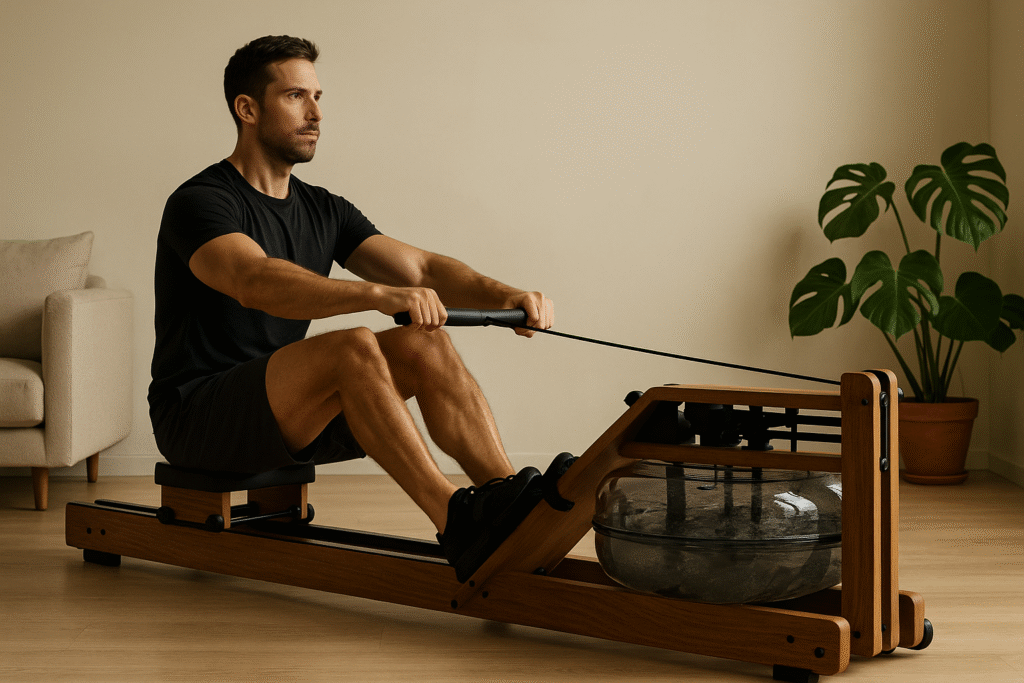
Then one day I hopped on a compact water rower “just for fun.”
Fifteen minutes later, I was dripping sweat, my lungs were staging a protest, and I realized… this thing might be the most underrated cardio machine on the planet.
Let’s talk about why rowing at home can absolutely go toe-to-toe with the classics — and sometimes even win.
The sneaky full-body payoff
Most people treat cardio like a leg-only job.
Treadmill, bike, stair climber — all solid, but they don’t ask your upper body to do much.
Rowing flips that script.
Every stroke pulls in your legs, core, back, shoulders, and even your grip.
It’s basically resistance training disguised as cardio.
That’s why your heart rate spikes faster, and your post-workout oxygen burn (EPOC) stays higher for hours.
Studies suggest rowing can activate around 85% of your major muscle groups, which is more than running or cycling at equal intensity.
And that means more calories burned per minute — and a lot less boredom.
Here’s a quick breakdown:
| Exercise | Muscle Groups Activated | Calories Burned (per 30 min)* | Joint Impact | Space Needed |
|---|---|---|---|---|
| Running | Mostly lower body | 280–360 | High | Medium (treadmill or outdoors) |
| Cycling | Lower body + light core | 250–320 | Low | Medium (bike or stationary) |
| Rowing | ~85% of total body | 300–400 | Very low | Small (foldable rower) |
*Based on average 160 lb (72 kg) person at moderate-high intensity.
Rowing vs. running: the joint-friendlier grind
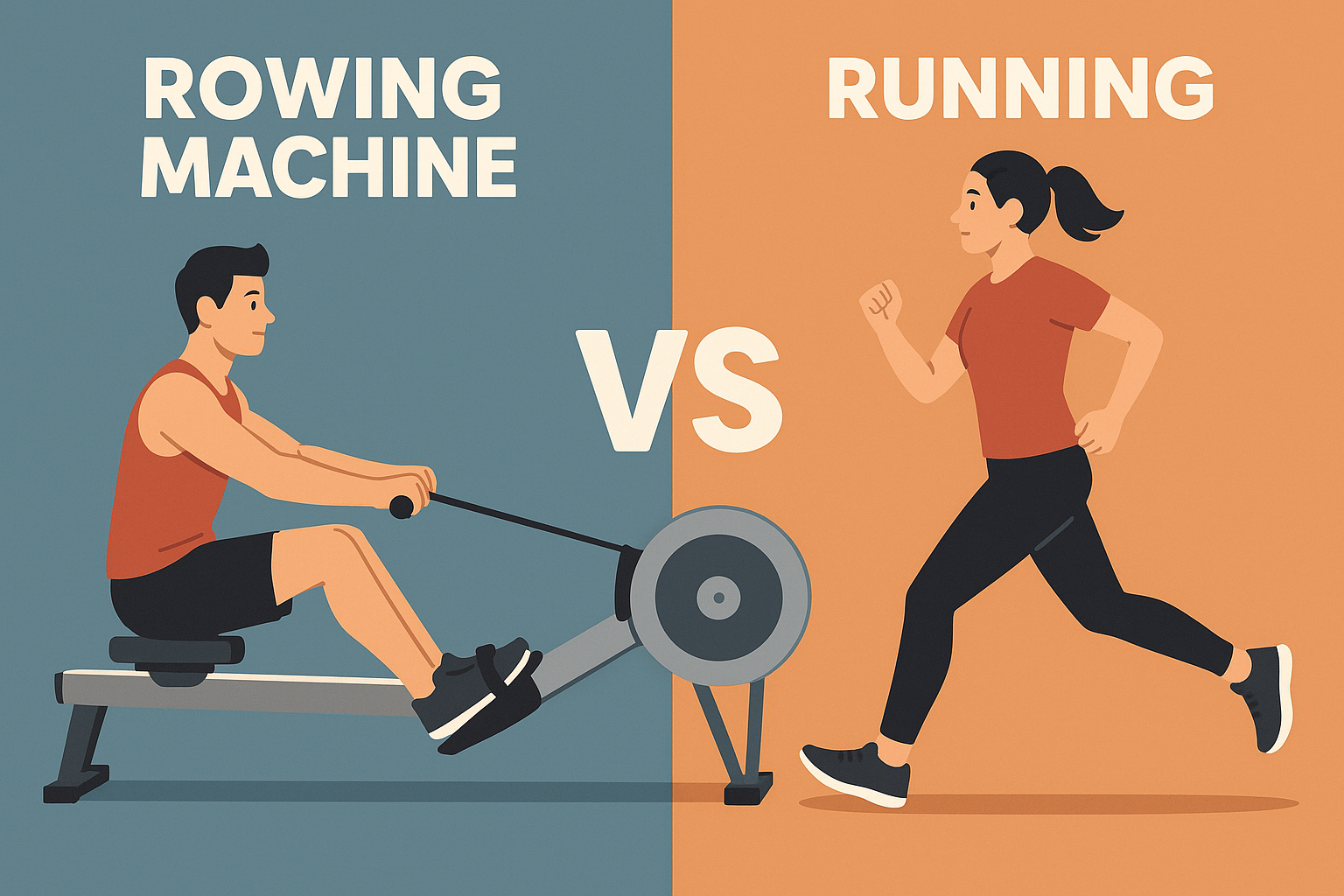
Don’t get me wrong, running is amazing — until your knees start throwing tantrums.
Rowing hits your cardiovascular system just as hard without the pounding.
Your joints glide through the motion instead of absorbing impact.
It’s like trading in a road sprint for swimming laps — still tough, just smoother.
If you’ve ever struggled with shin splints, knee pain, or old injuries that hate pavement, the rower is a gift.
And since it’s low-impact, you can row more often without beating your body into the ground.
For people returning from injuries or trying to keep training volume high without joint stress, that’s a game-changer.
Cycling vs. rowing: who wins the endurance battle?
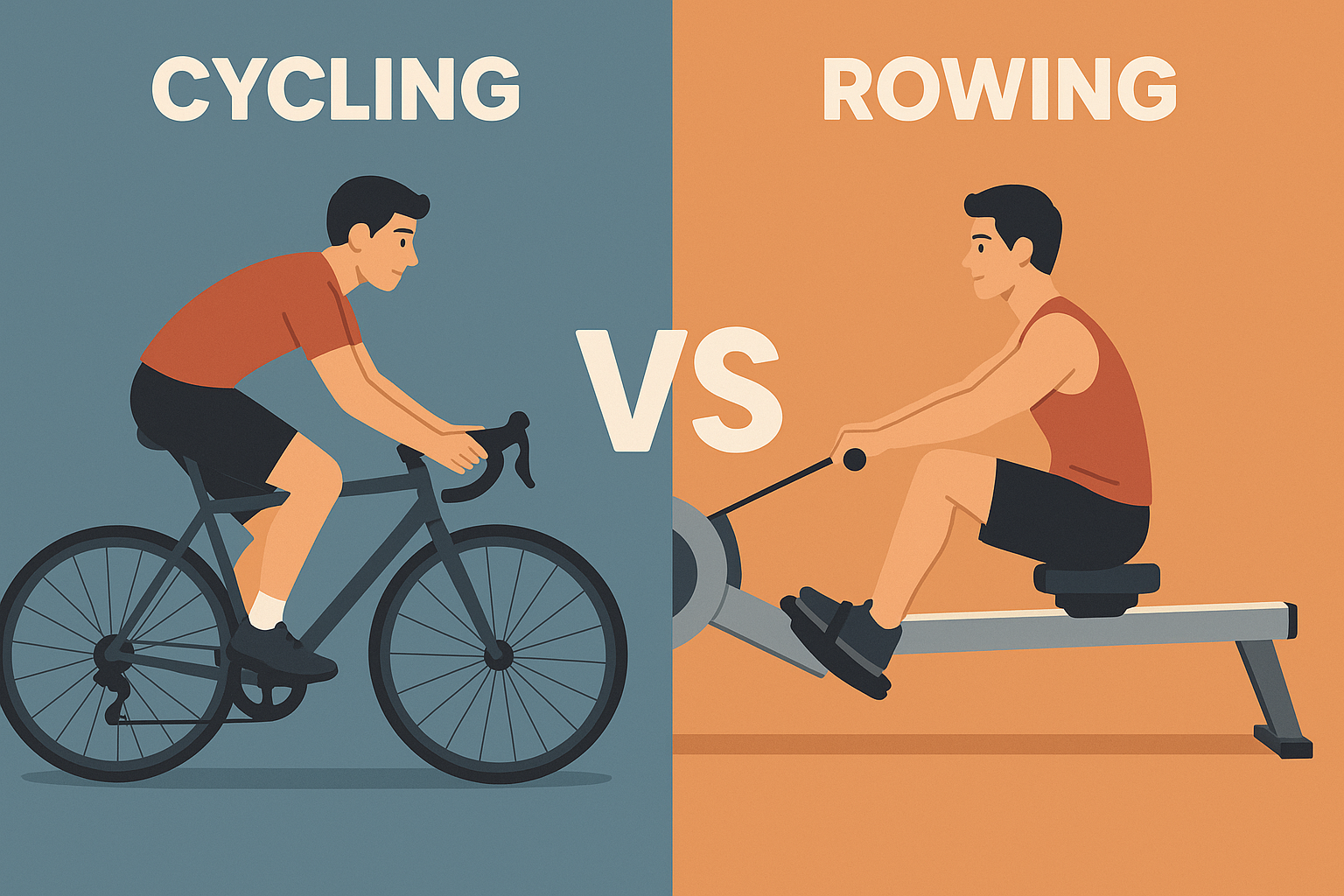
Cycling gives you a steady-state kind of burn — you can stay there for hours.
Rowing?
It’s more of a power rhythm.
You push, pull, recover, and repeat.
Your legs drive, your core stabilizes, your arms finish the stroke — it’s an orchestra of effort.
That’s why it spikes your VO₂ max faster and challenges your anaerobic capacity.
In one study from the Journal of Sports Sciences (2019), participants reached similar oxygen consumption levels during rowing as during running, but reported less perceived fatigue.
Basically, rowing doesn’t just make you last longer — it makes you stronger while lasting longer.
And no offense to cyclists, but the feeling of water resistance is way more satisfying than spinning pedals that don’t fight back.
The heart rate paradoxMost cardio lovers swear by long runs for heart health. But rowing triggers something different — it combines strength tension and endurance load at the same time. Because of that, your heart learns to handle both quick surges and long grinds. That hybrid effect is why some trainers call rowing “cardio strength conditioning.” It trains your cardiovascular system to stay calm under pressure — literally. Over time, your resting heart rate often drops faster than with pure running or cycling programs. Your heart gets strong and smart. |
The mental flow factor
Here’s something people don’t talk about enough: rowing clears your head.
You can’t doom-scroll, text, or half-watch Netflix mid-stroke.
You’re locked into a rhythm — catch, drive, release — and that repetition starts feeling almost hypnotic.
It’s one of the few workouts that gives you both focus and fatigue in the best way.
Ten minutes in, and your thoughts line up like soldiers.
When I’ve had a stressful day, rowing gives me that “reset button” feeling that even running rarely hits.
|
🚣♂️ Curious about how rowing stacks up for muscle growth too? |
Rowing for HIIT: the hidden weapon
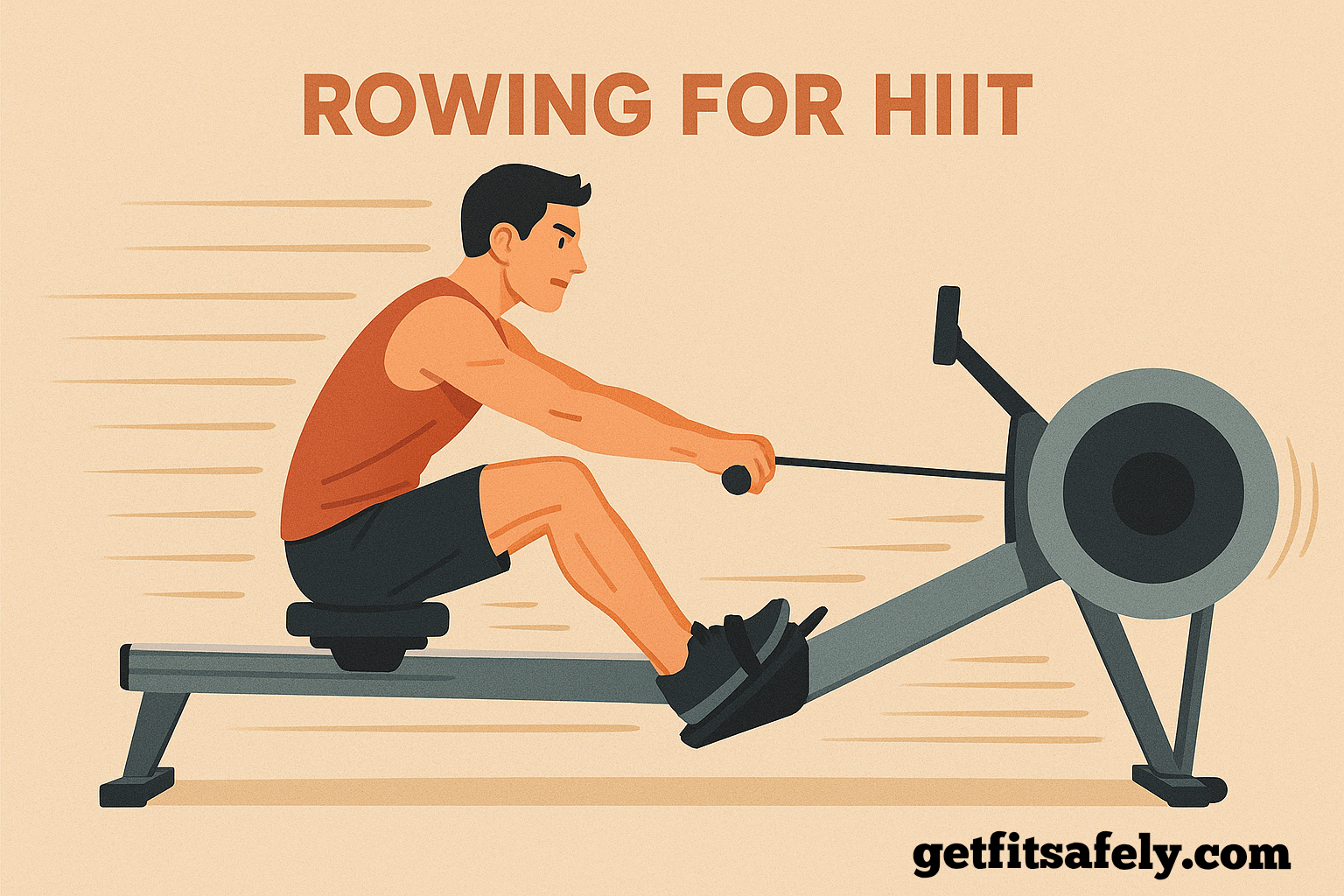
If you ever get bored rowing steady, switch gears.
Rowing machines — especially compact water rowers — are built for intervals.
Try this:
- 30 seconds of all-out sprints
- 30 seconds slow and smooth
- Repeat for 10 rounds
That’s ten minutes total, and your lungs will feel like they just did CrossFit with your soul.
The combo of strength and cardio stress makes your metabolism go wild afterward — perfect if you’re chasing fat loss or just want that “athlete burn” without living in the gym.
When running or cycling still make sense
Rowing might be king for full-body cardio, but there are still reasons to keep the others around.
Running helps improve bone density thanks to impact loading — something rowing doesn’t offer much of.
It’s also more accessible: no setup, no water tank, no moving parts. Just shoes and a street.
Cycling, on the other hand, wins big for long-duration endurance.
If your goal is zone 2 training or building aerobic base over hours, cycling keeps you in that sweet spot longer without overfatiguing your muscles.
The ideal setup?
Mix them.
Alternate days or blend 20 minutes rowing with a 20-minute run or bike ride for a “hybrid cardio” approach that gives your body everything — endurance, strength, balance, and variety.
Mini home routine: the 3-week rowing challenge
Want to make it practical? Try this:
Week 1:
- 3 × 10 min rowing at moderate pace
- 1 optional run or ride
Week 2:
- 2 steady-state 20 min sessions
- 1 HIIT (10 × 30 sec all-out / 30 sec rest)
Week 3:
- Mix one 25 min steady row + one short HIIT
- Track total meters, heart rate, and recovery
By the end, you’ll know if rowing really beats your usual cardio — not just in sweat, but in how it feels.
So… can rowing replace your main cardio?
Honestly, yeah — for most people, it can.
It’s low-impact, full-body, time-efficient, and genuinely fun once you find your rhythm.
If you love running, keep it.
But if your knees are done negotiating or your apartment space hates treadmills, a compact water rower is the upgrade you didn’t know you needed.
It won’t just build endurance.
It’ll teach your body coordination, balance, and control — stuff that carries over to lifting, sports, even posture.
|
🏋️♂️ Wondering whether your home setup should focus on free weights or machines? |
Final thoughts
Rowing isn’t just cardio.
It’s meditation with resistance.
Whether you’re chasing a sweat, some peace, or both — that slosh of water under your handle gives you more than a workout.
It gives you a moment to breathe, push, and feel connected again — no lake required.