It started like any other “I swear I’ll take it easy” Sunday.
Legs still screaming from deadlifts, I told myself, Let’s be smart today.
Light cardio. Recovery day.
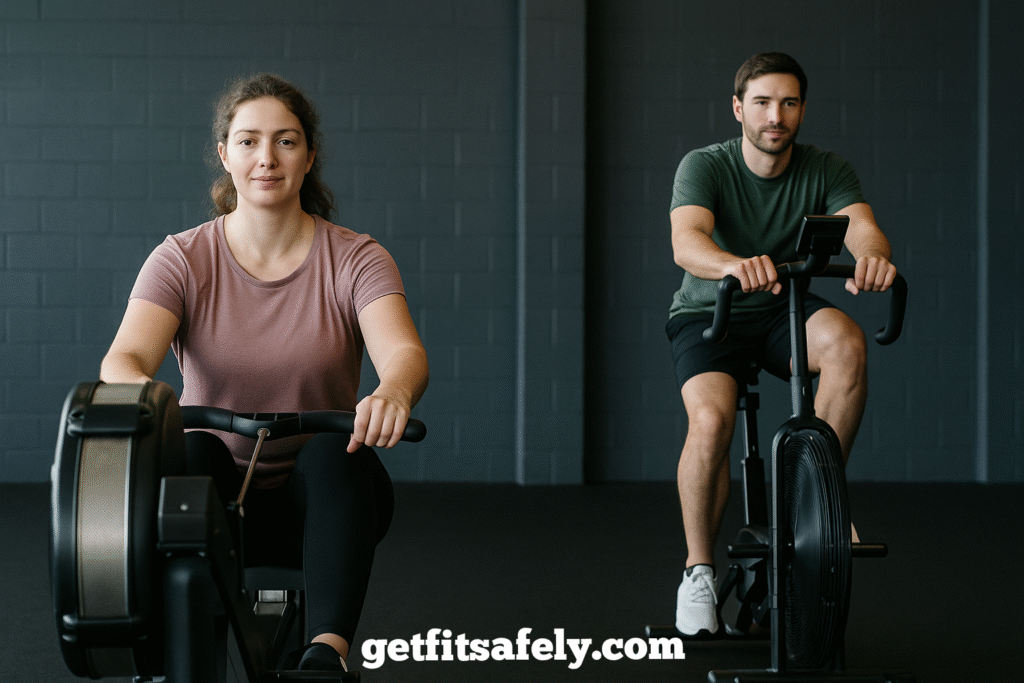
So I jumped on a stationary bike, hit play on a podcast, and started pedaling like a civilized athlete.
Fifteen minutes in, I was already zoning out, counting ceiling tiles.
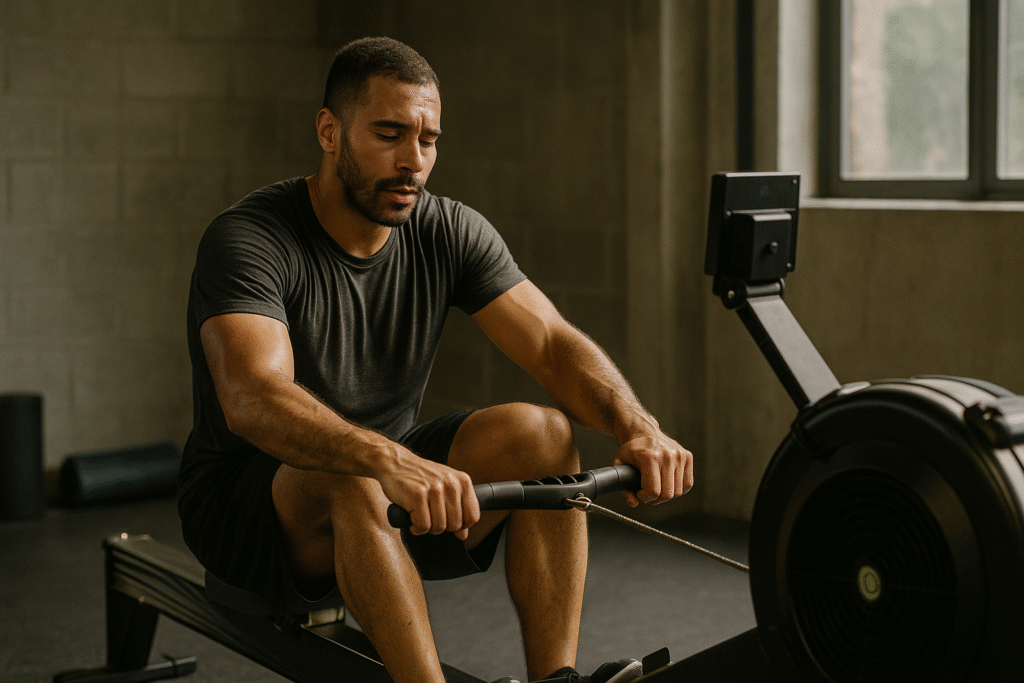
The next week, I tried rowing instead.
Ten minutes later, my heart rate was up, my back felt alive, and somehow my brain stopped thinking about spreadsheets and macros.
That’s when the question hit me — could the rowing machine actually be better than the bike for recovery days?
The “Recovery Day” Dilemma
Everyone talks about recovery like it’s this sacred ritual.
Foam roll, stretch, meditate, repeat.
But real recovery is more than doing nothing.
It’s about improving blood flow, flushing out waste products like lactate, and keeping the muscles oxygenated without adding more fatigue.
That’s where “active recovery” comes in — low-intensity movement that boosts circulation but doesn’t stress the central nervous system.
The problem?
Not all low-intensity cardio feels equal once your body’s beaten up from training.
Why Rowing Feels So Different
Rowing is one of those sneaky exercises that looks easy until you try it.
You’re using over 80% of your muscles — legs, glutes, back, arms, and even your core — in one smooth, rhythmic motion.
That full-body involvement means your heart gets challenged without overloading one specific muscle group.
Unlike running or cycling, where your legs do most of the work, rowing spreads the effort around.
So if your quads are fried from squats or your calves still hate you after sprints, rowing can give them a breather while keeping your blood moving.
Think of it as “circulation training” instead of cardio.
It’s cardio that doubles as posture therapy.
The Bike’s Strong Argument
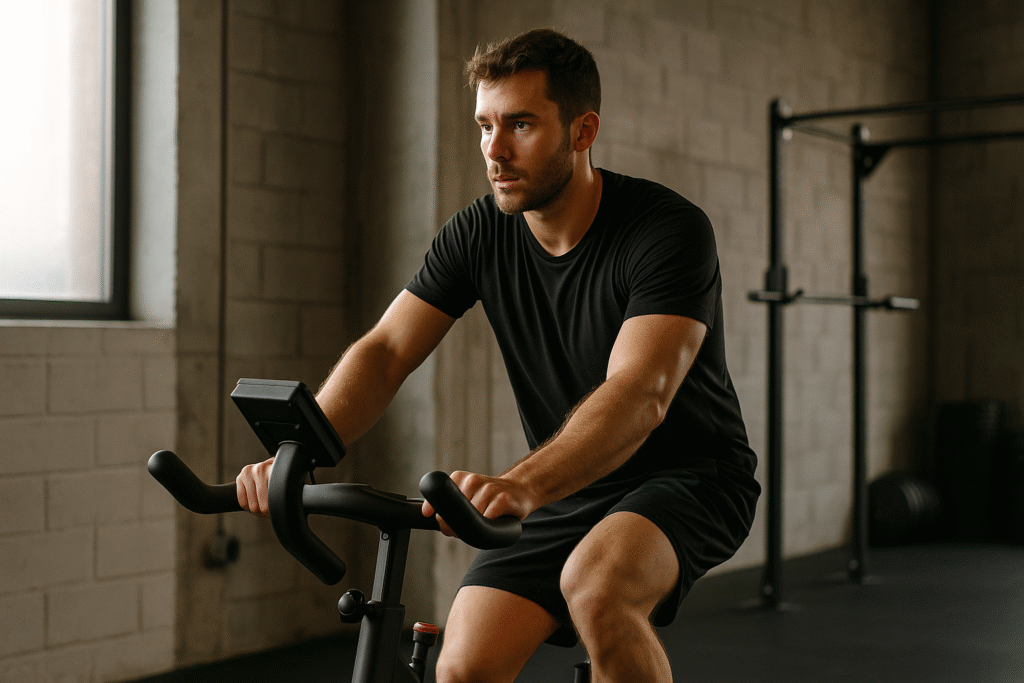
Now, I’ll give the stationary bike some credit.
It’s joint-friendly, mindless, and easy to control in terms of effort.
You can hop on, set resistance to “barely moving,” and zone out while your heart rate stays in the recovery zone.
That’s perfect for people who need a break from total-body stress — say, after a brutal pull session or a long week of lifting.
Cycling keeps it local.
It targets the legs, sure, but your upper body basically clocks out.
That can be a blessing or a curse, depending on what you’re recovering from.
Heart Rate, Oxygen, and the Sweet Spot
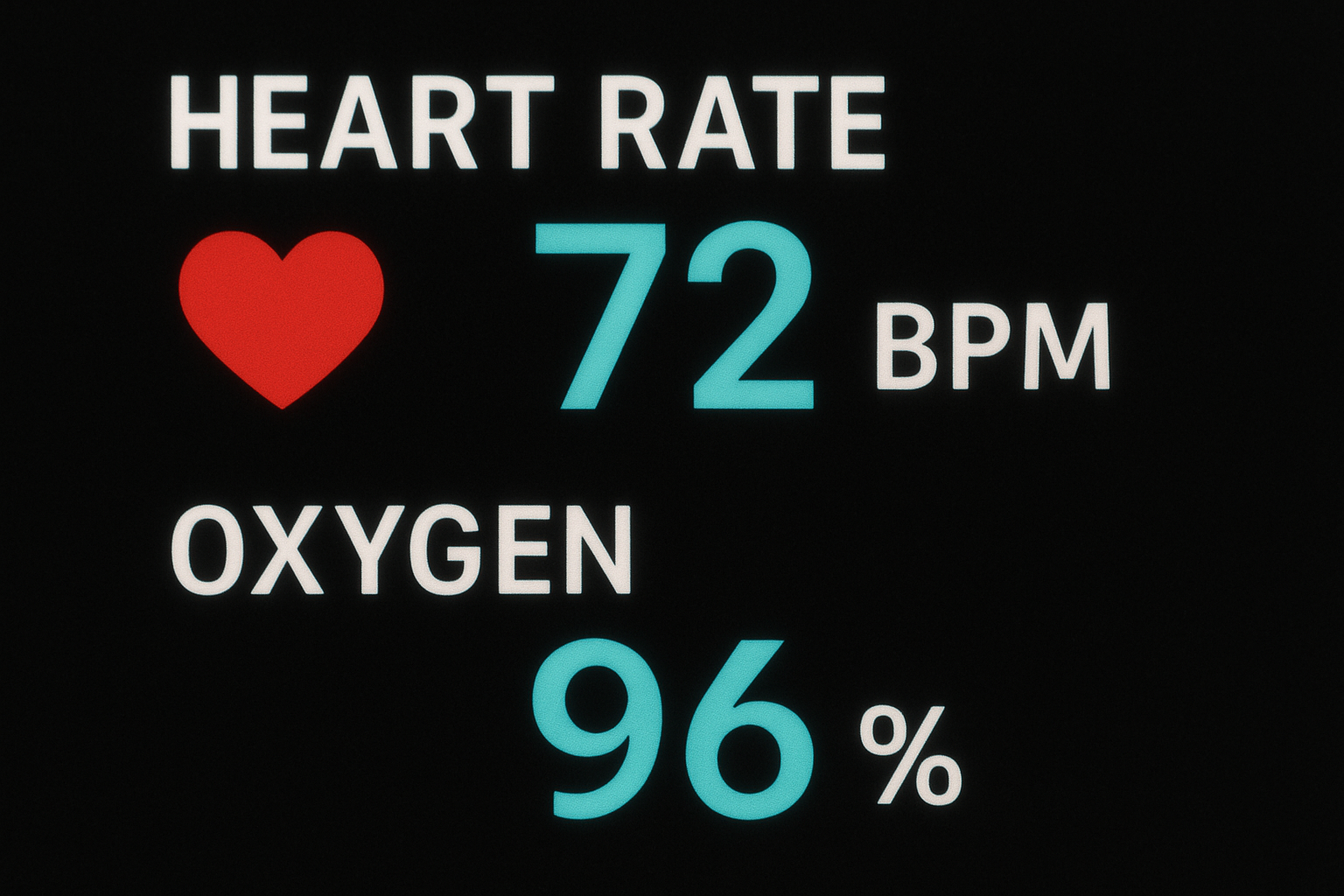
The ideal recovery cardio keeps your heart rate around 60–70% of your max.
That’s the zone where you’re improving blood flow and mitochondrial function — not adding more strain.
Rowing tends to get you there faster because you’re engaging more muscle mass.
But that can also mean you overshoot easily if you’re not careful.
On a bike, you can almost coast your way into the right range and stay there with less effort.
So the difference isn’t just what you do — it’s how well you control it.
What Rowing Does That Cycling Can’t
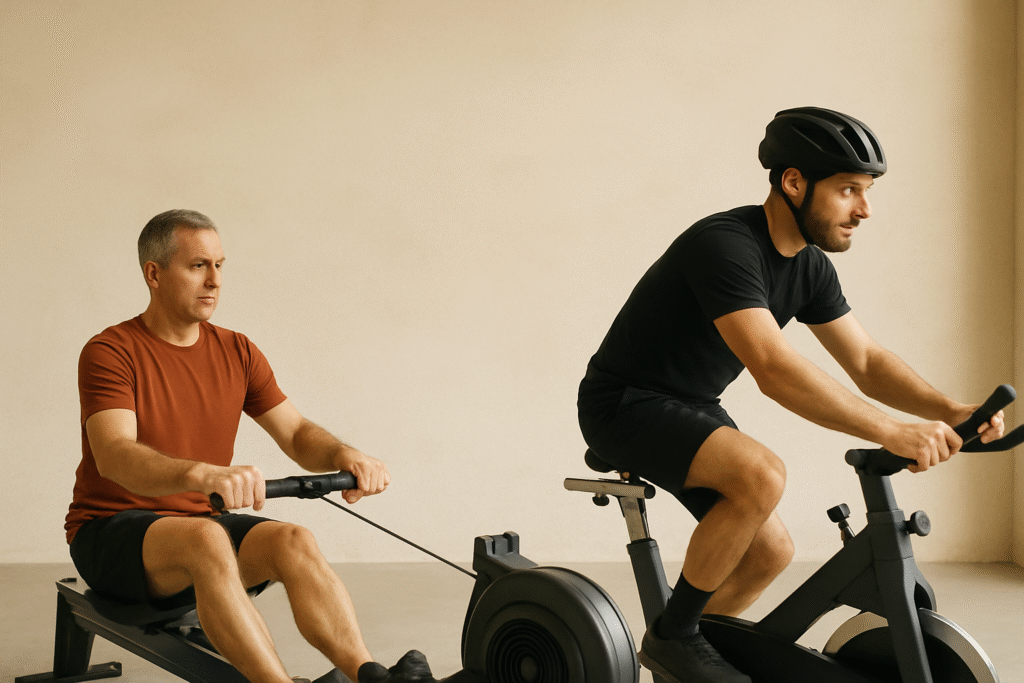
Here’s where the rowing machine quietly flexes.
Posture reset: After long days sitting, rowing strengthens the posterior chain — the back, glutes, and hamstrings that counteract slouching.
Core engagement: Every stroke forces your core to stabilize and transfer power through your torso.
Mobility through motion: The flexion-extension rhythm of each pull gives your hips and shoulders a functional range of movement instead of static stretching.
Basically, it’s cardio that strengthens your foundation while it heals it.
You finish sweaty but somehow taller.
The Real-World Trade-Off
Here’s the catch: rowing requires more technique.
If your form’s sloppy, it stops being recovery and starts being punishment.
You’ll know it the next day when your traps or lower back start whispering, “You overdid it, champ.”
Cycling, on the other hand, is foolproof.
Clip in, press start, and you’re done.
That’s why many coaches still recommend the bike for true “active rest” — it’s almost impossible to mess up.
Rowing takes a few sessions to learn how to breathe, hinge, and pull without tensing up.
But once you get it, it’s addictive.
It feels meditative, like your brain syncs with the rhythm of each stroke.
What My Body Taught Me After Switching
I started mixing rowing into my recovery days about a year ago.
At first, I thought it would be too intense.
But the opposite happened.
My soreness dropped faster, my posture improved, and weirdly enough, my pull-ups got smoother.
I realized that the gentle pulling motion of rowing complements all the pushing we do in the gym — benching, overhead pressing, dips.
It’s like balancing the scales.
Now, I still hop on the bike occasionally, especially when I just need to zone out.
But when I want to feel my body recovering, not just go through the motions, I row.
How to Gauge Intensity for Recovery Without Wrecking It
When you’re doing a recovery day, your aim isn’t max output, it’s optimal output.
Here’s a simple test: after your session, you should feel like you could do another 10 minutes if you wanted.
If you’re gasping for air or craving a nap, you overdid it.
For rowing, monitor your stroke rate — keep it around 22–24 strokes per minute, and focus on smooth form.
For cycling, aim for about 90 RPM at low resistance, keeping your heart rate around 60% of your max.
If you can still talk comfortably without breaking your rhythm, you’re in the recovery zone.
Match Recovery to Your Training Split
Recovery isn’t one-size-fits-all.
If your legs are trashed from squats or lunges, cycling might keep the soreness alive longer.
In that case, rowing wins — it spreads the workload and lets the legs relax while your upper body gets in on the action.
If you just crushed a pull-heavy day (rows, deadlifts, pull-ups), go easy on rowing and hop on the bike instead.
It’s about balance — use recovery to even out what training throws off.
Technique Tweaks That Change Everything
Good form turns recovery from “just cardio” into actual therapy.
On the rower:
- Sit tall and hinge from the hips, not the lower back.
- Drive with your legs first, then extend hips, then pull with arms.
- The recovery phase (when you slide forward) should be twice as slow as the drive.
On the bike:
- Adjust the seat so your knee has a slight bend at the bottom of the pedal stroke.
- Relax your upper body — your arms shouldn’t be doing push-ups.
- Keep your cadence smooth, like stirring soup, not pounding pavement.
Bad form adds tension where recovery should bring relief.
Rotate, Don’t Repeat
Variety keeps recovery interesting — and more effective.
Here’s what my schedule looks like lately:
- Monday: Heavy legs
- Tuesday: Upper body + short rowing
- Wednesday: Easy bike spin (25 minutes)
- Thursday: Strength day
- Friday: Moderate rowing
- Saturday: Long light cycling
- Sunday: Walk or full rest
Mixing it up keeps you from dreading your recovery days — which is the secret to actually doing them.
Measure If It’s Working
The easiest way to tell?
Ask yourself the next morning:
- Am I less sore than yesterday?
- Did I sleep better?
- Do I feel looser or tighter?
If you check “yes” for the first two and “no” for the last, you nailed it.
If not, adjust your intensity, switch the machine, and try again.
Your body’s feedback is the best data you’ll ever get.
Conclusion
Recovery doesn’t mean switching your brain off.
It means giving your body what it needs to bounce back stronger.
Rowing and cycling both have their place, but the best choice depends on where you’re sore, tired, or tight.
If you sit all week, row.
If your back’s shot, bike.
If your body’s asking for movement — just listen to it.