I get this question a lot, and honestly, I get why.
At first glance, push-ups and pull-ups both look simple.
One has me pushing my body away from the floor.
The other has me pulling my body up to a bar.
It almost feels symmetrical, like one is just the reverse of the other.
Then real life shows up and laughs a little.
I watch people drop into push-ups with decent control, even when they are new.
Then those same people jump to a pull-up bar, hang there for a second, and suddenly realize their body has other plans.
That contrast is exactly why this topic is worth unpacking.
Both are bodyweight exercises, but they do not ask the body for the same kind of strength, coordination, or control.
They also do not distribute your body mass in the same way.
When I do a push-up, part of my weight is supported by the floor through my feet.
When I do a pull-up, the bar expects my upper body to handle far more of the load directly.
That alone changes the experience completely.
And once that clicks, both exercises start making a lot more sense.
What I Notice Right Away When I Compare Push-Ups and Pull-Ups
The first thing I feel is how grounded I am in a push-up.
My hands are on the floor.
My feet are on the floor.
My body has a long contact line with the ground through pressure and balance.
Even when I am working hard, there is a sense that I am building force from a stable surface.
A pull-up feels nothing like that.
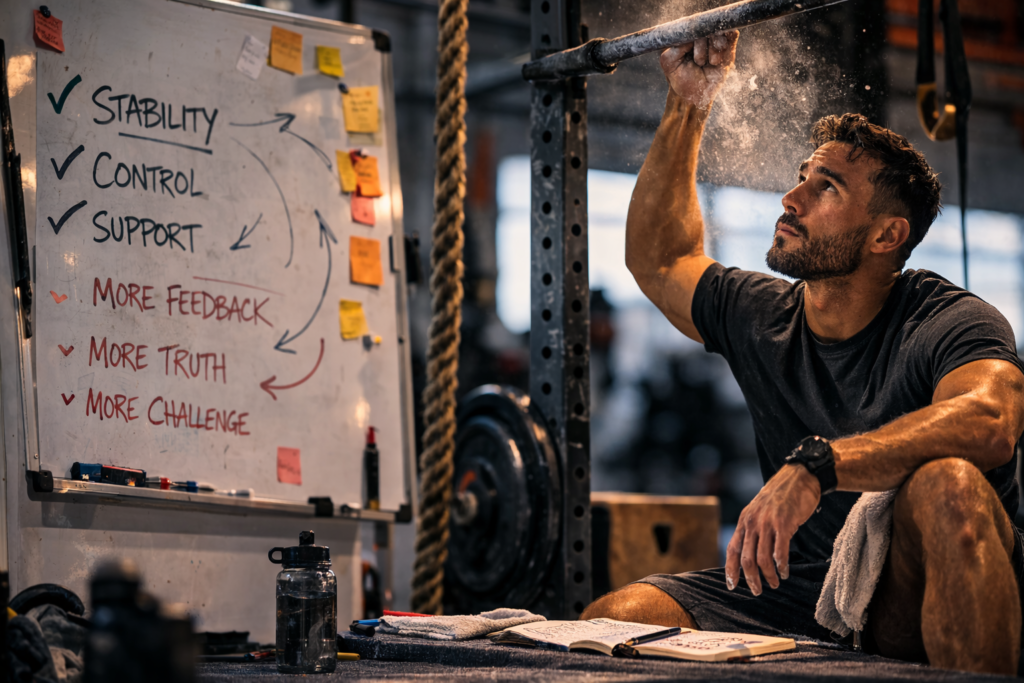
I grab the bar, my body hangs freely, and now my shoulders, hands, upper back, and arms have to organize the movement while the rest of me tries not to swing around like a shopping bag full of bricks.
That hanging position changes the whole experience.
In a push-up, the floor quietly helps me create structure.
In a pull-up, I have to create more of that structure on my own.
That is why a push-up often feels more approachable at the beginning.
It gives me more feedback.
It gives me more support.
It also lets me cheat a little without noticing.
A pull-up is less polite.
If my shoulders are not active, I feel it.
If my grip is weak, I feel it.
If my trunk is loose and my legs drift forward, I feel it.
The bar tells the truth very fast.
Why Push-Ups Usually Feel More Doable at First
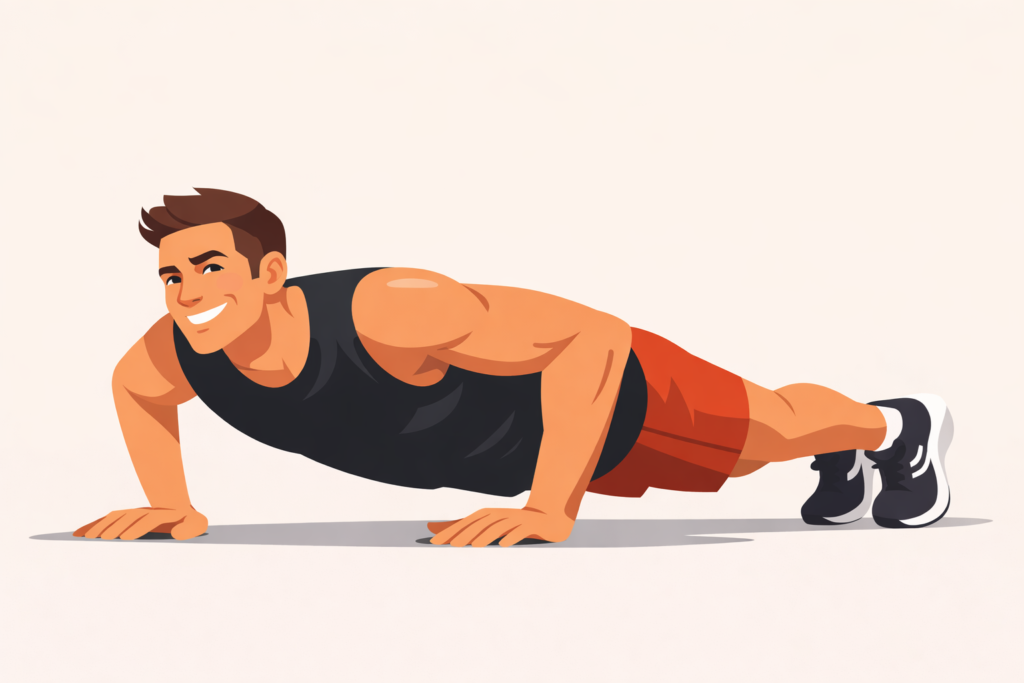
One huge reason is that a push-up does not make me lift my full bodyweight in the way a pull-up does.
Yes, a push-up is still a bodyweight movement.
No, it is not light.
But the load is shared differently.
A decent push-up has my hands pressing into the floor while my feet stay anchored behind me.
That means my upper body is not handling my entire body mass in the direct vertical way a pull-up does.
That distinction matters more than most beginners realize.
If I weigh around 75 kilos, a pull-up asks my upper body to move nearly all of that against gravity.
A push-up still challenges me, but the floor and body angle reduce how much load my pressing muscles have to manage directly.
That is why I often see someone do several push-ups before they can do even one clean pull-up.
It is not because push-ups are fake hard or because pull-ups are magical.
It is mostly mechanics.
The second reason is leverage.
A push-up spreads the work across the chest, shoulders, triceps, trunk, and even the legs as stabilizers.
A pull-up leans heavily on the lats, upper back, biceps, forearms, grip, shoulders, and trunk while hanging in space.
If one link in that chain is not ready, the whole movement gets messy.
That is why a beginner can sometimes grind out a rough push-up with a bit of wobble and still finish it.
A rough pull-up usually just turns into hanging, kicking, or staring at the bar like it personally offended you.
What “Leverage” Actually Means Here
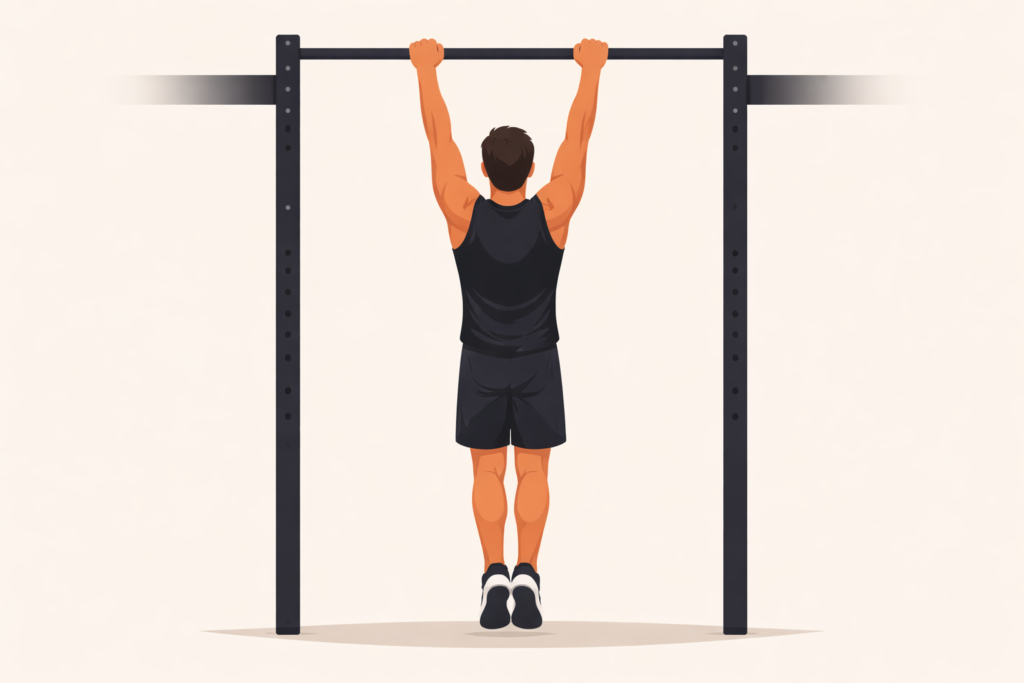
Leverage is just the way your body position changes how heavy a movement feels.
You do not need a physics degree for this.
You just need to picture a seesaw or a long wrench.
Tiny position changes can make a movement feel much lighter or much nastier.
In a push-up, my body is angled against the floor.
Part of my weight is transferred through my feet.
In a pull-up, gravity pulls my whole body straight down while my hands hold onto one fixed point above me.
That makes the upper body work in a much less forgiving way.
I notice this instantly when I compare a wall push-up, a countertop push-up, a floor push-up, and then a feet-elevated push-up.
As my body angle changes, the work climbs fast.
The farther I move from an upright position and the more horizontal I become, the more load my pressing muscles have to manage.
A pull-up starts in that less forgiving territory right away.
It does not warm me into the conversation.
It starts with, “Lift yourself.”
Very charming.
Why Pull-Ups Feel So Much More Brutal to Beginners
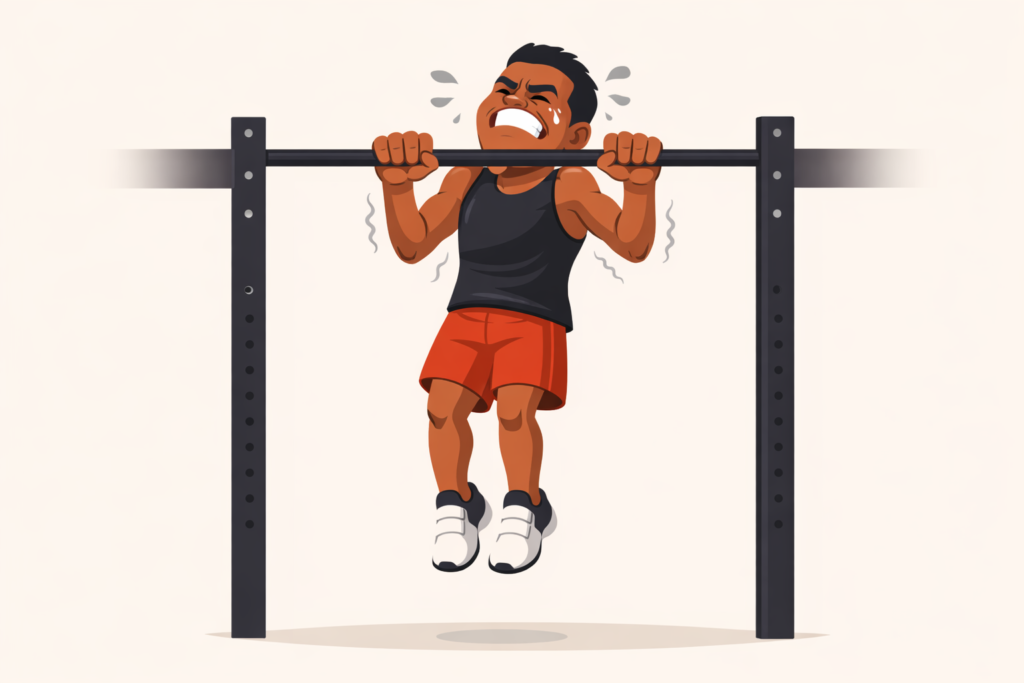
The word I prefer here is blunt.
Pull-ups are blunt.
They expose weak links quickly.
The first weak link is often grip.
Before the back or arms even get the spotlight, the hands and forearms often start complaining.
That alone can make pull-ups feel impossible to someone whose back is not actually as weak as they think.
Then comes shoulder position.
A strong pull-up is not just “bend the arms and go up.”
That is where a lot of beginners get confused.
The upper back has to engage.
The shoulder blades need to move with control.
The trunk has to stay organized.
The body has to avoid turning into a hanging banana.
That is a lot to ask from one movement.
In a push-up, the floor gives me guidance.
In a pull-up, I have to create that guidance by staying tight from the hands down through the ribs and hips.
And because I am hanging, every little leak in tension becomes obvious.
A shaky push-up can still move.
A shaky pull-up often goes nowhere.
The Pulling Muscles Usually Get Less Practice in Daily Life
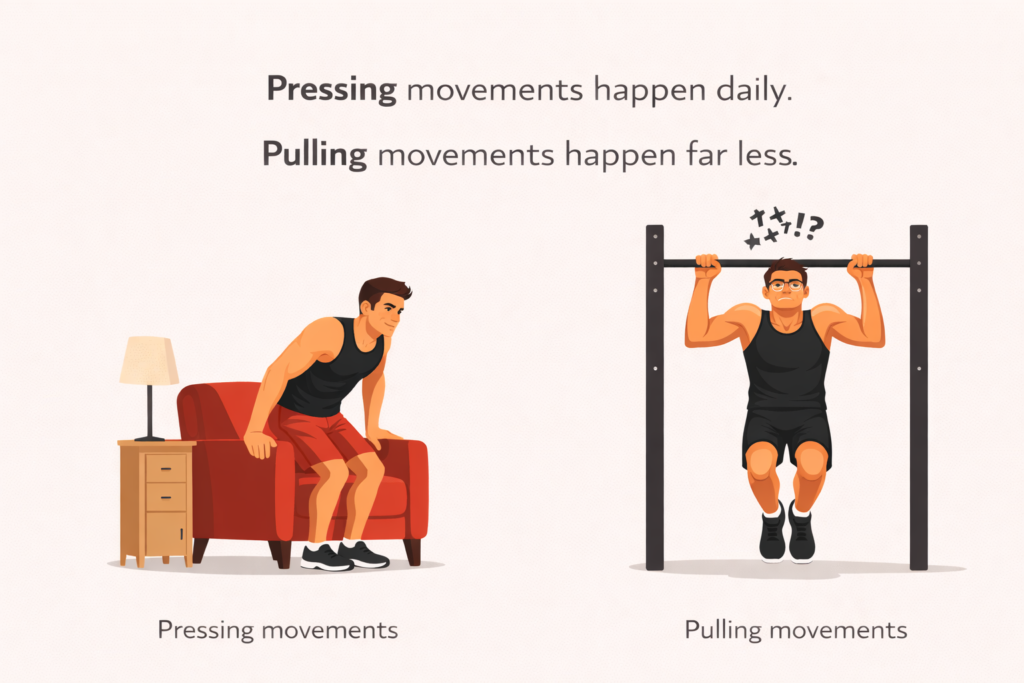
This is another big piece.
A lot of people spend years doing casual pressing without even calling it exercise.
They push themselves off a bed.
They brace off armrests.
They do push-ups in school or at home at some point.
Their chest, shoulders, and triceps are not fully trained, but they are not strangers to pressing.
Pulling is different.
Most people do not spend their day hauling their body upward from a dead hang.
Their lats, upper back, and grip just do not get that kind of practice often enough.
So when they meet the pull-up bar, it feels like reading a book in a language they technically studied once but never really used.
The letters look familiar.
The sentence still makes no sense.
That is why pull-ups often feel so much more foreign.
Why Push-Ups Can Fool You Into Thinking They’re Always Easy
Push-ups have a sneaky side.
Because they are more accessible at the beginning, people often treat them like they stop being serious once they can do a handful.
That is not true at all.
A clean push-up is not a lazy movement.
It asks for shoulder stability, trunk control, arm strength, and enough body awareness to keep the ribs, hips, and head working together.
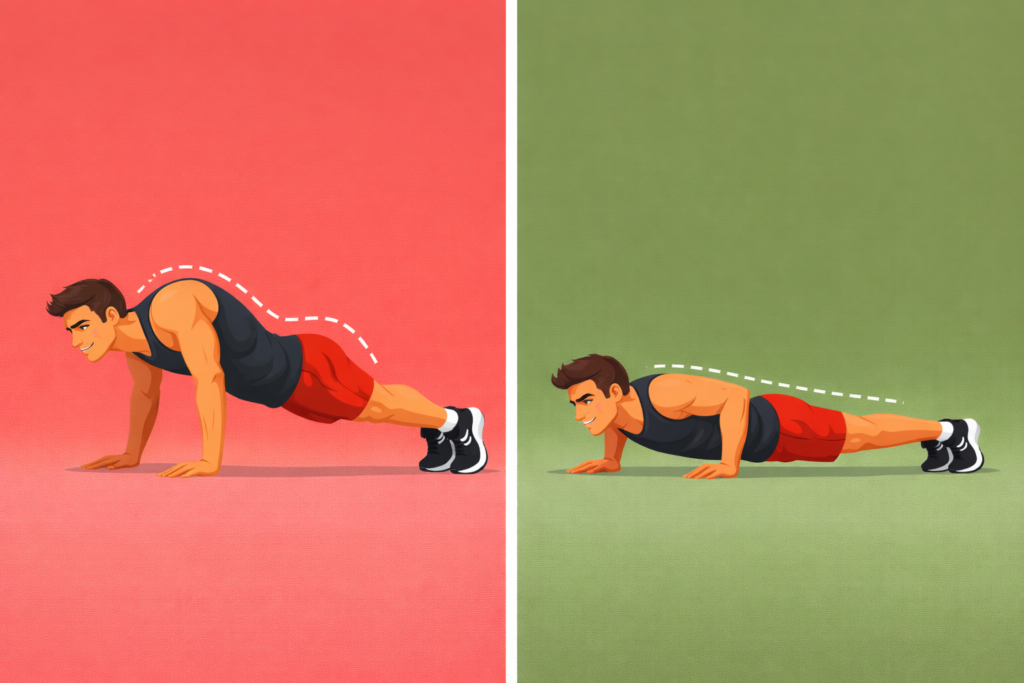
The problem is that many people do a softened version without realizing it.
I see hips sag.
I see elbows flare too wide.
I see half-range attempts where the chest stays miles away from the floor.
I see the neck reaching forward like the chin is trying to finish the rep alone.
That version feels easier, but it is not the standard people think they are judging.
A proper push-up gets much more serious very quickly.
When I keep my body in a straight line, lower under control, let the chest come close to the ground, and press back without turning it into a worm dance, the move feels much more demanding.
So yes, push-ups are often easier to access.
That does not mean they stay easy once technique gets cleaned up.
The Basics of a Proper Push-Up
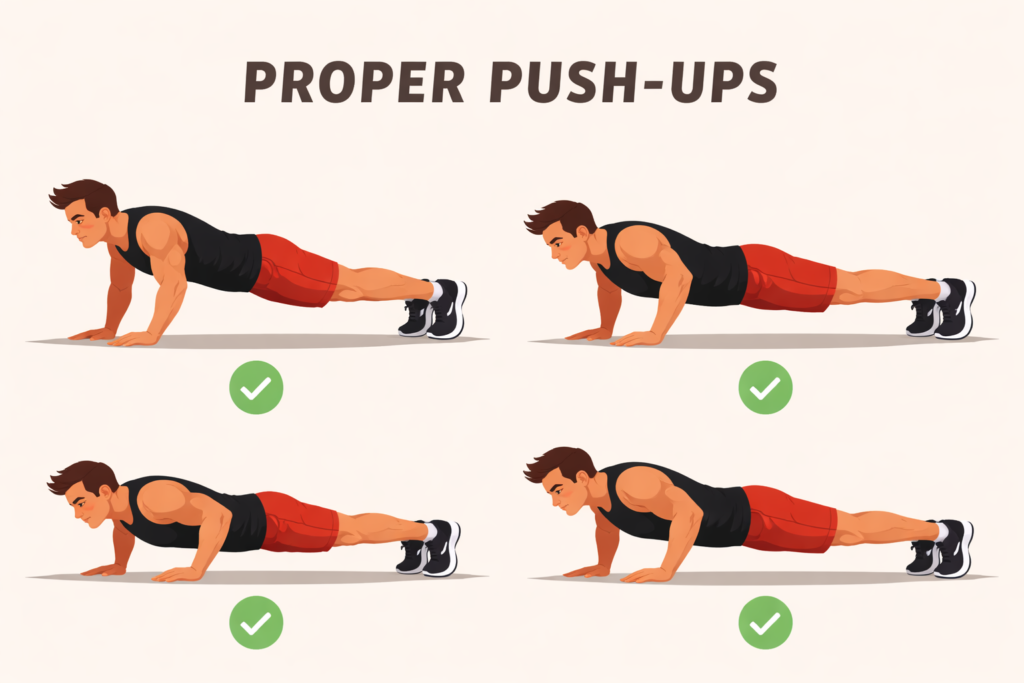
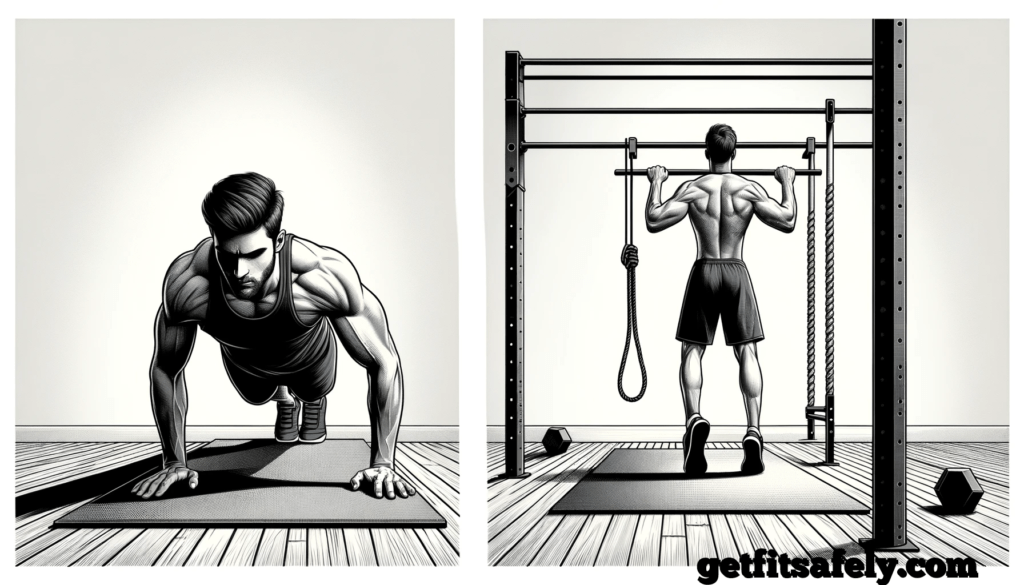
I place my hands on the floor around chest level, usually a bit wider than shoulder width, though hand position can change depending on comfort and arm length.
My fingers spread into the ground so I am not dumping all my pressure into the heel of the palm.
My shoulders stay away from my ears.
My body forms one long line from head to heel.
That means I am not letting my hips drop toward the floor, and I am not shooting them up like I am trying to start a weird mountain pose.
As I lower, my elbows bend and travel in a natural path instead of flaring straight out.
My chest moves toward the floor.
My trunk stays firm.
My legs stay active.
Then I press the ground away and return to the top without losing that body line.
That is a push-up.
Simple on paper.
Much less casual when done properly.
What Defines a Proper Pull-Up
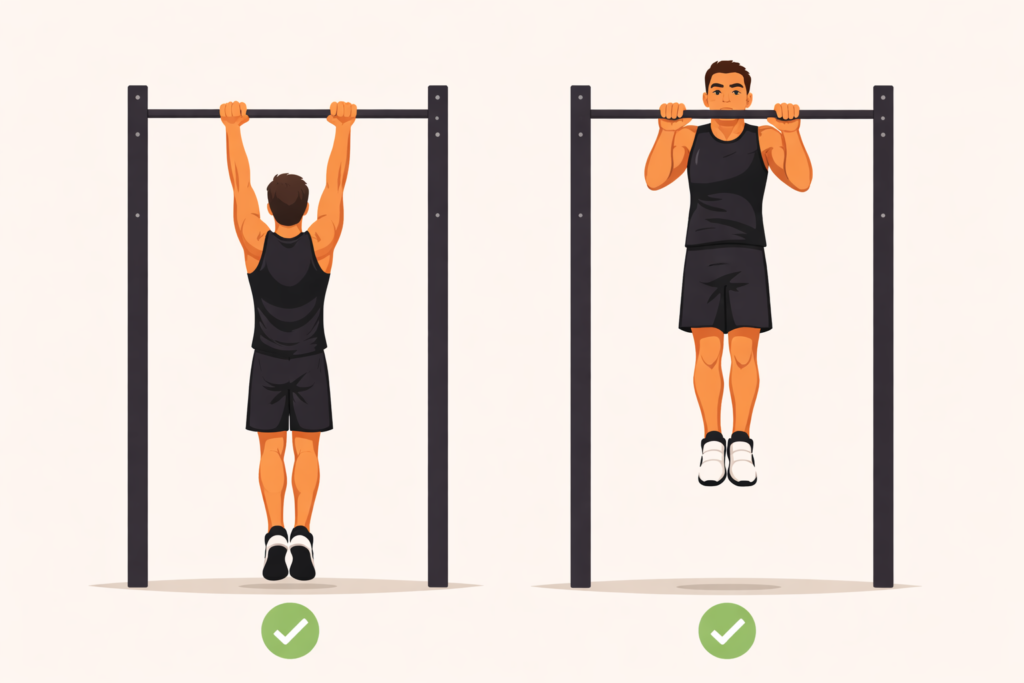
I grab the bar with my hands about shoulder width apart or slightly wider, usually with my palms facing away for a standard pull-up.
Then I hang with control instead of collapsing into my shoulders.
That means I do not just dangle like a coat.
I create a little tension through the upper back so the shoulders feel connected rather than loose.
My trunk stays firm.
My legs are quiet.
From there, I pull my body upward by driving the elbows down and back while my chest moves toward the bar.
I am not trying to yank my chin over at all costs.
I am trying to lift my whole body with control.
At the top, my chin clears the bar because the body rises well, not because the neck performs a desperate solo act.
Then I lower with control until my arms are straight again and I can start the next attempt from a real hang.
That is why pull-ups are such a clean truth-teller.
They demand a lot from the first inch to the last.
There is not much room for fake confidence in there.
The Direction of Force Changes the Feeling a Lot
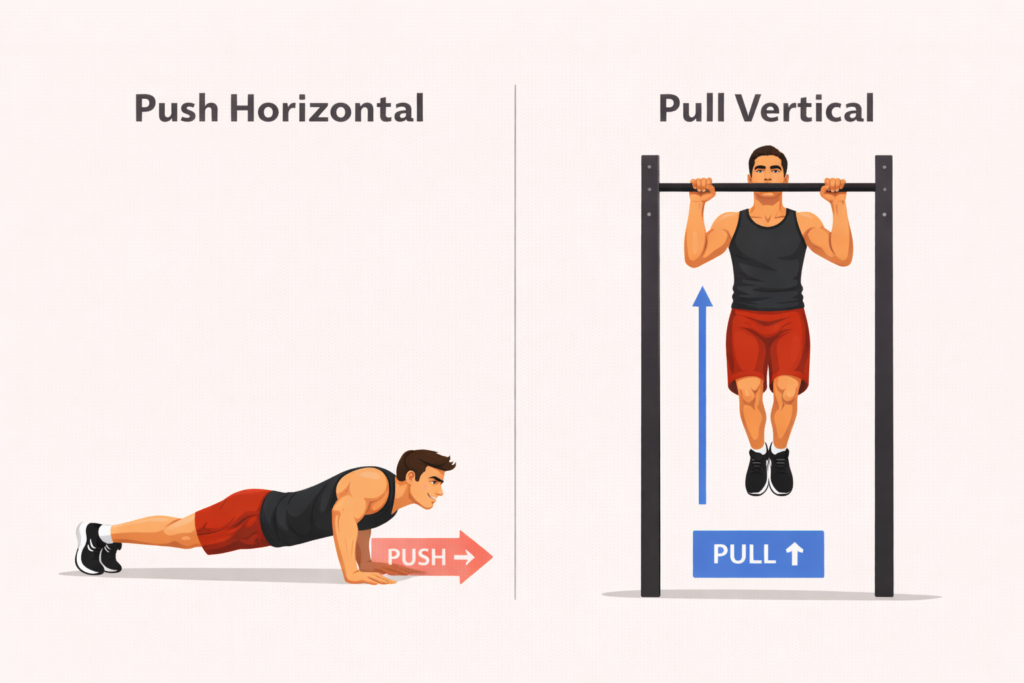
This part sounds technical, but it is actually simple.
Push-ups have me pushing the floor away.
Pull-ups have me pulling myself toward the bar.
One is a horizontal-style press against the ground.
The other is a vertical pull against gravity.
That changes which muscles dominate, how the joints behave, and how stable I feel.
In a push-up, I feel a broad front-side effort.
My chest works.
My front shoulders help.
My triceps straighten the arms.
My trunk acts like the bridge holding everything together.
In a pull-up, I feel the back side take over.
The lats, which are large muscles running from the upper arm into the torso, become major players.
The upper back helps guide the shoulder blades.
The biceps assist in elbow bending.
The forearms and hands work hard just to keep me connected to the bar.
That change in direction also changes how the exercise feels emotionally.
A push-up often feels more controlled and predictable.
A pull-up often feels more exposed.
You are literally hanging there.
There is no polite way to hide from that.
Why Hanging Changes Everything
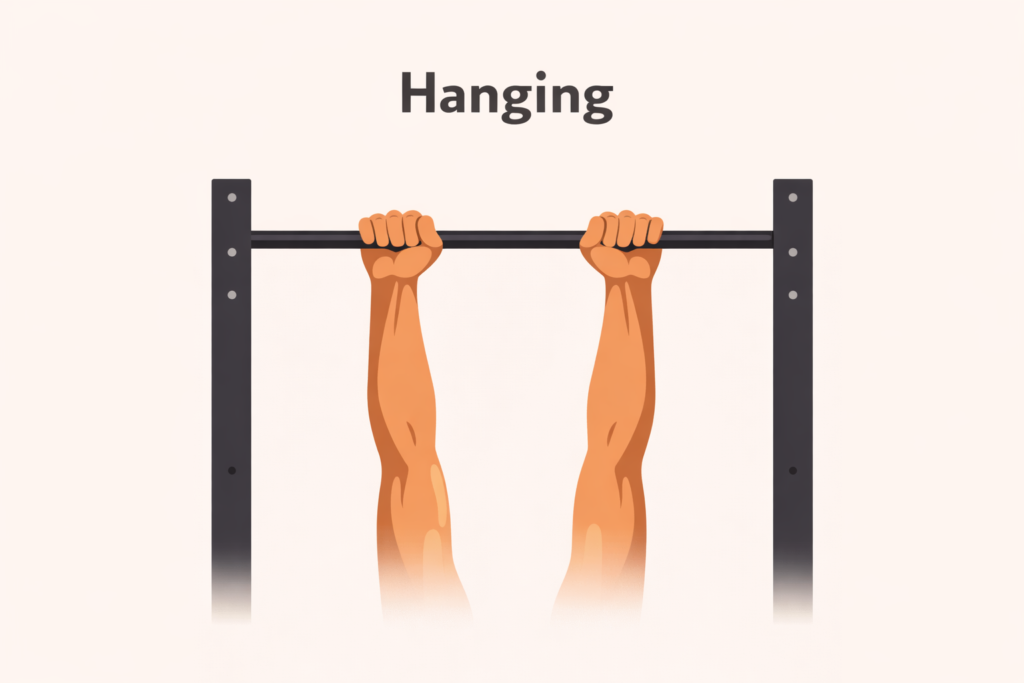
Hanging is not just a starting position.
It is a full-body demand.
Even before I begin to pull, I need enough shoulder comfort, grip strength, and trunk control to own the hang.
A lot of new lifters skip over that detail and wonder why the pull-up feels impossible.
But if hanging alone already feels unstable, the body is starting from a shaky platform.
That is like trying to write neatly while standing on a moving bus.
Can it be done?
Maybe.
Will it feel clean?
Not likely.
This is why getting comfortable with hanging is such a big step.
Once the hang feels solid, the rest of the pull-up starts becoming less mysterious.
Push-Ups Let You Adjust the Challenge More Easily
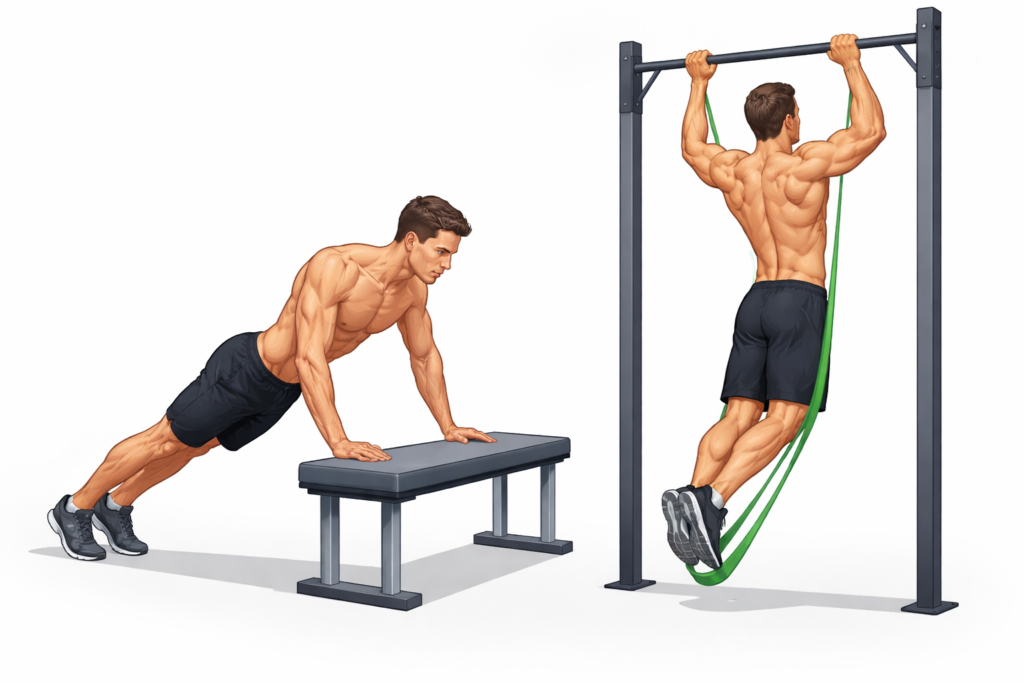
This is one reason I often start beginners with some kind of push-up variation long before a full pull-up shows up.
Push-ups are easier to scale without making them feel like a completely different exercise.
If the floor version is too heavy, I raise the hands onto a bench, table, sturdy box, or wall.
Now the body is more upright, which reduces the load.
The movement still looks and feels like a push-up.
The shape stays familiar.
That matters a lot for learning.
Pull-ups are a bit harder to scale elegantly.
Yes, there are ways to make them more accessible.
I can use an assistance band.
I can use a low bar for bodyweight rows.
I can practice controlled lowering.
I can use a machine in a gym if one is available.
But a full pull-up and a beginner-friendly pulling variation often feel less alike than a wall push-up and a floor push-up.
That is another reason push-ups feel easier for more people sooner.
A Real Comparison I See All the Time
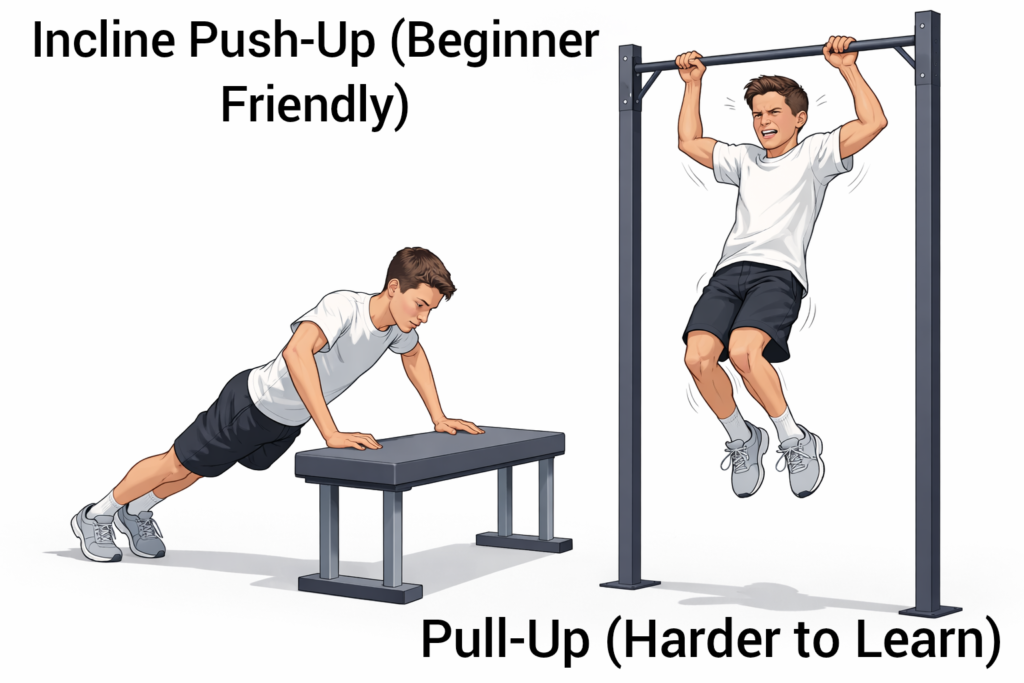
A teenager walks into training with no real background.
I give him an incline push-up using a sturdy bench.
He understands it within minutes.
Hands on bench.
Body straight.
Chest toward bench.
Press away.
Not perfect, but recognizable.
Then I bring him to a pull-up bar.
He jumps up, hangs, swings a little, tenses his face, bends his elbows halfway, and drops.
That does not mean he is unathletic.
It means the pull-up asks for a more advanced combination of strength and coordination from the start.
A few sessions later, his incline push-up has already become smoother.
His pull-up hang looks better too, but the pulling portion is still limited.
That is normal.
It is not a sign that one move matters and the other does not.
It is a sign that they live on different learning curves.
Why the Chest and Triceps Often Feel More “Available” Than the Back
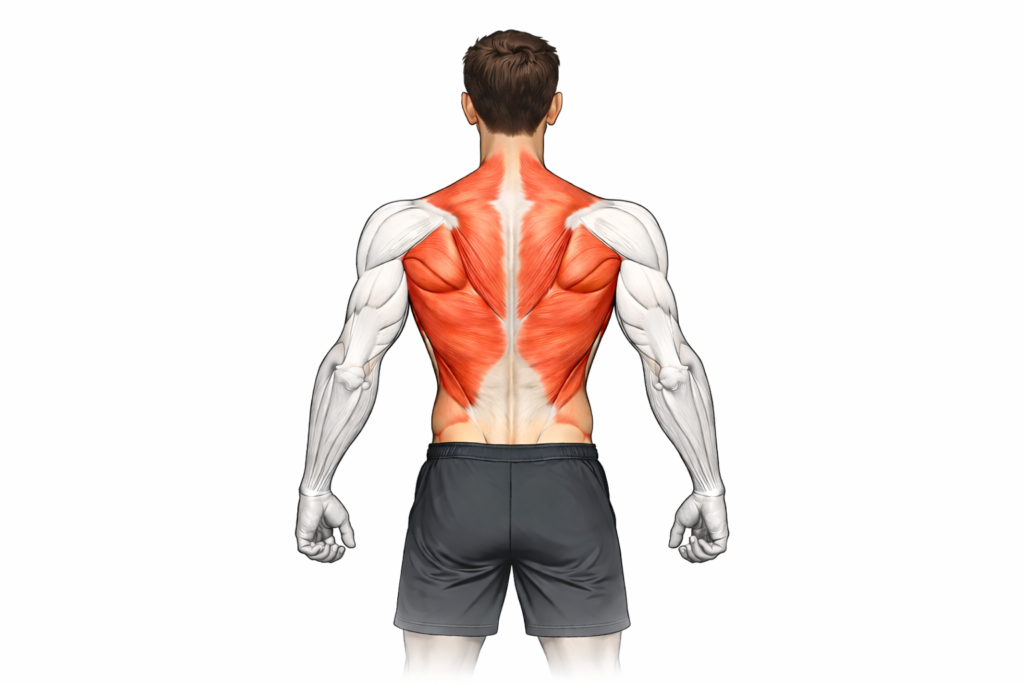
This is something I feel clearly in my own training.
When I start pushing, it is often easier to notice the chest and triceps working.
The sensation is more obvious.
The movement path is also easier to understand because I can see the floor and feel my hands pressing into it.
With pulling, the main muscles are on the back side of the body.
A beginner cannot see them working.
That sounds minor, but it matters.
It is easier to connect with muscles you can feel and visualize clearly.
The lats, for example, are large back muscles that help pull the upper arm downward and inward.
A beginner does not always know how to “find” them.
They end up yanking with the arms, shrugging the shoulders, or kicking the legs.
The body is trying to solve the problem with whatever tools it knows best.
That is one reason pull-ups can feel so awkward at first.
The body is learning where the work should come from.
How I Explain the Lats to Someone Brand New
I usually say this:
Imagine there are strong muscles under your armpits that help drag your upper arms down toward your ribs.
That is not the full anatomy lecture, but it gets the point across.
When those muscles join the movement well, a pull-up starts looking more connected.
When they do not, the arms try to do too much and the shoulders drift into ugly positions.
That is why rows, hangs, and controlled pulling drills often help so much.
They teach the body where the movement is supposed to come from.
No fancy language needed.
Just clearer ownership of the motion.
Body Size Changes the Story Too
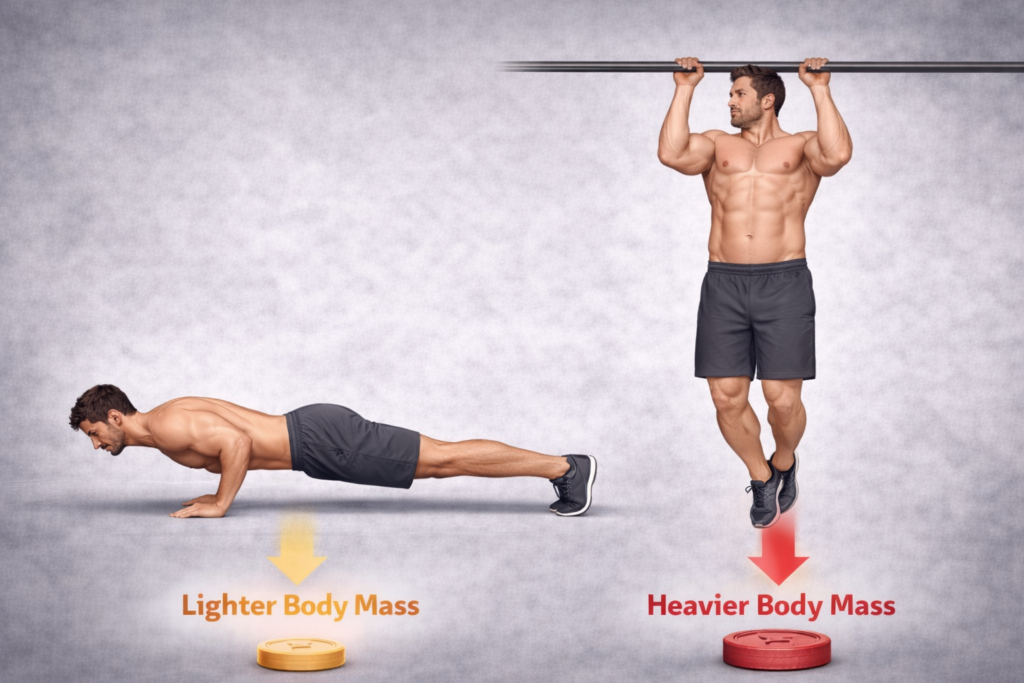
This part matters, and people do not always talk about it honestly.
If I carry more body mass, both exercises can feel harder.
But the effect shows up differently.
In push-ups, extra body mass increases the challenge, especially for the chest, shoulders, triceps, and trunk.
Still, the floor and foot support keep the movement somewhat more manageable.
In pull-ups, extra body mass is often much less forgiving because I am trying to move nearly all of it through the air.
That means body composition, limb length, and muscle distribution can influence how each move feels.
A lighter person with decent pulling strength may pick up pull-ups faster.
A heavier person may still be strong, but the pull-up asks them to move more load through a stricter range.
That does not make them worse.
It just changes the math.
I have seen solid, muscular people breeze through push-ups and still need more time before pull-ups start looking crisp.
There is nothing embarrassing about that.
It is just physics wearing gym clothes.
Arm Length and Limb Proportions Can Make One Move Feel Weird
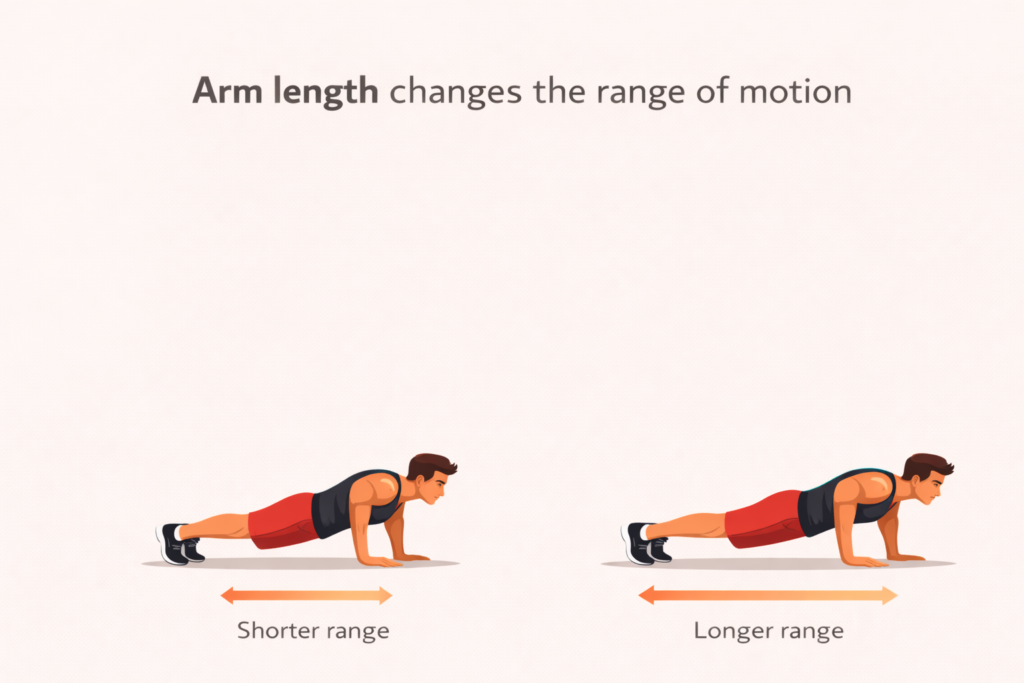
Long arms can change the feel of both exercises.
In push-ups, longer arms may increase the distance the body travels, which can make the movement feel more demanding.
In pull-ups, longer arms can also increase the total path from a dead hang to chin-over-bar.
That means each attempt asks for more range.
Some people also have shoulder structures that make one movement feel natural and the other a little awkward.
This is where comparison gets messy.
Two people can weigh about the same, train with the same effort, and still have very different experiences with push-ups and pull-ups.
That is why I never look at one person doing ten smooth push-ups and assume they should automatically have a clean pull-up.
The body is not a copy-paste machine.
A Simple Way I Think About Proportions
Imagine two people carrying groceries upstairs.
One has compact, sturdy bags with short handles.
The other has longer bags that swing more and sit farther from the body.
Both are carrying groceries.
One job just gets annoying sooner.
That is kind of how limb length can change exercise feel.
Not better.
Not worse.
Just different leverage.
Why Push-Ups Burn in a Different Way Than Pull-Ups
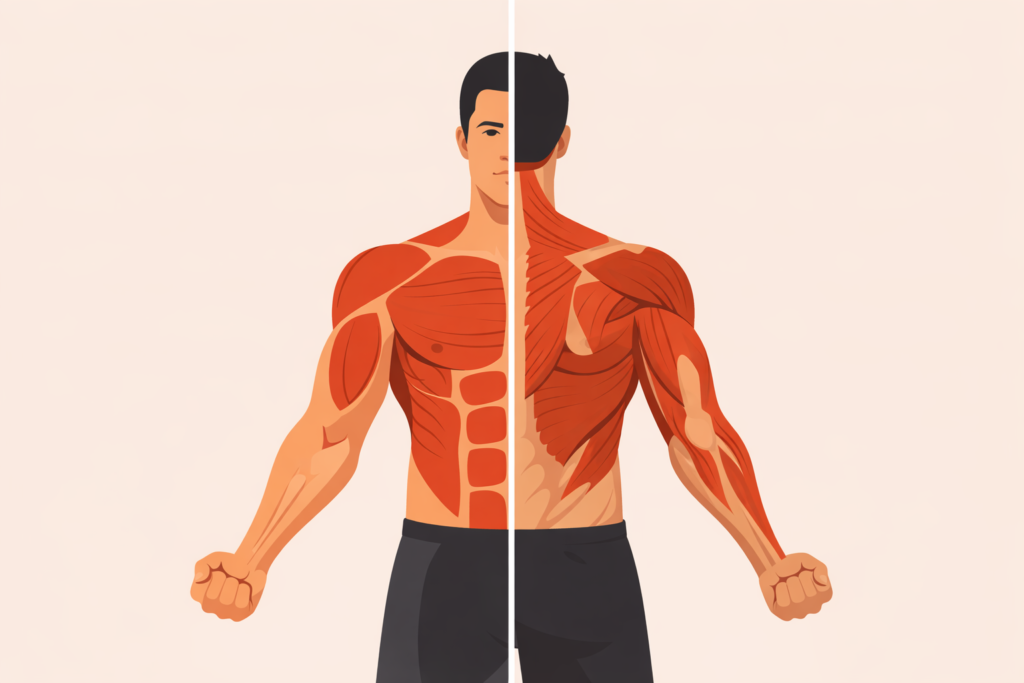
The discomfort profile is very different.
In push-ups, I often feel a growing pressure in the chest, shoulders, and triceps.
The whole front side starts heating up.
The trunk also works hard to stop the body from sagging.
As the effort climbs, the movement usually slows in a fairly predictable way.
In pull-ups, fatigue can show up in more scattered places.
Sometimes it is the forearms first.
Sometimes the biceps.
Sometimes the upper back loses position.
Sometimes the trunk goes loose and the lower body starts drifting around.
That makes pull-ups feel less smooth when fatigue enters the room.
One part gives up, and suddenly the whole rep falls apart.
Push-ups can be tiring.
Pull-ups often feel fragile.
That is a big emotional difference too.
In one, I feel the engine getting hot.
In the other, I feel bolts loosening.
The Starting Position Already Tells You Which One Is More Demanding
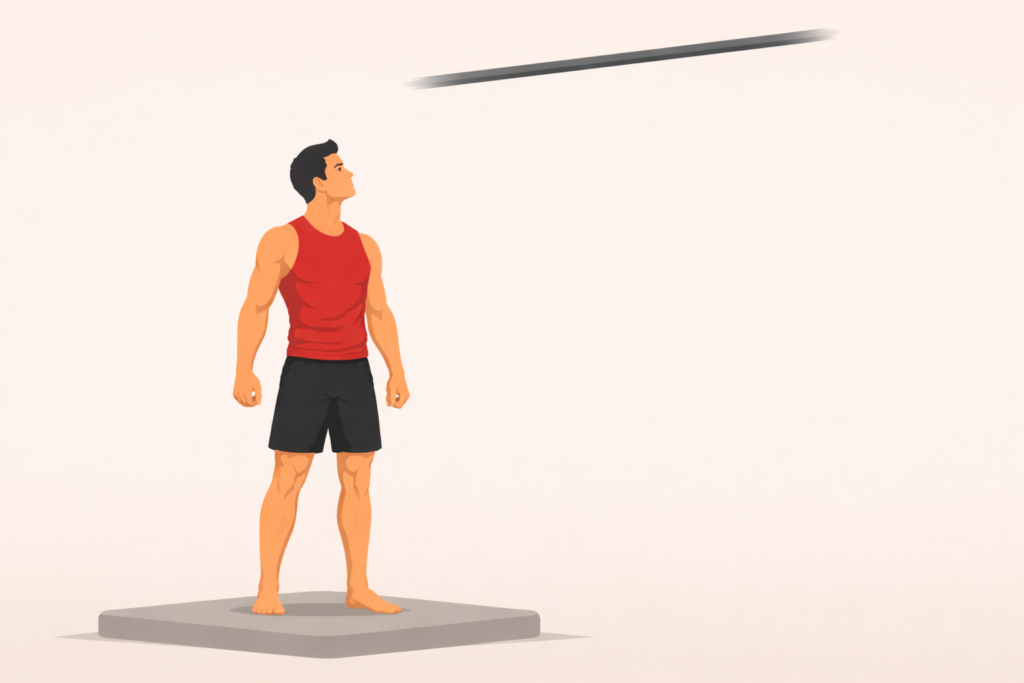
A push-up starts with me supported by the floor.
A pull-up starts with me suspended from a bar.
That alone tells the story.
If the starting position is already challenging, the full exercise will feel much more demanding.
Think about that for a second.
A beginner can usually get into the top of a push-up and hold it for a little while with some coaching.
Hands down.
Body straight.
Look slightly ahead.
Breathe.
That top position is teachable very quickly.
Now place that beginner on a pull-up bar.
Even the hang can be uncomfortable.
Their shoulders may creep up.
Their grip may feel panicky.
Their ribs may flare.
Their legs may swing.
They are not weak in a moral sense.
They are simply missing some very specific ingredients.
That is why the pull-up feels tougher from the opening second.
Why Push-Ups Often Improve Faster in the Beginning
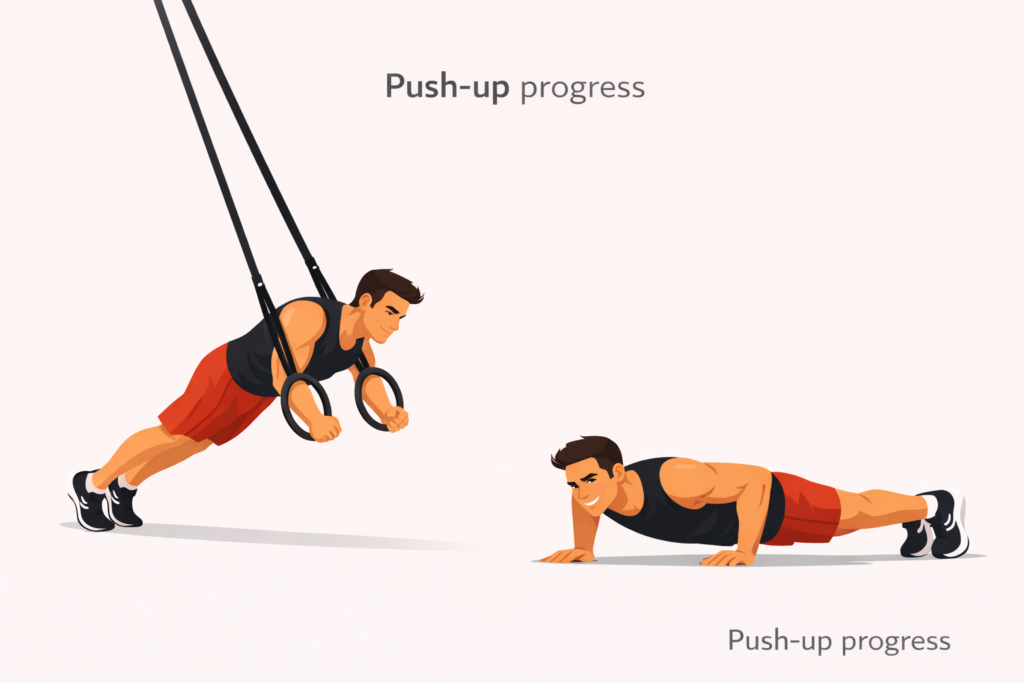
I notice beginners often improve push-ups faster than pull-ups for a few reasons.
The movement is easier to practice more often.
It is easier to scale.
It has less technical friction at the entry level.
It also builds confidence more quickly because visible improvement comes sooner.
That matters.
When someone goes from shaky incline push-ups to solid floor push-ups, they feel progress right away.
Their body line improves.
Their depth gets better.
Their pressing becomes smoother.
With pull-ups, the early improvement can be quieter.
A hang becomes steadier.
A shoulder position becomes cleaner.
A lowering portion becomes more controlled.
A body row feels stronger.
Those are real gains, but they do not always look as exciting as a full pull-up.
So beginners sometimes think nothing is happening when actually the foundation is finally being built.
The Early Pull-Up Journey Is Often Invisible
This is where patience matters, though not in a cheesy poster-on-the-wall way.
It matters because the body needs time to become organized.
I can feel the difference when a beginner goes from a loose hang to a stable one.
Their shoulders sit better.
Their trunk stops wobbling.
Their hands grip the bar without panic.
That may not look flashy, but it changes the entire future of the exercise.
It is like learning to stay upright on a bicycle before trying to race it.
Are Push-Ups More “Functional” Because More People Can Do Them?

I do not like using that word lazily, because it gets thrown around like confetti.
Still, I understand what people mean.
Push-ups are often more accessible in general life.
They require no bar.
They can be adjusted almost anywhere.
They train pressing strength, trunk control, and body awareness in a way that transfers nicely to general fitness.
Pull-ups are also useful, but they need equipment and a level of strength that many people do not begin with.
That does not make push-ups more valuable in every context.
It just makes them more available.
And availability matters.
The best exercise in the world does not help much if a person cannot currently do it, scale it, or practice it safely.
So yes, push-ups often fit into daily training more easily.
That is part of why they become the first bodyweight milestone for so many people.
Where Each Exercise Hits the Body Most
Here is the simple version.
Push-ups mainly challenge:
- The chest, which helps press the body away from the floor
- The triceps, which straighten the elbows
- The front shoulders, which help guide the pressing action
- The trunk, which keeps the body from folding in the middle
- The glutes and legs, which help maintain body position
Pull-ups mainly challenge:
- The lats, which help pull the upper arms down and bring the body upward
- The upper back, which helps control the shoulder blades
- The biceps, which bend the elbows
- The forearms and hands, which keep the grip locked in
- The trunk, which stops the body from swinging into chaos
That overlap in trunk work is important.
Both movements are full-body in a real sense.
They may look like arm exercises from a distance, but once I do them cleanly, I feel that the whole body has to cooperate.
Why Grip Strength Can Turn Pull-Ups Into a Different Sport
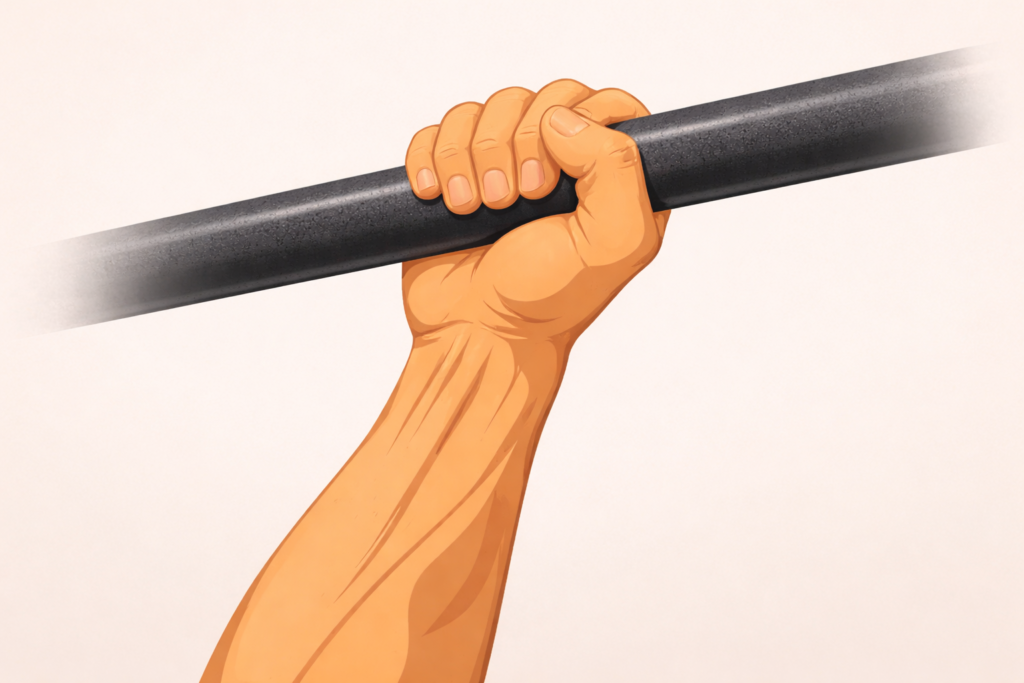
Grip is one of those hidden gatekeepers.
A lot of beginners think they fail pull-ups because their back is weak.
Sometimes that is true.
Sometimes the hands and forearms are the first thing waving the white flag.
If my grip is weak, I never get a fair chance to use the rest of my pulling muscles properly.
That changes the whole feel of the movement.
The bar starts feeling like the main enemy instead of just the place where the exercise happens.
Push-ups do not usually create that problem.
Yes, the wrists and hands matter in push-ups.
No doubt.
But most people can still express pressing strength without their hands being the major limiting factor.
In pull-ups, grip can become the bottleneck immediately.
That is a big reason the exercise feels harsher.
Why Pull-Ups Demand More Shoulder Control Than Most Expect
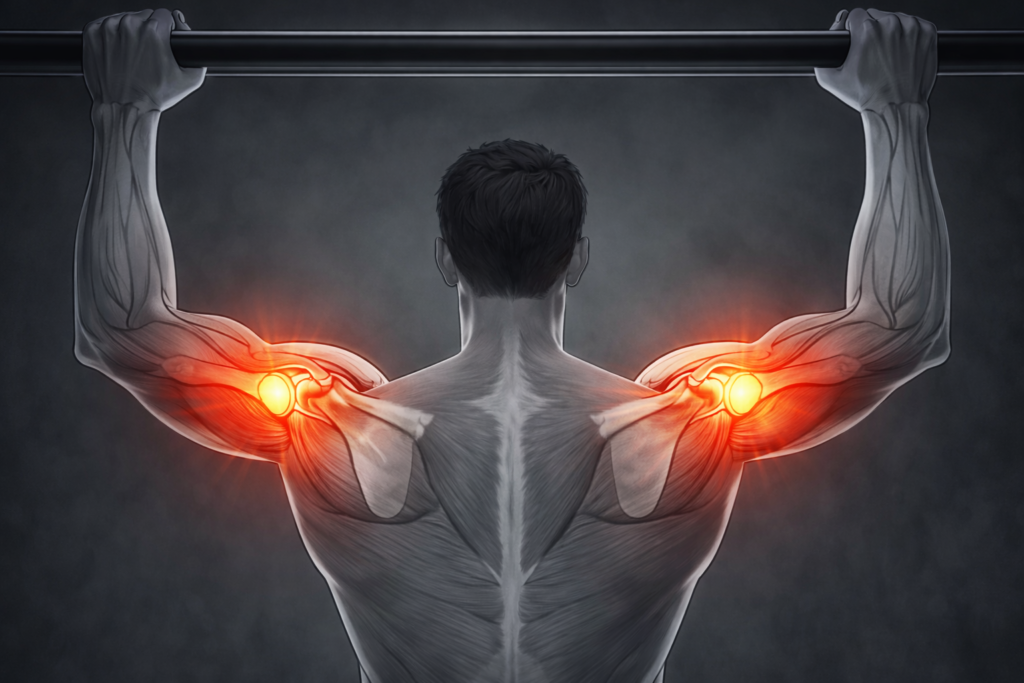
Shoulder comfort can make or break both exercises, but it often shows up more sharply in pull-ups.
When I hang from a bar, the shoulder joint sits in a loaded overhead position.
That means the surrounding muscles need to help keep everything centered and controlled.
If the shoulders are stiff, weak in certain angles, or poorly coordinated, the pull-up can feel awkward fast.
Push-ups usually keep the shoulders in a more familiar range for beginners.
There is still work to do, but the floor gives the body more reference points.
The hanging position removes some of that comfort.
This is why a person can say, “Push-ups feel okay, but pull-ups feel weird on my shoulders.”
That is not unusual at all.
It is a clue that overhead control and hanging tolerance need more attention.
A Beginner-Friendly Way to Build Shoulder Familiarity
I like starting with simple hangs, supported hangs, and easy row variations.
I also like teaching what it means to keep the shoulders active without turning the neck into a block of stone.
For someone brand new, I may have them hold a bar and simply feel the difference between collapsing into the shoulders and gently creating space through the upper back.
That tiny shift can change the whole feel of pulling.
Why Push-Ups Sometimes Feel Harder Than Pull-Ups for Certain People

Now here is the twist.
Not everybody experiences push-ups as the easier movement.
If someone has a strong back from climbing, gymnastics, or years of pulling work, pull-ups may feel more natural.
If someone has wrist discomfort on the floor, poor pressing mechanics, or limited chest and shoulder strength, push-ups can feel surprisingly rough.
I have met people who can knock out solid pull-ups but look awkward in push-ups because their trunk sags, elbows drift poorly, or they have never learned how to organize a clean press from the floor.
So while push-ups are often easier for the average beginner, that is not a universal law.
It is a trend.
Not a rule carved into stone.
When Push-Ups Become the More Annoying Move
I especially notice this with people who have:
- Strong pulling backgrounds from climbing or bar work
- Sensitive wrists when the hands are flat on the floor
- Limited pressing strength through the chest and triceps
- Poor control of rib and hip position during floor exercises
- A habit of rushing the lowering part and losing shape
For them, a push-up can feel clumsy and uncomfortable while pull-ups feel more intuitive.
That does not mean push-ups are secretly harder for everyone.
It means context matters more than gym folklore.
The Trunk Has a Bigger Job Than Most Beginners Realize
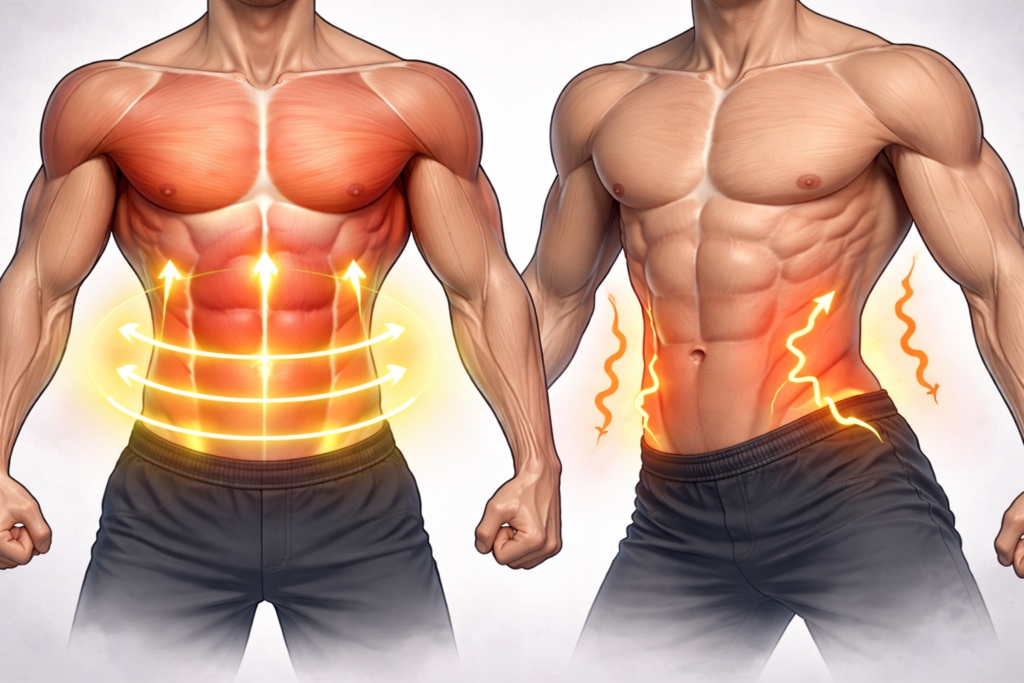
People often think of push-ups as chest and arms.
They think of pull-ups as back and arms.
That is only half the story.
In both movements, the trunk acts like the connector keeping force from leaking.
In a push-up, if my midsection goes soft, my hips sag and the movement becomes sloppy.
In a pull-up, if my trunk loses tension, my legs swing, my ribs flare, and the pulling path gets messier.
That trunk demand is one reason both movements feel harder when done cleanly than when done casually.
The body is not just moving.
It is transmitting force.
That sounds technical, but you can feel it immediately.
A tight, well-organized body moves better.
A loose body feels heavier and less coordinated.
What “Keeping the Trunk Tight” Really Means
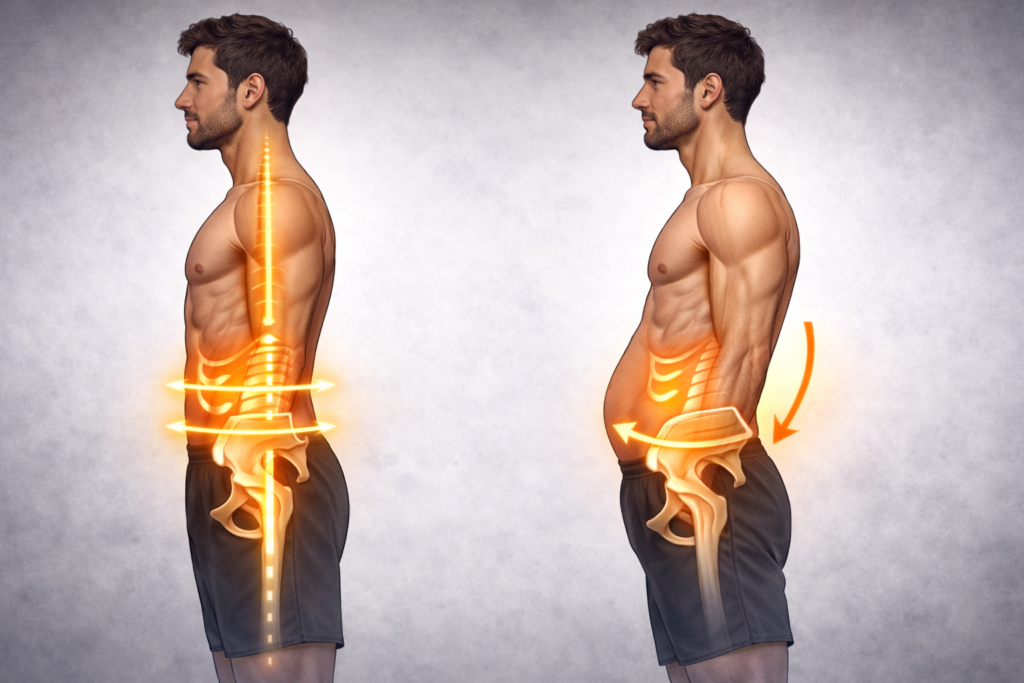
It does not mean squeezing every muscle until your soul leaves your body.
It means creating enough tension through the midsection that your ribs and pelvis stay in a useful position while the arms do their job.
In a push-up, that helps me move as one unit.
In a pull-up, that helps me stop swinging and pull in a straighter line.
A beginner usually understands this better when I say, “Do not let your middle hang like a hammock.”
The Floor Helps You Learn Push-Ups Faster
This point is underrated.
The floor gives instant feedback.
If my hips drop in a push-up, I can feel it.
If my chest is nowhere near the floor, I can see it.
If my hands are placed terribly, the position feels off almost right away.
That kind of feedback speeds up learning.
A pull-up bar gives feedback too, but it is harsher and less informative to beginners.
They just feel stuck.
Stuck is not always a clear teacher.
The floor almost coaches you.
The bar mostly exposes you.
That is another reason push-ups tend to improve faster at first.
Why Pull-Ups Require More Trust in Your Own Body

This sounds almost philosophical, but it is very physical.
When I am under a push-up, I still feel close to the ground.
If the rep falls apart, I am already near the floor.
A pull-up asks me to suspend myself and move upward with less external support.
That changes how safe the exercise feels to many beginners.
Even if they do not say it out loud, there is often a bit of hesitation.
Hanging in space and pulling your whole body up just feels more serious.
That small sense of uncertainty can affect performance too.
A body that does not feel secure tends to tense up in unhelpful ways.
So when someone says, “Pull-ups feel way harder,” part of what they are describing is not just muscle demand.
It is also the experience of having less support and less certainty.
A Beginner-Friendly Push-Up and Pull-Up Progression
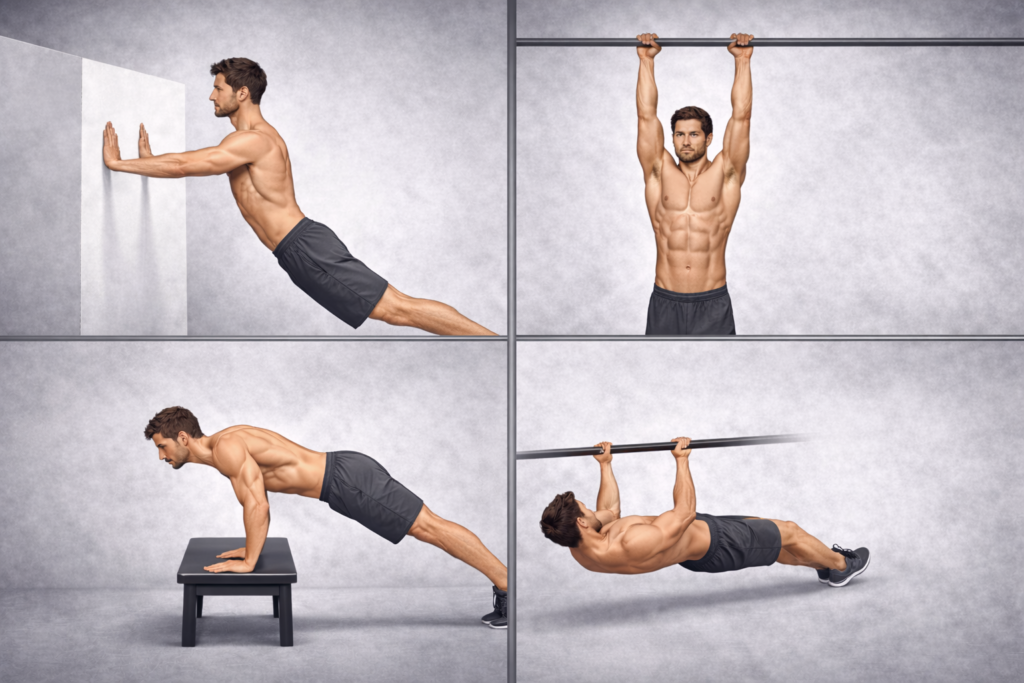
For pushing, I often use something like this:
- Wall push-up if the floor version is too heavy
- Bench or box push-up once body line improves
- Floor push-up when control is there
- Feet-elevated push-up later when the regular floor version looks clean
For pulling, I often use something like this:
- Dead hangs to get comfortable with the bar
- Active hangs to teach shoulder connection
- Body rows on a low bar or sturdy setup
- Controlled lowering from the top if the person can safely get there
- Full pull-up attempts once the pieces finally start cooperating
Why People Often Respect Pull-Ups More
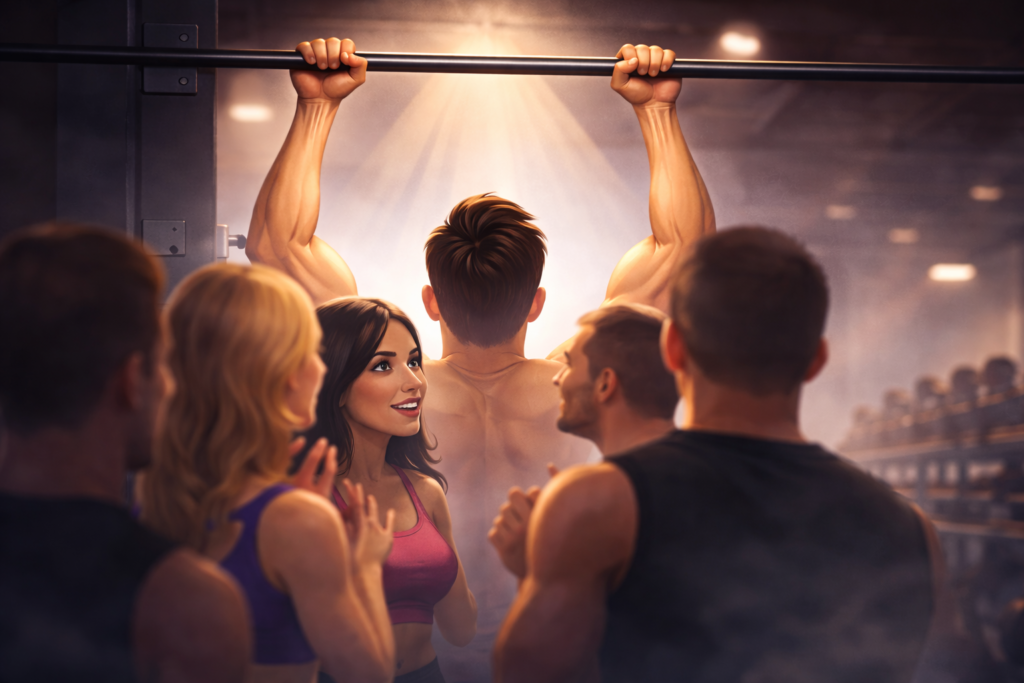
Let’s be honest.
Pull-ups have a reputation.
People see someone pull their body over a bar and immediately think, “Okay, that person is strong.”
There is a reason for that.
The movement is less accessible, more demanding for many bodies, and harder to fake cleanly.
Push-ups are more common, so people underestimate them.
That is a perception problem, not a movement problem.
A crisp, deep, controlled push-up is a very respectable display of strength and control.
It just does not get the same dramatic entrance.
There, I almost used that word and caught myself.
Let’s say it does not get the same cinematic entrance.
That is better.
In the End, Are Push-Ups Easier Than Pull-Ups?
In the end, push-ups are usually easier for beginners.
The floor helps.
The load is distributed in a friendlier way.
Pull-ups demand more strength, more grip, and more coordination.
But “easy” depends on body size, limb length, training history, and technique.
A sloppy push-up can feel easy.
A strict push-up can humble people fast.
Pull-ups may feel impossible at first.
Then suddenly the body learns how to connect everything.
Different exercises.
Different questions for the body.