
Ab wheel rollouts look amazing when someone does them right.
Smooth, controlled, superhero-core vibes.
But the moment your lower back starts to scream halfway down, that “superhero” energy turns into “please let me survive this rep.”
So, is it normal to feel lower back pain during rollouts?
Technically, no — but it’s extremely common.
And the reason it happens says a lot about how your body handles tension, not how strong your abs are.
💬 Quick check: is it actually normal if your lower back burns during rollouts?Yeah.
Feeling your lower back light up during ab wheel rollouts happens to almost everyone at some point.
But it’s not a badge of honor, and it’s definitely not something to shrug off forever.
The good news?
It’s fixable.
Most of the time, it’s just your body reminding you that strength without control doesn’t mean much.
Quick tip: Next time you roll out, keep that thought in your back pocket — and maybe, just maybe, keep your hips a little higher.
When the Ab Wheel Turns Into a Trap
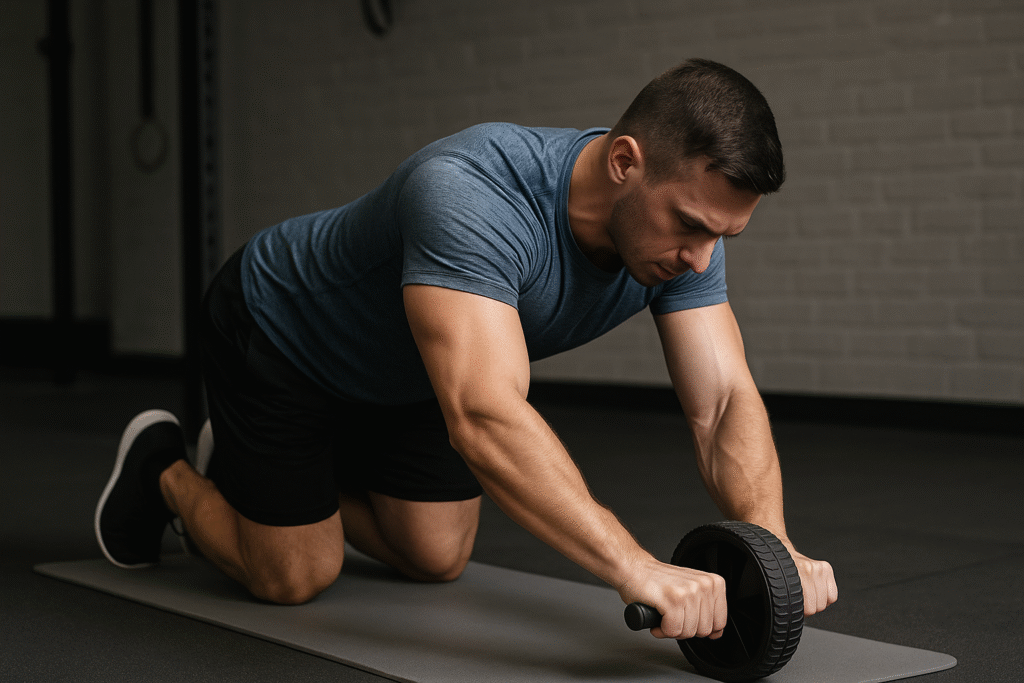
The ab wheel is sneaky.
It looks so simple you think, how hard could it be?
Then you try it, and the next day you’re walking like you slept in a car seat for twelve hours.
Here’s what usually happens.
You roll out.
At first, your abs handle it fine.
But the farther you go, the more your body wants to cheat — your hips drop a little, your abs stop bracing, and boom, your lower back starts taking over.
The pain isn’t random.
It’s your body telling you, “Hey genius, we’re out of core strength. We’re compensating now.”
And that’s how a core exercise becomes a back exercise — in the worst way possible.
Why Your Back Takes the Bullet
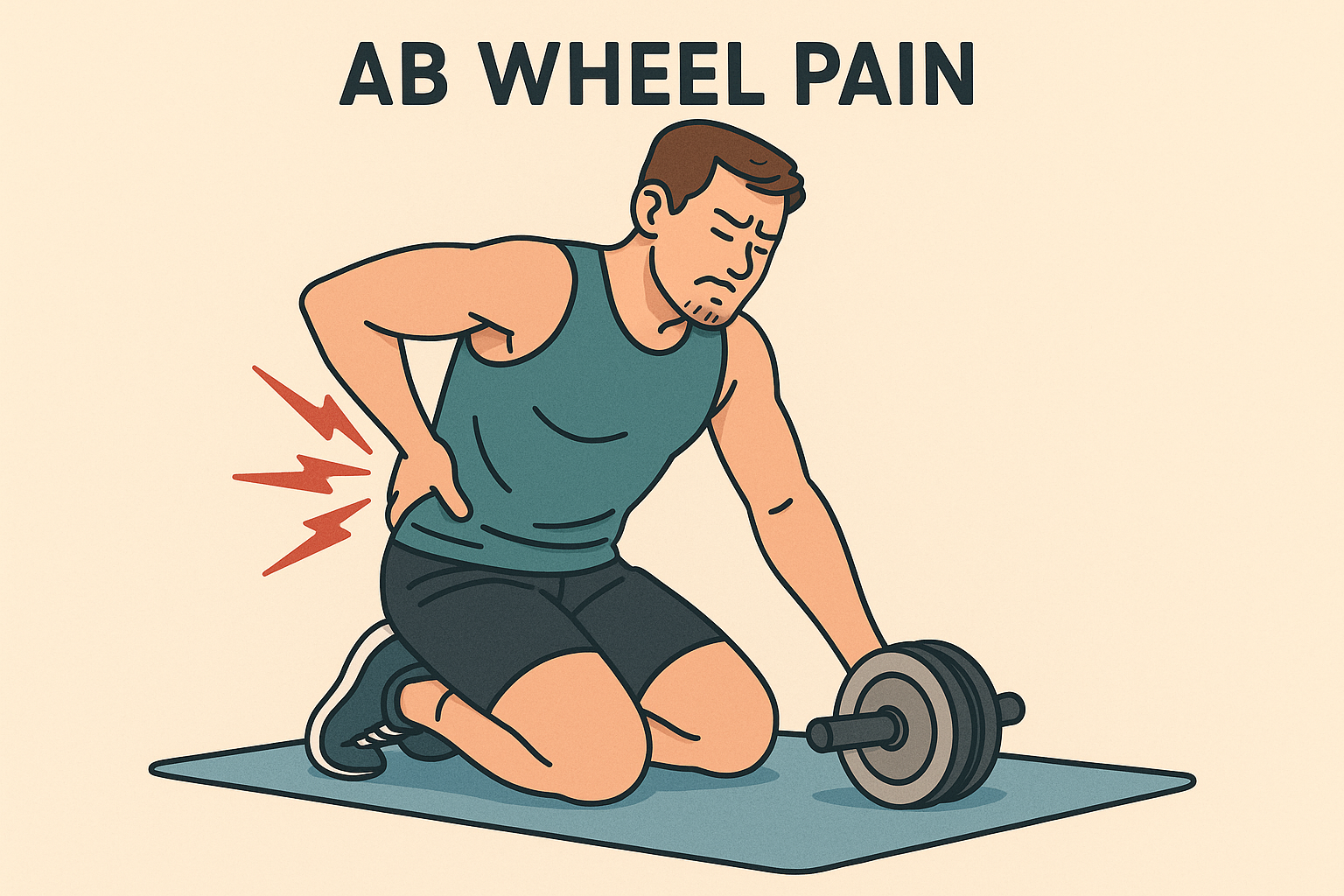
There’s no mystery muscle you’ve never heard of secretly snapping in your spine.
What’s happening is simple physics.
Your abs are supposed to resist extension — that arching motion when your ribcage drifts away from your pelvis.
During an ab rollout, your abs are like a front suspension system holding everything together.
But if that system gives up mid-rep, your spine becomes the fallback.
Instead of your abs absorbing tension, your lower back does.
And that’s when the discomfort starts — not because your back is weak, but because it’s doing a job it wasn’t hired for.
You wouldn’t use your lower back to catch a falling barbell, right?
Same logic here.
The Real Culprits Behind the Pain
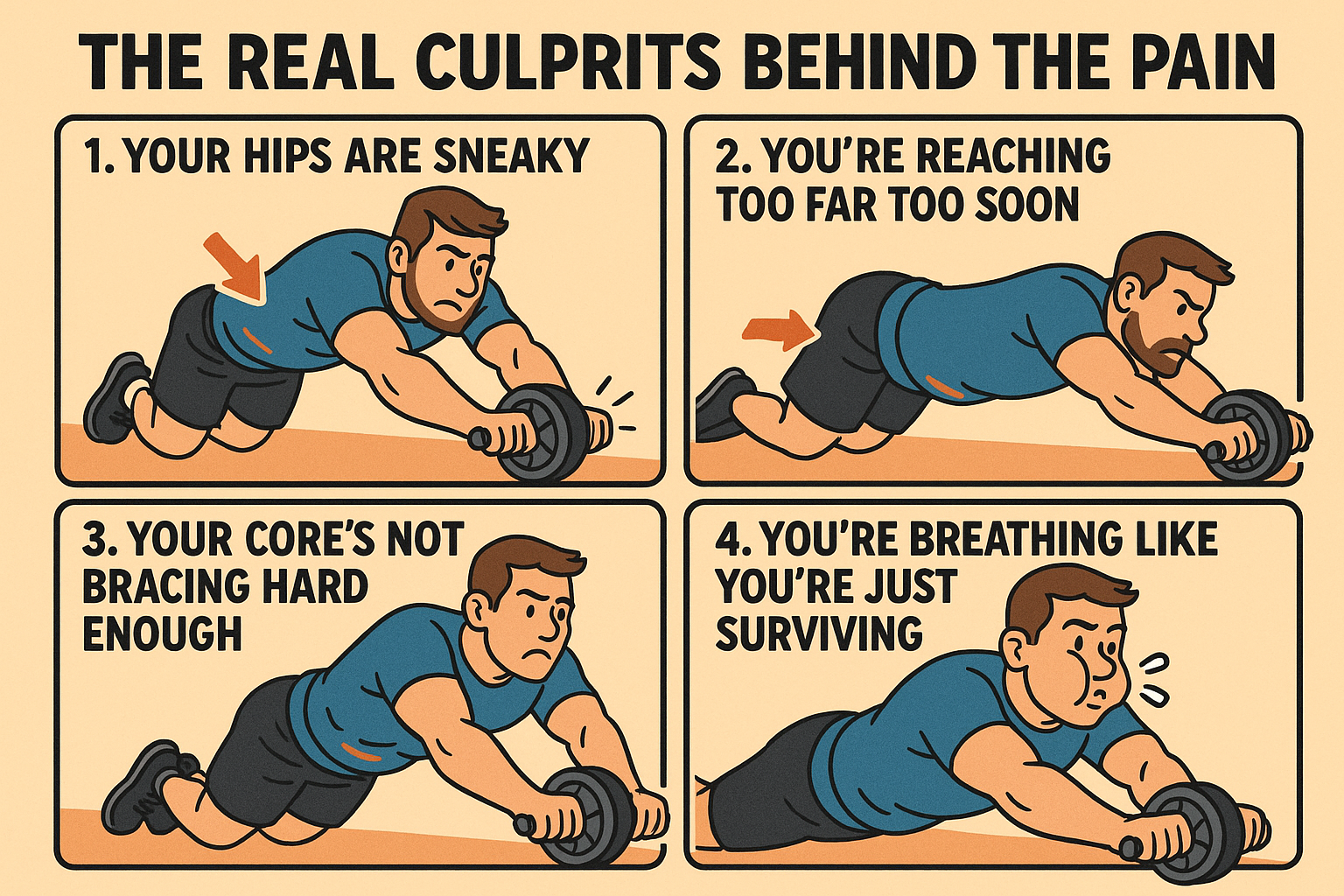
1. Your Hips Are Sneaky
You start rolling, and your hips decide to drop just a little.
That’s the first betrayal.
When your hips dip, your abs lose leverage, and your spine hyperextends to make up for it.
It’s like building a bridge with one beam missing — something’s going to crack.
2. You’re Reaching Too Far Too Soon
Everyone wants that full extension because it looks badass.
But if your abs can’t hold it, your lower back’s the one cashing the check.
The farther you go, the more leverage the wheel has against you.
3. Your Core’s Not Bracing Hard Enough
Rolling out isn’t about moving your arms — it’s about locking your torso like a plank that slides.
If your abs don’t engage before you move, you’re already late to the party.
By the time you realize it, your back’s already doing the work.
4. You’re Breathing Like You’re Just Surviving
Ever notice how you hold your breath mid-rep?
That’s not bracing — that’s panic.
Real bracing means exhaling slightly as you roll out, tightening everything from your ribs to your hips.
If you’re just holding air, you’re building pressure in all the wrong places.
How to Tell What’s Actually Going On
Here’s the quick mental replay.
Feels like tightness that fades after the set?
Probably just fatigue.
Feels like a pinch, pull, or sharp ache that lingers after the workout?
That’s your back saying “we’re done here.”
Feels fine during but stiff the next morning?
You probably let your hips drop late in the set.
This isn’t about guilt.
It’s about awareness.
The more you know how the pain behaves, the faster you’ll learn what your body’s actually telling you.
What Most People Miss About the Ab Wheel
The ab wheel isn’t just a “core exercise.”
It’s a stability test disguised as a toy.
If your core, glutes, and lats aren’t working together, the wheel exposes it instantly.
That’s why some people feel it in their abs and others feel it in their lower back — same move, different coordination.
And once you understand that, the exercise becomes less about proving something and more about control.
What Helps — Without Turning This Into a Tutorial
I won’t give you a step-by-step guide, but here’s what tends to save people’s backs.
- Start from a shorter range.
If you can’t roll all the way out yet, don’t. Half reps done tight are better than full reps done sloppy. - Engage your core like you’re about to take a gut punch.
That’s not a metaphor — actually brace like that. - Keep your hips and shoulders moving together, not separately.
If your hips lag behind, your back gets the bill. - Use your glutes a little.
A light squeeze helps lock your pelvis in place.
Those small cues are the difference between “my abs are on fire” and “why does my spine hate me?”
What Happens When You Get It Right
When the movement finally clicks, it’s night and day.
Your lower back goes quiet.
The tension shifts to your midsection — deep, almost like your abs are hugging your ribs from the inside.
You stop feeling like you’re falling forward and start feeling like you’re controlling the fall.
It’s weirdly addictive.
Once your abs learn to do their job, you start to crave that clean rollout where your body feels like one single piece of steel.
That’s when you know you’ve got it.
If You’re Still Getting Pain After Fixing Form
Sometimes, even after dialing in the cues, the ache sticks around.
That’s your sign to regress a bit.
Try:
- Using a band or wall stop to limit how far you roll.
- Doing rollouts from a standing incline or elevated surface.
- Mixing in anti-extension work like planks or dead bugs to rebuild control.
The idea isn’t to avoid the wheel forever — it’s to earn it back.
A Note on Real Pain
If you ever feel sharp, radiating pain — not the dull post-workout kind but the real stuff that makes you wince — stop.
That’s not muscle fatigue; that’s stress in your lumbar tissues.
Pain that lasts longer than a day or shoots down your leg is your body’s version of a cease-and-desist letter.
Respect it.
You can always rebuild.
But you can’t rebuild what you keep re-injuring.
And If You Still Doubt It
Do a rollout next to a mirror.
Watch your hips, your spine, your breathing.
You’ll see it.
That moment where the form starts to slip — it’s tiny, but it’s there.
Catch it once, and you’ll never unsee it again.
And that’s when you realize: the ab wheel isn’t punishing you.
It’s teaching you how to move right.