Picture this.
I’m in a crowded gym corner that’s basically the “miscellaneous suffering” zone.
A dip station.
A bench that wobbles like it has anxiety.
A wall.
A floor.
And me, staring at my arms like, “Okay, triceps, today you’re either going to cooperate or you’re going to file a complaint.”
That’s the mood this list was built in.
Not theory.
Just pressure.
And the truth about what actually works.
How This Bodyweight Triceps Ranking Actually Works
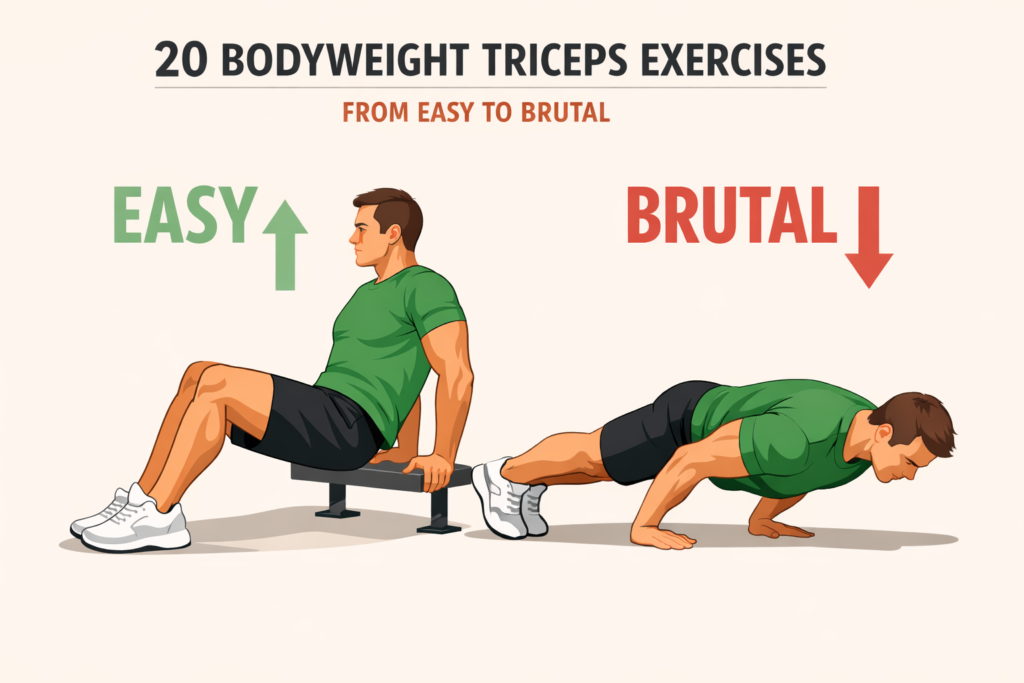
This list goes from “you can learn it in five minutes” to “this will make you negotiate with the universe.”
The ranking is mostly about leverage.
Leverage is just how hard gravity can bully you in a certain position.
When your hands are close to your body and your torso is upright, life is usually nicer.
When your body is stretched long, your shoulders are more flexed overhead, and your triceps are forced to work in a weak position, things get spicy fast.
Stability also matters.
A wall is stable.
The floor is stable.
Rings move like they’re trying to escape.
That instability doesn’t just feel harder, it literally forces your triceps to “brace” while they push, which cranks up the effort.
Quick Triceps Basics
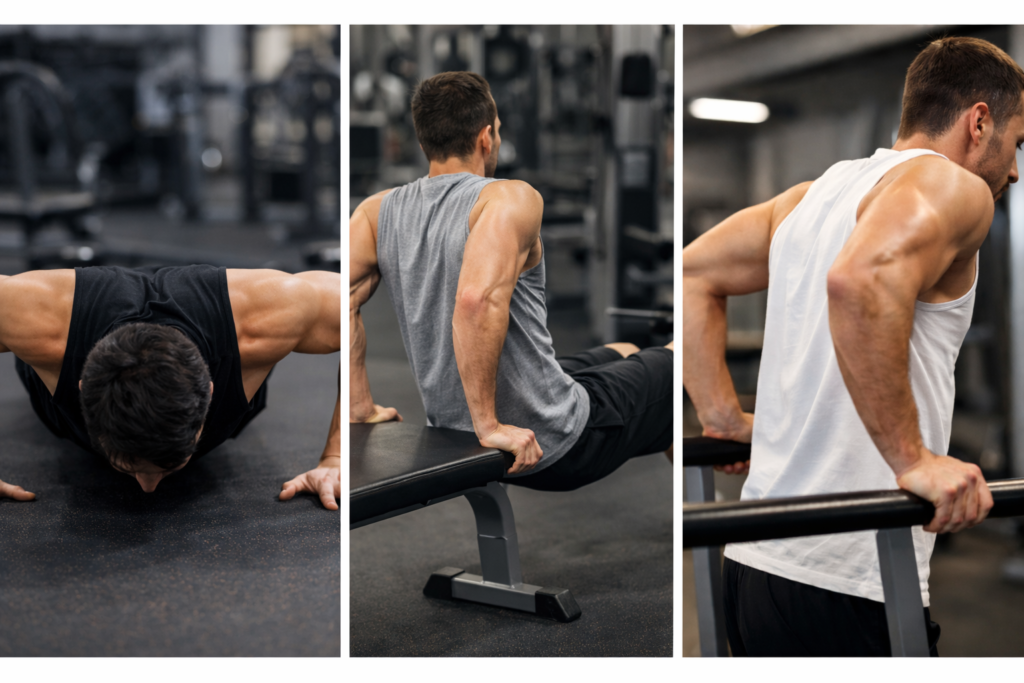
Your triceps are the muscles on the back of your upper arm.
They straighten your elbow.
Any time you go from a bent elbow to a straight elbow under resistance, the triceps are doing the job.
One of the triceps heads also crosses the shoulder, which matters a lot.
That’s why movements with your arms overhead can feel like your triceps are getting stretched like a rubber band.
That stretch can be useful, but it can also feel like your elbows are sending you a “please stop” email.
Pain in the joint is not the goal.
Work in the muscle is the goal.
Bodyweight Triceps Setup Rules (The Stuff That Ruins a Set Without You Noticing)
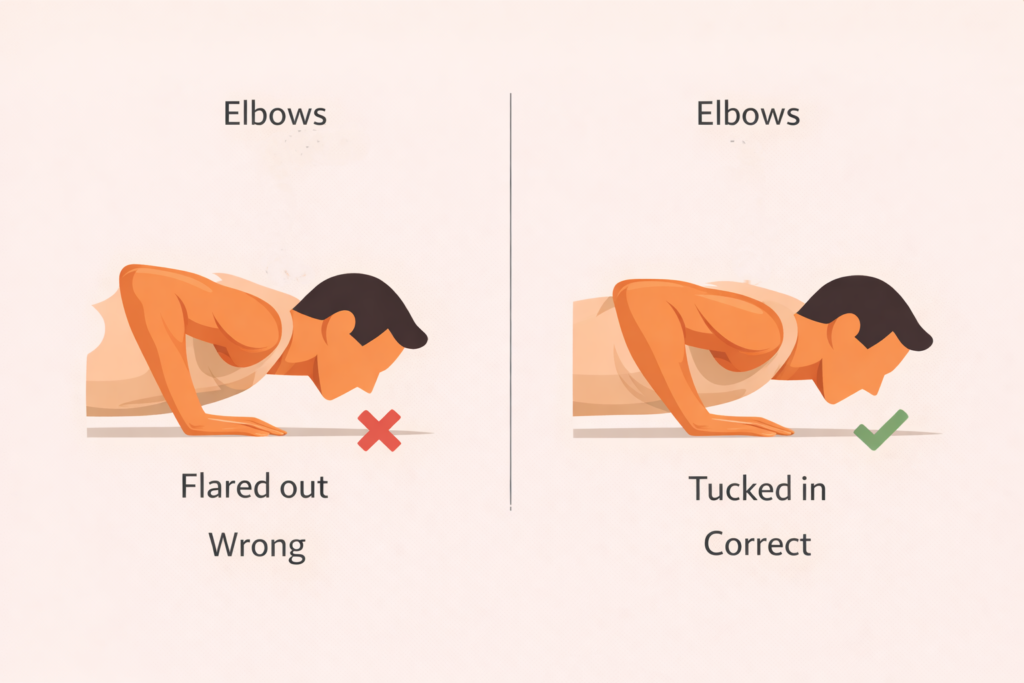
Elbows should usually track slightly in, not flared wide like chicken wings.
Wrists should feel stacked under your palm, not folded back like you’re trying to text during a push-up.
Shoulders should feel “down and stable,” not shrugged up into your ears.
Speed should look controlled, because bouncing off the bottom turns it into a shoulder-and-elbow lottery.
If something feels sharp in the elbow, I switch the variation, change the angle, slow the tempo, or cut the range a bit.
That’s not weakness.
That’s just being smart enough to keep training tomorrow.
How Fast, How Many, and How Long to Rest (So Your Triceps Actually Work)
Most of these work beautifully with a simple tempo like 3-1-1.
That means 3 seconds down, 1 second pause, 1 second up.
If you go too fast, your joints take the bill.
If you go controlled, your triceps pay the bill, which is what we want.
For hypertrophy-style training, I like 3–5 sets of 8–15 reps with 60–120 seconds rest.
For the brutal end of this list, reps might drop to 3–8, and rest might creep to 2–3 minutes because your nervous system will be busy writing poems about fatigue.
Bodyweight Triceps Exercises Ranked from Easiest to Most Brutal
1) Wall Triceps Press (Very Easy, Very Learnable)
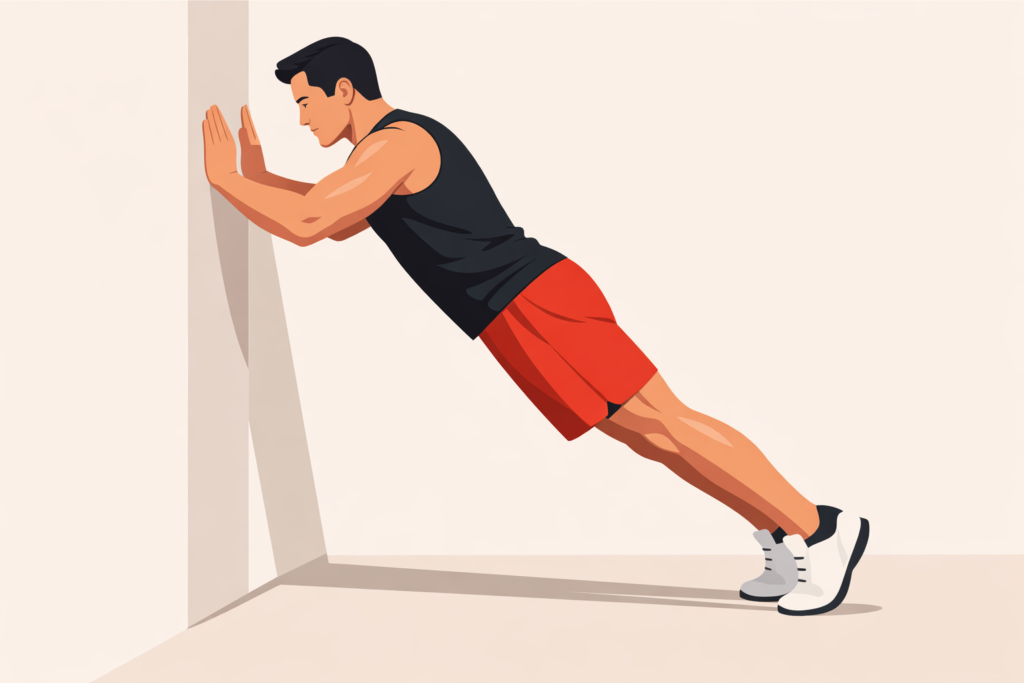
Stand facing a wall.
Put your palms on the wall at shoulder height, hands about shoulder-width.
Bend your elbows and let your forehead move toward the wall, then press back to straight arms.
Keep your body stiff like a plank, because if your hips sag you’ll turn it into a weird standing push-up thing.
I use this when elbows feel cranky, because the angle is gentle and the loading is light.
A clean start looks like 3 sets of 15 reps,2 seconds down,1 second up, 45 seconds rest, and it feels like a warm handshake for your triceps.
2) Incline Close-Grip Push-Up (Easy, But You’ll Feel It)
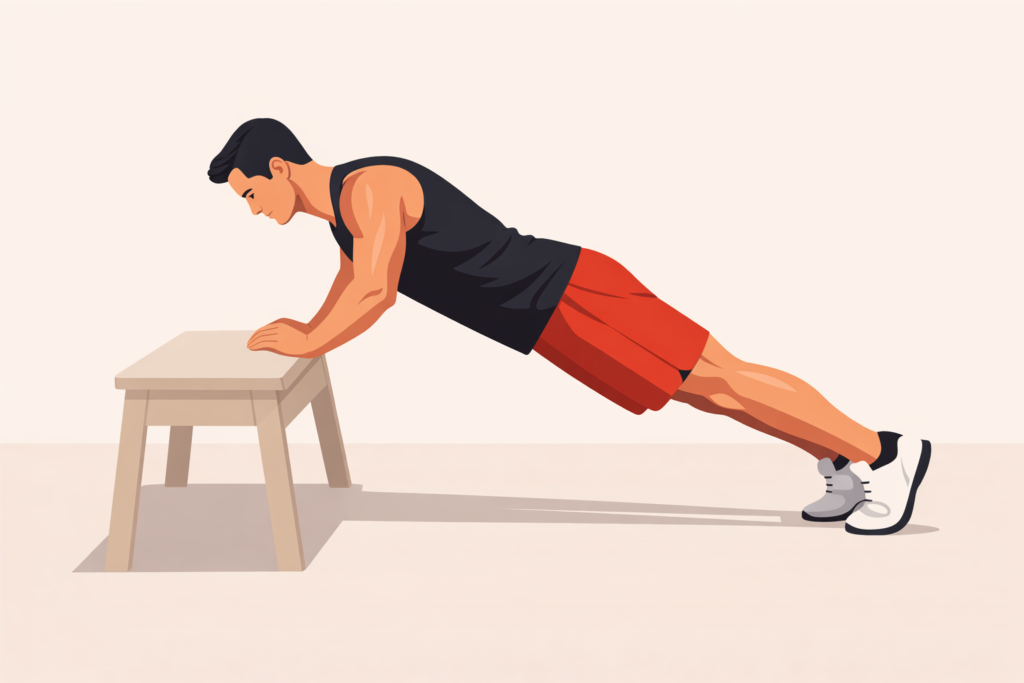
Hands go on a bench, couch, or sturdy table.
Hands are closer than normal push-ups, but not touching, because you still want stable wrists.
Lower your chest toward the edge, elbows drifting back rather than flaring out.
Press up and think “straighten elbows hard” at the top without locking your shoulders forward.
A session that’s oddly effective is 4 sets of 12, tempo 3-1-1, rest 75 seconds, and by the last set the back of your arms starts to feel thick and hot.
3) Knee Close-Grip Push-Up (Beginner-Friendly on the Floor)
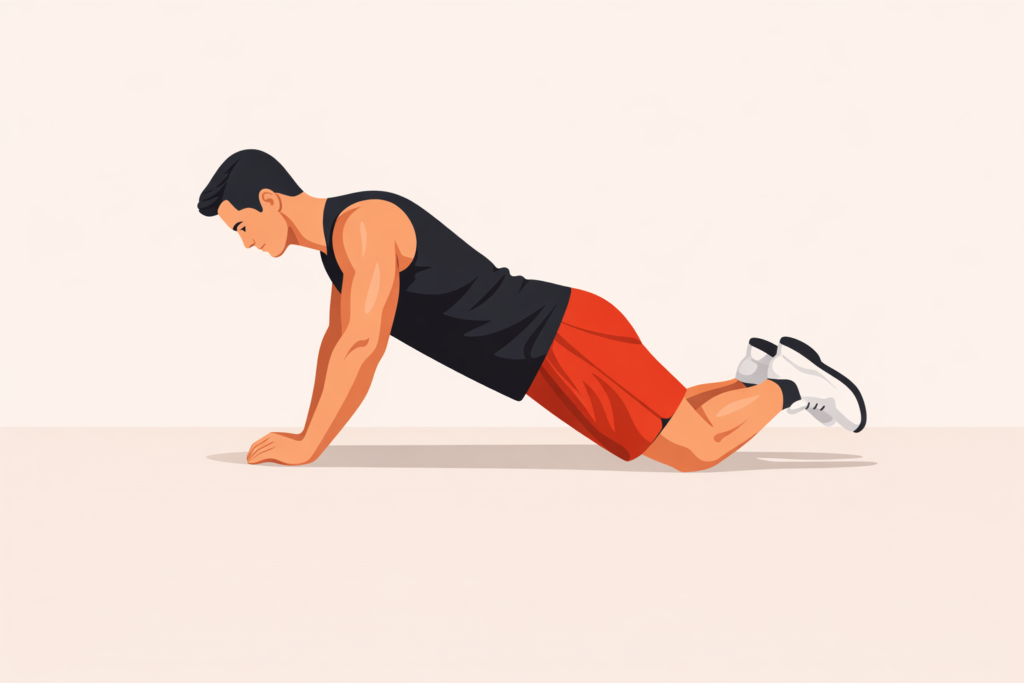
Knees down, body in a straight line from knees to head.
Hands closer than shoulder width.
Lower slow, pause lightly at the bottom, then press up.
If your elbows drift out wide, the load shifts and the triceps stop being the main character.
I like 3 sets of 10–14 with 90 seconds rest, and it feels like your triceps are doing honest work without drama.
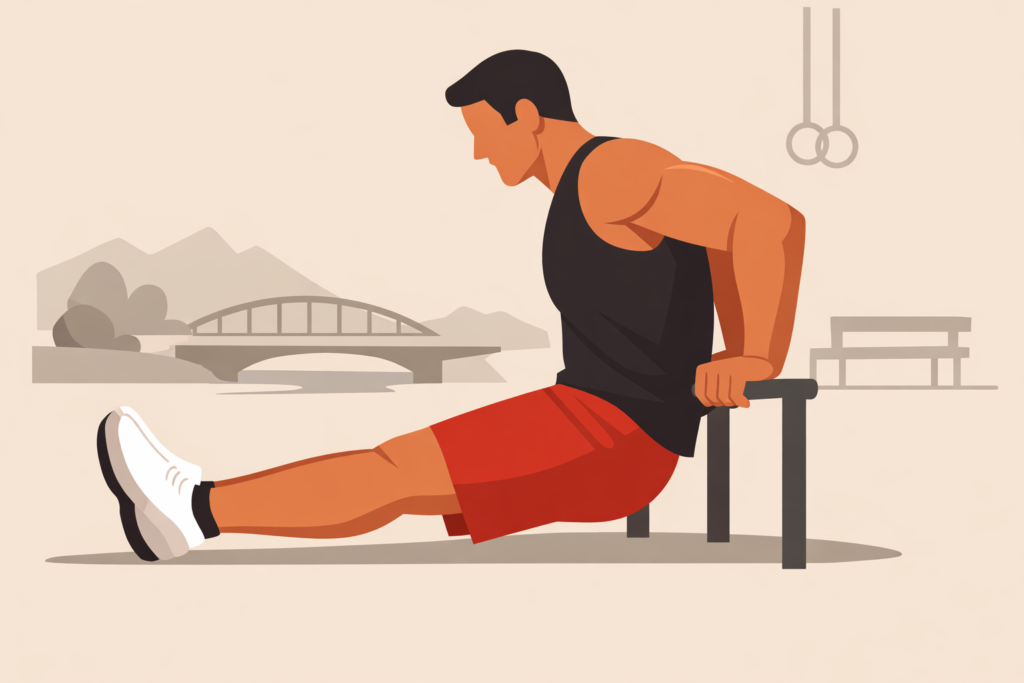
4) Bench/Box Triceps Dip (Easy, But Watch the Shoulders)
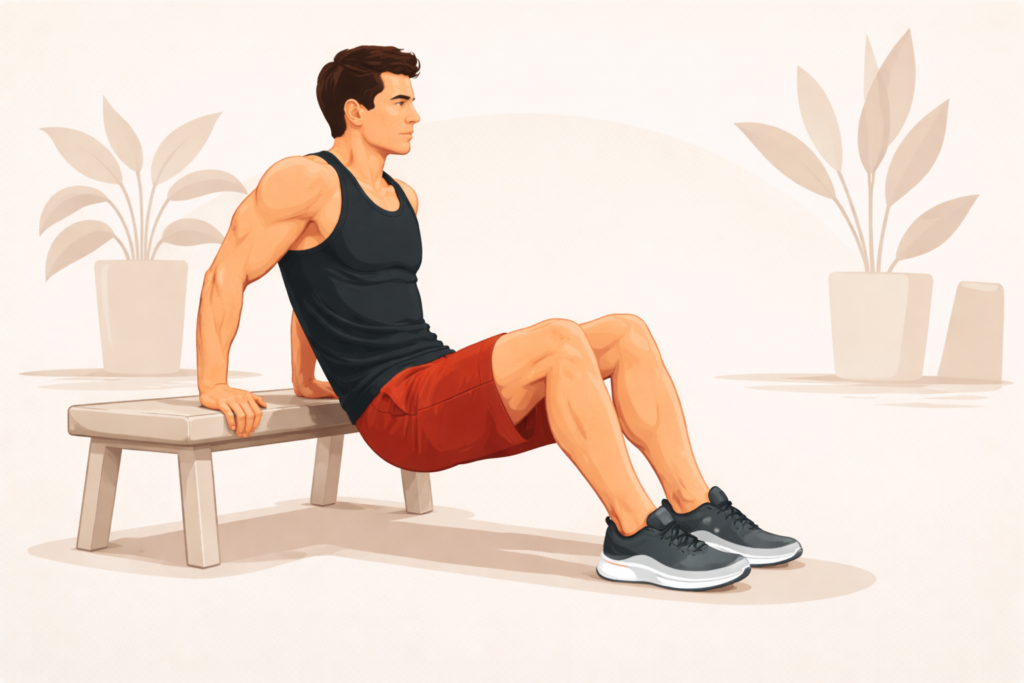
Hands on a bench behind you, fingers forward.
Feet on the floor, knees bent to make it easier.
Lower your body by bending the elbows, then press back up.
Keep your shoulders from rolling forward at the bottom, because that’s where the shoulder joint starts collecting parking tickets.
For a safe start, I keep the range modest and do 3–4 sets of 10–12, tempo 2-1-2, rest 90 seconds, and it hits the triceps with a clean burn.
5) Diamond Push-Up from Knees (More Triceps, More Wrist Demand)
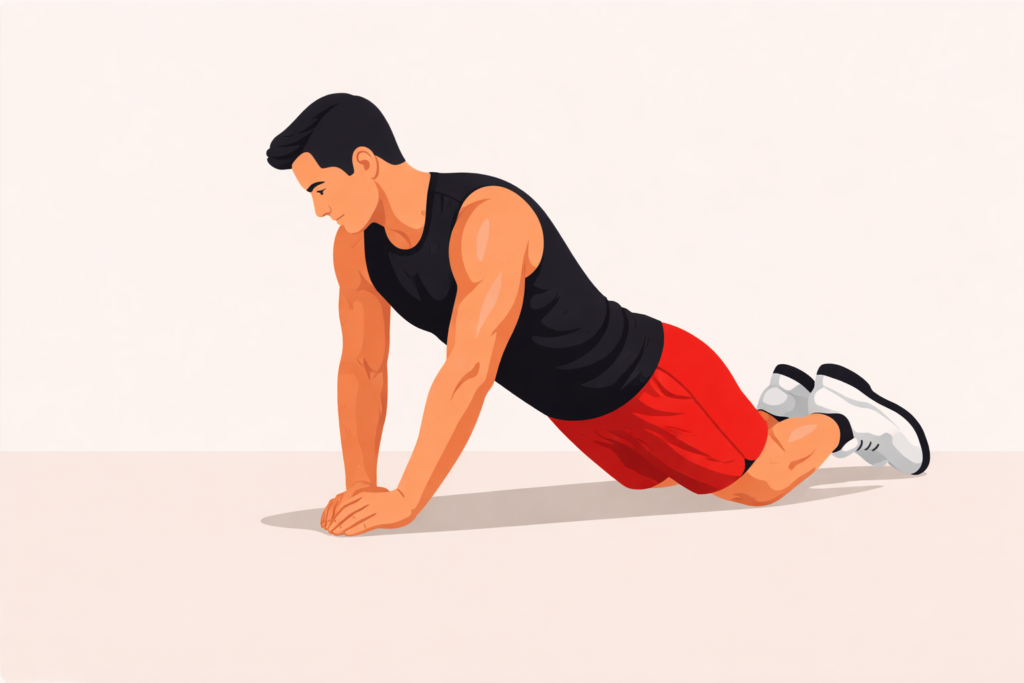
Make a diamond shape with your hands under your chest.
Knees down makes it manageable.
Lower slow while keeping elbows tucked.
Press up and squeeze the top like you’re trying to straighten your arms “through” the floor.
This one feels sharper in the triceps, like a focused pump instead of general pushing fatigue.
A solid run is 4 sets of 8–12, tempo 3-1-1, rest 90 seconds.
6) Close-Grip Push-Up (Classic, Reliable, Not Cute)
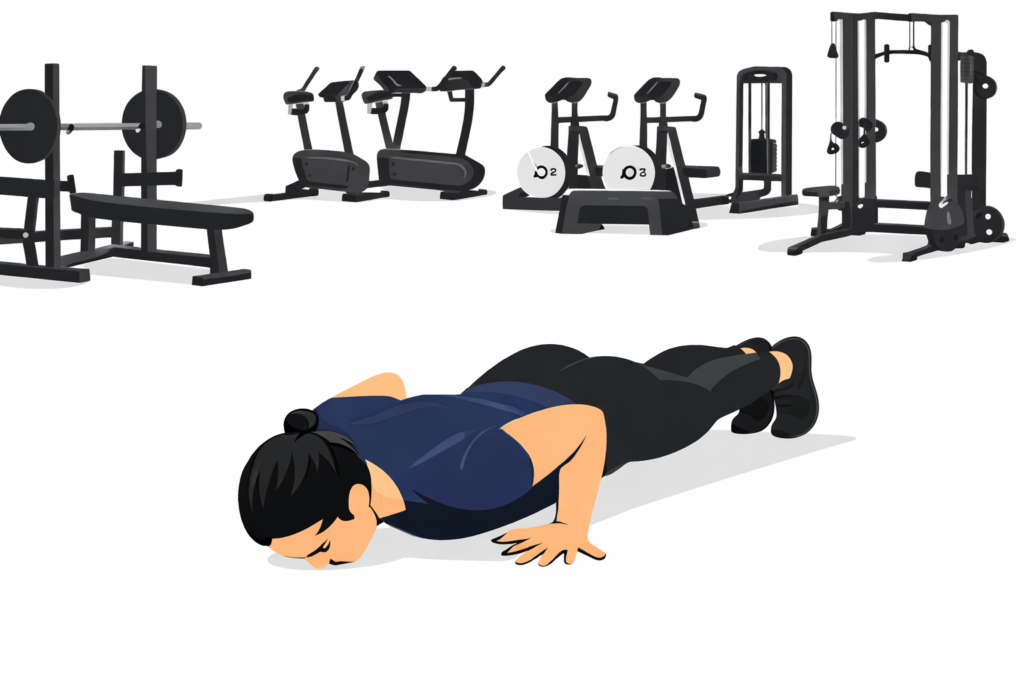
Normal push-up position.
Hands slightly inside shoulder width.
Lower with elbows angling back around 30–45 degrees from your torso.
Pause one second near the bottom, then press without letting your hips shoot up first.
If you do it right, the last 3 reps feel like your triceps are pushing a stuck car uphill.
Try 5 sets of 8–12, tempo 3-1-1, rest 90–120 seconds.
7) Diamond Push-Up (Floor Version, Now It’s Serious)
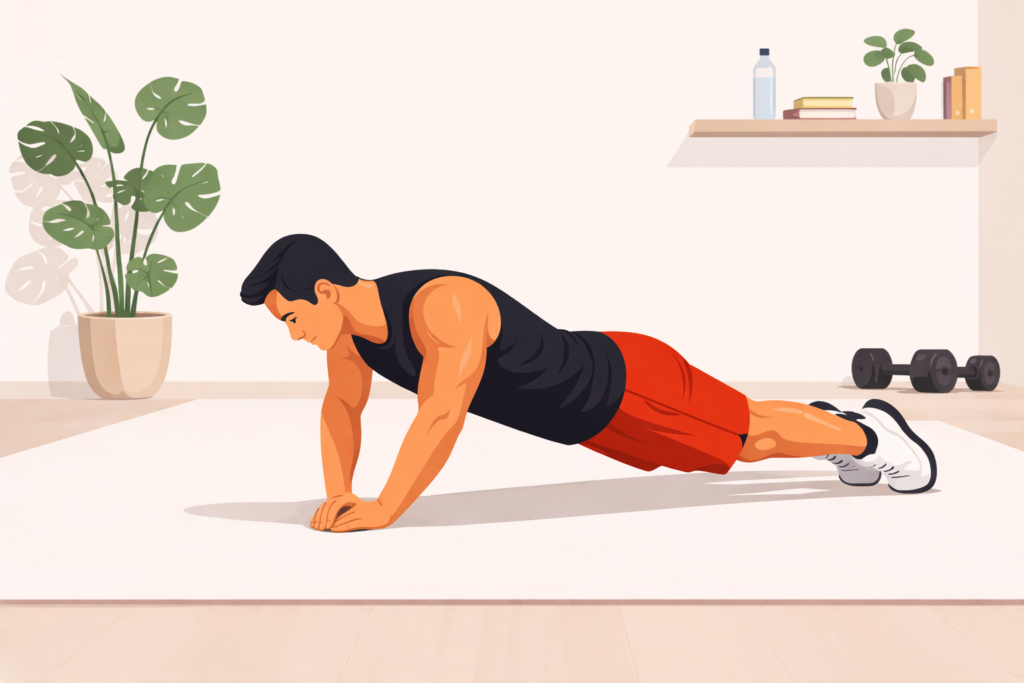
Same diamond hand position, but full bodyweight.
Wrist comfort matters here, so I sometimes do it on dumbbell handles or push-up bars to keep wrists neutral.
Lower slowly, because fast reps turn it into shoulder strain and wrist regret.
A strong but realistic target is 4 sets of 6–10, tempo 3-1-1, rest 2 minutes, and the pump feels like your sleeves shrank.
8) Decline Close-Grip Push-Up (Harder Because Gravity Gets Meaner)
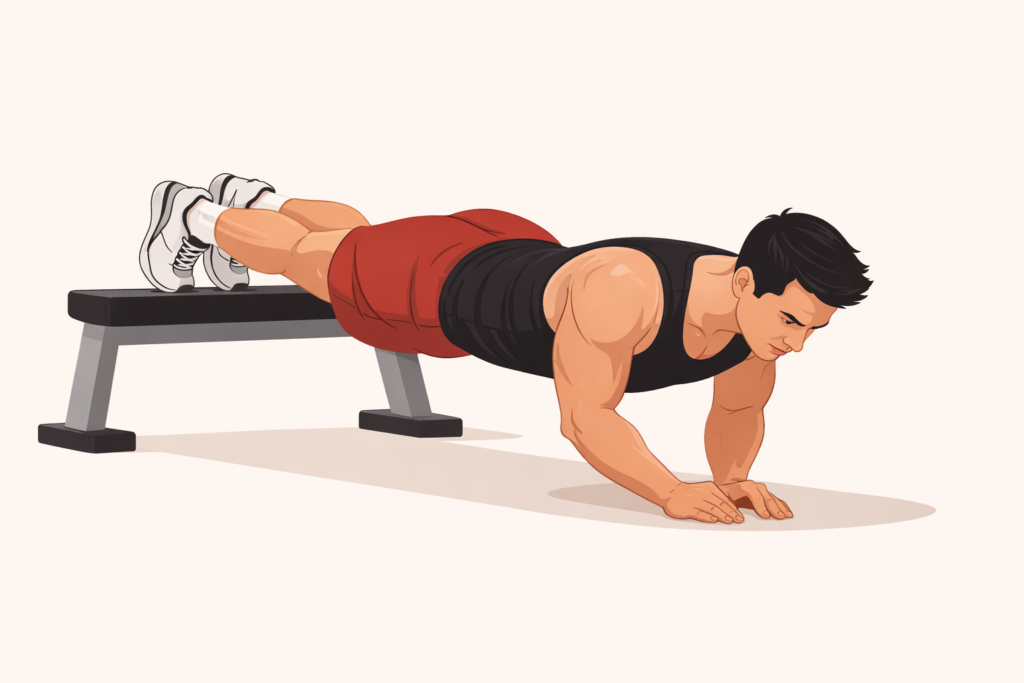
Feet up on a bench, hands on the floor.
Hands stay close-grip.
Lower with control and keep the core tight so your lower back doesn’t turn into a hammock.
The higher the feet, the more load shifts toward the arms and shoulders.
I like 4 sets of 6–10, rest 2 minutes, and the triceps fatigue shows up fast, like someone quietly turned down your strength knob mid-set.
9) Pike Push-Up “Triceps Lean” (Still a Push-Up, But Now Angles Matter)
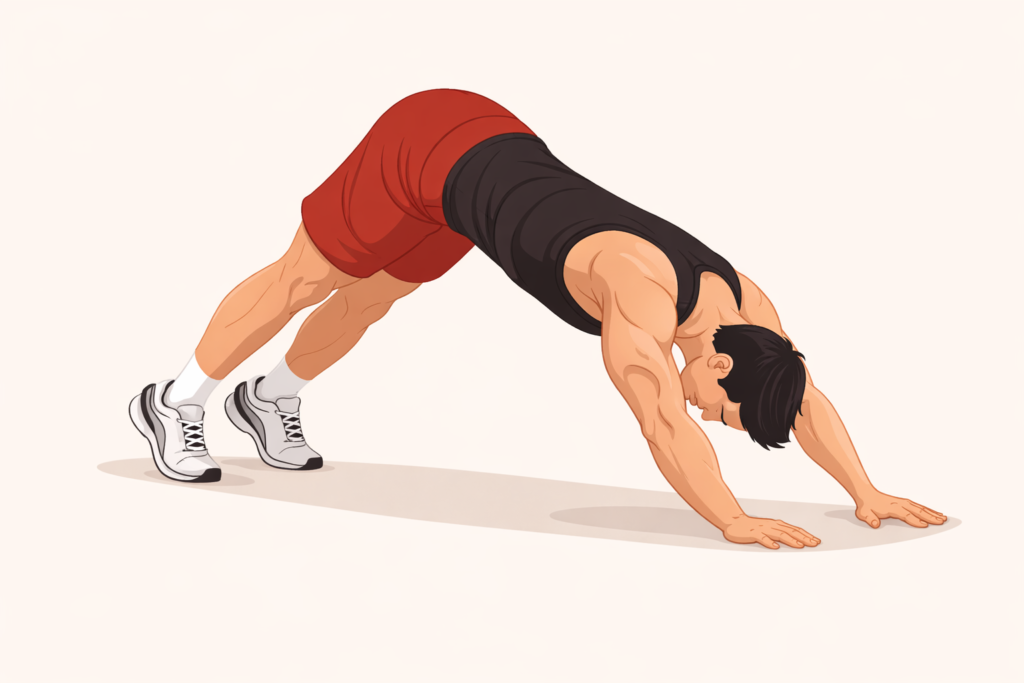
Start in a pike position, hips high.
Hands on the floor, shoulder-width or slightly narrower.
Now shift your body a bit forward so the elbows have to extend under a more demanding angle.
Lower your head toward the floor while keeping elbows from flaring out.
This isn’t purely triceps, but the elbow extension work becomes very obvious when you control the descent.
A good format is 3 sets of 8, tempo 4-1-1, rest 2 minutes, and it feels like the back of your arms is doing overtime.
10) Bodyweight Triceps Extension on Wall (Technique Builder, Sneaky Burn)
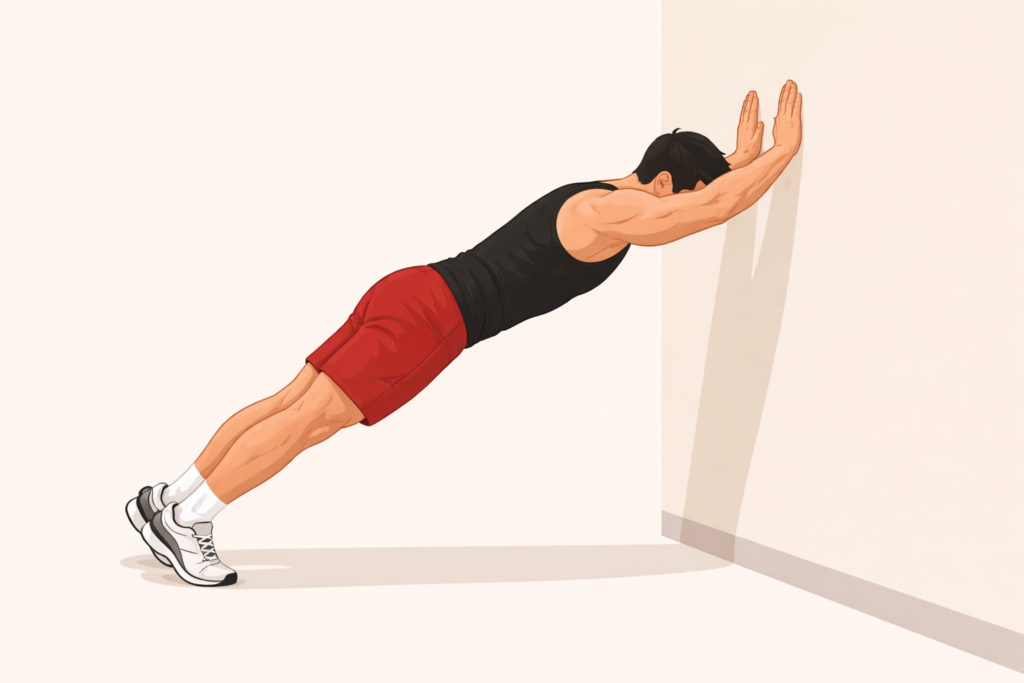
Hands on the wall higher than shoulders.
Walk your feet back so your body is angled.
Bend elbows and bring your head toward the wall between your hands, then extend elbows to push yourself away.
This is like a “standing skull crusher,” which is a triceps isolation move, just made bodyweight.
I’ve done 4 sets of 12–15, tempo 3-1-2, rest 75 seconds, and it creates that clean triceps burn without needing equipment.
11) Bodyweight Triceps Extension on Bench (Now It Starts Biting)
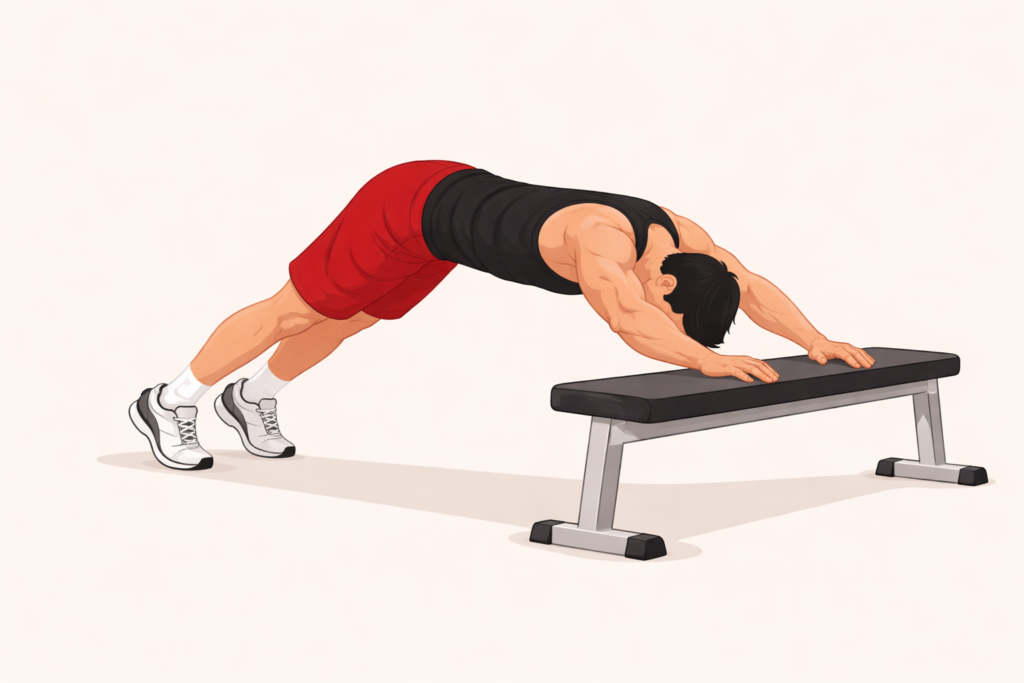
Same idea as the wall version, but hands on a bench and feet on the floor further back.
Lower your forehead toward the bench by bending elbows, then extend back up.
The lower the hands compared to your feet, the harder it gets.
This is where I start feeling that “stretch” in the triceps near the bottom.
Try 4 sets of 8–12, tempo 3-1-1, rest 90 seconds.
12) Bodyweight Triceps Extension on Floor (Harder Leverage, No More Free Lunch)
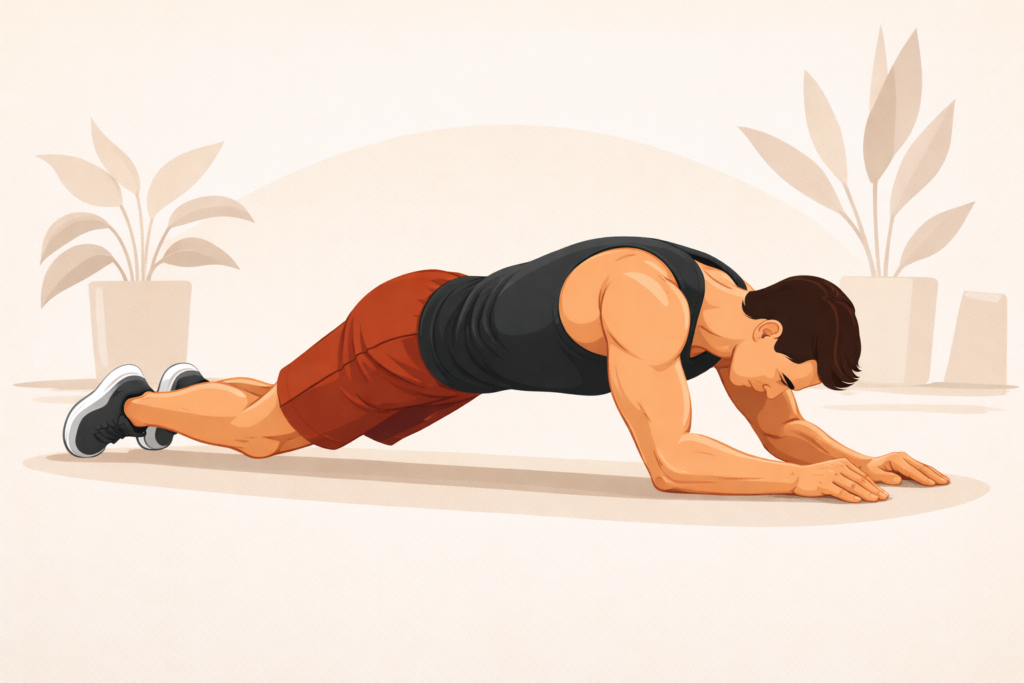
Hands on the floor, body angled like a plank.
Bend elbows and bring forehead toward the floor, then press by straightening elbows.
Keep elbows from drifting outward, because that changes the whole feel and often annoys the elbows.
When this clicks, it feels like your triceps are isolated in a way push-ups don’t always achieve.
A clean session is 5 sets of 6–10, tempo 3-1-1, rest 2 minutes, and the last reps feel slow even if you’re trying hard.
13) Bench Dip with Straight Legs (More Load, Less Mercy)
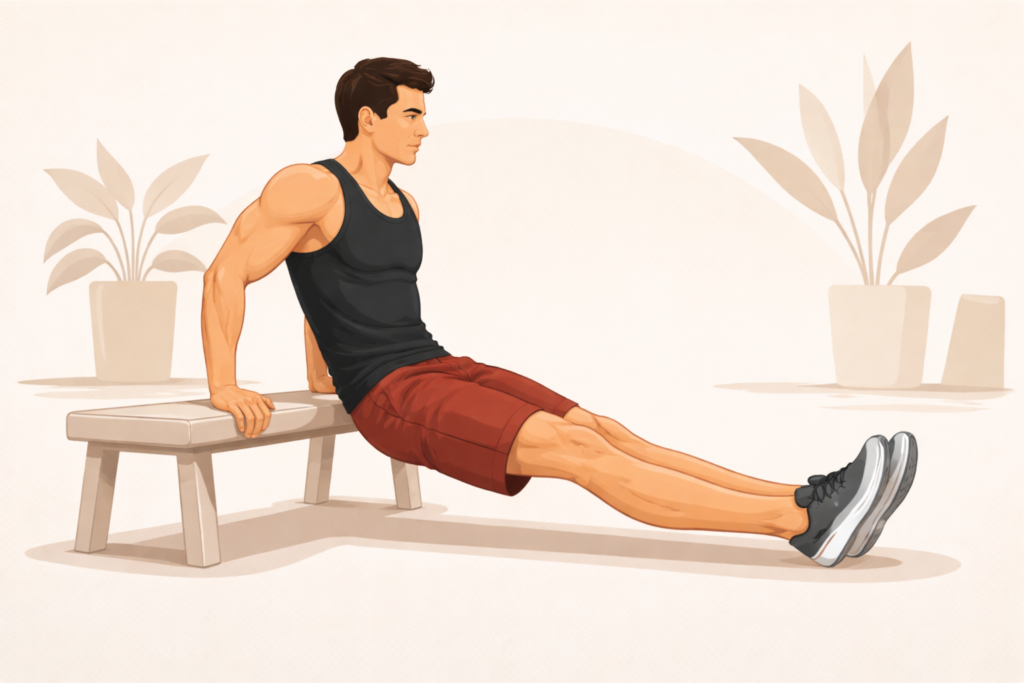
Same bench dip setup, but legs straight and heels on the floor.
More bodyweight shifts onto your arms.
Lower under control, stop when shoulders feel stable, then press back up.
I keep the bottom position conservative, because going too deep often shifts stress to the front shoulder.
A tough but manageable prescription is 4 sets of 8–12, tempo 2-1-2, rest 2 minutes, and your triceps will feel swollen in a very direct way.
14) Bench Dip Feet Elevated (Now You’re Negotiating With Gravity)
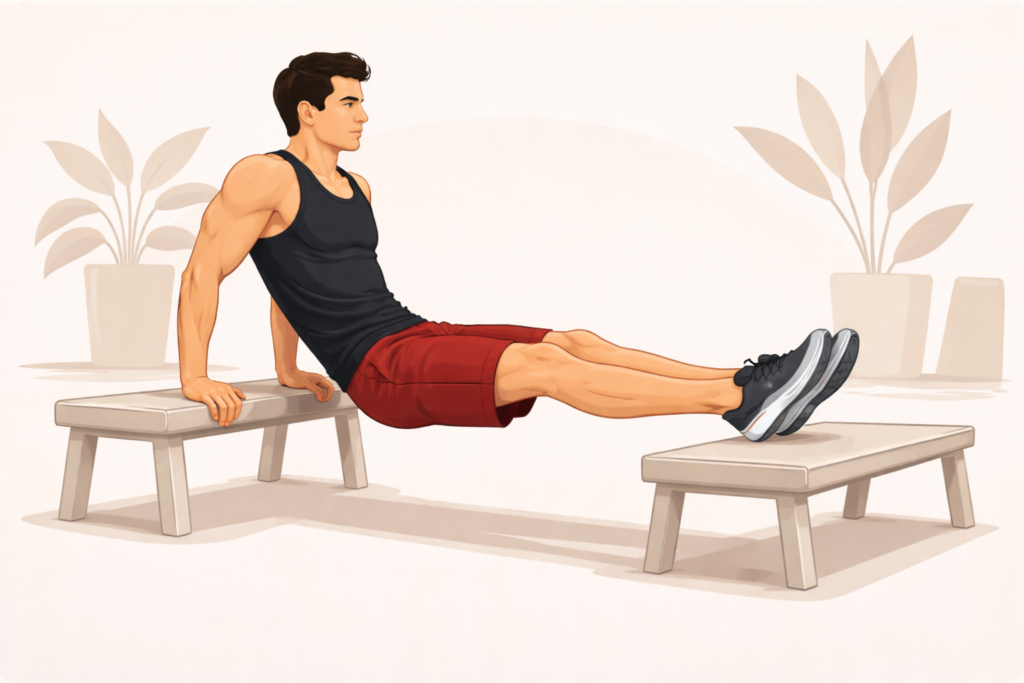
Hands on one bench, feet on another bench or chair.
Your arms now carry a lot more of your weight.
Lower slowly, elbows bending, then press back up.
This is one of those moves that feels “easy” on the first couple reps, then suddenly your lockout turns into a slow-motion documentary.
I like 5 sets of 6–10, rest 2 minutes, and the triceps fatigue is loud and immediate.
15) Dip Station Support Hold (Simple, But It Shakes People)
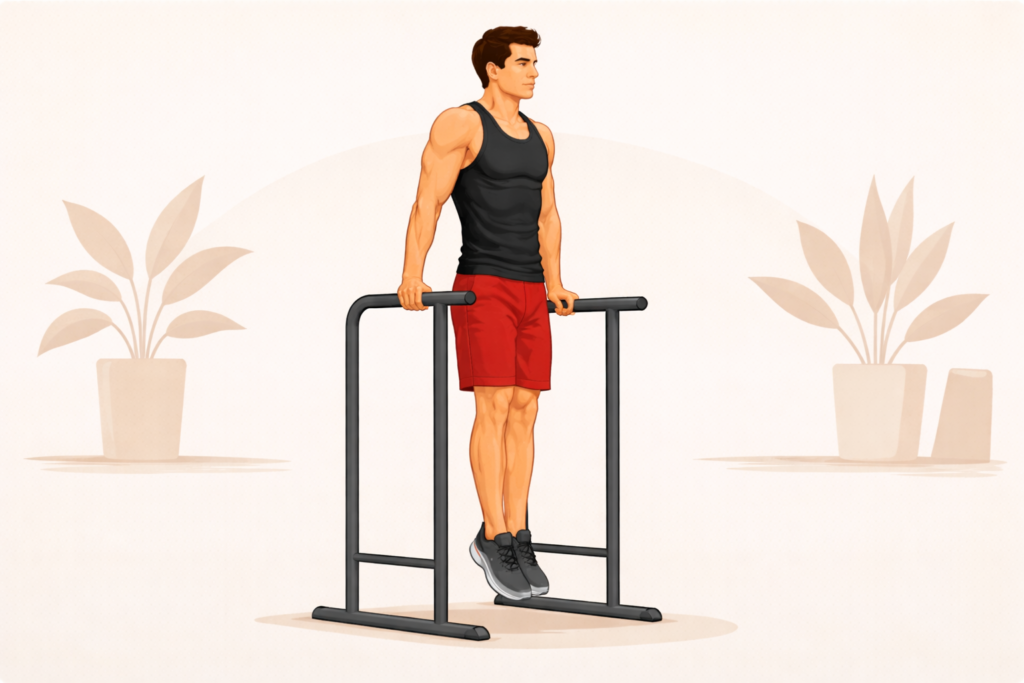
Get on parallel bars or dip station.
Lock elbows and hold your body up, shoulders down, chest tall.
Keep legs still so you’re not swinging like a pendulum.
This is not a “rep” exercise, but it builds lockout strength and stability that makes dips safer later.
A strong routine is 5 holds of 20–30 seconds, rest 60–90 seconds, and your triceps start trembling like they’re trying to text for help.
16) Parallel Bar Dips (Full Bodyweight, Real Triceps Work)
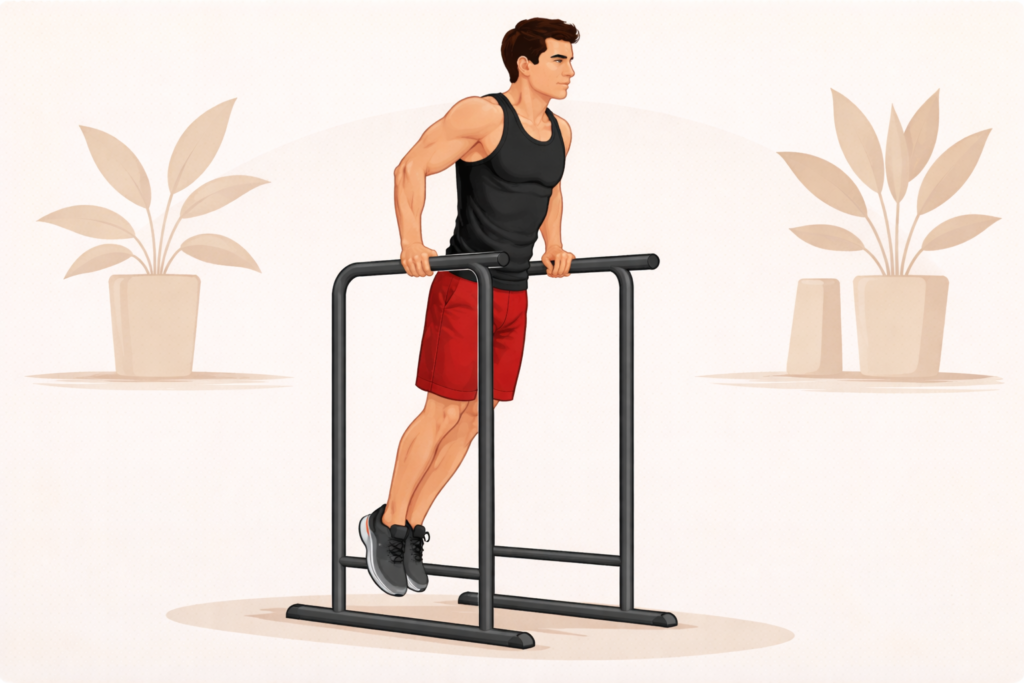
Start at the top with elbows straight.
Lower by bending elbows while leaning slightly forward, then press back up.
To bias triceps more, keep the torso a bit more upright and focus on elbow extension, not just “falling” into the bottom.
Stop the descent when shoulders still feel solid, then drive up hard.
A realistic strength-focused format is 5 sets of 5–8, tempo 2-1-1, rest 2–3 minutes, and the last rep often feels like you’re pushing the ground away with your arms.
17) Korean Dips (Behind-the-Back Bar Dips, The “Wait…What?” Move)
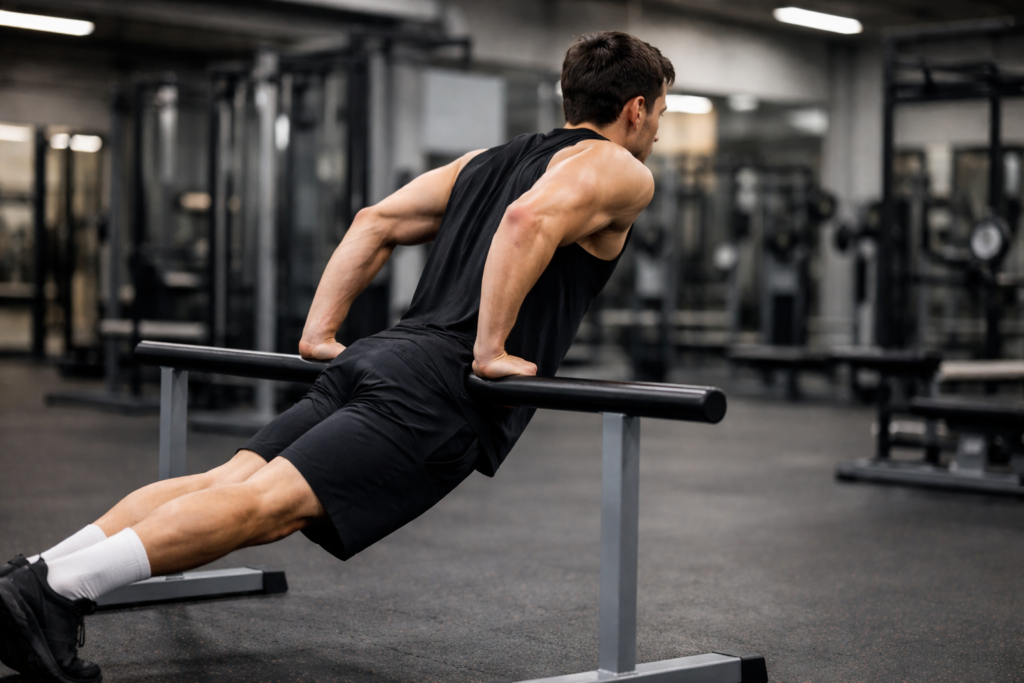
Find a bar at about hip height behind you.
Place hands on the bar behind your hips and support your body.
Lower by bending elbows, then press back up.
This puts shoulders in a deep extension position, which can be intense, so range control is everything.
When it’s tolerable, it hits triceps in a unique way that feels almost like a deep stretch plus lockout battle.
I keep it conservative at 4 sets of 4–8, tempo 3-1-1, rest 2–3 minutes.
18) Ring Dips (Same Dip, But Now The Handles Misbehave)

Set rings at a height where you can start supported.
Hold the rings close, elbows locked, shoulders down.
Lower slowly, rings will want to drift, and your job is to keep them from doing that.
Press back up while keeping rings tight to your sides like you’re trying to squeeze oranges in your armpits.
A strong starting point is 6 sets of 3–6, rest 2–3 minutes, and it feels like your triceps are working plus your whole upper body is bracing for stability.
19) Ring Triceps Extensions (Isolation + Instability, A Fun Kind of Cruel)

Set the rings around chest height.
Grab the rings and walk your feet back so your body is angled.
Bend elbows and let your head travel between your hands, then extend elbows to push back.
Rings will wobble, so the triceps have to both extend and stabilize.
I’ve done 5 sets of 6–10, tempo 3-1-1, rest 2 minutes, and the burn feels surgical, like someone highlighted your triceps with a marker.
20) Pseudo Planche Push-Up (Brutal, Because Your Body Is Now a Lever)

Start in a push-up position.
Now lean your shoulders forward so your hands are closer to your hips relative to your center of mass.
Keep elbows tucked and lower under control, then press up while maintaining that forward lean.
That lean massively increases the demand on your arms, especially at lockout.
The first time I dialed in a good lean, I hit 5 sets of 4 reps, tempo 4-1-1, rest 3 minutes, and my triceps felt like they were trying to cramp out of pure disbelief.
What Each “Difficulty Jump” Usually Feels Like
Early variations feel like you’re learning coordination and “where the push is supposed to happen.”
Middle variations start feeling like the triceps are doing repeated hard contractions, especially near lockout.
Later variations feel like two battles at once.
One battle is pushing.
The other battle is staying stable while pushing, which is why rings and lever-heavy moves get brutal fast.
If you’ve ever wondered why two exercises with the same rep count can feel completely different, that’s usually leverage and stability doing their sneaky work.
A Full, Realistic Triceps Session I’ve Actually Used (Home Version)
Warm-up started with 2 minutes of arm circles and gentle elbow bends, nothing fancy.
Then I did Wall Triceps Press for 2 sets of 20, tempo 2-0-2, just to get blood moving.
Next came Close-Grip Push-Ups for 5 sets of 10, tempo 3-1-1, rest 90 seconds, and the last set had that heavy “arms turning to rubber” feeling.
After that I used Bodyweight Triceps Extensions on a Bench for 4 sets of 10, tempo 3-1-1, rest 90 seconds, and the bottom stretch made the reps feel twice as long.
To finish, I did Bench Dips Straight Legs for 3 sets of 12, tempo 2-1-2, rest 90 seconds, and by the end my triceps felt pumped in a way that made washing my hair feel like a challenge.
A Full, Realistic Triceps Session I’ve Actually Used (Gym / Park Bars Version)
Warm-up was 3 minutes of easy support holds on the dip bars, broken into 3 rounds of 20 seconds with 40 seconds rest.
Then I ran Parallel Bar Dips for 6 sets of 6, tempo 2-1-1, rest 2–3 minutes, and the last reps slowed down even though I was trying to press fast.
After that came Ring Triceps Extensions for 5 sets of 8, tempo 3-1-1, rest 2 minutes, with a deep burn near the elbow that stayed muscular, not sharp.
I ended with a Dip Station Support Hold for 4 holds of 25 seconds, rest 60 seconds, and my arms were shaking like I was holding grocery bags that suddenly got heavier.
Small Tweaks That Change Everything (Without Making It Complicated)
Narrower hands usually increase triceps demand, but too narrow can annoy wrists.
Slower lowering makes light moves feel heavy, because the muscle stays under tension longer.
Pausing at the bottom for 1 second often reveals whether you were bouncing or actually controlling.
Stopping one inch before the position that feels sketchy keeps joints calmer while still training hard.
If elbows feel irritated, I move from deep stretch-heavy options to more straightforward push-up based options for a while.
That way the triceps still get trained, but the joint stops acting like a dramatic coworker.
If You Only Want 3 Moves, Here’s a Simple “Pick Your Level” Setup
For an easier start, rotate Incline Close-Grip Push-Ups, Bench Triceps Extensions, and Bench Dips Knees Bent.
For a solid middle, rotate Close-Grip Push-Ups, Floor Triceps Extensions, and Bench Dips Straight Legs.
For the brutal end, rotate Parallel Bar Dips, Ring Triceps Extensions, and Pseudo Planche Push-Ups.
Keep total work around 12–18 hard sets across the session, depending on how cooked your arms feel.
Rest long enough that your next set looks like a set, not a survival event.
How To Tell It’s “Good Triceps Work” and Not Just Random Strain
Good work feels like fatigue in the back of the upper arm.
Lockout gets slower and heavier as sets go on.
Burn builds predictably, not suddenly sharp.
Your shoulders can stay down and stable even when the triceps are tired.
If you finish and your elbows feel fine but your triceps feel full and tired, that’s the sweet spot.
Conclusion
Bodyweight triceps training gets wild fast because leverage changes are dramatic.
A tiny change in hand position, angle, or stability can turn “manageable” into “why is my arm doing that.”
Start with a variation you can control for clean reps and clean joints.
Then climb this ranking the same way you’d climb stairs, not the same way you’d jump off a roof.
5 Curious FAQs About Bodyweight Triceps Training
1) Can push-ups really build big triceps, or do I eventually need weights?
Yes, push-ups can absolutely build noticeable triceps, especially if you manipulate leverage and tempo.
When you move from incline to decline, from regular to diamond, and slow the lowering to 3–4 seconds, the load on your triceps increases dramatically even without adding plates.
That said, if you stay forever at the same variation doing 15 fast reps, your body adapts and the stimulus feels more like maintenance than growth.
Progression in angle, tempo, range of motion, or instability keeps the muscle challenged without needing external weights.
2) Why do my elbows sometimes feel weird during triceps extensions?
That “weird” feeling often shows up when the stretch at the bottom is too aggressive or the elbows flare out and shift tension away from the muscle.
In bodyweight triceps extensions, especially on a bench or rings, the lower position stretches the long head of the triceps hard.
If you dive too fast or lock out too aggressively at the top, the joint takes stress instead of the muscle.
Slowing the descent to 3–4 seconds and shortening the range slightly usually turns “weird” into a clean muscular burn.
3) Are bench dips actually bad for shoulders?
They’re not automatically bad, but they demand awareness.
The bottom position places your shoulders in extension, which can feel tight if mobility or control isn’t there yet.
Keeping the chest open, lowering only as far as you can stay stable, and avoiding extreme depth keeps them productive instead of sketchy.
When done controlled, they can be a solid mid-level triceps builder.
4) Why do ring dips feel ten times harder than regular dips?
Rings move.
That movement forces your triceps not only to extend your elbows, but also to stabilize your arms in space.
Instead of just pushing your body up, you’re fighting sideways wobble at the same time.
Even if you can do 10 clean bar dips, 3–5 ring dips can feel like a completely different sport.
5) Is the “burn” necessary for triceps growth, or is strength enough?
The burn is just a sensation from metabolic stress, not a magic signal.
You can build triceps with slower, heavier bodyweight variations where reps are low and the burn is moderate.
You can also build them with higher reps that create that deep, hot feeling in the muscle.
What matters more is progressive overload, clean reps, and consistent tension, not chasing discomfort for its own sake.