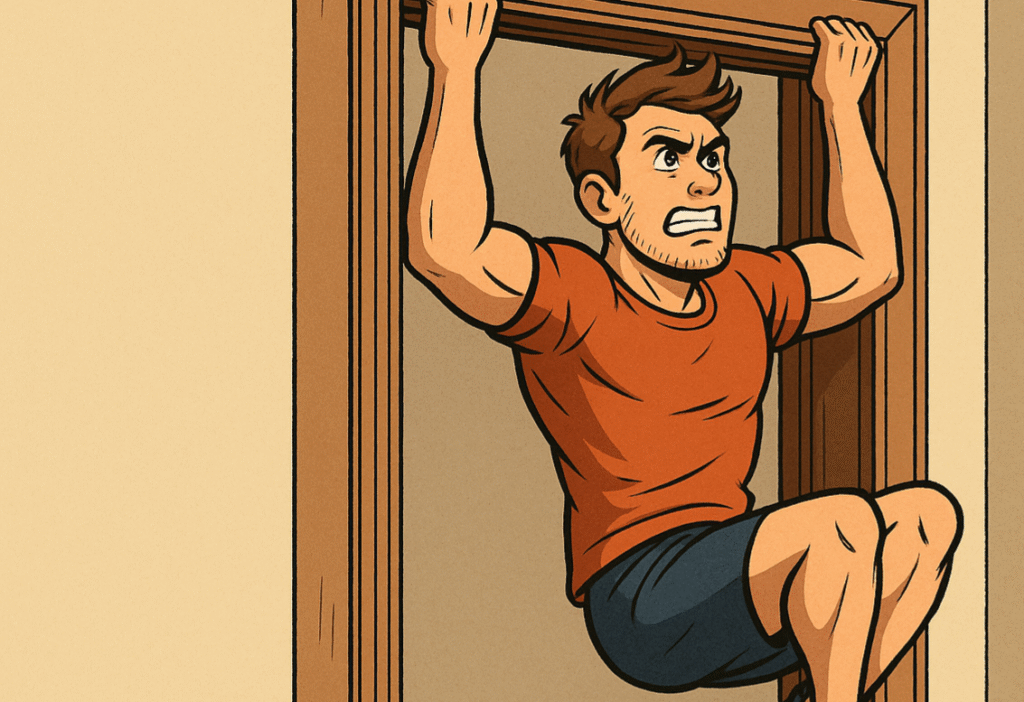
Bet you’ve had that moment too — standing there, grabbing the edge of a doorframe for no logical reason whatsoever.
Maybe it started as a quick, harmless “let’s try this” kind of move.
Then suddenly the forearms lit up like someone hooked them to a car battery.
And that’s when the most honest, gym-bro-approved question popped into existence:
“Hold on… does this actually work for grip strength?”
Understanding Grip Strength Without Overcomplicating It
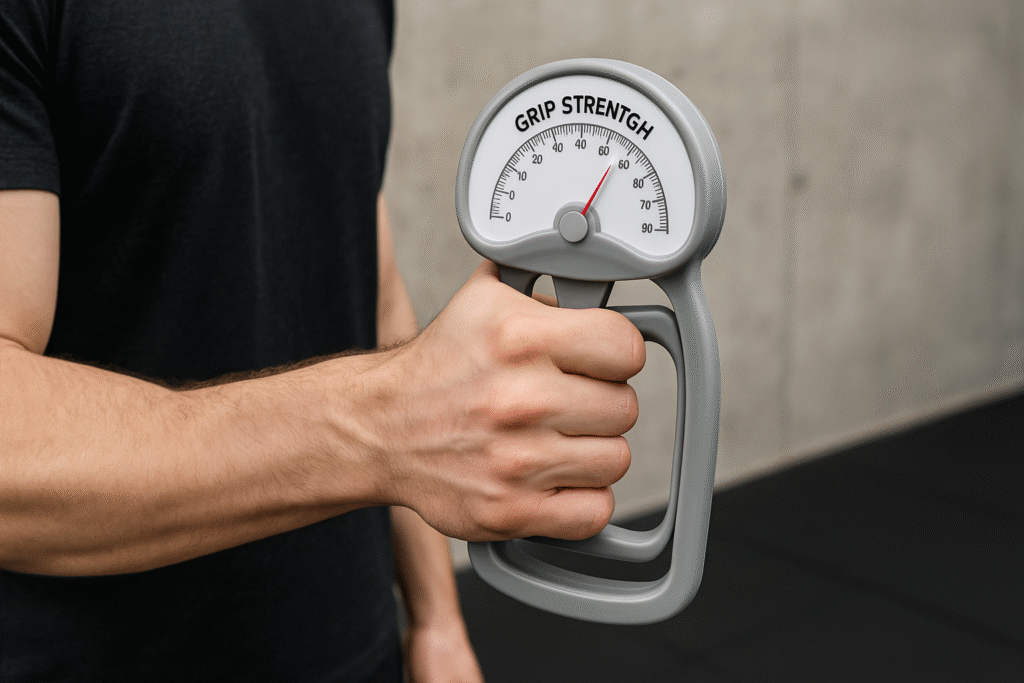
Grip strength sounds simple, but it’s secretly one of the most layered things in training.
And then you’ve got all the tiny stabilizers that only wake up during weird experiments.
Like hanging from a doorframe and praying the wood holds.
That’s the type of grip athletes rely on when they deadlift heavy or hold onto a pull-up bar for dear life.
Is that legit?
Absolutely.
But like everything in fitness, there’s context — and that’s where things get fun.
What Doorframe Hanging Actually Does for Your Grip Strength
The moment you latch onto a doorframe, your fingers turn into industrial-grade hooks.
Your flexor digitorum profundus, flexor digitorum superficialis, and your wrist flexors all fire at once.
Your brain goes: “Wow, we’re doing this? Okay.”
Your shoulders stabilize.
Your core quietly wakes up.
Your lats think you’re trying to do a very confused pull-up.
It’s messy, but effective — in the same way doing farmer carries with grocery bags is technically “functional training.”
You’re loading the same muscle groups involved in a proper bar hang, just with a much more awkward surface.
And awkward surfaces force your fingers to adapt fast.
Your Fingers Learn Real-World Strength

A metal bar is predictable.
A doorframe is not.
It has edges, inconsistent width, and absolutely zero intention of being ergonomic.
Training on weird objects can build the kind of strength climbers rely on — not maximal force output, but reactive grip.
The “adjust on the fly” strength.
It’s the type you feel when holding onto slippery dumbbells or managing heavy kettlebells mid-swing.
It teaches your fingers and forearms to grip something that isn’t doing you any favors.
Doorframes train you like a low-budget rock climber.
And honestly?
There’s something charming (and mildly ridiculous) about that.
But Let’s Be Honest: There Are Limits
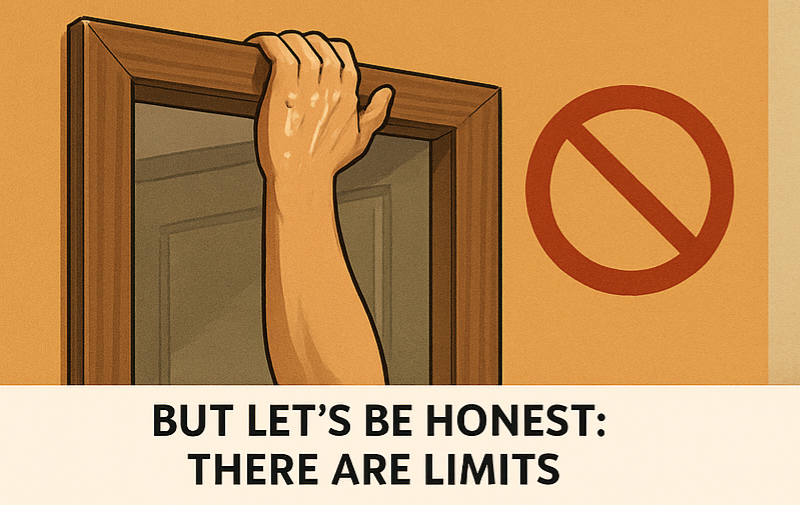
Before you redecorate your doorframes with chalk handprints, let’s keep expectations real.
You won’t build elite-climber strength this way.
You won’t magically add 50 pounds to your deadlift because your landlord’s doorframe held for a full eight seconds.
You won’t replace proper grip training tools like:
- Bar hangs
- Thick bar holds
- Farmer carries
- Plate pinches
A Better Way to Mix Doorframe Hanging Into Your Training
If you want to make doorframe hangs actually useful instead of “that thing I do when I’m bored,” treat them like micro-sessions.
Short bursts.
High intention.
Controlled intensity.
Think:
- 5–10 seconds hangs
- 2–4 times a day
- Full recovery between attempts
- No feet swinging like a kid at recess
This activates your grip without frying it.
It also prevents you from destroying your skin, your ligaments, or the architectural integrity of your apartment.
The Safety Side Everyone Forgets
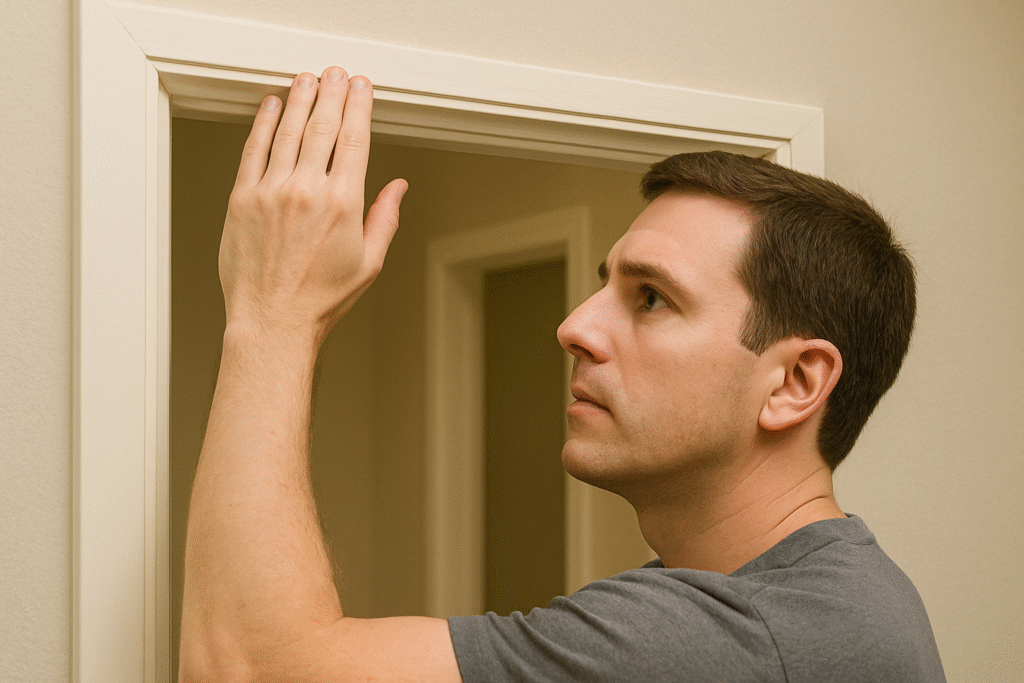
Doorframes weren’t designed for:
- Gymnastics
- Cliffhanger reenactments
- Ninja Warrior training
- Impromptu grip PRs
Check the frame first.
Put your fingers on solid wood, not paint that’s about to flake off and disrespect you.
Don’t hang on anything that feels hollow or wobbly.
And absolutely avoid the top part of a sliding door unless you enjoy unexpected plot twists.
The last thing any of us need is a “grip strength fail” video going viral under your name.
The Moments When Doorframe Training Really Helps
This stuff helps the most when you already train grip consistently.
If your routine includes deadlifts, pull-ups, kettlebell work, or even rowing (the erg absolutely hammers your grip over time), then adding doorframe hangs feels like leveling up your fingers with side quests.
They fill in gaps.
They improve sensitivity and tension control.
They teach your hands to “bite” the surface faster.
Honestly, sometimes those tiny gains are what finally let you hold onto the bar long enough to finish that last set you’ve been losing.
How to Know Your Grip Is Actually Getting Stronger
Most people train grip like it’s a mystery box.
They squeeze stuff, hang from stuff, survive a few questionable decisions… but never check if they’re getting better.
Doorframe hangs give you an easy way to track progress without turning your home into a climbing gym.
Start with one simple rule: notice the first two seconds.
Not the full hold.
Not the dramatic “I’m still here” moment.
The bite—that instant when your fingers clamp down before your brain realizes you’re off the ground.
If that bite feels sharper, steadier, and less panicked than last week, congratulations.
Your grip is leveling up.
Another sign?
Your forearms will burn slower.
The pump shows up late to the party instead of kicking the door down at second five.
And here’s a weird-but-true test: everyday objects feel lighter.
Grocery bags, suitcase handles, even dumbbells that usually slip on sweaty days—everything feels slightly more cooperative.
Grip strength isn’t just about holding longer.
It’s about how confidently your fingers lock in before anything even starts.
Why Finger Tension in the First Few Seconds Matters More Than Duration
Everyone obsessively tries to hang longer.
But here’s the plot twist: with doorframe work, duration is actually the least interesting part.
What really changes your strength is the tension your fingers produce in the opening moments.
That’s when your flexors fire fast.
That’s when your tendons do the equivalent of “hey, wake up.”
That’s when your nervous system decides how much force to send through the fingertips.
Those first seconds build what I call “snap tension” — the ability to clamp, stabilize, and react instantly.
Climbers live off this.
Kettlebell lifters feel it during heavy swings.
Anyone who rows or deadlifts knows the difference between a grip that locks in and one that hesitates.
Doorframe hangs exaggerate this exact moment.
And that makes them valuable even if you only last seven seconds before rethinking all your life choices.
Skin Conditioning and Finger Durability on Hard Edges
Nobody talks about this, but your skin might tap out before your muscles do.
Doorframes are brutal on the fingertips.
Not the callus spots you build on barbells—different zones entirely.
Hard edges create tiny hot spots, micro-friction burns, and the classic “why does this one millimeter of skin hate me?” feeling.
You can actually train this.
A few short hangs per week toughen the exact patches of skin your fingers rely on during awkward grips.
Rotate your finger placement slightly each session to avoid over-irritating the same point.
Moisturize lightly at night so the skin stays tough but doesn’t crack.
And if you feel a sharp sting instead of pressure, stop.
That’s your body sending a polite “don’t peel me like an orange” message.
Once the skin adapts, your hangs last longer, your grip engages faster, and the whole experience stops feeling like medieval punishment.
Final Word: Should You Do It? Absolutely — Just Don’t Make It Your Religion
Doorframe hanging is legit if you use it the right way.
It challenges your fingers.
It builds reactive strength.
It adds flavor to your training.
And honestly, there’s something motivating about feeling like you’re in an action movie for a few seconds a day.
Add it as a sprinkle on top of your grip-focused movements.
Treat it like a fun experiment, not a replacement for real training.