There’s something oddly intimidating about shopping for treadmills.
Every model looks the same — until you realize one folds, another slides under the bed, and a third claims to be “whisper quiet” but sounds like a jet engine when you try it.
The truth is, choosing the right compact treadmill isn’t about picking the fanciest one.
It’s about finding the one that actually fits your life — your space, your habits, and your patience for assembly instructions that read like IKEA manuals.
Let’s break it down, step by step.
Start with your space — not your goals
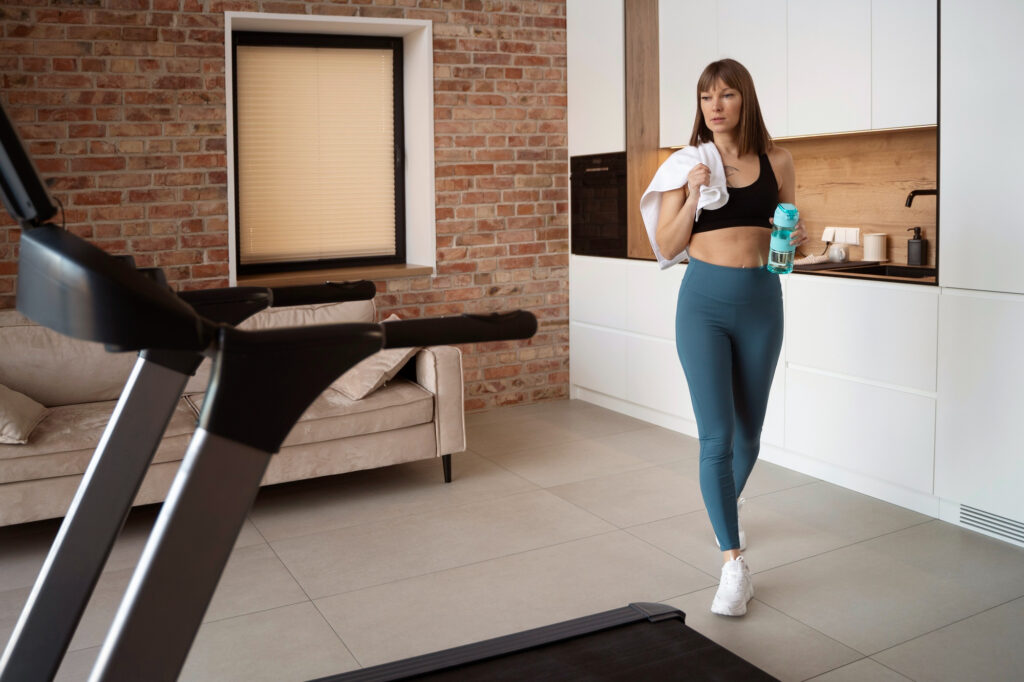
Everyone starts with motivation.
But motivation fades when your treadmill becomes a clothes rack in a tiny living room.
Measure your space first. Ask yourself:
- Will it stay in one place or need to fold away?
- Do you have a solid surface (not carpet) to support it?
- Can you walk comfortably without hitting a wall or table behind you?
Compact treadmills are built for apartments, shared spaces, or multipurpose rooms.
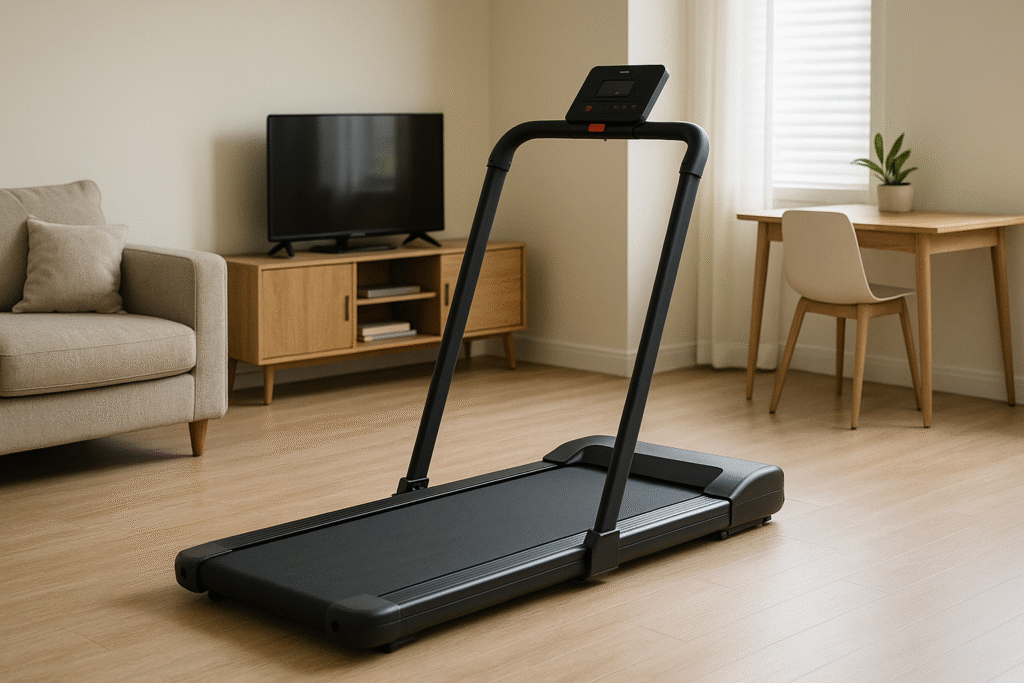
Some models fold in half, others slide flat under furniture, and a few transform like mechanical origami.
If it’s not easy to store, you’ll use it less — simple as that.
Match the treadmill to your real goals
Let’s be honest: most people don’t need a marathon-grade machine.
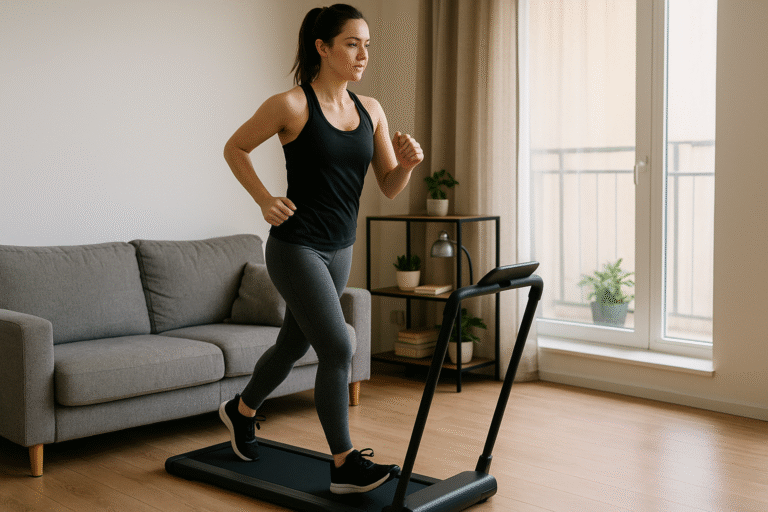
They need something to walk daily, stay active while working, or squeeze in short sessions before Netflix.
If your goal is gentle daily movement, look into under-desk treadmills or walking pads.
They’re smaller, quieter, and built for low-speed use.
If you want to jog or do interval training, go for a foldable treadmill with a motor above 2.0 HP and a stable frame.
And if you live with someone who hates noise — belt cushioning and motor type matter more than horsepower.
👉 Shop Foldable Treadmills on Amazon
Consider your lifestyle rhythm
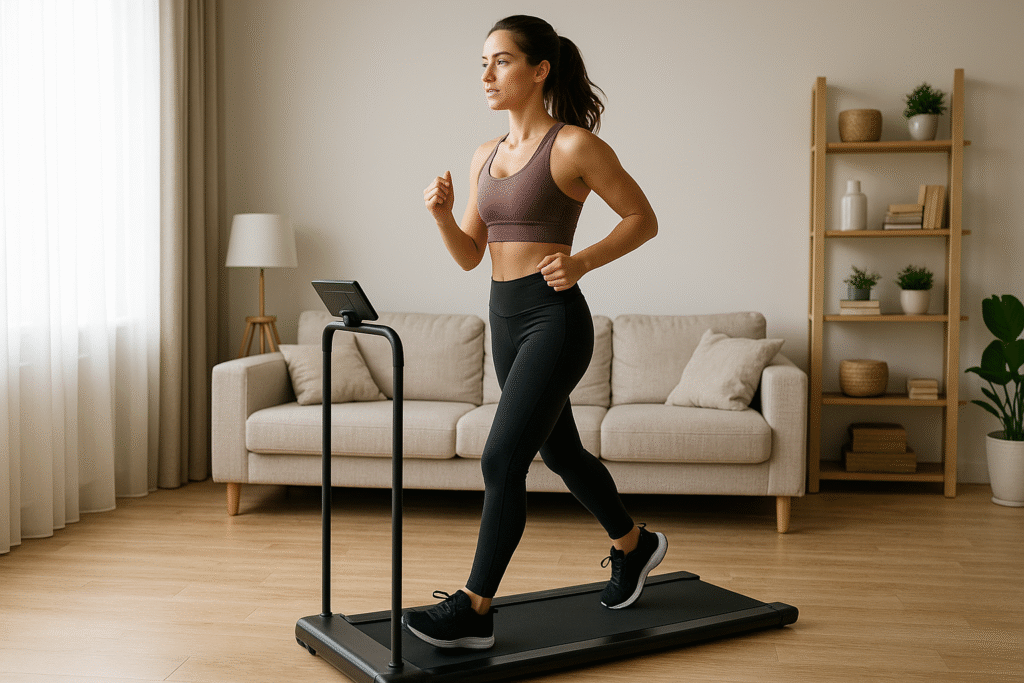
Some people walk during calls; others prefer a dedicated workout after work.
Your routine decides the machine, not the other way around.
- For remote workers → under-desk treadmills keep you active while working.
- For night owls → look for noise reduction and soft belt technology.
- For morning movers → choose fast-start motors with preset speed modes.
If you love multitasking, under-desk models are perfect.
If you prefer focus time, go for foldables with incline options to make short sessions count.
Your treadmill should adapt to your rhythm, not control it.
💡 Related: Curious whether walking pads offer the same benefits as foldable treadmills? Read Do Walking Pads Offer the Same Benefits as Foldable Treadmills in Small Spaces? to see how each one fits different lifestyles and spaces.
Don’t skip ergonomics and build quality
A compact treadmill shouldn’t mean cheap or flimsy.
The difference between a durable model and a disposable one often lies in:
- Frame stability — wobble means wear.
- Belt width — at least 16–18 inches for comfortable walking.
- Weight capacity — always check it matches your body weight plus a safety margin.
- Shock absorption — crucial if you walk long hours or have joint concerns.
If you plan to work while walking, pair it with an adjustable desk and monitor riser.
Good ergonomics aren’t optional — they’re what make the habit sustainable.
Noise, comfort, and the “neighbor test”
Manufacturers love to say “quiet motor,” but quiet to whom?
If you live in an apartment, the real test is whether your downstairs neighbor knocks on the ceiling.
Look for DC motors and rubberized belts for noise reduction.
Anti-vibration mats can make a big difference too — both for sound and stability.
Compact treadmills aren’t just about size.
They’re about coexisting with your lifestyle, your space, and your people.
Under-desk treadmill or foldable treadmill?
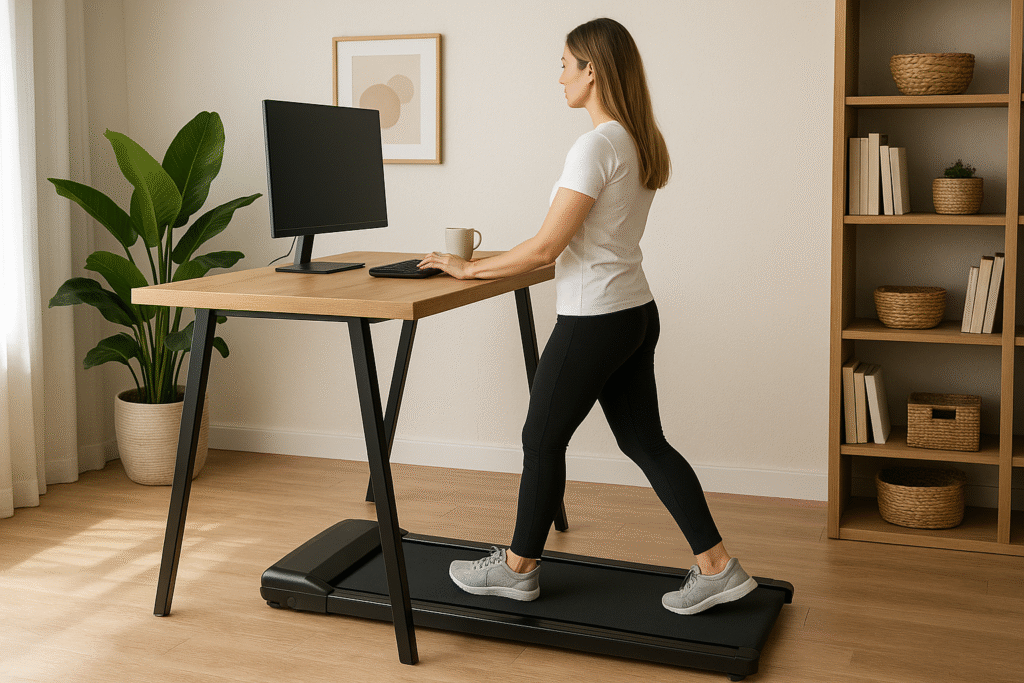
Here’s the quick breakdown:
- Under-desk treadmills → small, sleek, designed for walking while working.
- Foldable treadmills → slightly bulkier, with handrails and higher speed options for full workouts.
Under-desk models are ideal for remote workers who want to move throughout the day.
Foldables are better for those who prefer distinct “exercise time” with more cardio intensity.
Both can fit in small spaces — it’s just about how you use them.
Budget vs. longevity: pick your side wisely
According to 2025 fitness equipment trends, compact treadmill sales grew by over 40% in small-space households — proving that “small” doesn’t mean “less effective.”
Cheap models often fail where it matters most — motor durability and belt smoothness. But spending a fortune doesn’t always guarantee comfort either.
The sweet spot is in the mid-range: reliable motors, decent shock absorption, and simple controls.
Avoid feature overload — Bluetooth speakers won’t fix a squeaky belt.
Top Compact Treadmills for Small Spaces (2025 Update)
| Model | Motor | Foldable / Under-Desk | Best For |
|---|---|---|---|
| WalkingPad C2 Mini | 1.5 HP | Under-desk | Remote workers, small apartments |
| Sunny Health & Fitness SF-T7718 | 2.5 HP | Foldable | Jogging and quick setup |
| Urevo Foldi 2-in-1 | 2.0 HP | Foldable / Under-desk | Versatile home office use |
| Goplus 2-in-1 SuperFit | 2.25 HP | Foldable | Apartment cardio workouts |
All models are compact, low-noise, and easy to store — perfect examples of what to look for when buying a treadmill for small spaces.
💬 Also read: For a deep look into build quality and lifespan, check out Are Foldable Treadmills Actually Worth It or Do They Break Faster Than Normal Ones? It reveals how to spot models that last years — not months.
FAQs About Compact Treadmills
How do I know which compact treadmill fits my space?
Start by measuring your available area — both floor space and height clearance.
A good rule is to leave at least two feet behind the treadmill and one foot on each side. If your space is tight, go for a foldable or under-desk model that slides away after use.
Avoid bulky consoles or fixed handrails if you need to move it often.
Can a compact treadmill handle daily use?
Yes — as long as it has a motor of at least 2.0 HP and a sturdy frame.
Cheaper models tend to overheat or wear faster when used for long sessions.
Stick with brands known for durability and smooth belt motion.
And remember: maintenance matters more than price.
Keep the belt lubricated and the surface clean, and even smaller models can last for years.
What’s the difference between a walking pad and a compact treadmill?
A walking pad is lighter, thinner, and usually motor-limited to slow walking speeds.
A compact treadmill has a stronger motor, better cushioning, and sometimes an incline feature.
Walking pads are perfect for remote workers or multitaskers.
Compact treadmills are better for people who want structured cardio sessions in small spaces.
Are compact treadmills good for weight loss?
They can help — but not because they’re magic.
Weight loss comes from consistent calorie deficit and daily movement.
A treadmill simply makes that movement easier and more frequent.
Even walking at 2 mph for a couple of hours can burn 200–300 calories without feeling like a workout.
Are compact treadmills noisy?
Modern models are designed to be quiet — but some noise is inevitable.
Look for DC motors and multi-layer belts for the lowest sound levels.
Placing a rubber mat underneath helps reduce both vibration and floor impact.
If you’re working from home, you’ll barely hear it — and your neighbors will thank you.
How long should I walk on a compact treadmill each day?
The sweet spot is between 1 and 3 hours per day at a low speed (around 1.5–2 mph).
You can break it into short sessions — one in the morning, one mid-day, one before dinner.
The key is consistency over intensity.
Even gentle walking done daily helps boost circulation, focus, and long-term metabolic health.
Is it safe to run on a foldable treadmill?
Yes — as long as it’s built for running, not just walking.
Check for a motor of at least 2.5 HP, a belt length over 50 inches, and a solid locking frame.
Avoid ultra-slim models meant for desks — they’re not designed for impact.
High-quality foldable treadmills are perfectly safe for light to moderate runs if placed on a stable surface.