
One afternoon at the gym I notice a guy training his back in a way I almost never see.
He starts with a low bar.
Pulls his chest toward it a few times.
Then he walks over to the rings and does another pulling movement, slower this time.
A few minutes later he’s hanging from the pull-up bar, barely moving, just shifting his shoulders up and down a couple of centimeters.
From a distance it doesn’t look like much.
But when he finally starts doing real pull-ups, every rep looks smooth.
Watching him move from one angle to another makes me realize something.
Most people approach back training like it has only one main movement.
Pull-ups.
Maybe a row variation.
Then repeat that pattern every week.
But the back is a large and complicated group of muscles.
Some movements pull vertically.
Others pull horizontally.
Some movements barely bend the arms at all and still train the upper back.
That afternoon I start experimenting with different bodyweight pulling angles during my own sessions.
And it quickly becomes clear that pull-ups are only one piece of the puzzle when it comes to building a strong back.
The back muscles people rarely think about
When someone says “train your back,” most people imagine the lats.
The big muscles that give the V-shape.
Pull-ups are great for them.
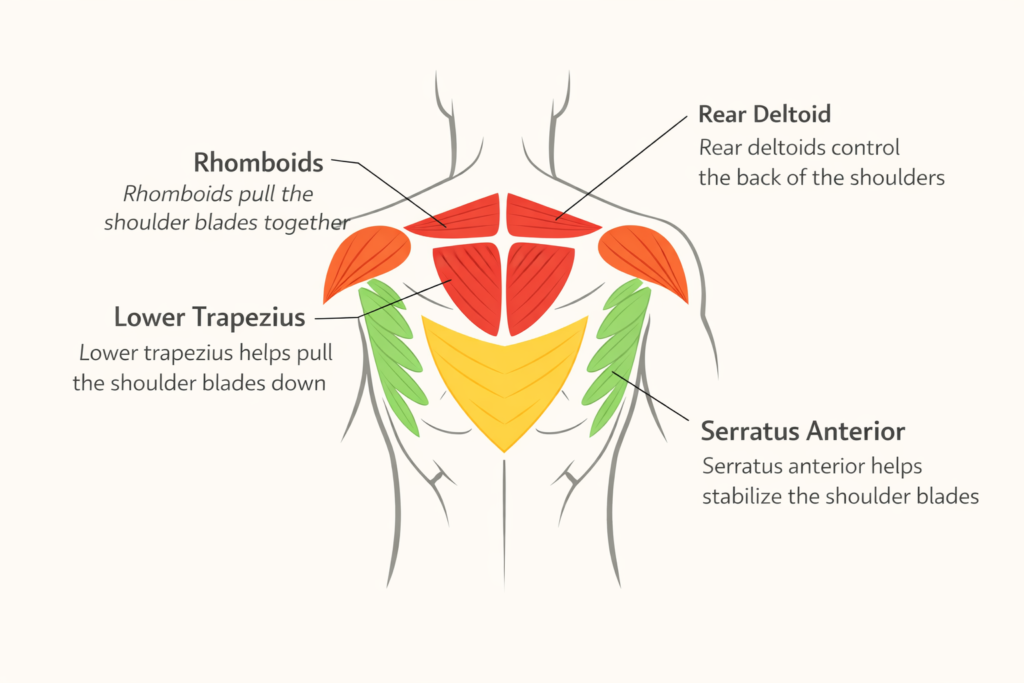
But the back also includes smaller muscles that control shoulder stability.
For example:
- Lower trapezius helps pull the shoulder blades down
- Rhomboids pull the shoulder blades together
- Rear deltoids control the back of the shoulders
- Serratus anterior stabilizes the shoulder blade during pulling
When these muscles are neglected, pulling movements start to feel awkward.
The shoulders drift upward.
The neck tightens.
The arms do more work than they should.
That’s why a variety of pulling angles helps a lot.
Different angles recruit different parts of the back.
And bodyweight exercises offer more variety than most people expect.
Horizontal pulling movements
These exercises train the back in a rowing pattern.
They are excellent for beginners and advanced athletes.
They also build the mid-back muscles that stabilize the shoulder blades.
1. Inverted Rows
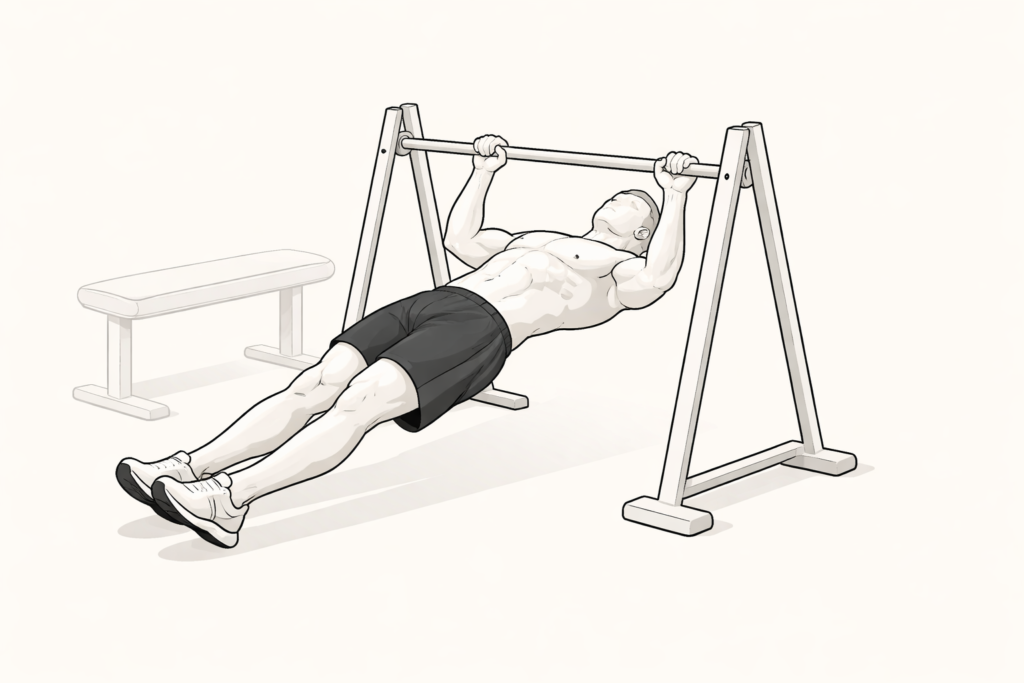
This is one of the best bodyweight back exercises.
Set a bar at waist height.
Lie underneath it.
Grab the bar with both hands.
Pull your chest toward the bar while keeping the body straight.
A beginner session might look like this:
- 3 sets
- 8 to 12 reps per set
- pause briefly between sets
The mid-back starts burning quickly.
2. Ring Rows
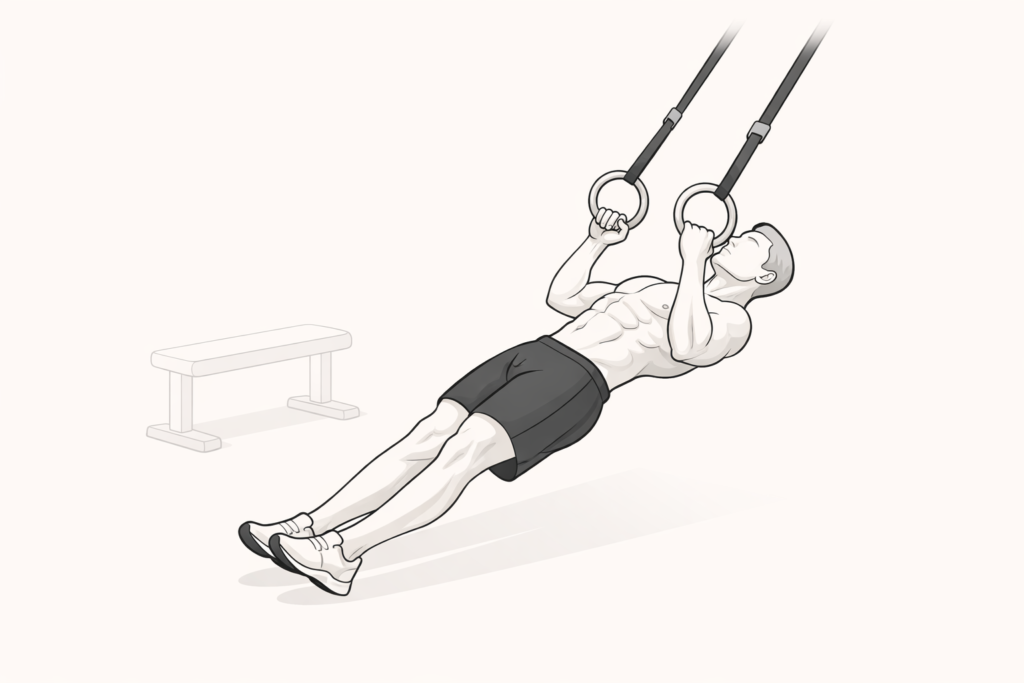
Using gymnastic rings makes the movement slightly unstable.
That instability forces the back muscles to stabilize the shoulders.
Hold the rings.
Lean back.
Pull the chest toward the handles.
Even small sets like 6–8 reps feel intense.
3. Wide Grip Inverted Rows
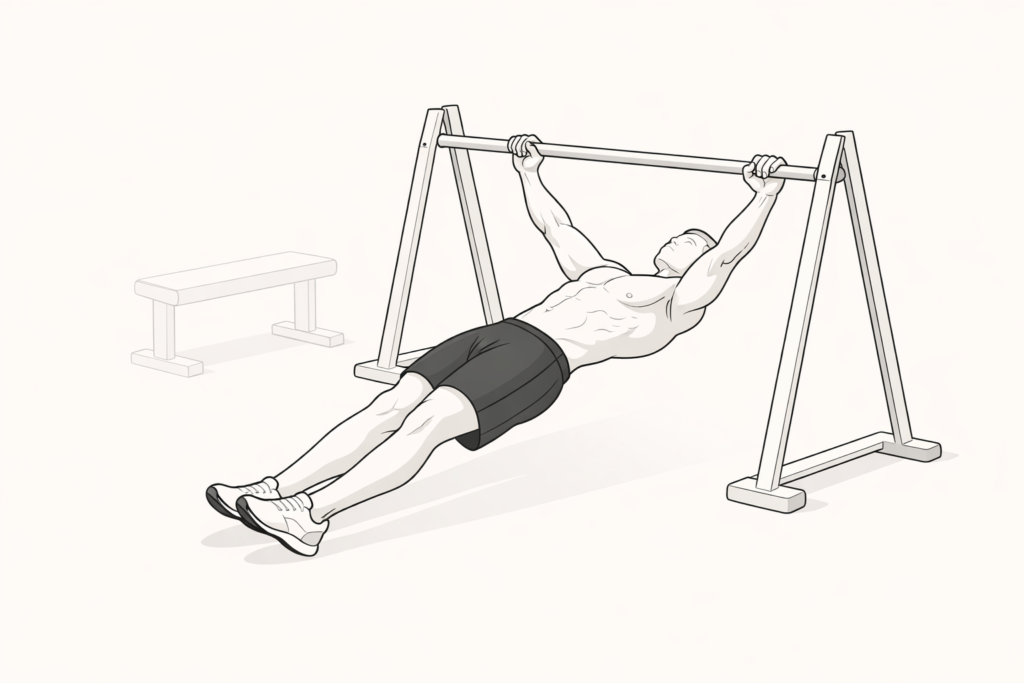
Place the hands wider than shoulder width.
This shifts more work toward the rear delts and upper back.
Keep the elbows flaring slightly outward.
You’ll feel the muscles between the shoulder blades working hard.
4. Feet-Elevated Rows
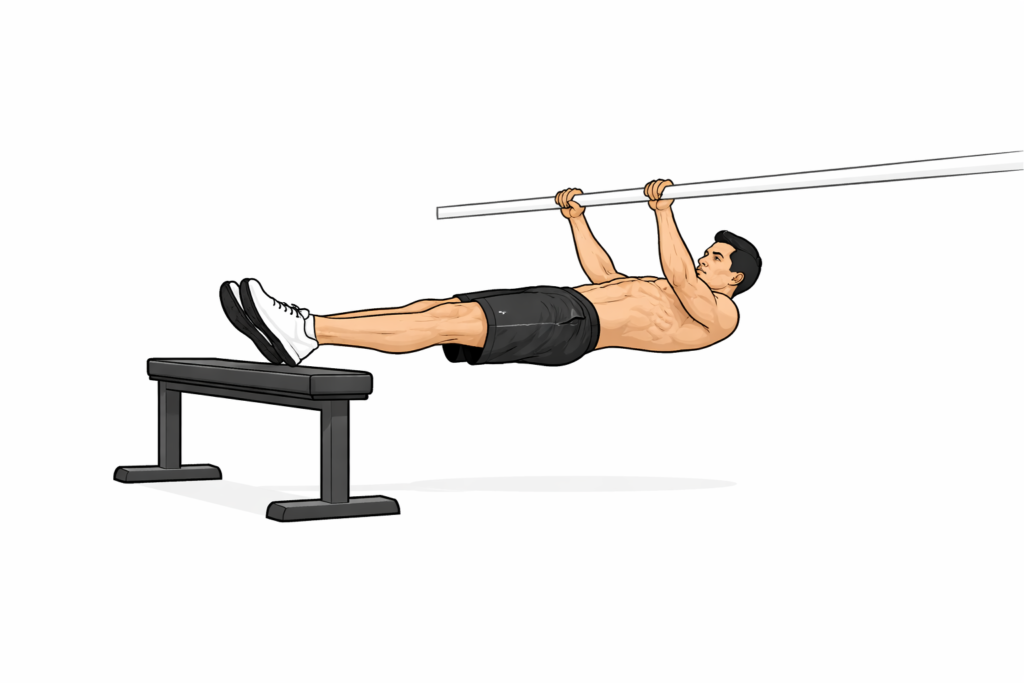
Raise your feet on a box or bench.
Now your body becomes more horizontal.
This makes the exercise significantly harder.
Even 5 reps can feel challenging.
5. Towel Rows
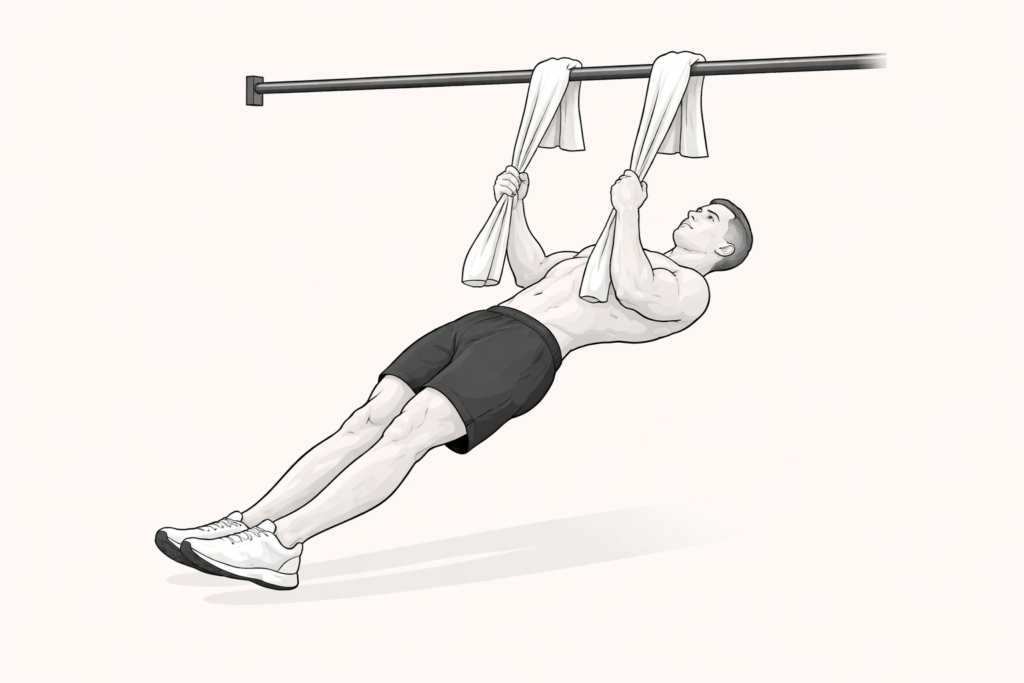
Wrap two towels over a pull-up bar.
Hold the ends.
Lean back and row.
The towels increase grip demand and activate the forearms.
Vertical pulling movements
Vertical pulling exercises emphasize the lats and upper back.
6. Pull-Ups
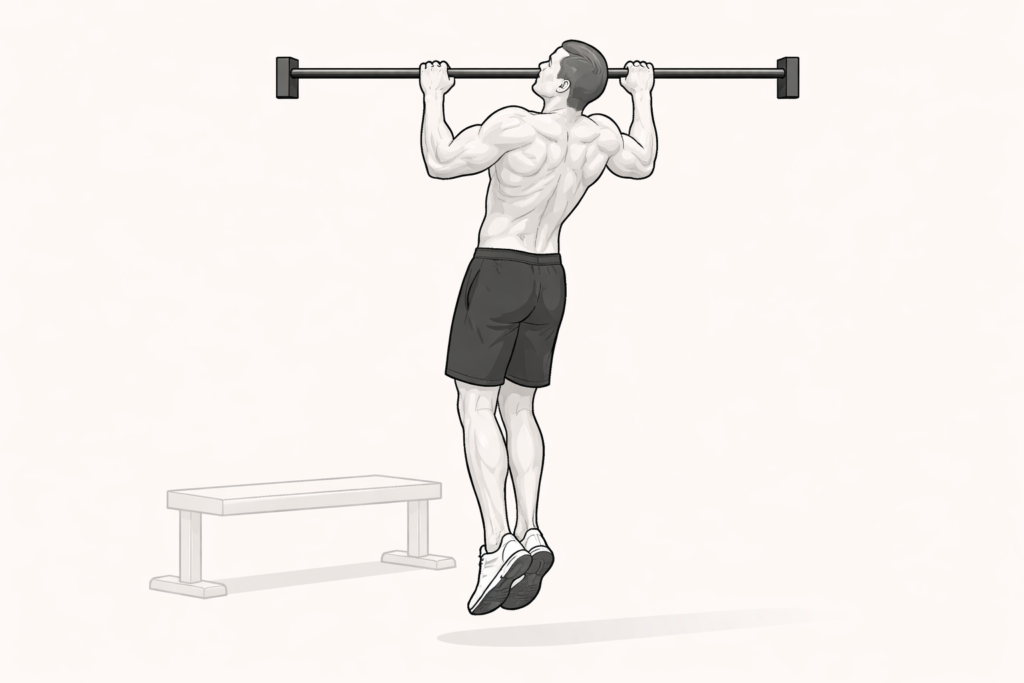
The classic movement.
Grip the bar slightly wider than shoulder width.
Pull the chest upward until the chin passes the bar.
A typical bodyweight session might include:
- 4 sets
- 5–8 repetitions per set
7. Chin-Ups
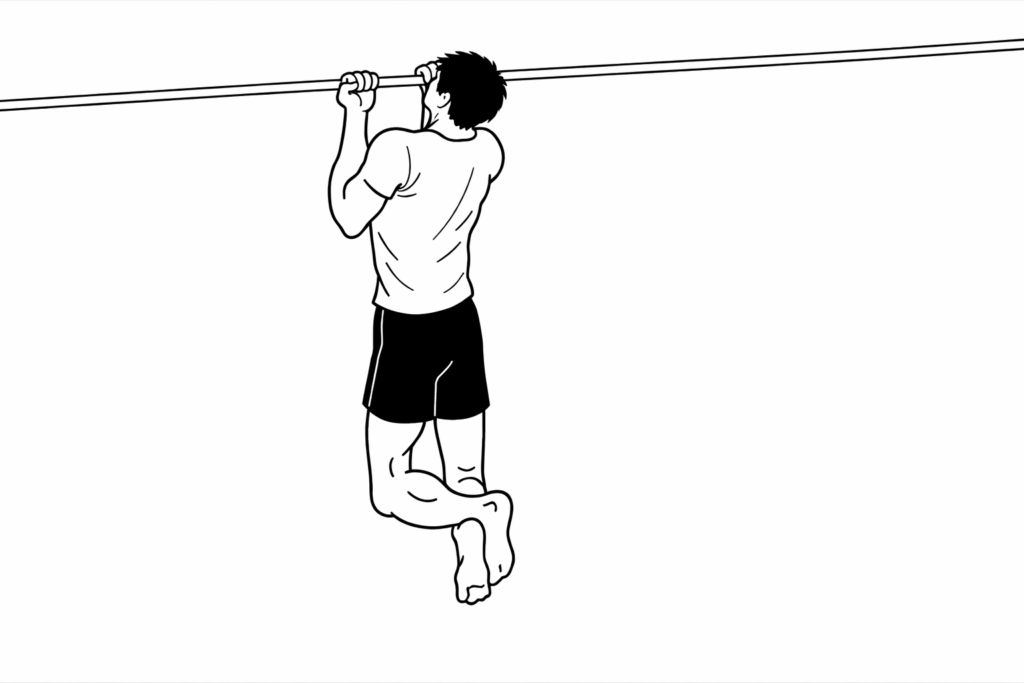
The palms face toward you.
This position engages the biceps slightly more.
But the lats still do most of the pulling.
Some people find chin-ups easier than pull-ups.
8. Commando Pull-Ups
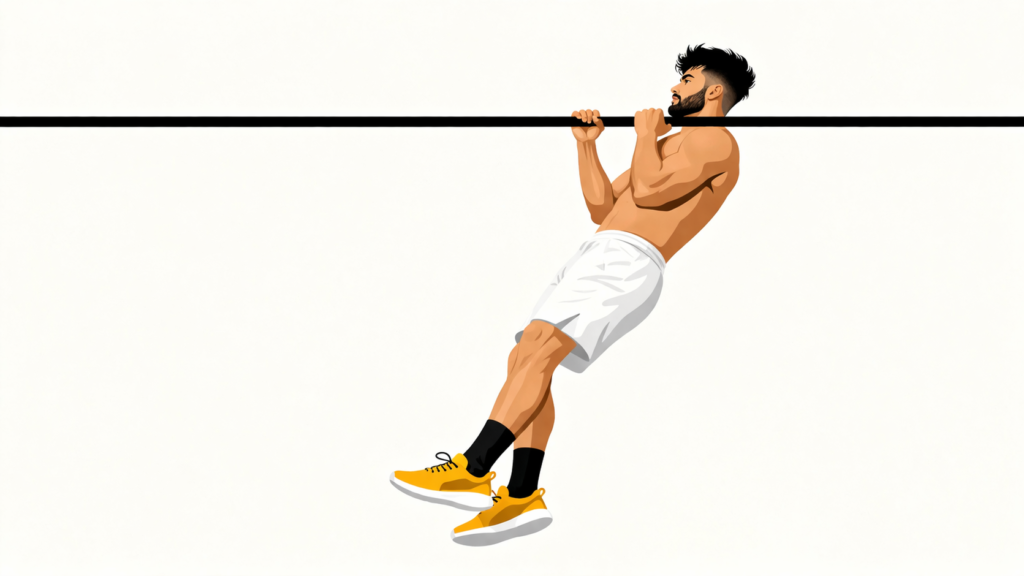
Grip the bar with one hand in front of the other.
Pull the body beside the bar instead of in front of it.
Alternate sides each rep.
The twisting angle recruits different back muscles.
9. Archer Pull-Ups
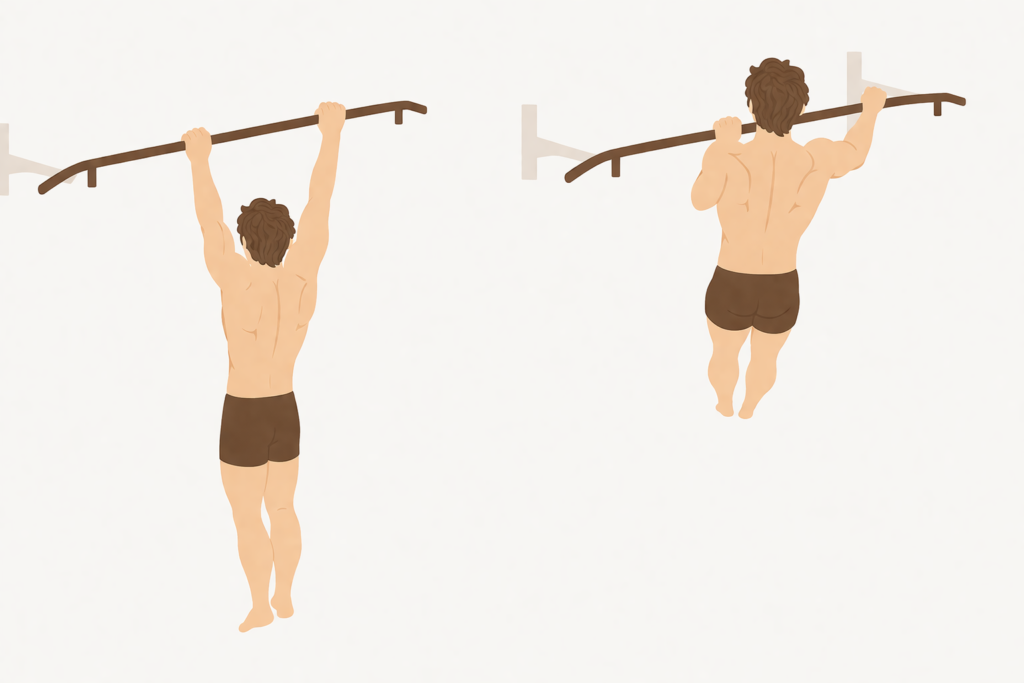
Pull mostly with one arm while the other arm stays straighter.
This builds unilateral pulling strength.
Even 3–5 controlled reps are enough to challenge the back.
Straight-arm back exercises
These movements train shoulder control and lat activation.
10. Scapular Pull-Ups
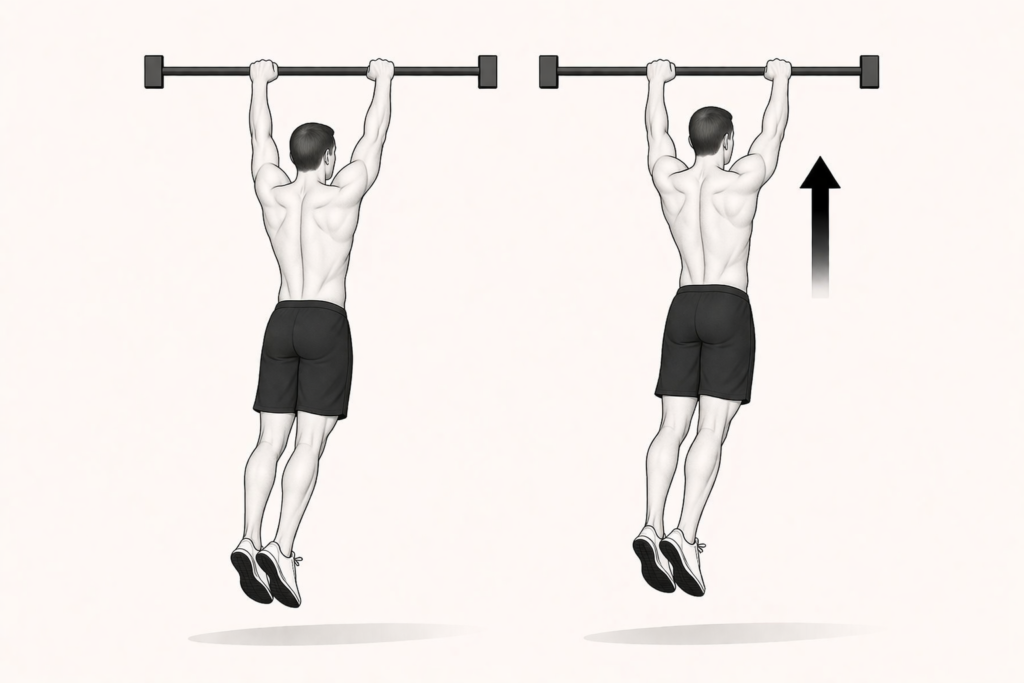
Hang from the bar.
Keep the elbows straight.
Pull the shoulder blades downward.
The body rises a few centimeters.
This movement strengthens the muscles that start every pull-up.
11. Active Hangs
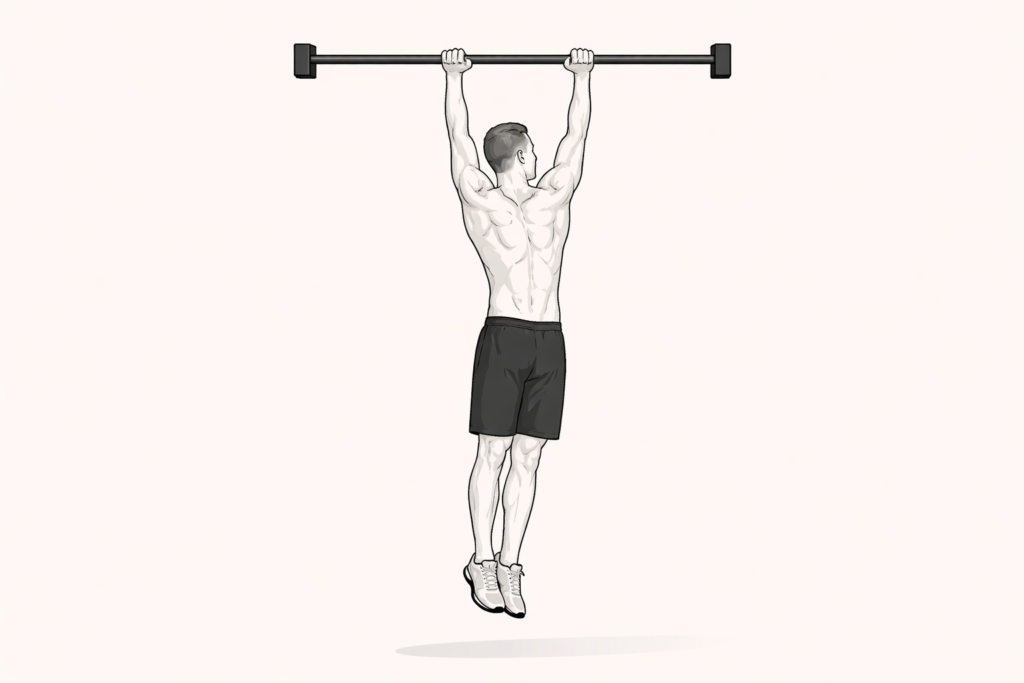
Hang from the bar.
Slightly pull the shoulders down.
Hold that position for 10–20 seconds.
This builds shoulder stability.
12. Skin the Cat (Partial Range)
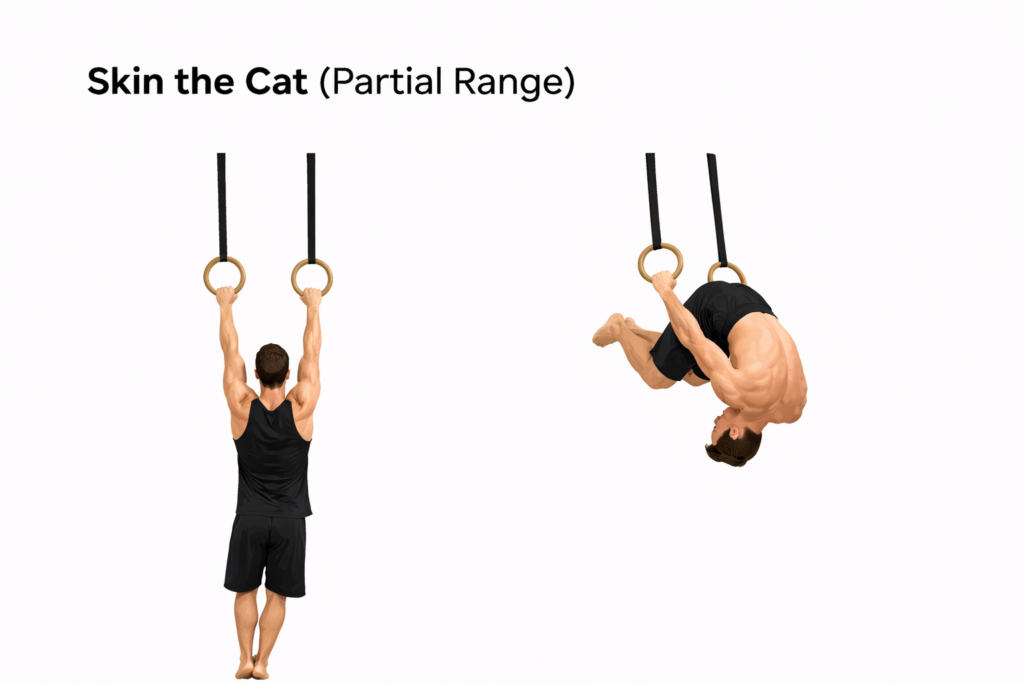
Hang from gymnastic rings or a pull-up bar.
Begin by pulling the shoulders slightly downward.
Lift the legs and rotate the body backward until the hips move behind the bar or rings.
Stop before going fully through and return slowly to the starting position.
Even a few controlled repetitions build strong shoulder and back control.
Hold a low bar while standing.
Lean slightly forward.
Raise your straight arms upward while holding the bar.
This activates the lats without elbow bending.
Floor-based back exercises
These movements train the upper back without hanging from a bar.
13. Reverse Snow Angels
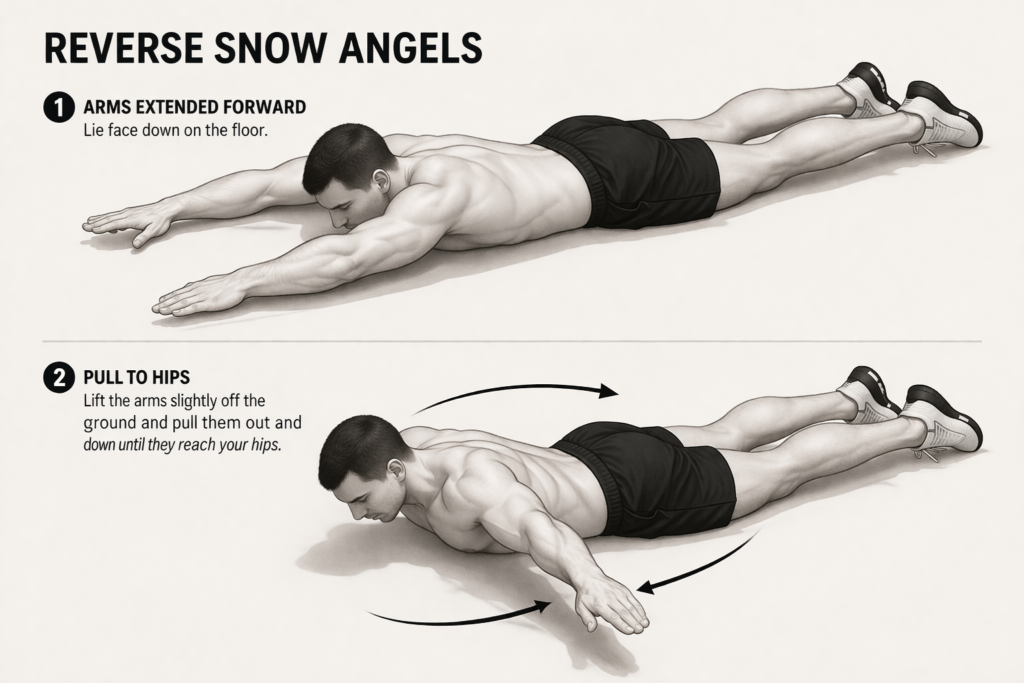
Lie face down on the floor.
Arms extended forward.
Lift the arms slightly off the ground.
Move them slowly toward the hips.
This targets the lower traps and rear delts.
14. Superman Holds
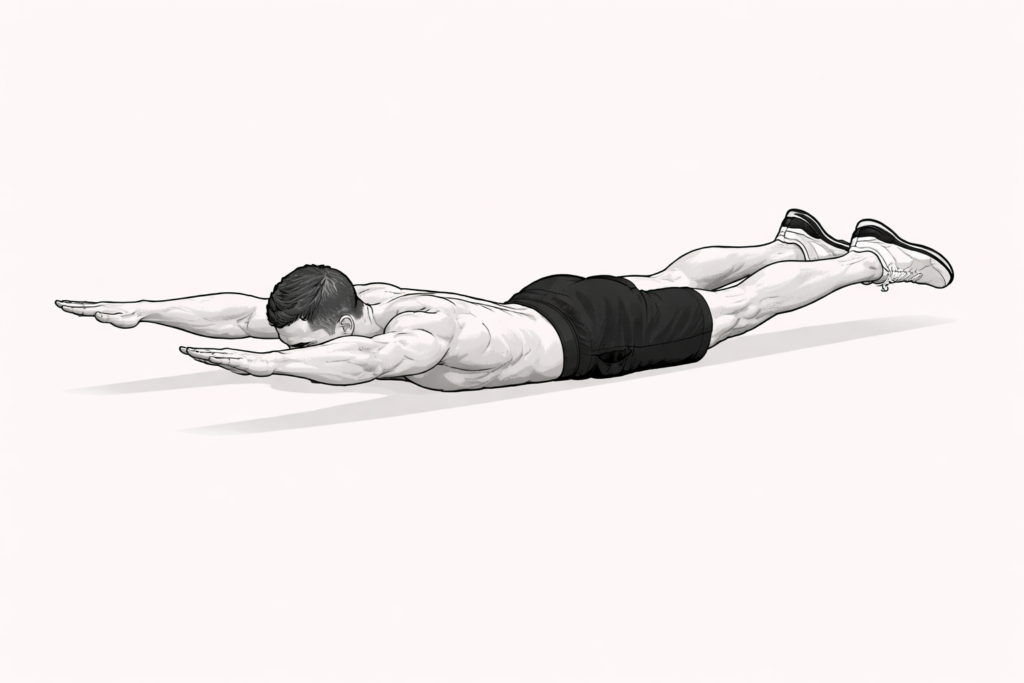
Lie face down.
Lift the arms and legs slightly.
Hold the position for 15 seconds.
The lower back and upper back both engage.
15. Prone Y Raises
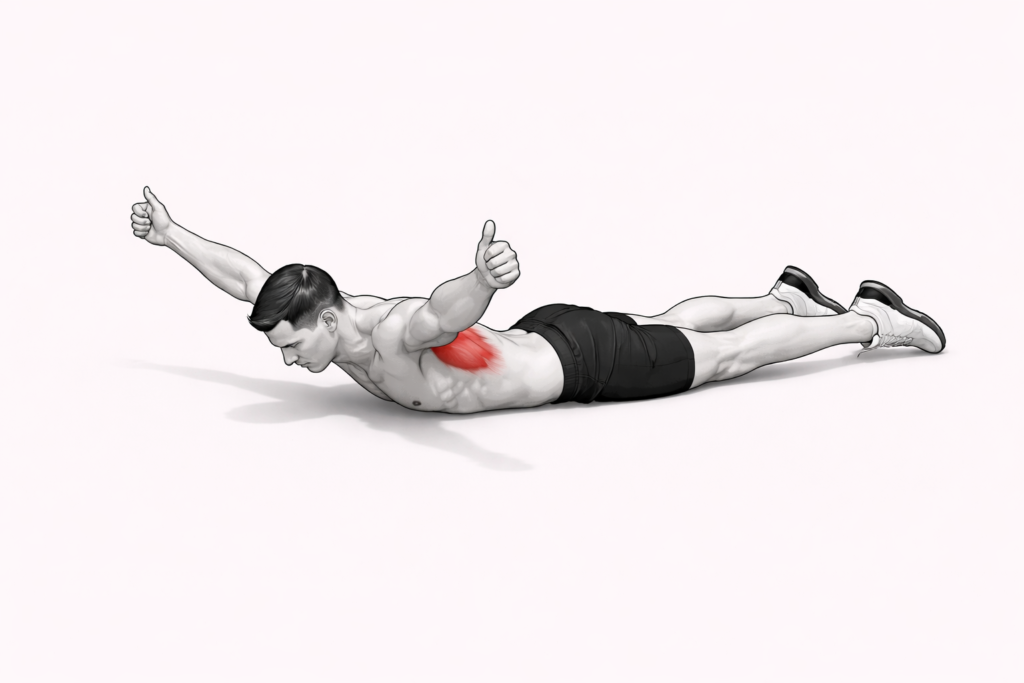
Lie face down.
Raise the arms overhead in a “Y” shape.
Hold for a moment before lowering.
The lower trapezius works hard in this position.
16. Prone T Raises
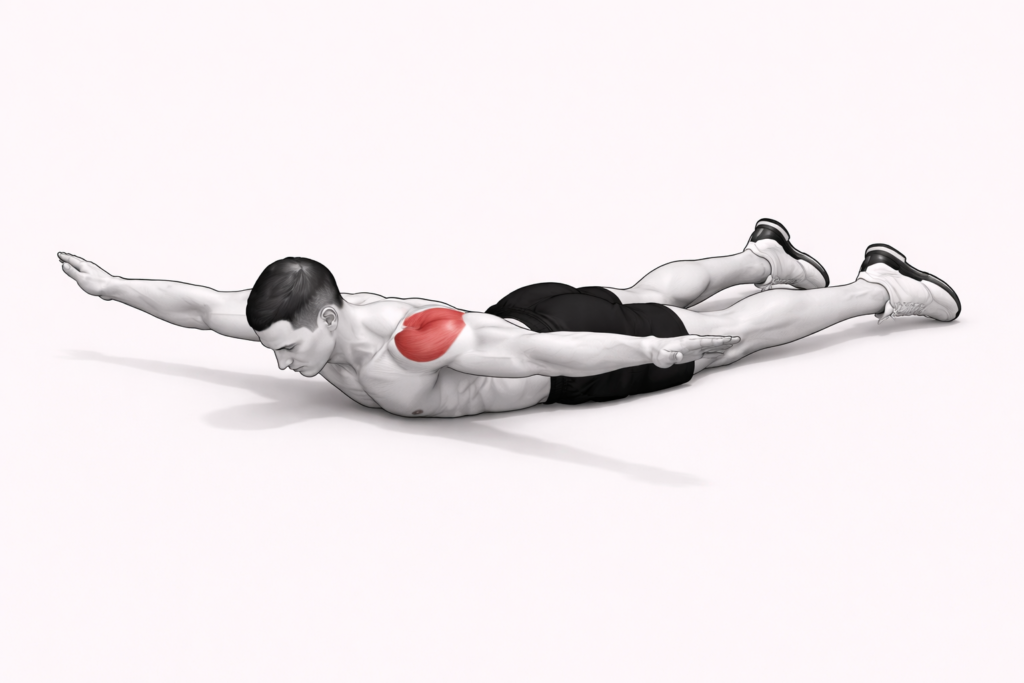
Raise the arms sideways forming a “T”.
The rear delts activate strongly here.
Hanging stability exercises
These movements strengthen the shoulders and back simultaneously.
17. Dead Hangs
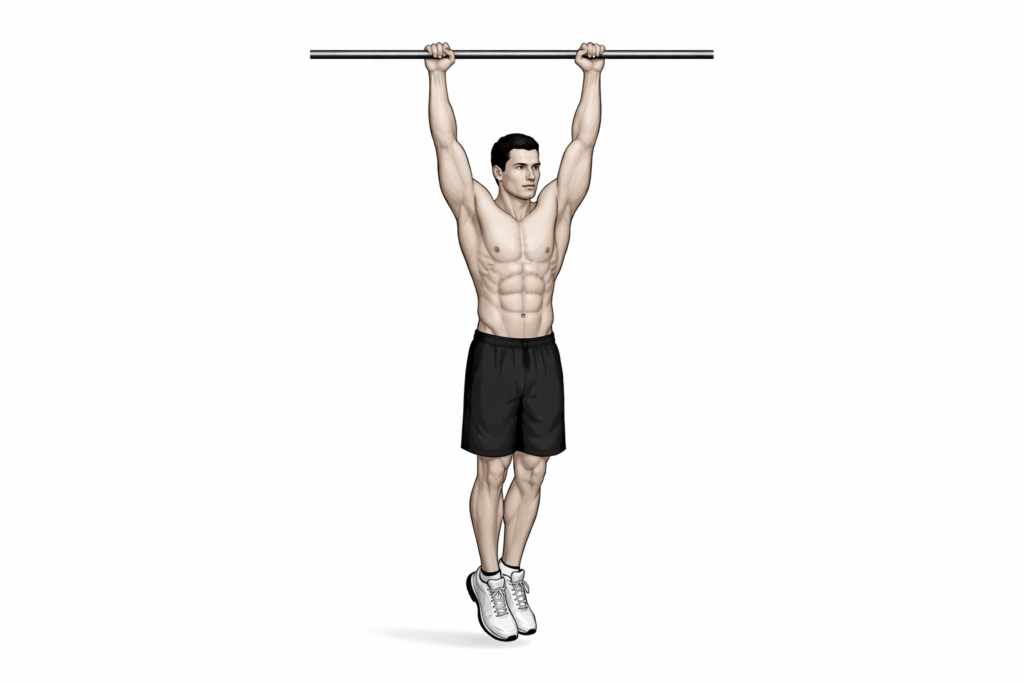
Simply hang from the bar.
Duration: 20–40 seconds.
This improves grip strength and decompresses the shoulders.
18. Scap Pull-Up Circles
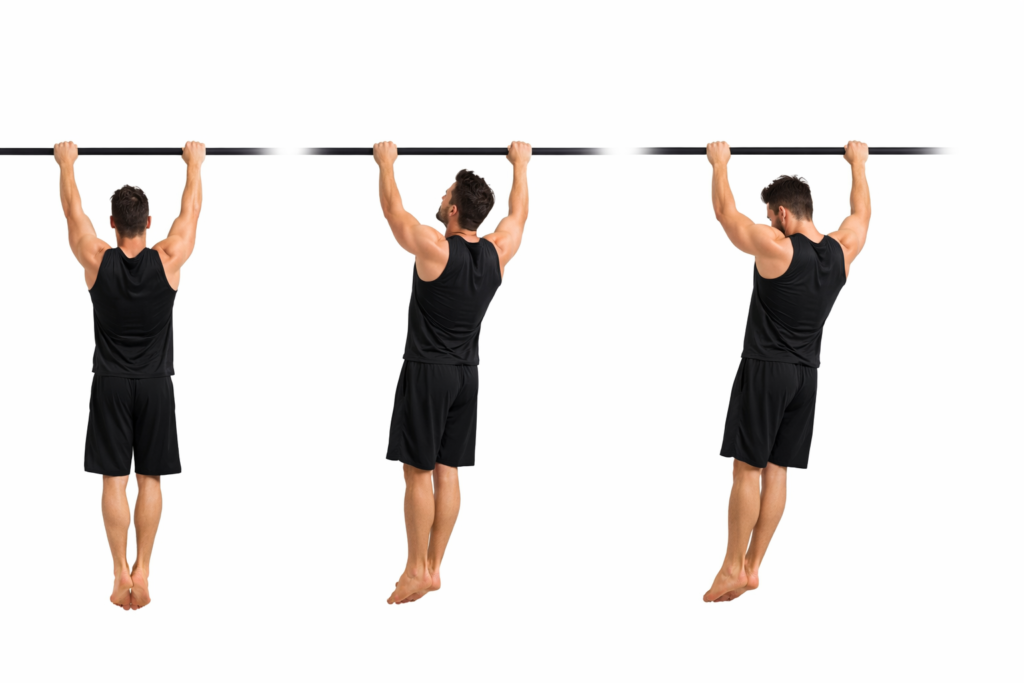
Hang from a pull-up bar with relaxed arms.
Instead of pulling up, move the shoulders slowly in small circles.
Let the shoulder blades travel forward, down, back, and up.
Keep the movement controlled and avoid swinging the body.
Perform the circles for about 15–20 seconds.
Advanced bodyweight back movements
These exercises require more strength and control.
19. Front Lever Tucks
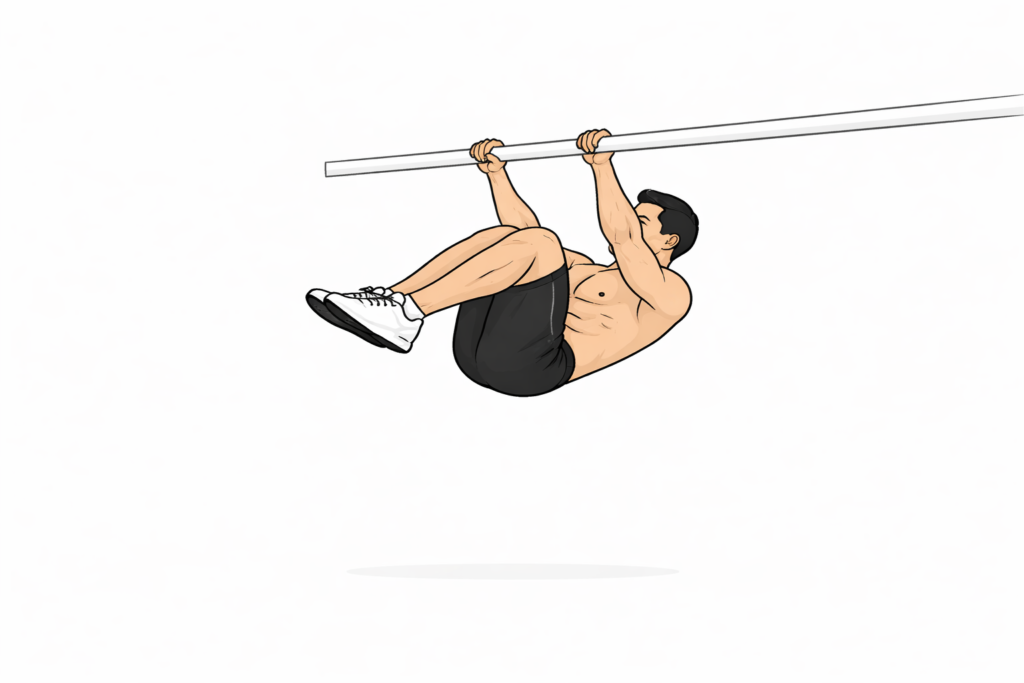
Hang from the bar.
Pull the knees toward the chest.
Lean backward until the torso becomes horizontal.
Even holding the tuck position for 5 seconds is demanding.
20. Front Lever Rows
From a tuck front lever, pull the body toward the bar.
This exercise targets the lats and mid-back intensely.
21. Ice Cream Makers
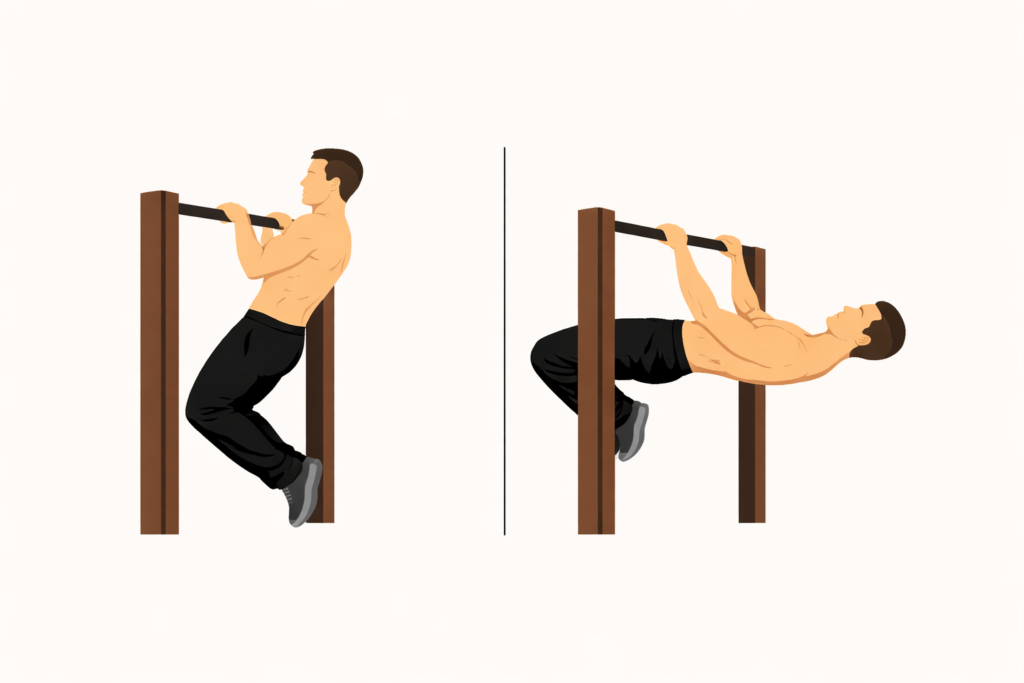
Pull into a pull-up.
Extend the body forward until it becomes horizontal.
Then return to the bar.
This combines pulling strength and core tension.
How Some of These Movements Naturally Fit Together
After experimenting with many of these back exercises over time, something interesting starts to happen.
Certain movements seem to complement each other almost automatically.
Not because they are part of a strict routine.
But because each one challenges the back from a slightly different angle.
When a few of them are placed close together in the same session, the muscles of the upper back end up working much more completely than repeating one pulling motion over and over.
Starting with shoulder control
Before heavier pulling begins, a small shoulder movement often makes everything feel smoother.
Two exercises work well here.
- scapular pull-ups × 10 repetitions
- active hang for about 15 seconds
The scapular pull-ups wake up the muscles that control the shoulder blades.
The short active hang lets the shoulders settle into a stable position before the real pulling begins.
Moving into the main pulling effort
Once the shoulders feel organized, the stronger pulling movements usually feel much more coordinated.
This is where vertical and horizontal pulls work well together.
For example:
- pull-ups × 6 controlled repetitions
- inverted rows × 10 repetitions
The pull-ups emphasize vertical pulling strength.
The inverted rows shift the work toward the mid-back and the muscles between the shoulder blades.
Adding a slightly unstable pull
At this point I often switch to ring rows × 8 repetitions.
Because the rings move slightly, the shoulders need to stabilize the movement more actively.
The back muscles still perform the pulling, but the smaller stabilizers around the shoulder blades join the work.
Finishing with a slow upper-back movement
Before leaving the back muscles alone, one slower movement often completes the work.
That’s where reverse snow angels × 12 repetitions come in.
Lying face down, the arms travel slowly from overhead toward the hips while staying slightly lifted from the ground.
The motion is not explosive at all.
But by the end of those repetitions, the muscles between the shoulder blades usually feel noticeably warm.
Why this mix feels different from repeating one exercise
Pull-ups alone are excellent for building back strength.
But repeating the exact same pulling pattern again and again tends to emphasize only certain muscles.
Combining a few different pulling angles changes that.
Vertical pulling, horizontal pulling, unstable pulling, and slow shoulder blade movements all place the tension in slightly different parts of the back.
Over time that variety helps the entire upper back develop more evenly instead of relying on a single movement pattern.
Why bodyweight back training is often underestimated
Many people assume bodyweight exercises are only for beginners.
But the back responds extremely well to them.
Changing angles.
Adjusting leverage.
Slowing the tempo.
All of these create new challenges.
And because the shoulders move freely during bodyweight exercises, the muscles around the shoulder blades learn to stabilize naturally.
That combination builds both strength and control.
Sometimes all you need for a strong back is a bar, a few creative movements, and a willingness to explore more than just pull-ups.