
I once bought a stationary bike that promised to “withstand anything.”
Two months later, it squeaked like an old door in a horror movie and started shaking every time I went above level 6 resistance.
The pedals finally gave up during a Netflix cardio session — dramatic slow motion included.
Meanwhile, a friend of mine has this old-school Schwinn from the early 2000s that looks like it survived a war and still spins smoother than a brand-new Peloton knock-off.
That’s when I started wondering: what makes some bikes practically immortal, while others die faster than your motivation on leg day?
When Price Doesn’t Tell the Whole Story
Most people assume price equals durability.
But that’s not always true.
Sure, a $1,000+ bike usually uses better parts, but I’ve seen cheaper models last for years simply because the owners took care of them — and didn’t treat them like a CrossFit sled.
The big difference isn’t just in the brand name or the marketing.
It’s in what’s inside.
A lot of budget bikes use plastic bearings or hollow cranks to cut weight and cost.
They might look sleek, but those materials wear out fast once you start doing daily HIIT or resistance sprints.
Meanwhile, bikes with sealed steel bearings, belt-driven flywheels, and solid crank arms can handle punishment for years without complaining.
Build Quality
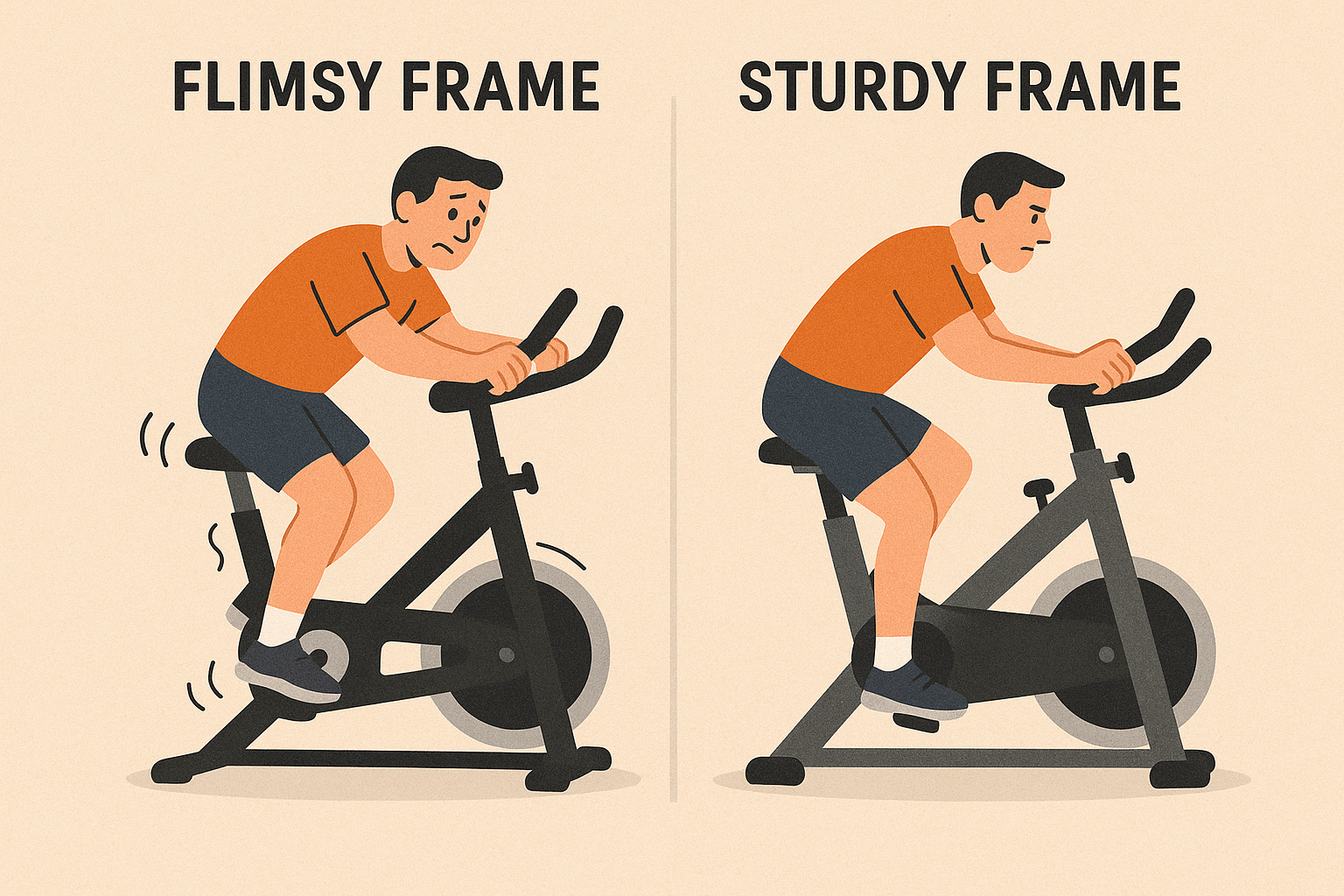
If your stationary bike feels like it wobbles every time you stand up to pedal, that’s not just annoying — it’s a red flag.
Wobble means stress on the joints, the welds, and even the flywheel alignment.
And when those parts shift even slightly over time, the whole structure weakens.
You’ll notice:
- The pedals start clicking.
- The seat starts tilting.
- The resistance feels uneven, like one leg’s pedaling through molasses.
Good bikes have a welded steel frame, not one bolted together like IKEA furniture.
They also weigh more — and that’s a good thing.
That extra 20-30 pounds means it won’t dance across the floor when you go hard.
In short: the heavier and more stable the bike, the longer it’ll live.
Lightweight usually means lightweight lifespan too.
The Role of Maintenance (aka “Don’t Ignore the Weird Noises”)
Here’s a harsh truth: most bikes don’t “break” — they’re slowly murdered by neglect.
A bit of sweat drips down the handlebars.
It sneaks into the bolts.
Over time, corrosion eats away at the metal like rust on an old car.
Cleaning after every ride and tightening bolts once a month is the difference between a smooth spin and an early funeral.
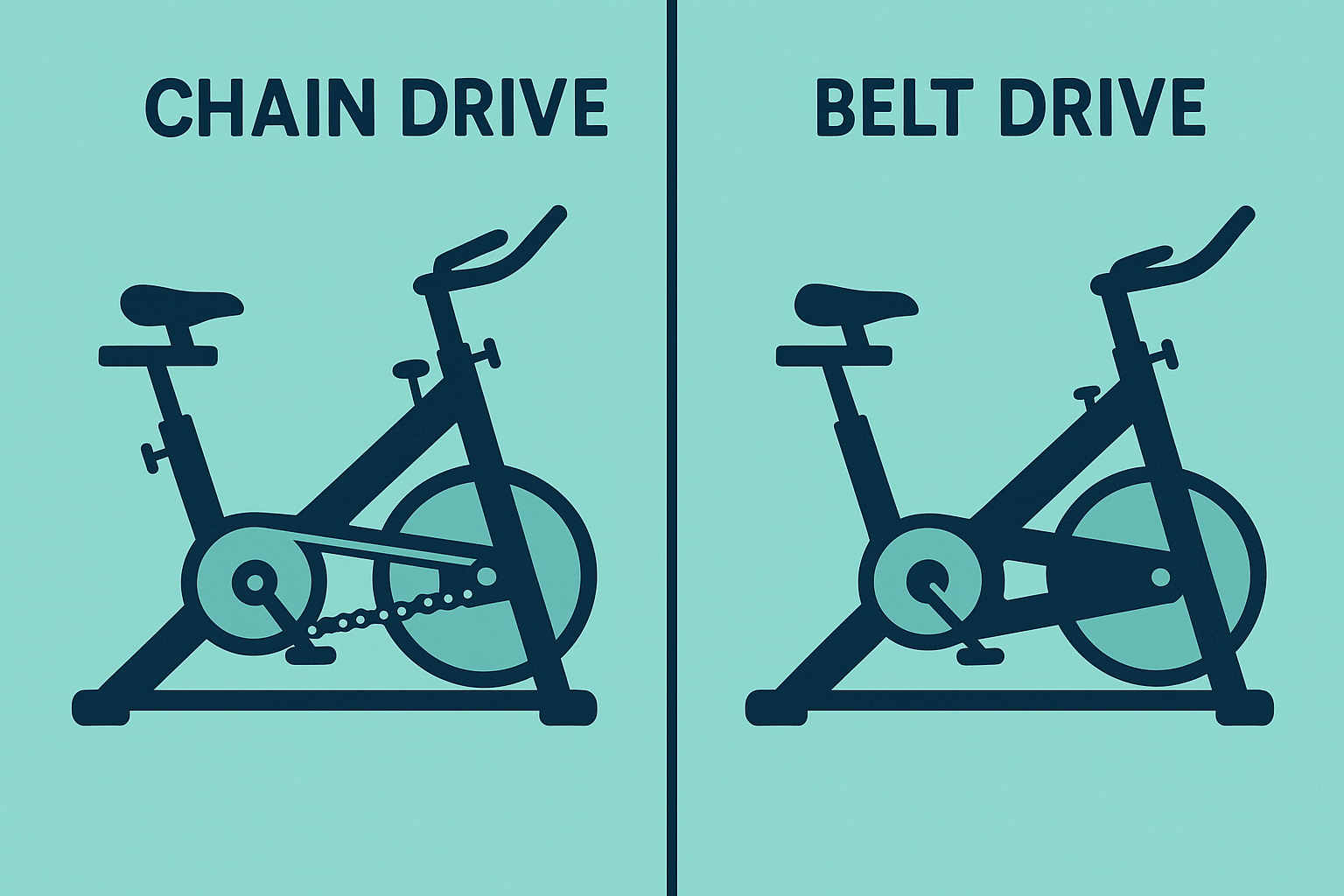
If you’re using a chain-driven bike, oil it occasionally like you would a regular bicycle.
If it’s belt-driven, keep it dust-free and don’t overtighten the tension.
Oh, and those weird squeaks and rattles?
They’re not just background noise.
They’re the bike whispering, “I’m dying, please fix me.”
How You Ride Matters More Than You Think
Two people can buy the exact same bike — one will have it for years, the other will kill it in months.
Why?
Because how you ride affects how the components wear out.
If you pedal with uneven force, push down too hard on one side, or constantly switch resistance mid-stroke, the flywheel and bearings take a beating.
Standing climbs at max resistance can also torque the frame — especially on cheaper models not built for it.
In other words, treating a lightweight spin bike like a heavy-duty assault bike is like doing box jumps on a glass coffee table.
It might work once or twice, but something’s going to crack.
Ride smoothly.
Distribute your weight evenly.
And if the manual says “not designed for standing sprints,” believe it.
The Difference Between Chain and Belt Drives
This one’s underrated.
Chain-driven bikes are like old-school outdoor bikes — they feel raw and connected, but need more maintenance and can stretch or rust over time.
Belt-driven bikes, on the other hand, are quieter and usually more durable if properly tensioned.
The key word there is properly.
If the belt is too loose, it slips and wears out the teeth.
Too tight, and it strains the bearings.
That’s why bikes with auto-tensioning belts or magnetic resistance systems tend to last longer — fewer moving parts, less friction, fewer chances for something to go wrong.
Environment: Where You Keep It Can Make or Break It
Humidity, dust, and temperature matter more than most people realize.
A garage gym might seem perfect — until winter moisture starts corroding the flywheel.
Likewise, leaving it near a window that gets daily sun can dry out the rubber grips and plastic parts.
If you want your bike to live long, treat it like a pet:
- Keep it indoors, away from humidity.
- Wipe off sweat after every ride.
- Cover it if you’re not using it for weeks.
Simple, boring habits.
But they work.
What the Long-Lived Bikes Have in Common
After years of seeing which bikes survive and which bite the dust, here’s the pattern:
- Heavy steel frames (no cheap welds or bolts).
- Belt drive or sealed chain systems.
- Flywheel weight around 30–40 lbs for stability.
- Adjustable resistance that doesn’t rely on friction pads alone.
- Regular maintenance (yes, that means wiping it down).
None of this is rocket science.
It’s just consistency — from both the machine and the human using it.
Materials & Components You Should Know
Let’s get even nerdy for a moment.
In case you really want to “buy once, cry once” rather than “buy cheap, cry early.”
Flywheel weight and inertia
A heavier flywheel stores more rotational energy, which means smoother pedaling and less shock to the drivetrain when you change pace.
If you’re zig-zagging resistance or doing HIIT style sprints, that smoother inertia helps reduce wear on the chain/belt and bearings.
Sealed bearings vs open bearings
Sealed bearings keep out dust, sweat, debris.
Open bearings are cheaper to manufacture, but much more vulnerable, especially in a sweaty home gym environment.
Check the specs: if it says “maintenance-free sealed bearings,” that’s a plus.
Frame weld quality & material thickness
Look at the frame joints.
Are there smooth welds or… sketchy seams?
Thick-walled tubing is better than thin gauge steel cut to shed weight.
Better for structural longevity.
Resistance mechanism types
- Friction pads: cheap, simple, but pads wear out and generate heat.
- Magnetic: quieter, low wear, often higher cost.
- Fan/air: great for sweat-cooling and realism, but the fan blades and belt (or chain) see constant stress.
Components exposed to sweat
Pedals, crank arms, seat post, adjustment levers. If these are cheap alloy or plastic, your sweat will corrode them.
Stainless or treated steel fares better.
So yes, wiping down after each ride matters more than you think.
User Behavior Patterns That Kill Bikes (and How to Avoid Them)
Here’s where I get real with you — because I’ve made these mistakes myself.
- Jumping resistance too fast: I once cranked my bike to max after a week of use. The next session it was clicking like a bad wrench. Don’t rush. Ramp up gradually.
- Standing too often on a light-duty bike: The one I got cheap tried it and the frame twisted slightly. Lesson: if you stand, make sure the bike is rated for it.
- Using the bike in a damp basement without a dehumidifier: That rusted the flywheel hub. Now I keep a little fan and moisture absorber nearby.
- Skipping tune-up checks: I treated the pedals like “fit and forget” and they eventually stripped. Tighten bolts monthly.
- Ignoring odd noises: I once heard a faint hum and ignored it. Weeks later the belt slipped and I was repairing parts. If it sounds off — fix it early.
How to Know When It’s Time to Replace a Stationary Bike
Yes, even the best models eventually wear out.
Here are some signs:
- Persistent abrasive noise even after maintenance.
- Pedals or crank arms have lateral play (wiggle side to side).
- The flywheel wobbles at high RPMs.
- Adjustment mechanisms (seat height, handlebar reach) are stripped or don’t hold.
- The bike manufacturer no longer sells replacement parts.
If you’ve hit any two or more of those, it might be time to retire that piece of equipment — or upgrade to something built for the type of workouts you’re really doing.
Future Trends in Indoor Bikes: What to Watch For
So you wanna stay ahead of the curve?
Here are things I’m keeping an eye on:
- Smart bikes with auto-tensioning belts: The belt adjusts itself to optimal tension — less maintenance, longer life.
- Direct-drive systems: Some premium bikes eliminate chain/belt altogether and drive the flywheel directly via a shaft or magnetic drive — fewer moving parts to wear out.
- Materials upgrades: Carbon or aerospace-grade alloys creeping into home bikes — lighter and stronger if done right.
- Big data maintenance alerts: Smart bikes that monitor internal resistance wear, belt tension degradation, and alert you when parts are nearing replacement.
- Sustainable design & modular parts: Bikes designed so you can replace major components (flywheel, belt drive module, frame) rather than throwing the whole machine away.
Quick Maintenance Checklist (Print-Ready)
Here’s a one-page checklist you can print and keep near your home gym:
- After each ride: wipe down the frame, handlebars, seat, controls — remove sweat.
- Weekly: vacuum or dust around flywheel and belt/chain area.
- Monthly: check bolt tightness (seat post, handlebar stem, pedal cranks).
- Every three months: inspect belt or chain tension + lubrication.
- Twice a year: inspect frame welds/joints for cracks or deformation.
- Annually: validate flywheel alignment — spin at medium resistance and check for wobble or side-play.
- As needed: replace worn parts (belt, pedals, seat) rather than waiting for catastrophic failure.
How to Choose a Stationary Bike for Longevity
If you’re shopping now — here are the criteria I’d personally use:
- Frame rating: look for weight limit + standing/user sprint rating.
- Flywheel weight: go for 30 lbs+ if you’ll use it hard.
- Drive system: belt drive preferred for low maintenance.
- Resistance type: magnetic > friction for wear reasons.
- Brand & parts support: can you still buy replacement parts in 5 years?
- Warranty: full frame vs parts vs labor — longer warranty often signals confidence in durability.
- User reviews focusing on durability, not just features.
Ever wondered why two bikes can feel completely different even at the same resistance?
Check out
Why Stationary Bikes Feel So Different — and How That Affects Your Leg Activation
to see how flywheel design, frame geometry, and drive type can change your leg activation and overall ride feel.
Final Thought
You want your stationary bike to last?
Then you’ve got to think of it as more than a purchase.
You’ve got to think of it as a tool — one that deserves respect, time, and a little bit of TLC.
Buy the best you can afford, ride it properly, maintain it, and treat your environment kindly.
And it’ll reward you with years of smooth spins, not months of frustration.
Now you’ve got the full roadmap — mechanics, user behavior, future trends, replacement timing.
Go forth and pick your machine well.