
At first glance, those videos of people typing emails while walking look almost comical.
Balancing spreadsheets and steps at the same time?
That’s multitasking on a whole new level.
But remote work has changed the way people move — or don’t move.
After months of sitting through endless meetings, sore backs, and stiff hips, many remote workers are turning to under-desk treadmills as the ultimate fix.
The real question is: do these walking pads actually help, or are they just another passing trend dressed up as a productivity hack?
Let’s find out what really happens when the home office starts moving.
When Working From Home Starts Wrecking Your Body

Working from home sounds amazing until the body starts rebelling.
From bed to chair, and suddenly it’s 6 p.m. with less than 1,000 steps logged.
Sitting for long hours doesn’t just make the glutes disappear — it rewires posture, shortens hip flexors, compresses the spine, and even slows circulation to the lower body.
Research from the Mayo Clinic shows that prolonged sitting decreases NEAT (Non-Exercise Activity Thermogenesis), which is basically all the calories burned from daily movement outside of formal workouts.
When NEAT drops, metabolism and energy levels follow.
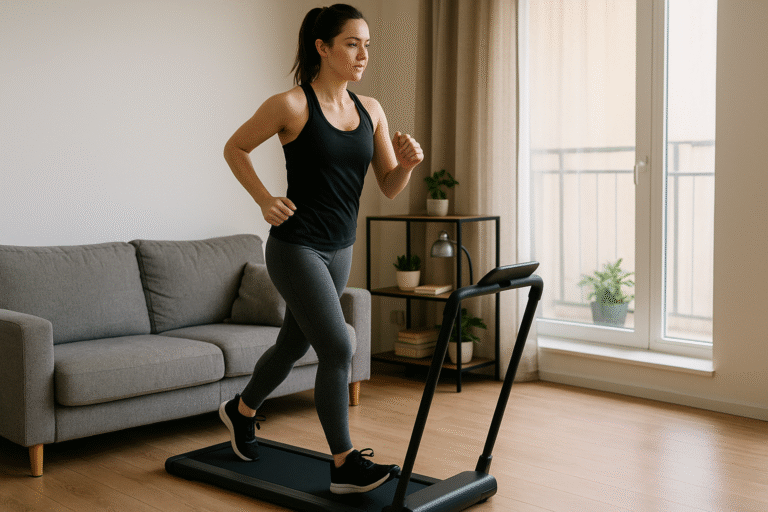
That’s where under-desk treadmills sneak into the scene — compact, quiet, and designed to keep you moving without leaving your workspace.
The walking rhythm that changes your day
No one’s sprinting while typing emails, and that’s perfectly fine.
The magic lies in slow, steady movement.
Walking even 1.5 to 2 mph helps increase blood circulation, oxygen delivery to the brain, and stimulates mild muscular activation in the glutes, calves, and core — without breaking a sweat.
The result?
Fewer afternoon crashes, less stiffness, and a subtle but steady boost in concentration.
Some people even notice better digestion and less back pain after a few weeks of consistent daily walking.
It’s like caffeine — minus the heart palpitations and 3 p.m. crash.
Calories, mood, and the sneaky benefits
Under-desk treadmills won’t turn a Zoom meeting into a fat-burning bootcamp.
But they do elevate your baseline energy expenditure — quietly but consistently.
Depending on walking pace, body weight, and incline angle, users burn anywhere from 100 to 200 calories per hour.
That’s not gym-level output, but it’s metabolic gold when done daily.
Over time, these small burns compound — improving circulation, lowering cortisol, and even stabilizing blood sugar.
It’s not a “workout,” but it’s what prevents your body from sliding into sedentary chaos and the all-too-common “desk slump.”
The ergonomics factor nobody explains well
Most people forget one crucial part: the setup.
Without a proper standing desk or monitor riser, walking while typing can become an ergonomic nightmare.
To avoid hunching forward, keep the monitor at eye level and wrists parallel to the keyboard.
Shoes with slight cushioning or even anti-fatigue mats can help reduce joint pressure during long walks.
This is where “ergonomic stacking” matters — combining a walking pad, a height-adjustable desk, and proper monitor positioning creates a setup that actually supports your musculoskeletal system instead of overloading it.
When done right, the treadmill becomes part of your recovery, not another stressor.
💡 Related: If you’re wondering how these compact treadmills compare to other space-saving machines, check out
Do Walking Pads Offer the Same Benefits as Foldable Treadmills in Small Spaces?
It breaks down the pros, limits, and real performance differences — so you can pick the one that actually fits your home setup.
Under-desk treadmill vs. standing desk: which helps more?

Standing desks were once the big hero of remote work wellness — until people realized that standing still all day just makes legs ache in new ways.
Under-desk treadmills take that same principle and fix its flaw: movement.
Instead of shifting weight from one foot to another, walking stimulates active circulation and postural engagement.
In short, standing desks stop the damage; walking pads reverse it.
They reintroduce the micro-movements our joints and muscles are built for — the kind that keep metabolism elevated and the spine naturally aligned.
How Walking Keeps Your Brain Sharp at Work
Several studies from Harvard Health and Stanford University highlight how light physical activity can improve cognitive performance and creativity. (Exercise can boost your memory and thinking skills)
Walking increases blood flow to the brain’s prefrontal cortex — the area responsible for decision-making and problem-solving.
That’s why ideas seem to appear out of nowhere during walks.
This same mechanism applies to under-desk walking: gentle movement keeps the mind alert without distraction.
Some companies that introduced walking desks even reported higher productivity and reduced fatigue over time.
It’s not magic — it’s physiology in motion.
Building a realistic routine around it
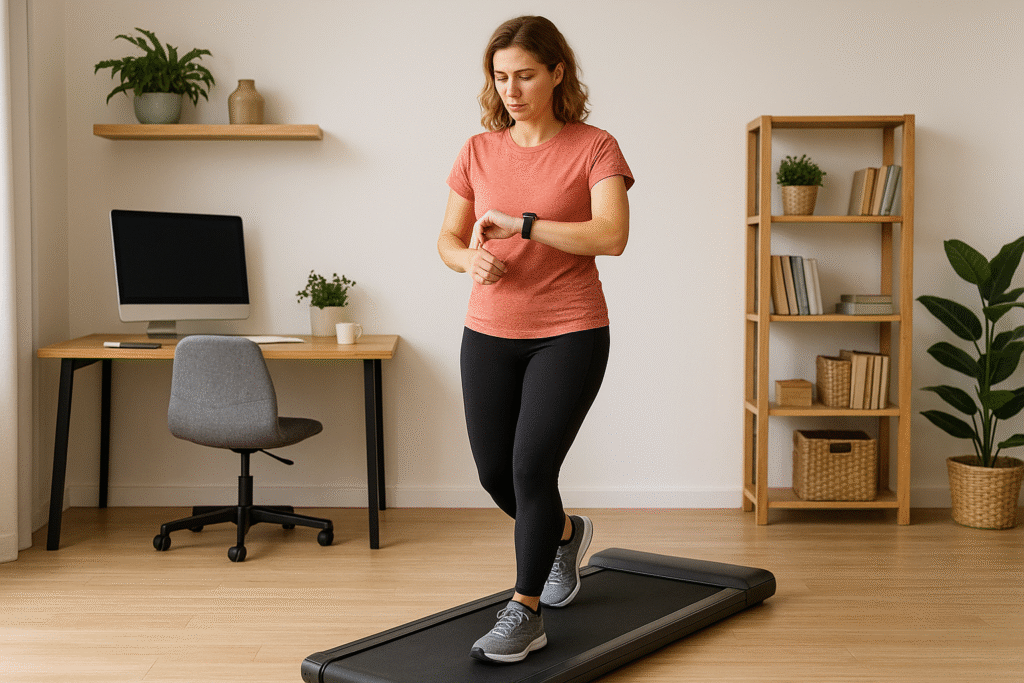
The key to making under-desk treadmills actually work isn’t walking nonstop — it’s scheduling movement like a habit.
For most remote workers, a realistic rhythm looks like:
- 1 hour of walking in the morning (during emails or planning time)
- 1–2 shorter sessions throughout the afternoon
- Finishing with 10–15 minutes before logging off
This pattern breaks up sedentary time and maintains circulation without fatigue.
Consistency matters more than duration.
Even light movement done daily can reduce insulin resistance, improve cardiovascular health, and prevent that end-of-day stiffness everyone knows too well.
The downsides nobody puts in the ads
Let’s keep it real.
Under-desk treadmills aren’t miracle workers.
They require space, and without the right desk setup, your shoulders and wrists can suffer.
Walking while on a call? Prepare for the occasional microphone wobble.
Overdoing it can also lead to fatigue — both physical and mental.
Walking for three or more hours straight might sound productive, but the body still needs variation: stretching, sitting, and even full rest.
Like any training tool, it’s only effective when used intentionally and balanced with recovery.
Before you buy, read our no-nonsense checklist:
What Should You Look for When Buying a Compact Treadmill for Small Spaces? — motor, deck size, noise, foldability, and more made simple.
Are Under-Desk Treadmills Just Hype or the Future of Remote Work?
Honestly, it’s a bit of both.
For some, it’s the ultimate remote-work gadget that gathers dust after two weeks.
For others, it quietly transforms their energy, focus, and daily rhythm.
The truth is simple: it’s not about turning your home office into a gym.
It’s about refusing to let work turn the body into furniture.
A slow, steady walk while sending emails may not be glamorous — but it’s often the missing link between “surviving the day” and feeling human again.
Because in the end, real wellness isn’t found in apps or gear — it’s found in those small, consistent movements that keep you alert, alive, and evolving.
FAQs About Under-Desk Treadmills
How long should you walk on an under-desk treadmill each day?
Most people find that 1 to 3 hours per day at a slow pace (1.5–2 mph) is the sweet spot.
It’s long enough to boost circulation and energy, but not so much that it causes fatigue.
The goal isn’t to burn out — it’s to move just enough to prevent full “chair mode.”
Can walking while working really improve productivity?
Yes — as long as the pace stays slow and steady.
Light movement helps blood flow to the brain, improves alertness, and reduces mid-afternoon crashes.
Think of it as background energy — subtle, but surprisingly powerful for focus and mood.
Are under-desk treadmills noisy?
Most modern models are quiet enough for calls and meetings.
They produce a low hum similar to a fan.
Placing a mat underneath helps minimize vibration and keep peace with your downstairs neighbor.
Do under-desk treadmills replace real exercise?
Not really.
They’re great for increasing NEAT and keeping you active through the day, but they won’t replace strength or cardio training.
Think of it as the foundation that supports your workouts — not a replacement for them.