I’ll be real with you from the start.
I’ve only done towel curls a couple of times in my life.
Not during some experimental arm routine.
Not because I read about them on a forum.
Just one of those days when I ended up in a tiny, equipment-starved home gym and refused to waste the session.
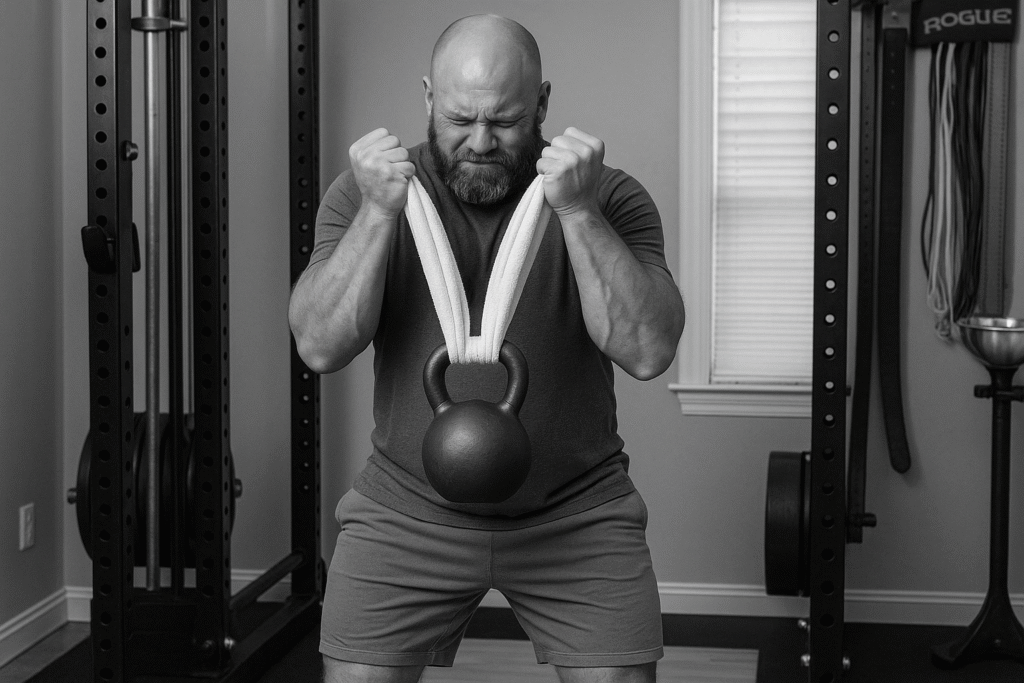
I grabbed a towel, looped it around a dumbbell, and curled it because… what else was I supposed to do?
And here’s the honest part:
When you really focus on the pull, keep the towel tight, control the tension, and don’t let the movement get sloppy… you feel them.
More than you’d expect.
It didn’t turn me into a towel-curl fanatic overnight.
But it definitely made me curious enough to ask the same thing you’re probably thinking right now…
| Quick Take: Are Towel Curls Worth It or Not? |
|---|
| If your goal is maximum biceps hypertrophy, towel curls are a side dish, not the main course.
But if you want stronger forearms, better grip, more arm stability, and curls that don’t feel like autopilot… towel curls absolutely earn their spot. They’re not placebo. They’re not magic. They’re a simple, creative tool that hits your arms differently. Sometimes that’s all you need. |
What Towel Curls Really Do (Beyond the Weird Vibes)
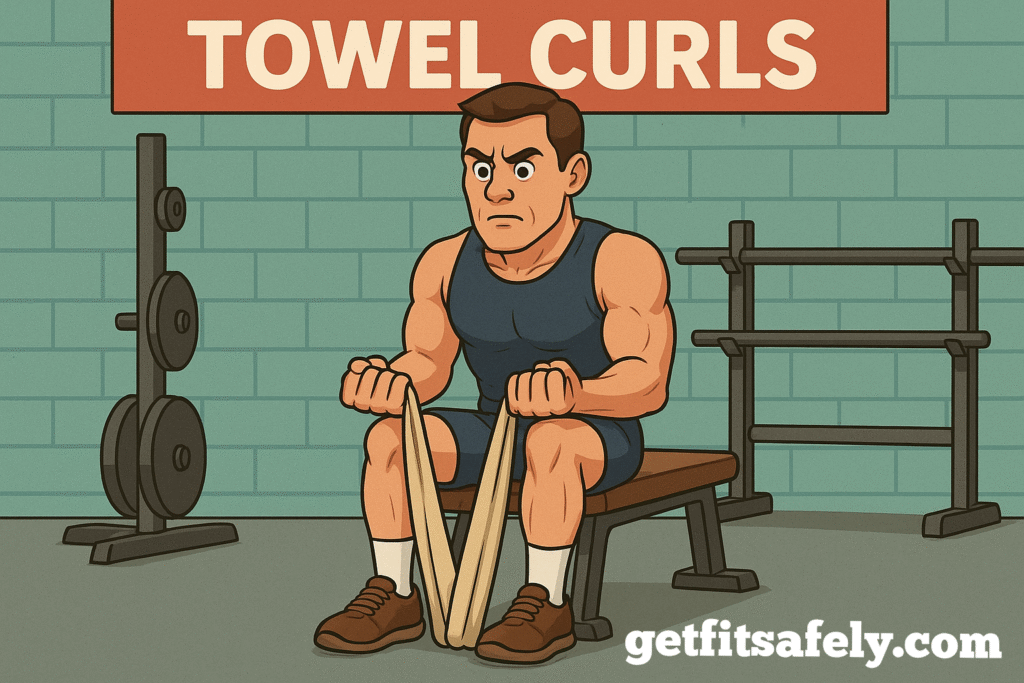
A towel curl is basically a curl with built-in instability.
You take a dumbbell, wrap a towel around the handle, grab the ends, and suddenly your arms are dealing with instability they never asked for.
Your fingers, wrist flexors, forearms, and brachialis jump into the fight.
Your biceps still carry the load, but they’re sharing the stage instead of being the solo act.
That shaky, uneven feeling?
It’s intentional.
It forces your arms to stabilize, squeeze, and control every inch of the movement.
Are Towel Curls Good for Biceps Growth?
Short version: yes, but not in the “throw your preacher bench away” kind of way.
Towel curls create tension, but they also redirect a ton of that effort into grip and stabilization.
That means:
- They build biceps, but not as efficiently as traditional curls.
- They hit forearms much harder.
- They improve grip strength without needing a dedicated grip workout.
- They increase arm density by training multiple stabilizers at once.
They’re not the foundation of a biceps program.
But they’re a great accessory movement when you want something different—or when your equipment options are garbage.
How Towel Curls Compare to Regular, Hammer, and Cable Curls
People who search “Are towel curls effective?” usually want a simple comparison.
So here’s the straightforward version.
Regular curls → better pure biceps overload.
Hammer curls → better brachialis and grip without instability.
Cable curls → smooth, consistent tension.
Towel curls → grip strength, forearm thickness, and making light weights feel heavy.
It’s not a replacement.
It’s a niche tool with a specific benefit.
How to Progress Towel Curls Without Overthinking It
Towel curls aren’t about chasing a giant PR.
You progress them differently.
Here’s the clean and useful version:
- Slow the eccentric.
- Lower in 3–4 seconds.
- Instant upgrade in difficulty.
- Choke up on the towel.
- Hold your hands closer to the dumbbell.
- Less leverage = more work.
- Use a thicker towel.
- More surface → more grip fatigue → more forearm activation.
- Add a top-end squeeze.
- Pause 1–2 seconds at the top.
- Pull the ends outward gently.
- Stick to moderate-high reps.
- They shine in the 12–20 range.
You’ll feel it right away.
Where Towel Curls Go Wrong (And How to Make Them Actually Work)
Most people don’t hate towel curls because they’re bad.
They hate them because the way they’re doing them guarantees the exercise won’t work.
It’s not about strength.
It’s about control.
And the towel punishes you the moment you lose it.
Here are the spots where everything tends to fall apart — and how to fix them without turning the movement into a science project.
1. When the towel is too long and the weight starts drifting
If the towel hangs so low you could mop the floor with it, the dumbbell has a mind of its own.
Shorten it.
Bring your hands closer.
Make the setup tight so the weight follows you, not the room.
2. When the dumbbell starts swinging like a tiny wrecking ball
If it’s swinging, you’re not curling — you’re just surviving momentum.
Pull both ends of the towel evenly.
Think “steady pull” instead of “yank and hope for the best.”
3. When you rush the rep because the instability feels uncomfortable
Fast reps kill the whole purpose.
Slow reps let the tension settle into your forearms and biceps instead of into panic mode.
Control = results.
4. When the shoulders creep up and steal the load
The moment your traps rise, the exercise is done.
Drop the shoulders.
Keep the elbows tucked.
Let the arms earn their paycheck.
5. When one hand grips harder and the weight tilts sideways
A tilted towel turns the curl into an accidental oblique workout.
Match your grip.
Mirror the tension on both sides.
Keep the towel flat and balanced.
6. When the weight is too heavy and the towel beats you
People only hate towel curls because they start too heavy.
Pick a dumbbell you can dominate.
Once you own the movement, then you scale it.
7. Why fixing these details changes everything
Clean towel curls hit differently.
Suddenly the instability becomes the feature, not the problem.
Your forearms wake up.
Your biceps stay tight.
Your grip stops being the weak link.
That’s when the exercise goes from “gimmick” to “actually worth my time.”
Final Thoughts
Try adding towel curls at the end of your arm day or on a day when heavy curls just don’t feel right.
Give them a fair shot for a couple of weeks.
Play with the grip.
Experiment with the tempo.
You’ll know fast if they belong in your routine.
Either way, your arms will learn something.
And that’s always worth it.