I’m just going to say it upfront because sugarcoating isn’t the vibe today.
A lot of people are absolutely convinced that sit-ups are useless, outdated, and maybe even dangerous.
And a lot of people are equally convinced that leg raises are the new religion of core training.
Meanwhile, most of us are just trying to figure out why our lower back feels like it’s writing a complaint letter every time we do either.
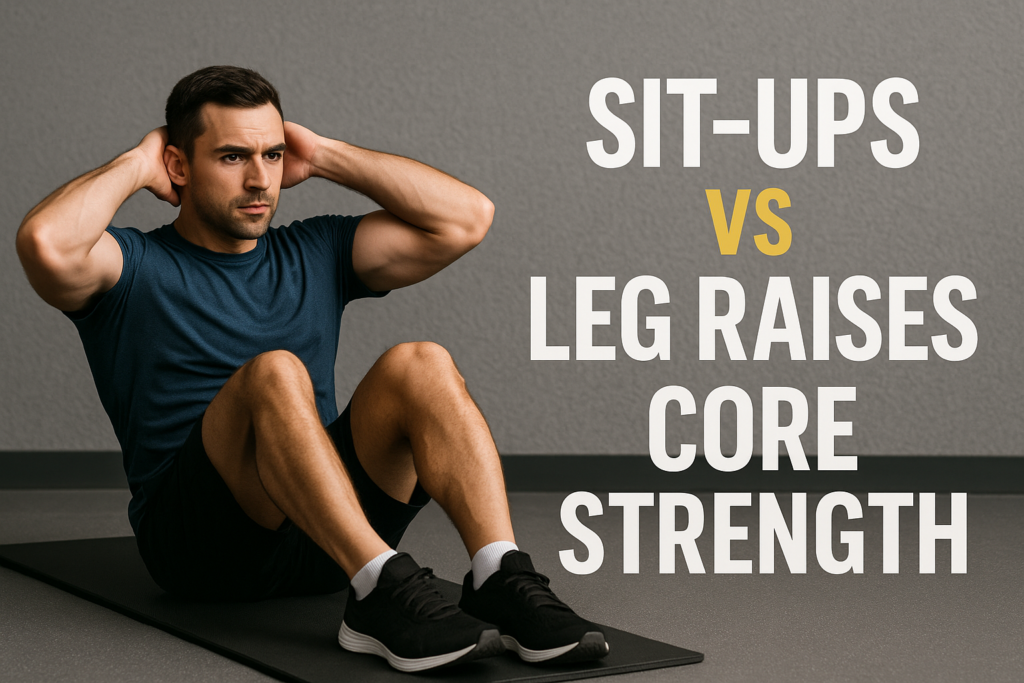
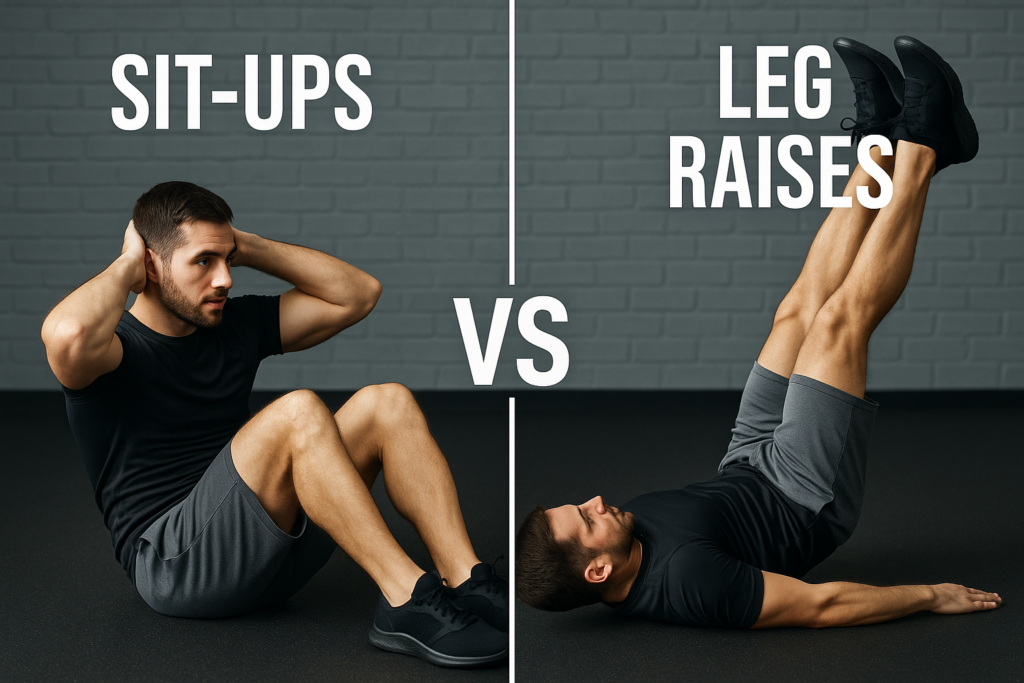
Sit-ups vs leg raises for core strength: what are we actually asking?
When someone asks this question, they usually mean:
Which one builds a “functional core” that doesn’t crumple during squats, deadlifts, or that one awkward moment when you try to pick up a dropped AirPod?
Because nobody is doing sit-ups for aesthetics anymore.
At least not proudly.
Sit-ups are a flexion-dominant movement.
Leg raises are a hip-flexion-dominant movement that forces your abs to stabilize the pelvis while resisting spinal extension.
One is old-school.
One is trendy.
Neither is a magic spell.
Are sit-ups worse for core strength than leg raises?
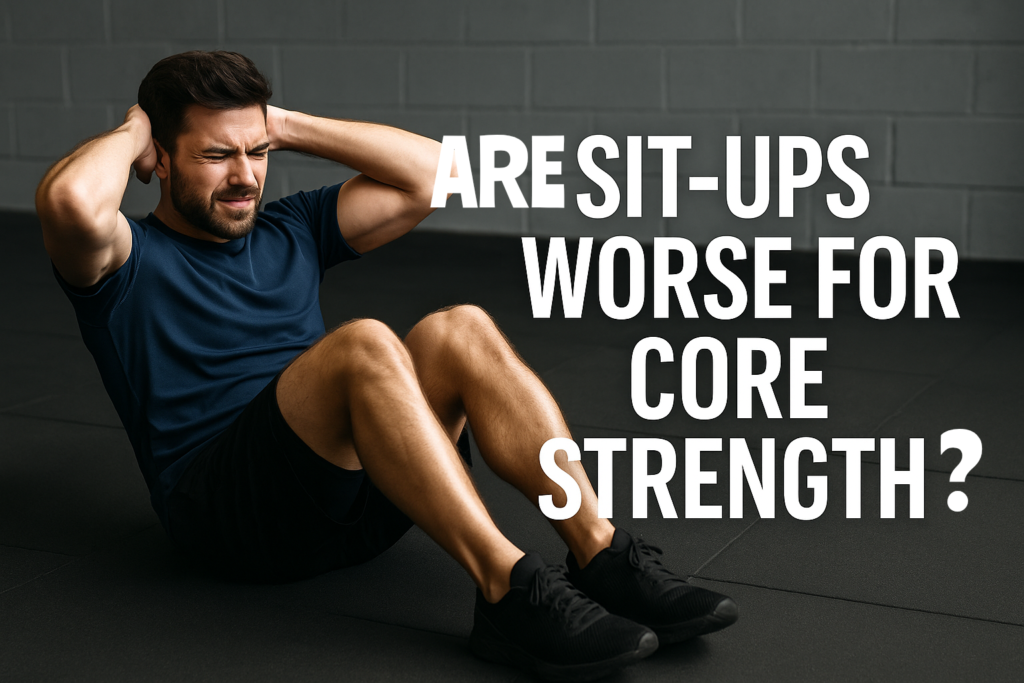
Not automatically.
Sit-ups tend to get trashed because they “work the hip flexors more than the abs.”
Which is kind of true, but also kind of missing the point.
Your hip flexors matter to core stability.
They’re literally helping control the pelvis when you move, stand, run, or do anything that requires a stable trunk.
So acting like they’re “cheating” is wild.
But here’s the catch.
Sit-ups don’t produce high levels of anti-extension resistance.
Meaning, they don’t train the abs to fight gravity the way your body reallllly needs under a heavy bar.
Leg raises do.
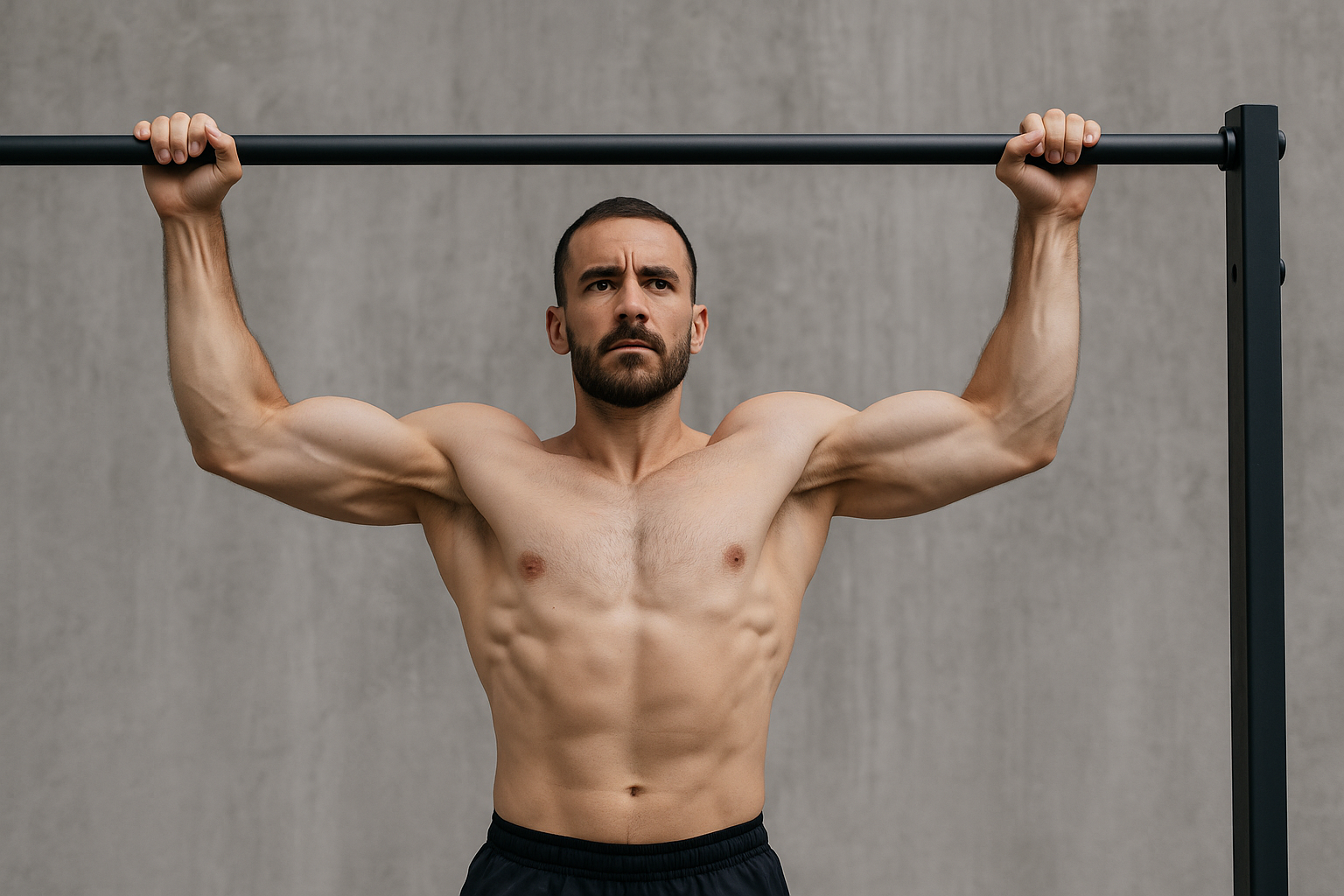
Especially hanging leg raises, because they force your abs to contract isometrically while controlling the pelvis.
So for athletes, lifters, and anyone who wants a core that doesn’t fold like a cheap beach chair, leg raises are usually more transferable.
Why leg raises feel harder

When I started practicing leg raises consistently, the first few reps always felt deceptively easy.
Around the middle of the set, there was a very specific fatigue in the lower abs that I didn’t experience with other core exercises.
By the end, maintaining control, breathing, and alignment at the same time felt like a genuine challenge rather than just a test of willpower.
The reason became clearer once I paid attention to the mechanics.
Leg raises place the legs farther from the body, which increases the lever arm and the torque around the pelvis.
This forces the core to work harder to keep the trunk stable, especially in the lower abdominal region, which is often less conditioned than we assume.
In contrast, sit-ups keep most of the mass closer to the rotation point, making them easier to control and less demanding on stabilizing structures.
That doesn’t make sit-ups inferior, just different in intention and stimulus.
Leg raises simply expose gaps in strength and motor control more quickly, which is why they feel disproportionately hard even at low reps.
For me, understanding this shifted the exercise from “why is this so brutal?” to “this is what targeted improvement actually feels like.”
Sit-Ups Only Suck When Your Alignment Sucks
This isn’t a “your abs are weak, you are doomed” story.
It’s more of a “your hip flexors are angry, your pelvis is tilted, and your lower back is the unpaid intern doing all the work” story.
When that happens, sit-ups don’t feel like a core exercise.
They feel like an audition for a lower-back horror movie.
Leg raises stop feeling like a clean, controlled movement.
They feel like your spine is being charged interest one rep at a time.
If your core can’t stabilize, every rep turns into damage control.
Not because sit-ups and leg raises are evil.
But because your alignment is playing on hard mode while your form is still on the tutorial level.
What each exercise is really good at
Sit-ups shine in:
- High-rep metabolic conditioning
- Beginner-friendly progressions
- Flexion endurance
- Core involvement in dynamic motion
Leg raises shine in:
- Pelvic control
- Anti-extension dominance
- Lower ab tension management
- Strength that transfers to sport and lifting
These are not the same skills.
And pretending they are is like arguing whether a screwdriver is better than a wrench for “fixing stuff.”
Depends what you’re fixing.
But does one build a “stronger core?”
For a lifter?
Leg raises probably carry more benefit.
They train the abs to stabilize under tension, which is exactly what you need when a bar is telling your spine “pay up or collapse.”
For a general exerciser who just wants to stop feeling “weak in the middle”?
Sit-ups are fine.
Seriously.
You’re not preparing for a military obstacle course or trying to qualify for some televised fitness showdown.
You just want to move without feeling unstable through your midsection.
A technical detail with real impact
Leg raises rely heavily on the iliopsoas.
Which attaches to your spine.
Meaning, if your core isn’t engaged properly, that muscle literally pulls your lumbar spine into extension while you lift your legs.
That’s why some people feel “compressed” afterwards.
Not injured.
Just poorly coordinated.
Sit-ups don’t hit that mechanism as aggressively, so they often feel “safer” for beginners.
So which one should you do if you want real strength?
Ask yourself one ridiculous but useful question:
“When I brace heavy, do I crumble, or do I hold?”
If your answer is crumble, you need anti-extension strength.
Leg raises deliver that.
But only if you do them with slow control, not with a swing that could knock a ceiling fan off its axis.
If your answer is hold, but you gas out quickly, you might benefit from sit-ups for endurance.
Strength and endurance are not synonyms.
Don’t treat them like they are.
Are sit-ups “worse” than leg raises?
For pure strength?
Probably, yes.
Because leg raises force the abs to stabilize the pelvis under load, which creates a demand that looks a lot more like what happens in heavy lifting or athletic movement.
For a beginner?
No.
Sit-ups are simpler to learn, easier to scale, and less likely to fall apart technically when fatigue kicks in.
For a lifter who wants a stronger squat and deadlift?
Leg raises win.
They build anti-extension control, which keeps your spine from folding under pressure and helps you maintain position through the whole lift, not just at setup.
For someone who just wants a burn and doesn’t care about mechanics?
Sit-ups are totally fine.
They’ll deliver a quick hit of fatigue, without needing a pull-up bar or coordination worth a gymnastics medal.
At the end of the day, what you’re really choosing between is strength vs endurance.
Not “good vs bad.”
Quick Comparison of Common Core Exercises and Their Uses
| Exercise | Strength Focus | Best For | Common Issue |
|---|---|---|---|
| Sit-ups | Endurance | Beginners | Neck pulling |
| Leg raises | Control | Athletes | Swinging |
| Hanging raises | Anti-extension | Lifters | Back arching |
| Plank | Stability | General | Sagging hips |
| Crunches | Flexion | Hypertrophy | Short ROM |
Scientific perspective on sit-ups vs leg raises
Research on core training doesn’t just look at how “hard” an exercise feels.
Scientists measure things like muscle activation, spinal loading, and whether strength actually transfers to real movement.
Sit-ups mainly train the rectus abdominis through repeated spinal flexion.
Leg raises train the same muscle while resisting extension created by the hip flexors.
So it’s not “upper abs vs lower abs” magic.
It’s dynamic flexion vs anti-extension stability.
Leg raises tend to produce higher peak activation because of the longer lever and torque demands.
Sit-ups produce longer duration activation because they’re usually done for higher reps.
One is force production under load.
One is endurance under fatigue.
When it comes to safety, neither exercise is automatically better.
Sit-ups get blamed for back pain, but controlled spinal flexion isn’t inherently harmful.
Leg raises can stress the spine too, because the hip flexors attach to the lumbar vertebrae and pull the spine into extension.
So the scientific angle isn’t “this movement is bad.”
It’s that each movement taxes the spine differently, depending on strength, posture, and control.
For performance, most research favors exercises that train the trunk to resist motion, which gives leg raises an edge for athletes and lifters.
But endurance capacity still matters, which keeps sit-ups relevant for general conditioning.
In simple terms:
- Leg raises build control under tension.
- Sit-ups build tolerance to fatigue.
- Both can fit into a smart program.
Bottom line: stop asking which one is “better”
The question isn’t “which exercise is superior?”
It’s “what kind of core do you want to build?”
A core that flexes well?
Sit-ups.
A core that stabilizes under chaos?
Leg raises.
A core that looks good AND performs well?
Alternate.