Post-meal-walking-supporting-appetite-stability.
For a long time, “walking after a meal” lived in the same mental drawer as “drink warm lemon water” and “never eat after 8pm.”
Not evil.
Just… vaguely wellness-y.
Then something weird kept happening.
Lunch would be normal, solid, adult behavior.
And two hours later my appetite would act like I hadn’t eaten since the invention of fire.
So I tried something embarrassingly simple.
A short walk after meals.
No heroic cardio.
No “10k steps before sunrise” storyline.
Just a consistent, low-drama walk.
And my hunger cues started behaving like they had read the instructions.
What I Expected Vs. What Actually Happened

Expectation was basic.
Walking after eating might help digestion a little.
Maybe reduce that heavy “I swallowed a couch cushion” feeling.
Appetite, though, felt like it should be controlled by calories and willpower and macros and whatever motivational quote is currently being printed on shaker bottles.
Reality was different.
Post-meal walking didn’t make me “less hungry” in a sad, suppressed way.
Hunger still showed up, because hunger is not a bug in the system.
What changed was the timing and the intensity.
The sudden hunger spikes got less dramatic.
The “snack emergency” vibe calmed down.
And I started noticing that I could go from meal to meal without feeling like my stomach was trying to file a complaint with HR.
The Real Issue: My Appetite Was Loud And Random

Before changing anything, the pattern was messy.
Big lunch sometimes meant I felt sleepy and stuffed.
Small lunch sometimes meant I felt ravenous.
Identical meals could create totally different hunger outcomes depending on what I did afterward.
Which was annoying, because consistency is supposed to be the whole point of routines.
The biggest clue was this.
When I ate and then sat for a long stretch—desk, couch, car, whatever—my appetite later felt sharper and more impulsive.
When I ate and then moved a bit—errands, walking to a store, casual movement—hunger later felt smoother and more predictable.
That observation alone was enough to make me run the experiment in real life, without turning my life into a lab.
What “Post-Meal Walking” Actually Means (Because People Picture A Lot Of Things)
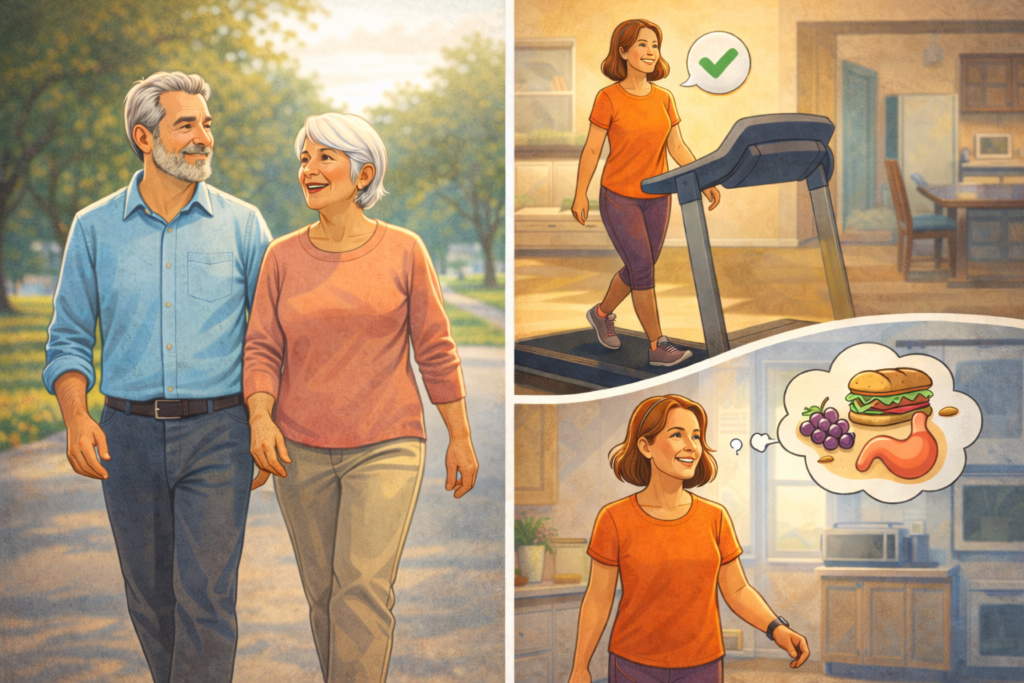
Post-meal walking is exactly what it sounds like.
After eating, you walk at an easy pace for a short time.
No breathless talk-test drama.
No sweat requirement.
The vibe is “comfortable movement,” not “burn the meal off,” because that mindset tends to turn normal meals into emotional debt.
Here’s what I treated as a real post-meal walk.
A pace where nose breathing is easy.
A pace where conversation would be normal.
A pace where you could still feel your food digesting, but not in a gross way.
The route didn’t matter.
Treadmill worked.
Neighborhood loop worked.
Walking around the house like a slightly lost NPC also worked.
What mattered most was doing it regularly, not how it looked.
Why I Refused To Overthink It
Rules stayed simple on purpose.
A walk happened after bigger meals most of the time.
Smaller meals were optional.
If the day got chaotic, I didn’t “make it up later,” because that’s how simple habits become annoying obligations.
I also avoided pairing the walk with anything intense.
No weighted vest.
No steep hill repeats.
No “let’s optimize this.”
The goal was to see whether gentle movement changed appetite signals, not to create a second workout hiding inside my digestion routine.
That choice ended up being important, because the benefits I noticed didn’t feel like they came from burning calories.
They felt like they came from changing what my body did with the meal.
The First Thing I Noticed: Hunger Didn’t Spike As Hard Later

This was the big one.
Normally, a couple hours after eating, I’d sometimes feel a sudden drop into “I need food now.”
Not mild hunger.
Not “dinner soon would be nice.”
More like “I would fight a stapler for a granola bar.”
After post-meal walks became a regular thing, that feeling showed up less often.
When hunger arrived, it arrived like a notification, not like a fire alarm.
That matters because appetite isn’t only about how much you ate.
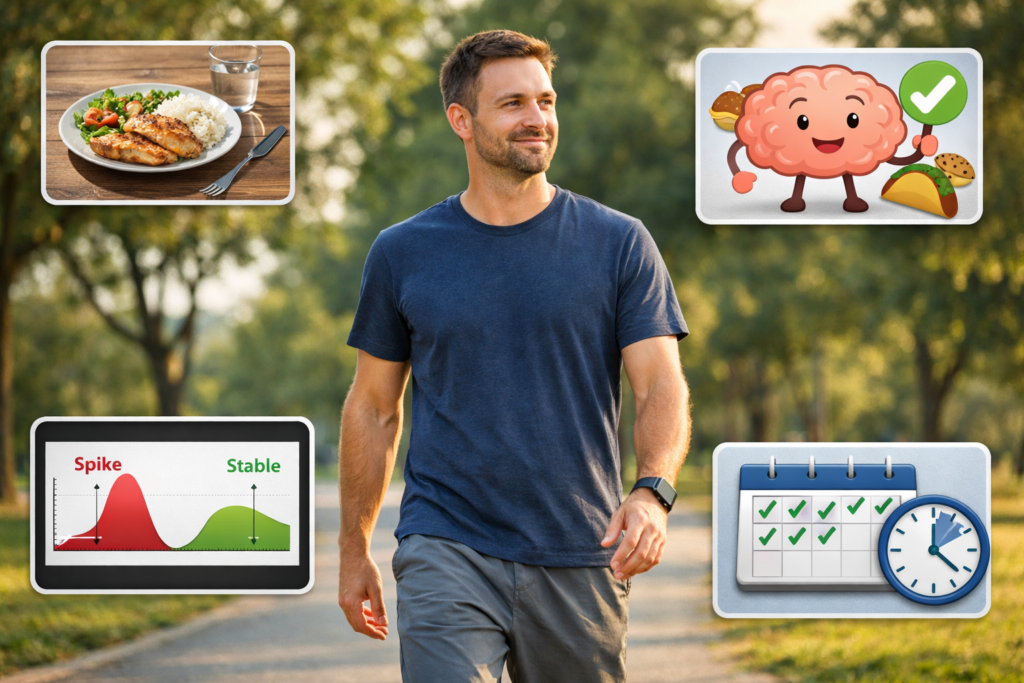
Appetite is also about how your blood sugar rises and falls, how quickly nutrients move from the stomach into the small intestine, and how your brain interprets those signals.
Walking seemed to smooth out the rollercoaster.
Why This Could Make Sense Biologically (In Plain English)

Food digestion is not just “food goes in and disappears.”
Your body has to move glucose from the bloodstream into muscles and organs.
Insulin is one of the tools that helps with that.
Muscles can also absorb glucose more effectively when they’re being used, even at low intensity.
A gentle walk activates a lot of muscle mass.
Leg muscles, hips, calves, and even your core stabilize every step.
That muscle activity acts like opening extra doors for glucose to leave the blood and enter working tissue.
Smoother glucose handling can mean fewer sharp swings later.
Fewer sharp swings can mean appetite feels more stable, because the brain is not reacting to a sudden drop and screaming “EAT.”
Another piece is digestion speed.
Movement can help gastric emptying and overall gut motility for some people.
Not in a “shake the food down like a vending machine” way.
More in a “the system keeps moving at a comfortable pace” way.
When the meal processes more predictably, hunger signals tend to feel more predictable too.
The Second Thing I Noticed: Less “Food Coma” After Meals

A heavy post-meal slump is not always about laziness.
Sometimes it’s about blood flow shifting, meal size, meal composition, and how fast your system is trying to manage nutrients.
Sitting immediately after eating made me feel heavier.
Walking after eating made me feel more normal.
Not energetic like I chugged espresso.
Just less foggy.
That mattered because fatigue can masquerade as hunger.
When energy dips, the brain often suggests food as a quick fix.
So reducing the slump also reduced the “maybe I need a snack” confusion.
That one surprised me more than the hunger smoothing, because I didn’t expect a gentle walk to change how my afternoon brain felt.
The “This Is Stupidly Small But Weirdly Effective” Detail: Portion Perception Changed

Another shift was subtle.
My meals started feeling more “complete.”
Same plate.
Same calories.
Same foods.
Yet the mental sense of satisfaction felt more reliable.
Here’s my best nerd analogy.
Imagine your meal is a file download.
When you sit immediately afterward, the progress bar looks stuck at 83% and your brain keeps refreshing the page.
When you walk afterward, the download completes in the background and your brain stops checking every five minutes.
That’s not a scientific claim.
That’s just how it felt.
The satisfaction signal arrived more consistently, and cravings felt less like random pop-up ads.
How Long The Walk Was (And Why I Didn’t Chase The “Perfect” Number)
I didn’t chase a magic duration, because that’s the fastest way to quit.
Sometimes the walk was short.
Sometimes it was longer because the weather was good and my brain needed a break.
What seemed to matter most was the timing and the consistency.
Walking soon after the meal gave the most noticeable effect on appetite later.
Waiting too long turned it into “just a walk,” which is still great, but it didn’t consistently change my hunger pattern the same way.
Pace stayed easy.
If breathing felt slightly elevated, I slowed down.
If my stomach felt heavy, I went gentler.
If I had eaten a massive meal, I treated the walk like a cool-down for life, not like training.
The Meals Where It Helped Most (And The Ones Where It Barely Mattered)

Meals that were heavier in carbs seemed to be the most obvious.
Rice, pasta, bread, potatoes, fruit-heavy meals.
Those were the times when hunger swings used to be more likely later.
Walking after those meals felt like it buffered the swing.
High-protein meals already tended to keep me steadier, so the difference was smaller.
Fat-heavy meals sometimes gave me that slow, heavy fullness.
Walking after those helped the “slump” feeling more than it helped hunger.
Mixed meals—protein, carbs, fat together—gave the best overall response.
That makes sense, because mixed meals already slow digestion a bit and keep blood sugar steadier.
Walking just made the whole system feel even more predictable.
So no, it wasn’t magic.
The effect wasn’t identical every time.
But the pattern was consistent enough that it stopped feeling like coincidence.
How To Walk After Eating Without Making Your Stomach Hate You
A post-meal walk should feel like you’re helping digestion, not challenging it.
So the execution matters.
Here’s what made it comfortable.
Start gently.
Let a few minutes pass after finishing the meal, especially if the meal was big.
Then begin with an easy pace, like you’re warming up.
Keep posture tall.
Shoulders relaxed.
Arms swinging naturally.
Steps smooth instead of stompy.
Avoid bouncing like you’re auditioning for a cardio commercial.
Breathing should stay calm.
If you can’t breathe through your nose, the pace is probably too fast for this purpose.
If stomach discomfort shows up, slow down and shorten the walk.
Intensity is the enemy of comfort here.
Repetition matters more than effort.
On a treadmill, keep incline modest or flat.
Outside, avoid steep hills right after eating if they make you feel queasy.
If reflux is an issue, stay upright and keep the pace gentle.
Bending forward and speed-walking can make reflux worse for some people, so the “easy and tall” approach usually wins.
The Patterns That Kept Messing With My Appetite

Calling them mistakes felt too judgmental, and honestly kind of boring.
So I stopped giving them names altogether.
One thing I noticed was doing nothing after meals and then blaming the meal itself.
Sitting isn’t evil.
But for appetite signals, going completely still right after eating made hunger come back louder later on.
Another thing I noticed was trying to “earn” the meal with a hard walk.
That turned eating into punishment, and the body pushed back with more hunger, not less.
Hard effort can increase appetite, especially on days that already include training.
I also expected a walk to erase cravings after bad sleep.
Poor sleep messes with hunger hormones.
Stress messes with cravings too.
A walk can help, but it’s not a mind-control switch.
I skipped the walk after the meals that actually needed it most.
When the meal was bigger or more carb-heavy, that was exactly when movement helped the most.
So the habit had to be anchored in real life, not in “perfect days.”
Why It Felt Different From “Just Burning Calories”
If this were only about burning calories, the effect should have been small and inconsistent.
A gentle walk doesn’t torch energy the way people imagine.
And I wasn’t walking long enough to create a major calorie deficit.
Yet appetite signals changed noticeably.
That points to something else doing the heavy lifting.
Glucose regulation.
Insulin efficiency.
Nervous system settling.
Digestion moving along.
Stress reduction from simply going outside and letting the brain reset.
Also, walking is one of the few activities that is both movement and recovery.
It doesn’t feel like training.
So it doesn’t “demand” compensation eating as aggressively as harder exercise sometimes does.
In other words, it influences appetite without poking the “feed me because we’re in survival mode” button.
What This Looked Like On Training Days Vs. Non-Training Days

Training days already have appetite noise.
Workouts can boost hunger, especially later in the day.
Post-meal walking didn’t override that.
But it did reduce the chaotic spikes between meals.
So training days became more structured instead of more snacky.
Non-training days were where the difference felt almost comical.
Rest days used to make me hungrier sometimes, which feels unfair because the body is not exactly building skyscrapers on the couch.
Walking after meals on those days kept hunger from turning into constant grazing.
The day felt cleaner.
Not restrictive.
Just more stable.
That stability matters if body composition is a goal, because a calmer appetite leads to easier food decisions.
Stability makes discipline feel lighter, instead of forced.
Walking Changed How I Think About Hunger
Hunger used to feel like an emergency message.
Now it feels more like a schedule reminder.
That shift is psychological, but it’s built on physiology.
When the body is stable, the mind stops catastrophizing normal sensations.
A walk after eating became a small signal to myself.
The meal is done.
The body is processing it.
No need to keep negotiating with the pantry.
That may sound cheesy, but it’s real.
Routines shape perception.
Perception shapes behavior.
Behavior shapes results.
That chain is boring and powerful, like gravity.
RELATED:》》》 It Wasn’t My Workout: A 60-Day Walking Shoe Test for Knee Pain and Joint Stress
If Someone Reading Knows Nothing About This, Here’s The Simple Takeaway
Post-meal walking is not a hack.
It’s not a detox.
It’s not “biohacking.”
It’s just gentle movement timed at a moment when the body is handling nutrients.
That timing can influence how hunger feels later.
Not by suppressing appetite, but by smoothing the signals.
So the experience becomes less chaotic.
Less “I’m starving.”
More “yeah, dinner in a bit sounds right.”
That difference is huge in real life.
Because real life is not a spreadsheet.
Real life is meetings and errands and stress and random cravings triggered by a smell from three blocks away.