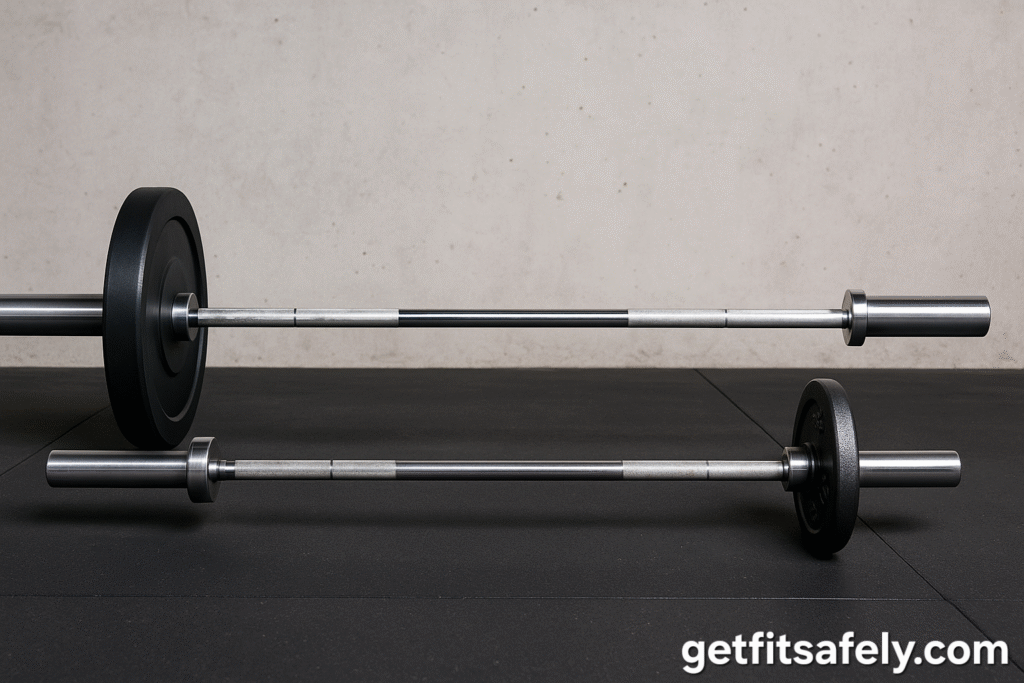
There’s a moment every garage-gym dreamer faces.
You’ve cleared the space, swept out the spiderwebs, maybe even argued with your partner about why the lawnmower suddenly needs a “new parking spot.”
And now you’re standing there, scrolling through endless fitness gear websites, staring at the question that makes or breaks your iron sanctuary:
Do I go Olympic, or do I keep it standard?
It’s like choosing between a Ford and a Ferrari.
Both get you from point A to point B, but one feels like strapping a jet engine to your workout.
Let’s break it down.
The basics: what’s the actual difference?
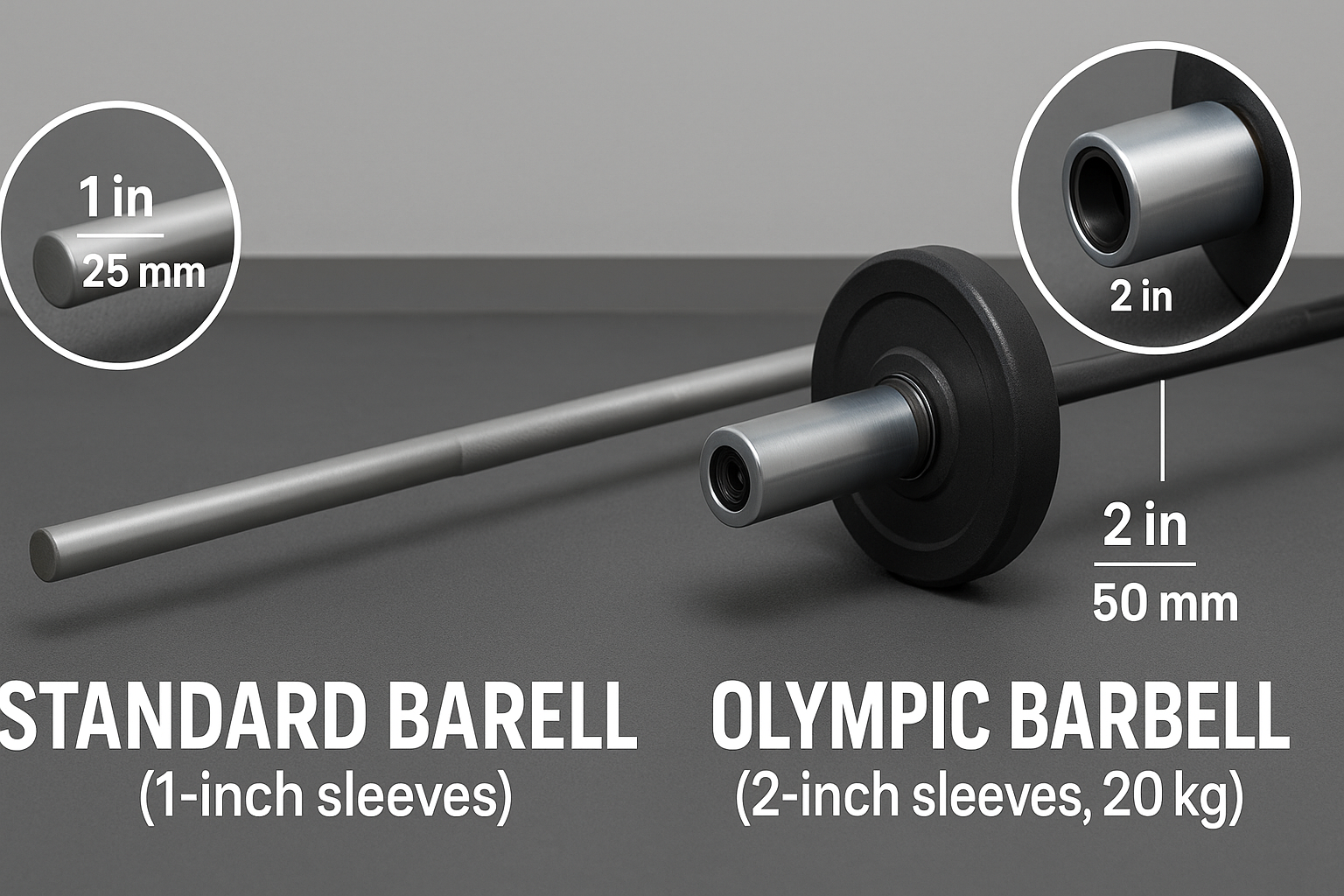
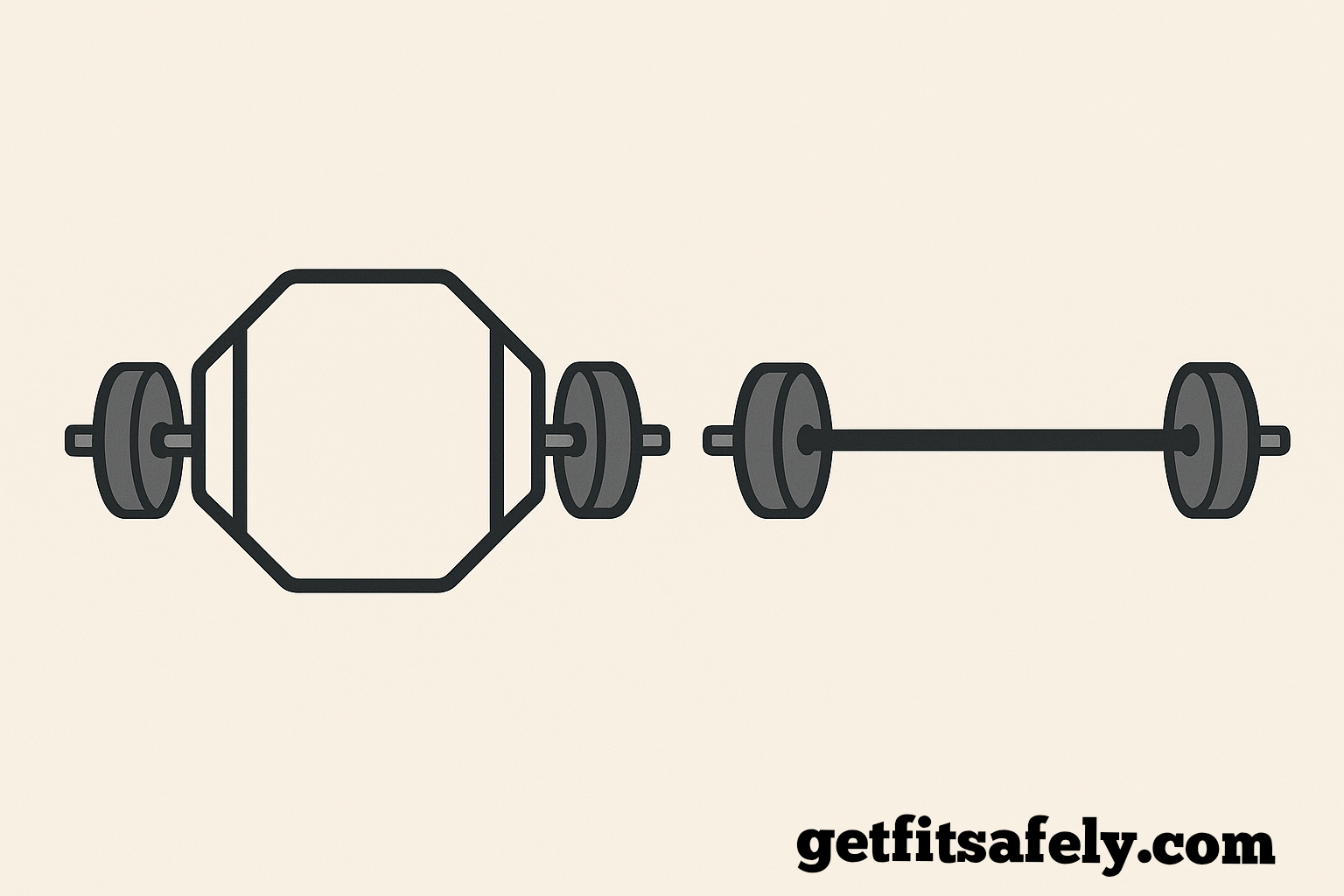
A standard barbell is the one you probably first grabbed in your high school weight room.
Usually one inch in diameter, lighter in weight, and compatible with those smaller-hole plates you see stacked in big box sporting goods stores.
They’re cheaper, simpler, and often come in starter sets.
An Olympic barbell, on the other hand, is like the heavyweight champion of barbells.
Two inches in diameter at the sleeves, rotating collars for smoother lifts, and usually weighing in at 45 pounds (20 kilograms if we’re going full international).
They’re built for heavy loading, explosive lifts, and basically anything that makes you feel like you’re auditioning for a Marvel movie.
Why Olympic bars feel different in your hands
Here’s the sneaky detail nobody mentions until you try one.
Olympic bars have whip.
No, not the kind you throw on your pancakes.
Bar whip is the flex of the bar under heavy load, and it’s a game changer when you’re pulling big deadlifts or driving a clean overhead.
That little bounce gives you momentum.
It makes the bar almost feel alive, responding to your movement instead of fighting against it.
A standard bar?
Stiff as a broomstick.
It doesn’t move, it doesn’t play, it just clunks up and down.
That’s fine for curls, presses, and general fitness.
But if you start stacking real weight, it’ll feel like you’re driving with square wheels.
Price vs. performance
Let’s talk money, because nobody builds a home gym with an unlimited budget.
Standard bars and plates are cheaper.
No question.
You can probably snag a full set for the cost of just one Olympic barbell.
But here’s the kicker: long-term, Olympic gear actually holds its value.
Plates are universal.
Any Olympic plate fits any Olympic bar.
You can buy used plates, mix brands, trade with a buddy.
It all works together.
Standard plates?
They’re like phone chargers from the early 2000s.
Every set has a slightly different fit, and once you’re locked in, you’re stuck.
So if you plan to expand your gym over the years, Olympic is like buying Legos—you can always add on.
Who should stick with standard?
Now, I’m not here to say Olympic is the only way.
If your workouts are mostly:
- Light barbell work
- High-rep conditioning
- Basic presses, curls, and rows
…a standard barbell might be all you ever need.
They’re easier to move, easier to store, and you won’t cry if you scratch one on the concrete.
For beginners, it can actually be less intimidating.
A 15- or 20-pound standard bar lets you learn the motions before you start stacking serious weight.
And let’s be honest—if your basement ceiling is low enough to make pull-ups feel like spelunking, you might not need Olympic gear taking up even more space.
Who should go Olympic?
If you’ve got the itch to go heavy, Olympic is non-negotiable.
Deadlifts, squats, cleans, snatches, overhead presses—you want that rotation in the sleeves and that bar whip working with you, not against you.
It’s also the standard for powerlifting and CrossFit-style training, so if you ever step into a commercial gym, the movement will feel the same.
And let’s not forget safety.
Olympic bars are designed to handle hundreds (even thousands) of pounds.
A standard bar might bend into a sad banana if you try loading it too far.
Trust me, there’s no worse feeling than hearing your bar groan like a haunted door mid-deadlift.
Olympic Straight Bar on Amazon
The not-so-cheap side of going Olympic
When I first bought my Olympic bar, I thought the money problem was solved.
Pay once, cry once, right?
Wrong.
Here’s the sneaky thing: the bar is just the beginning.
Plates, collars, maybe bumper plates if you plan to drop weight—suddenly your budget feels like it’s sprinting on a treadmill with no off button.
Standard gear looks cheap upfront, but you’ll eventually notice the hidden limits.
Olympic gear looks expensive at checkout, but it ages better and opens more doors long-term.
It’s kind of like buying a dog.
The puppy price isn’t the issue—it’s the food, the vet, the chewed-up shoes.
Same here: the bar’s just the start of the relationship.
For me, once I accepted that, it was easier to think of Olympic gear not as a splurge but as a long-term investment in my sanity.
The everyday workout vibe
Here’s a curveball nobody mentions: how fun the bar feels in daily use.
Standard bars feel like a tool.
Functional, fine, but not thrilling.
Olympic bars?
They feel like a ritual.
The spin of the sleeves, the solid clang when plates lock in—it gives the workout a “this is serious business” energy.
And sometimes that’s what gets you off the couch.
I’m no personal trainer with degrees plastered on the wall, but I can tell you this: if the bar makes you want to train, that’s already half the battle.
There were mornings where I didn’t feel like lifting at all, but the moment I gripped that knurled steel, I knew I wasn’t skipping.
It’s silly, but psychology matters as much as steel specs.
Space and flooring
Here’s something I wish someone told me before I dragged 400 pounds of plates into my garage—flooring matters.
An Olympic bar with bumper plates is meant to be dropped.
That’s part of the design.
The sleeves spin, the plates bounce, and the bar survives.
But if you’ve got standard iron plates on a thin bar and you slam it down?
Say goodbye to your basement tiles or, worse, your bar’s straight shape.
So if your space is small or you don’t want to invest in rubber flooring, standard might be less stressful.
But if you’re willing to throw down some stall mats and make your garage look like a mini CrossFit box, Olympic gear shines.
Personally, once I added flooring, I realized how much more confident I felt setting up heavy lifts.
No hesitation, no fear of cracking the floor—just focus on the lift.
The grip and feel difference
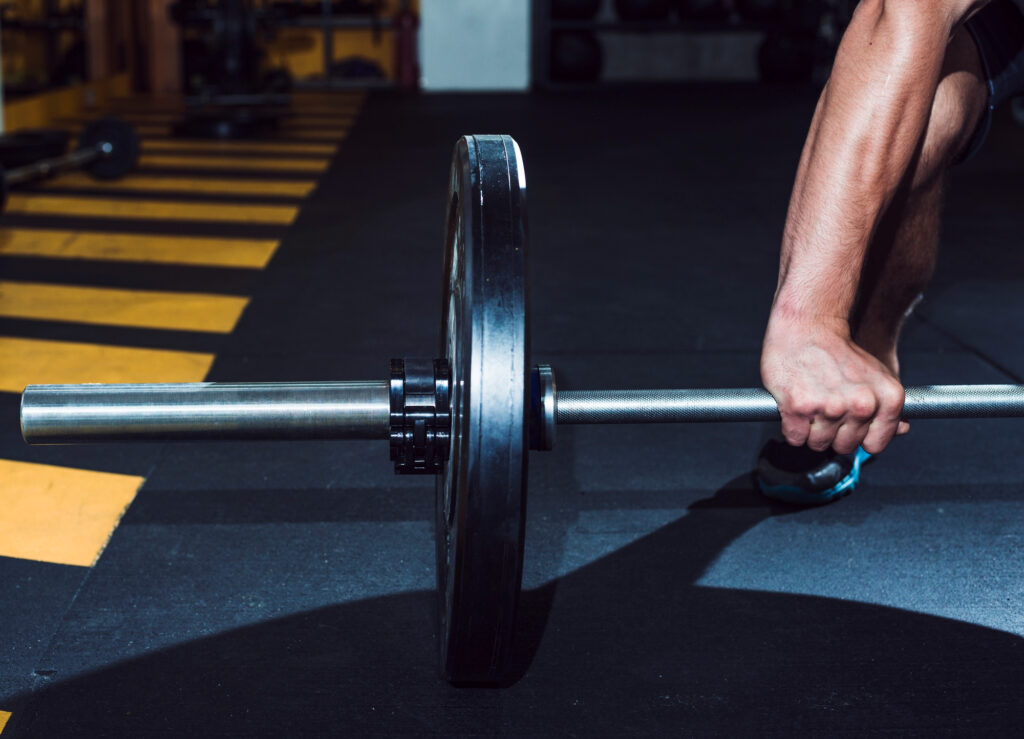
One detail that surprised me was grip.
Olympic bars have knurling patterns designed for performance.
Some are more aggressive for heavy pulls, others softer for high-rep training.
Standard bars?
They’re often smooth or barely textured, which is fine for casual use but can feel slippery when the sweat hits.
And here’s the funny part—I didn’t even realize how much the bar feel mattered until I got my first Olympic bar.
Suddenly, it was like my hands locked in place without crushing my palms.
That tactile difference gave me more confidence under the bar.
And sometimes confidence is the one ingredient that turns a “maybe” lift into a clean rep.
RELATED:》》》Before You Buy That ‘All-in-One’ Home Gym — Read These Real Tips First
Conclusion
So, should you invest in an Olympic barbell or stick with standard?
If you’re dipping your toes in, just want a simple way to stay active, or don’t care about loading huge weight—standard can serve you well.
But if you dream about getting stronger year after year, if you want equipment that grows with you, and if you see your home gym as more than just a passing fling—go Olympic.