There’s a special kind of annoying problem in training.
Everything technically works.
Yet everything feels slightly off, like a shopping cart with one wheel that has its own personality.
That’s me.
Push-ups feel like my ribs try to escape upward.
Pull-ups feel like my lower back wants to help even though nobody asks it.
Squats look fine, yet I finish sets feeling like my torso is a loose backpack.
Then I start doing hollow holds consistently.
It isn’t some “new era” moment.
It feels more like, “Fine, I add this boring floor position and see whether it stops my body from improvising.”
After a while, something clicks.
There’s no big surge of sensation or showy ab burn.
The shift feels more subtle than that.
My whole body behaves like it’s connected again.
What really happens in your body during a hollow hold
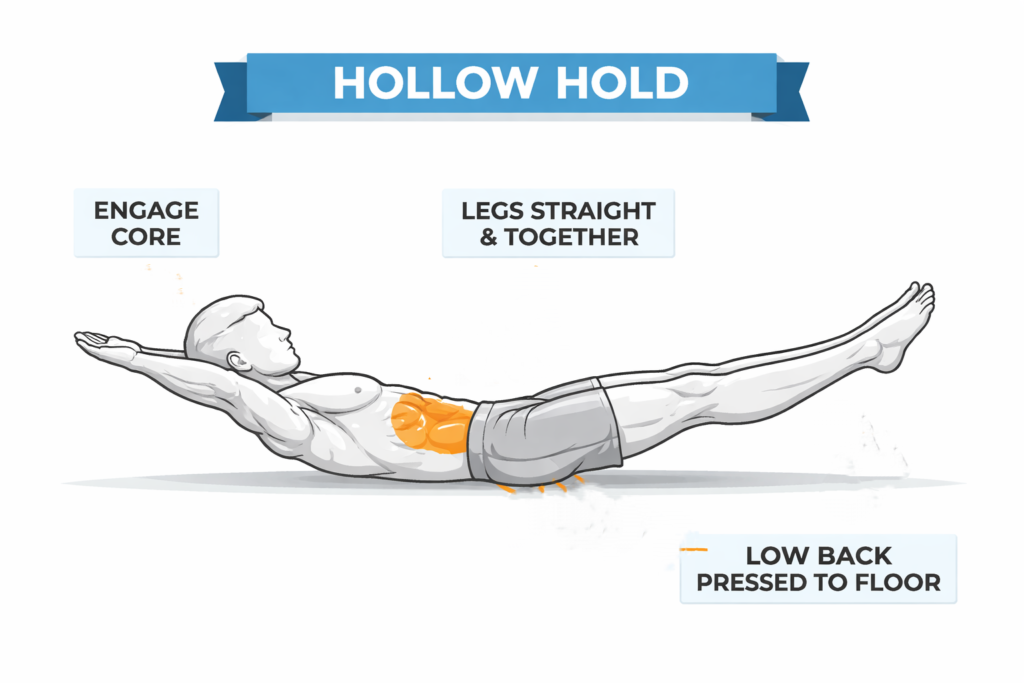
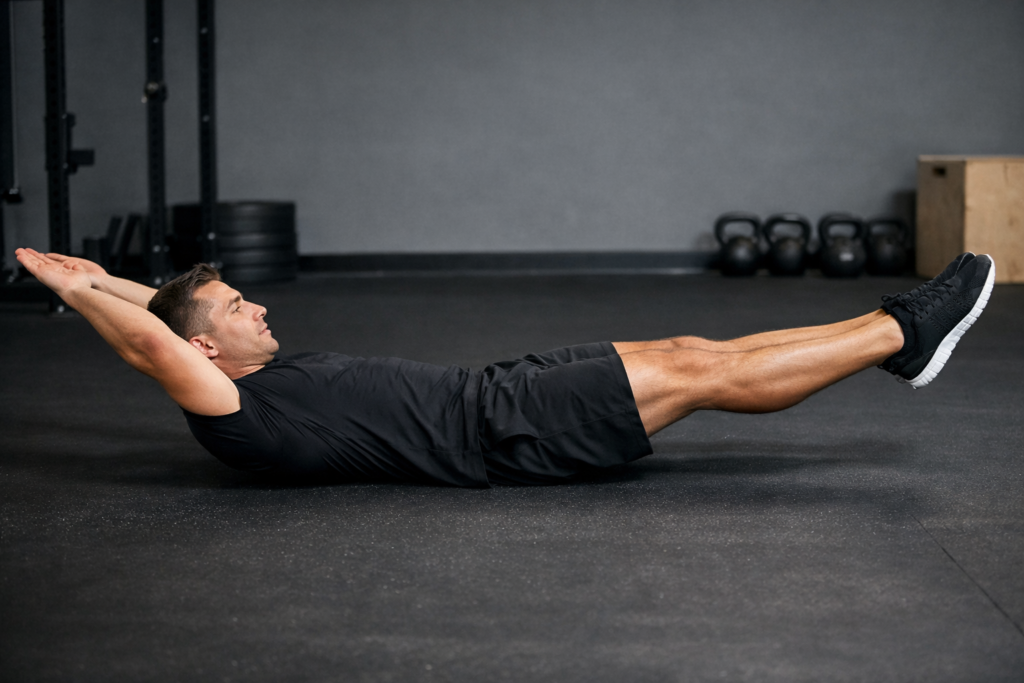
A hollow hold is basically the opposite of the “lazy lounge” posture.
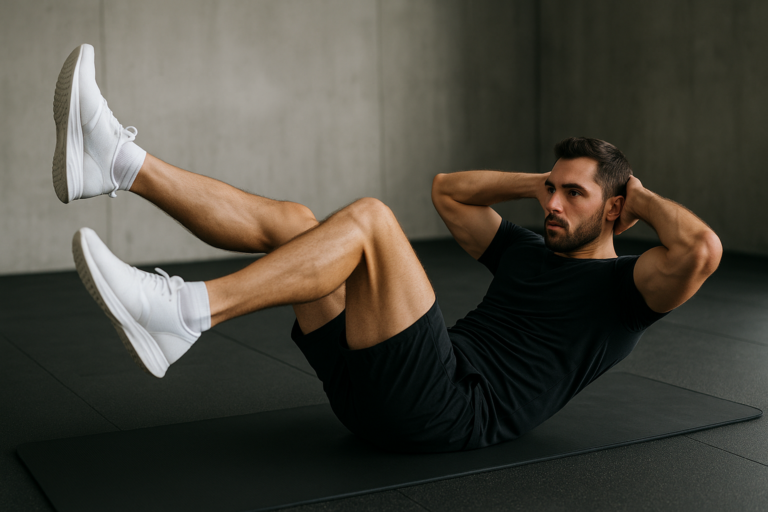
Instead of ribs flaring up and your low back arching like a cat, you stack your ribcage over your pelvis and keep the front of your body tight like you’re bracing for someone to poke you.
Picture this.
You’re lying on your back.
You want your lower back gently pressing into the floor, like you’re trying to trap a piece of paper under it.
Then you lift your shoulders and legs off the ground while keeping that “paper trapped” feeling.
That’s the hollow hold.
It looks like nothing.
It feels like your abs are writing an angry email.
Why it matters beyond “abs”
Most people hear “core” and think “six-pack muscles.”
The hollow hold is more about control than looks.
It teaches your body to stop leaking tension through the midsection.
And that matters because almost every exercise is basically “move arms and legs while your trunk stays solid.”
When that trunk isn’t solid, other parts start doing weird side jobs.
Low back becomes a helper.
Ribs pop up.
Hips tilt forward.
Shoulders feel unstable.
Then you wonder why a push-up feels like a back exercise and a pull-up feels like a biceps emergency.
The thing I didn’t notice: my ribs were living in the sky
Here’s what I didn’t realize until I started paying attention.
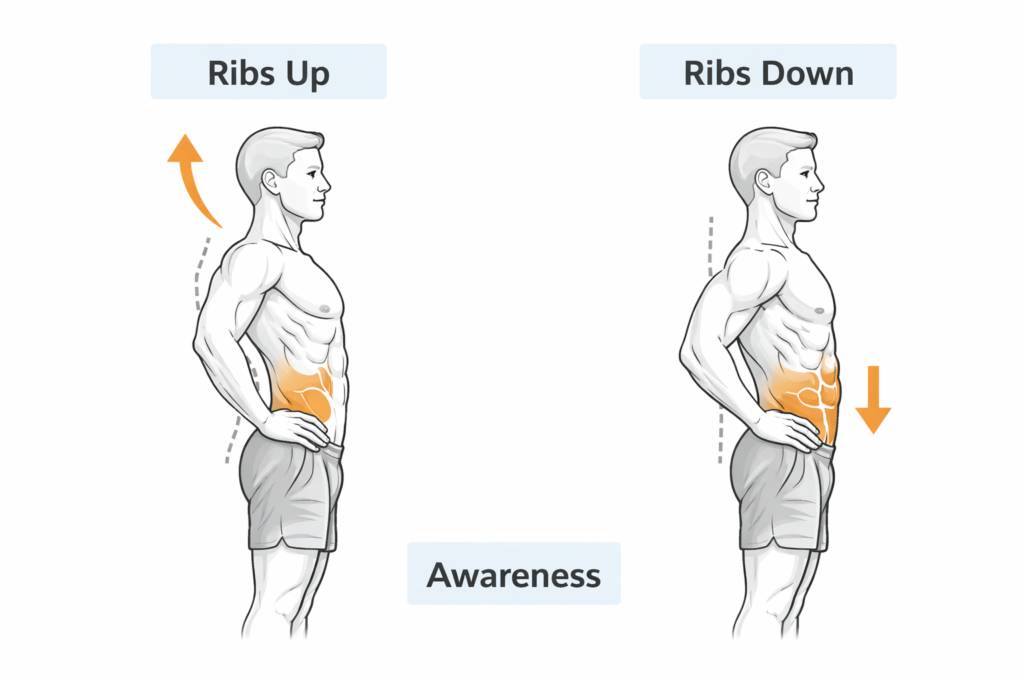
At rest, I was walking around with my ribcage slightly lifted all the time.
Not excessively
Just enough that when I started a set, my body’s default was “chest up, ribs up, lower back arched.”
In the mirror it looked “athletic.”
In actual movement it was a problem.
Because when ribs flare up, your abs can’t do their job properly.
They’re stretched and turned off at the exact moment you want them to stabilize you.
So the low back tightens to create stability instead.
It’s like having a friend who always jumps in to “help” and ends up making everything worse.
Once I felt what it was like to keep ribs down and pelvis slightly tucked, I couldn’t un-feel it.
It was like realizing your car seat has been tilted wrong for years.
How it showed up in real exercises
Push-ups felt like my chest was strong, but my midsection was sloppy.
The first 5 reps looked fine.
Then the ribs lifted.
Then the hips sagged.
Then the lower back felt compressed.
Pull-ups felt similar.
First reps felt smooth.
Then I’d arch to get my chin over the bar.
Then I’d finish a set with forearms and biceps screaming while my midsection felt like it didn’t even attend class.
Even hanging knee raises felt weird.
My legs moved.
My torso swung.
It was motion, not control.
How I set up hollow holds so they actually worked
I didn’t start with the full “legs straight and low” version.
That’s the version that looks cool and makes you shake like a phone on vibrate.
I started with the version that let me keep perfect form, because the whole point is learning control.
Not surviving.
Not “holding on” with bad posture.
Control.
The positions I keep an eye on during every hold
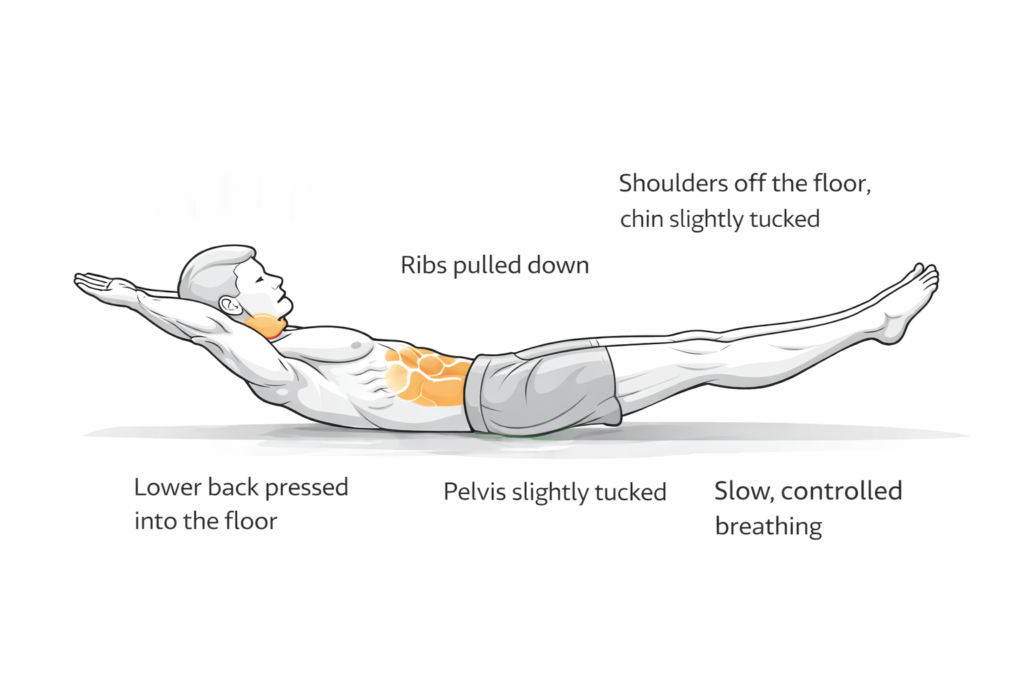
- Lower back gently pressed into the floor, like pinning paper.
- Ribs pulled down, like you’re closing a jacket zipper from chest to pelvis.
- Pelvis slightly tucked, so your belt buckle feels like it’s tipping toward your face.
- Shoulders off the floor, chin slightly tucked, like you’re holding an orange under your chin.
- Breathing stays quiet and controlled, not a dramatic whale inhale.
If one of these failed, I adjusted the exercise instead of forcing it.
That was the difference.
The first version that actually clicked: bent knees
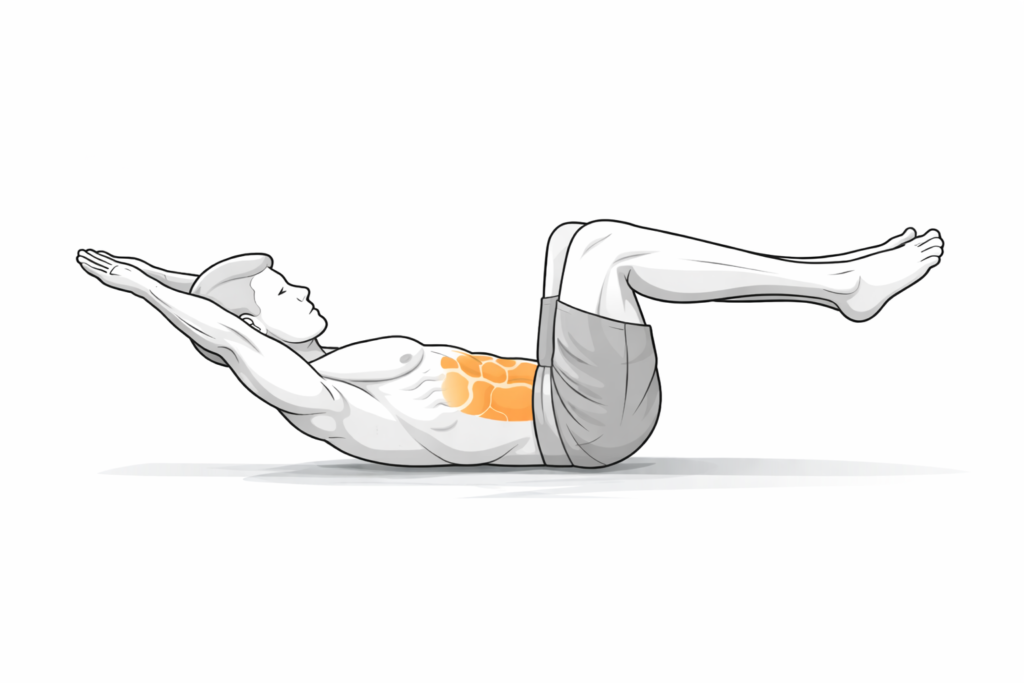
My starting position looked almost too easy.
Knees bent at about 90 degrees.
Shins parallel to the floor.
Arms reaching overhead.
Shoulders lifted slightly.
Then the real work: keeping my lower back glued down while breathing.
I did 6 sets of 20 seconds with 40 seconds rest.
Total time was basically a few minutes.
But it felt like my abs had to learn a new language.
The shaking started around second 12.
Not full-body shaking.
More like the deep core doing that subtle tremble that says, “Oh, so you actually want me to work.”
The version that exposed my weak spot: one leg longer
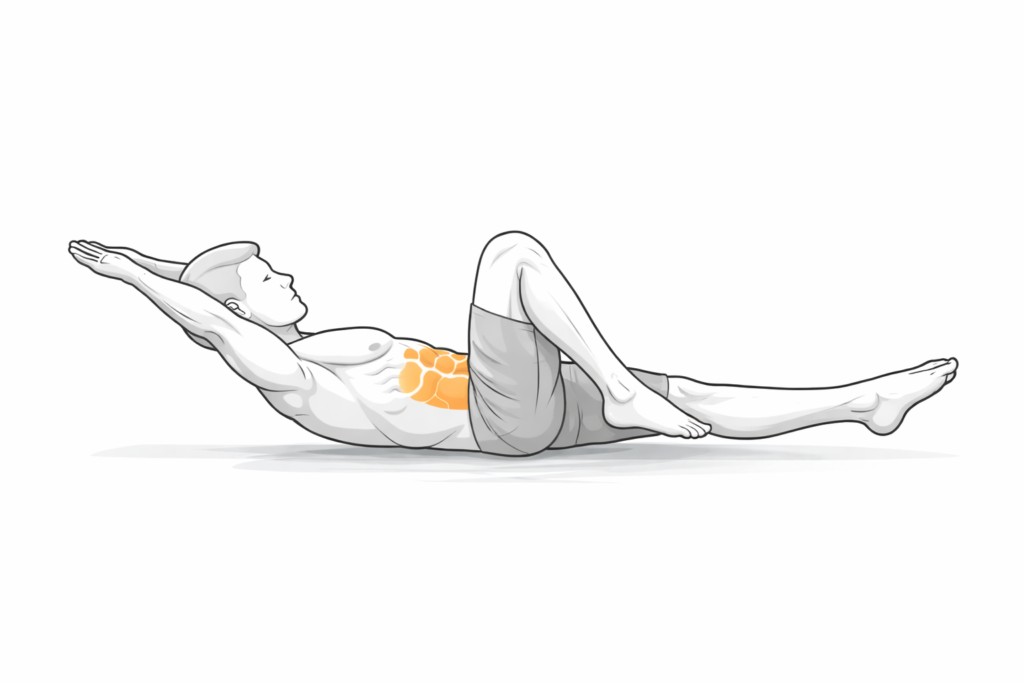
After that felt controlled, I changed one thing.
One leg stayed bent.
The other leg extended out slowly until I felt my lower back want to lift.
That moment was my boundary line.
I held just above that line.
Not below it.
Because below it, my low back would arch, and the whole point would disappear.
I did 5 sets of 15–25 seconds per side.
Rest was 45–60 seconds.
The feeling was weirdly specific.
Not a “crunch burn.”
More like a tight, deep brace from ribs down to pelvis.
Like someone tightened a wide belt around my midsection.
The full version: straight legs, but not “hero low”
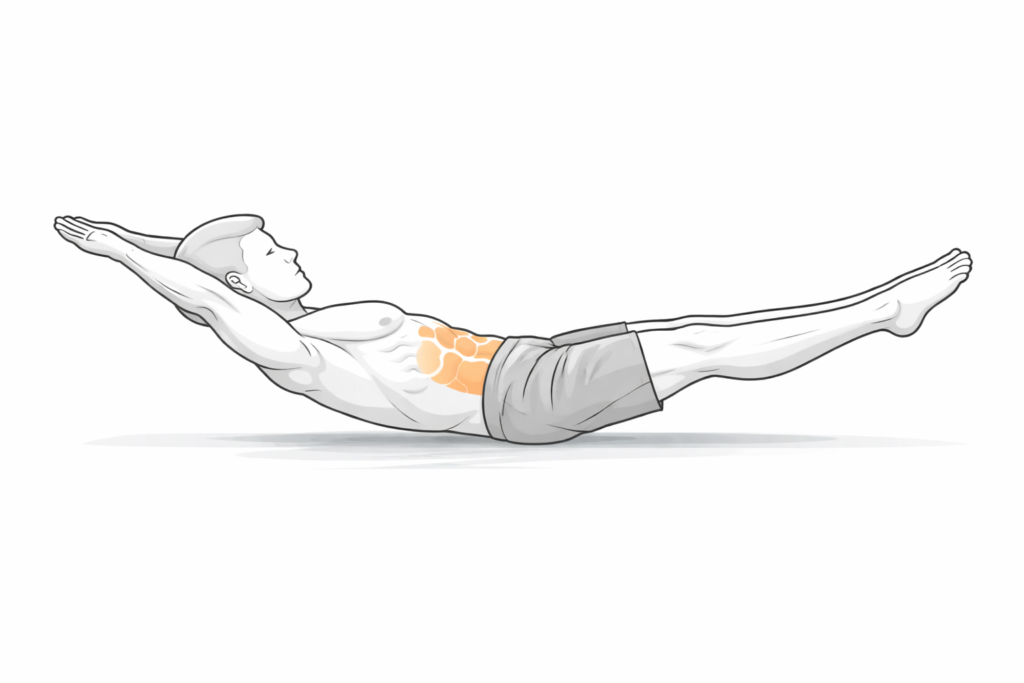
Eventually I could do straight legs.
But I didn’t drop them super low like Instagram demands.
I kept them at an angle where I could still keep the paper pinned under my lower back.
That angle for me was roughly 35–45 degrees from the floor.
Any lower, and my ribs would flare and my low back would pop up.
So I stayed in the honest zone.
I used 5 sets of 20–30 seconds.
Rest stayed around 60 seconds.
Breathing stayed the priority.
If breathing turned into panic, I shortened the hold.
What I felt changing
The first change wasn’t “stronger abs.”
It was posture and pressure.
I started noticing that my default standing posture shifted.
Ribs weren’t flared up as much.
Pelvis felt more neutral.
My lower back didn’t feel like it was always “on duty.”
Then the weird part.
Exercises felt cleaner without me trying to “fix” them.
Push-ups stopped turning into a low-back endurance test.
Pull-ups felt more like my lats were actually connected to my body, instead of my arms pulling a torso that was along for the ride.
Even walking felt different.
Less sway.
More stacked.
It wasn’t a big change at first.
It was like tightening a loose screw in a chair and suddenly it stops wobbling.
The first obvious “oh wow” moment
One push-up session stuck in my head.
Nothing in that workout was new, but something felt different almost immediately.
I went through my usual preparation and started the sets.
I did 4 sets of 10 reps with 90 seconds of rest.
Normally, by rep 7, my ribs would start lifting and my hips would sag slightly.
This time it didn’t happen.
Not because I “focused harder.”
It just didn’t happen as easily.
My midsection held the line.
And the push-ups felt more chest and triceps, less “random body parts helping.”
That was the moment I realized hollow holds weren’t just an ab thing.
They were a coordination thing.
Why hollow holds carry over so hard to everything else
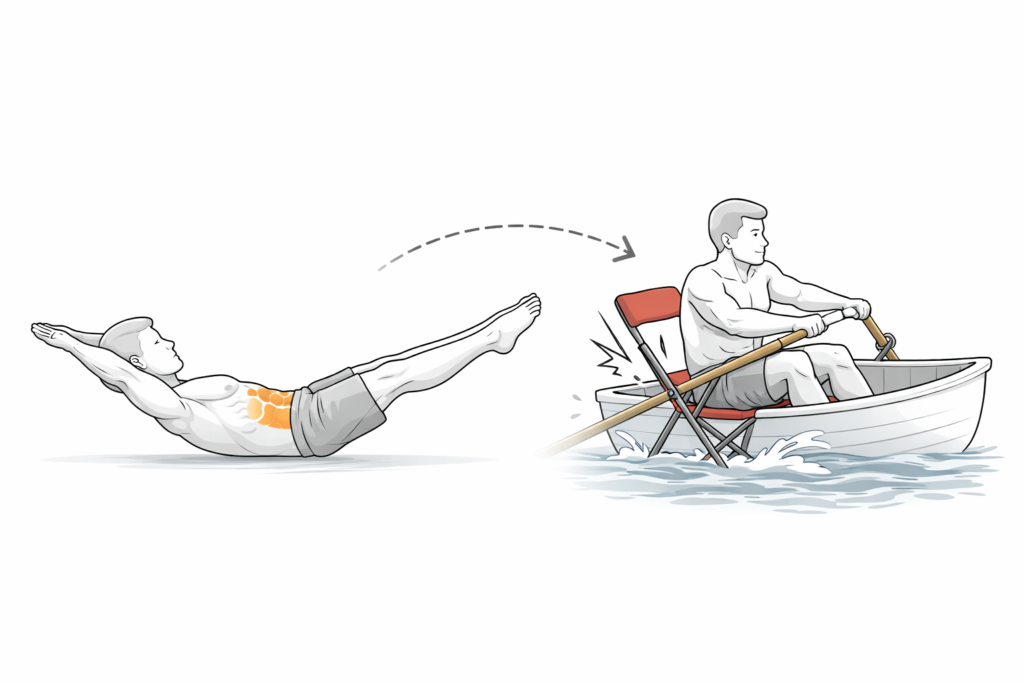
Here’s the simple explanation.
Your arms and legs can only apply force well if the middle of your body doesn’t collapse.
If the middle collapses, force leaks.
It’s like trying to row a boat while sitting on a folding chair that keeps closing.
You can still move, but it’s messy and inefficient.
Hollow holds teach you to keep the folding chair locked open.
That’s it.
That’s the magic.
The “ribs down” skill is the real prize
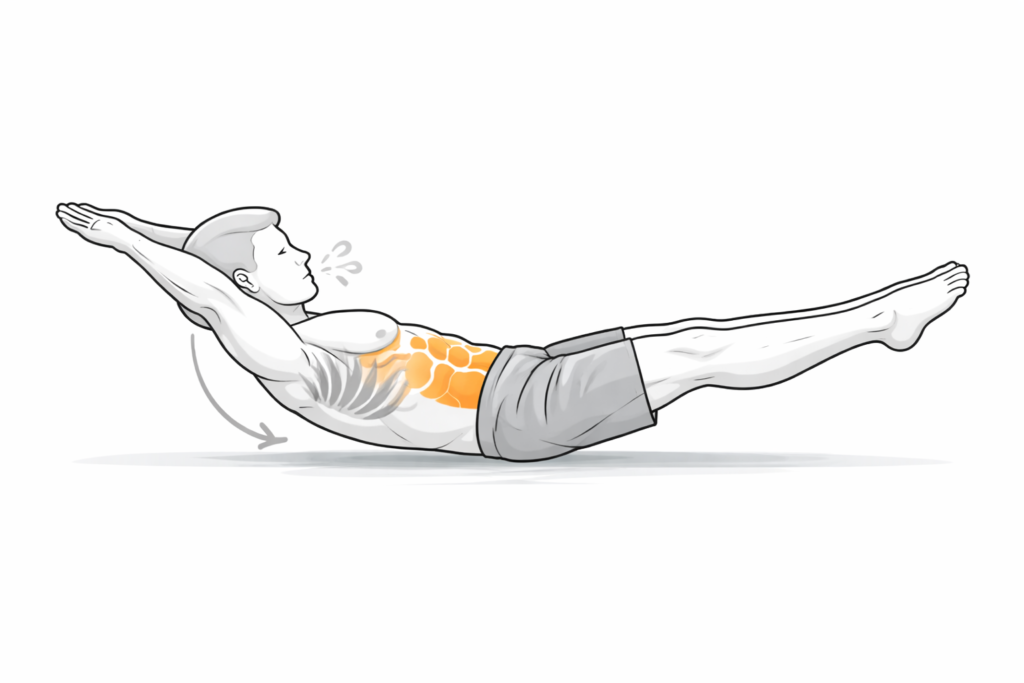
Most people think the exercise is about lifting legs.
It’s not.
The real prize is learning to keep ribs down while breathing.
Because that’s what you need in:
- Push-ups and dips, so the torso doesn’t sag.
- Pull-ups and rows, so you don’t arch to cheat reps.
- Squats and lunges, so you don’t turn every rep into a lower-back hinge.
- Planks and carries, so you don’t just “hold” with joints instead of muscles.
Once ribs and pelvis stack better, everything else feels more stable.
And stability makes strength feel real.
RELATED:》》》 Planks vs Crunches
The small adjustments that made it work (instead of turning into a circus)
A hollow hold can become useless fast if you do it sloppy.
These were the small things that kept it honest.
Breathe like you’re trying not to be loud
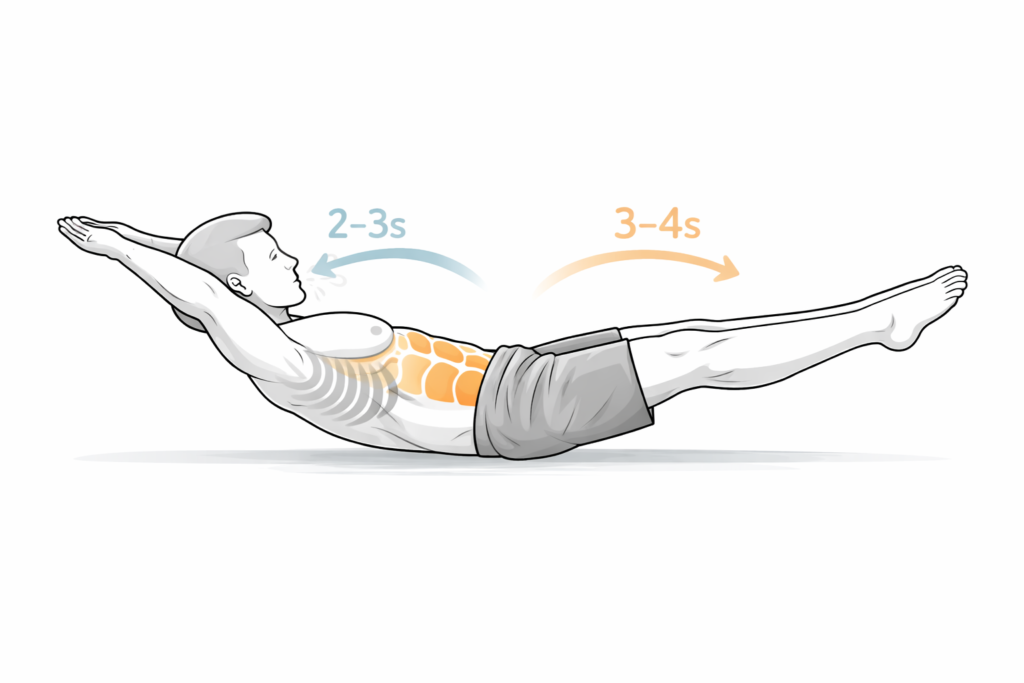
Big dramatic inhales made my ribs flare instantly.
So I practiced quiet breathing.
Inhale through the nose for about 2–3 seconds.
Exhale through the mouth for about 3–4 seconds.
Not fully emptying the lungs.
Just steady.
If the hold made me hold my breath, the hold was too hard.
Arms overhead is harder than people admit
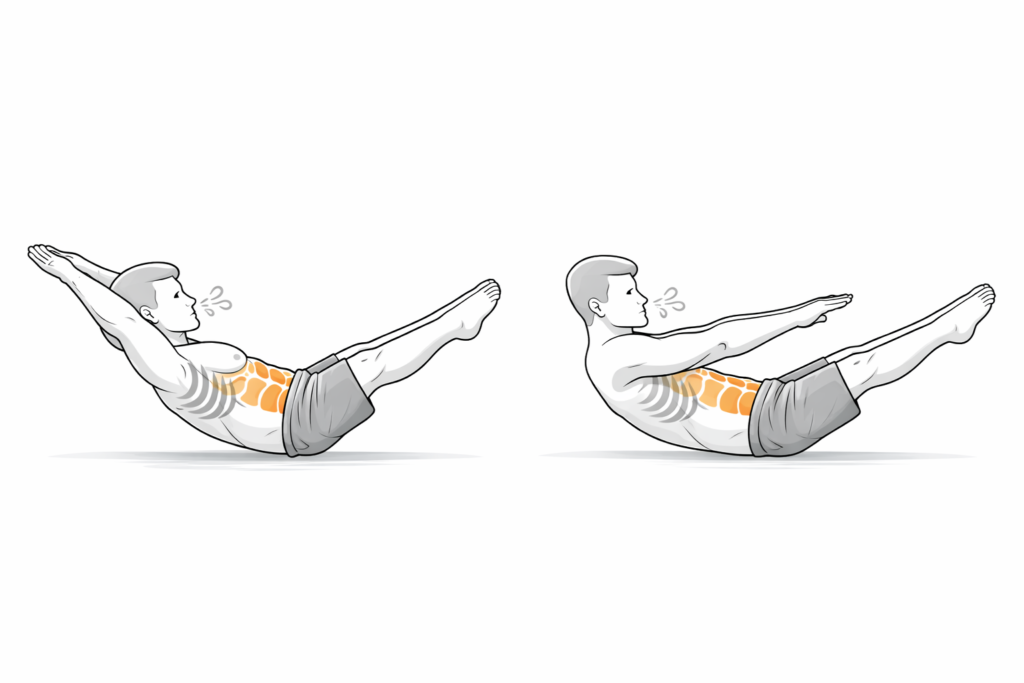
Arms reaching overhead lengthens the lever and makes your ribs want to pop up.
So if ribs kept flaring, I brought arms forward instead, like reaching toward knees.
Same idea, less lever.
Then I slowly worked arms back overhead again when control improved.
Neck position matters more than it should
When I looked up too much, ribs flared.
When I tucked the chin slightly, ribs stayed down easier.
So I kept my gaze toward my thighs, not toward the ceiling.
Small change.
Big control difference.
Best Time to Do Hollow Holds in a Workout
I didn’t build a whole workout around hollow holds.
That would’ve made me hate them.
I kept them as a short “switch-on” block near the start.
Right after a warm-up that raised my body temperature.
Because doing hollow holds cold feels like trying to fold a stiff cardboard box.
How one of my sessions actually looks from start to finish
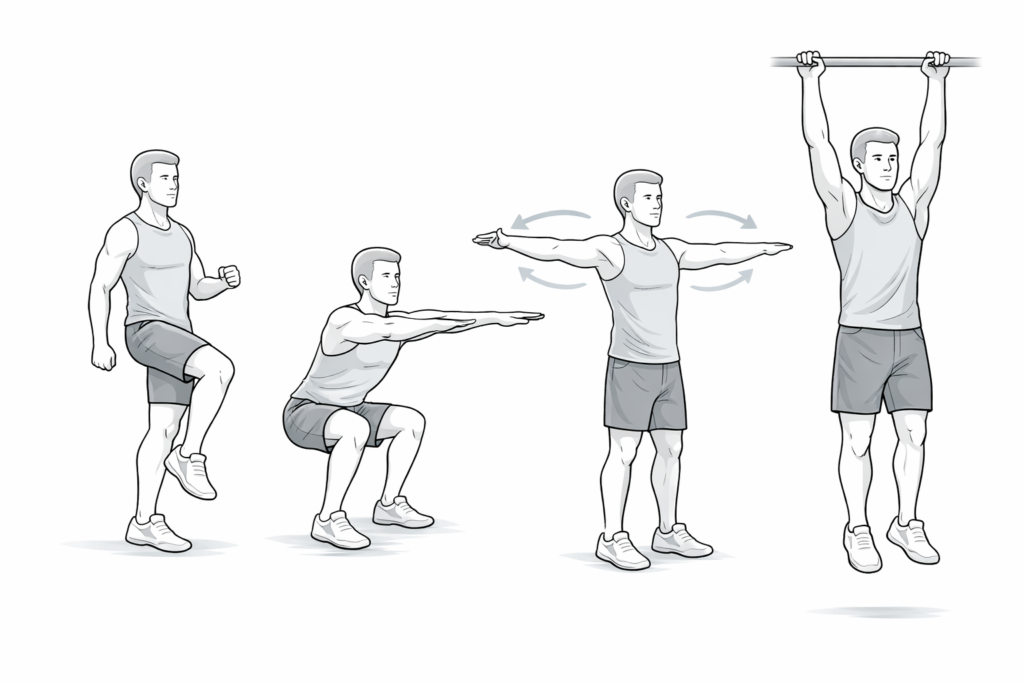
Warm-up: 6 minutes total.
- 2 minutes brisk walk or marching in place.
- 10 slow bodyweight squats.
- 8 shoulder circles each direction.
- 20 seconds dead hang from a bar (or just arm shaking if no bar).
Hollow block: 10 minutes.
- 2 sets of 20 seconds bent-knee hollow hold, 40 seconds rest.
- 2 sets of 20 seconds one-leg-extended hollow hold per side, 45 seconds rest.
- 2 sets of 20–30 seconds straight-leg hollow hold at a controllable angle, 60 seconds rest.
Then the main workout.
Push-ups or dips felt more stable.
Pull-ups felt less “archy.”
Even if the workout wasn’t perfect, the torso stayed more organized.
When hollow holds felt wrong, and what I changed
Sometimes hollow holds felt like hip flexors were doing everything.
Sometimes they felt like my neck was getting tired.
Sometimes my low back felt weird pressure.
Those were my warning lights.
Not “pain equals gain.”
More like “this setup needs tweaking.”
If hip flexors took over
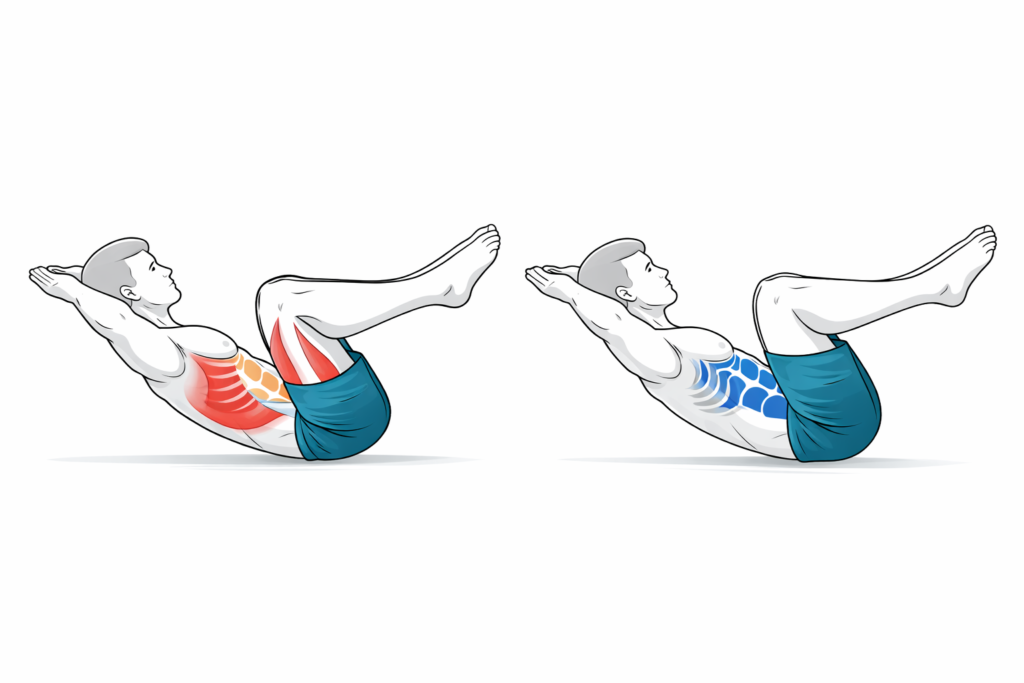
I bent the knees more.
I raised the legs higher.
I shortened the hold to 10–15 seconds and did more sets.
That shifted effort back into the abs.
Because hip flexors love long, ugly holds when the core isn’t controlling the pelvis.
If the neck got tired
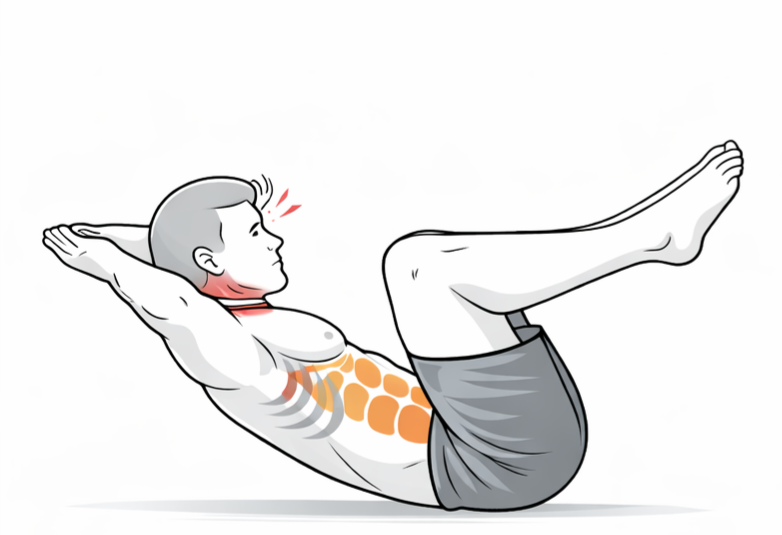
I reduced the shoulder lift slightly.
I supported my head for a moment between sets.
I kept the chin gently tucked and stopped reaching the arms too aggressively overhead.
Neck fatigue usually meant I was trying to “crunch” instead of bracing.
If the low back felt pressure
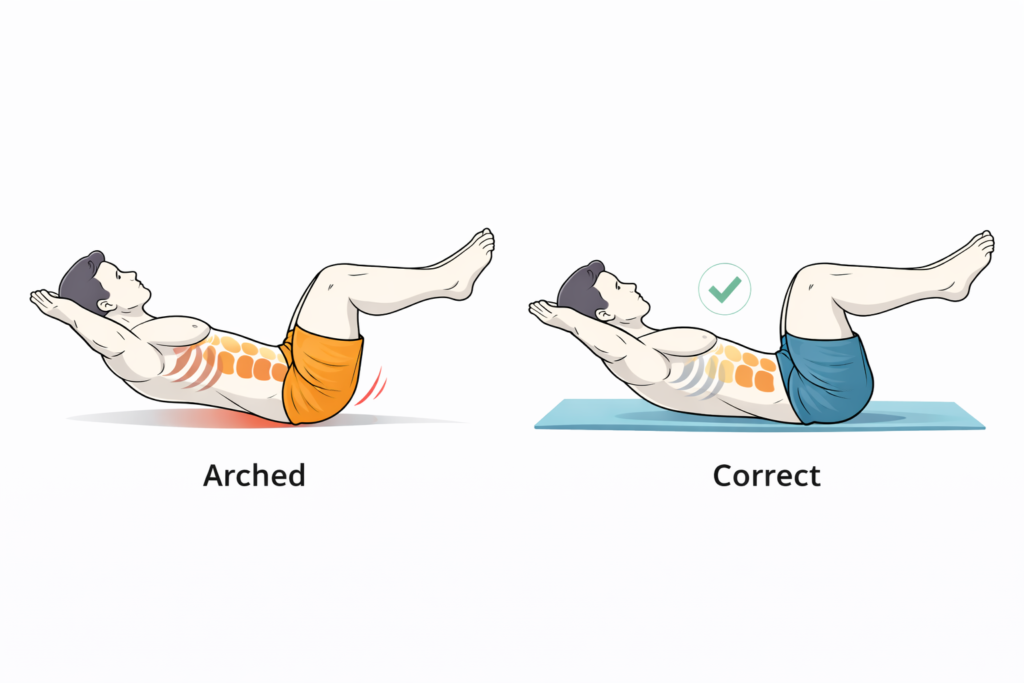
That usually meant my low back wasn’t actually pressing into the floor anymore.
So I regressed instantly.
Bent knees.
Shorter holds.
More rest.
Because if the low back is arched, you’re basically practicing the exact problem you’re trying to fix.
RELATED:》》》Ab-Wheel vs Hollow Body
Why hollow holds feel simple but reveal a lot
A hollow hold doesn’t let you hide instability.
When something isn’t tight, you feel it right away.
That’s exactly why it works so well.
Small leaks in control become obvious within seconds.
It’s a very simple position, not flashy but extremely effective.
It teaches your body to stay stacked while you breathe and hold tension.
Then you stand up and push-ups, pull-ups, and even basic movements feel more connected.
It feels like fixing a loose wheel on a shopping cart and suddenly everything rolls smoothly.
Only then do you realize something hadn’t been working properly before.