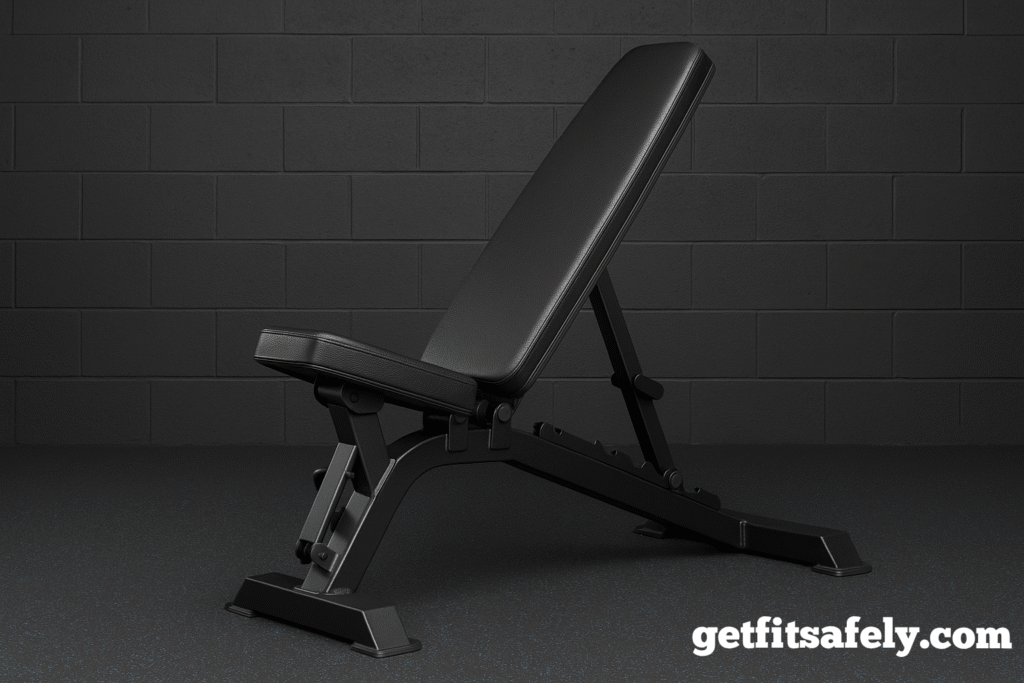
A lot of people think durability just means “can it hold my body weight plus the dumbbells?”
Not even close.
With dumbbells, the load isn’t symmetrical like with a barbell.
Your right side may press faster, your left side may lag, and suddenly all that torque is twisting into one hinge of the bench.
Over time, that adds up.
Now factor in the real-life stuff:
- Slamming dumbbells on your thighs before pressing.
- Adjusting your back mid-set when you feel slightly crooked.
- Dropping sweat everywhere (and let’s be honest, sometimes spilling pre-workout too).
Your bench isn’t just holding you—it’s taking punishment every single rep.
A flimsy frame will start creaking, bolts will loosen, and eventually you’ll feel like you’re lifting on a rocking chair at your grandma’s house.
Here’s a simple test I always do before trusting a new bench.
Sit down, grab a pair of dumbbells, and just hold them for 30 seconds without starting your set.
Don’t move, don’t press—just feel.
If the bench stays rock solid under you, that’s the kind of durability you want.
If you notice even a small wobble, a shift, or that unsettling creak, that’s your red flag.
Frame: heavy steel is non-negotiable
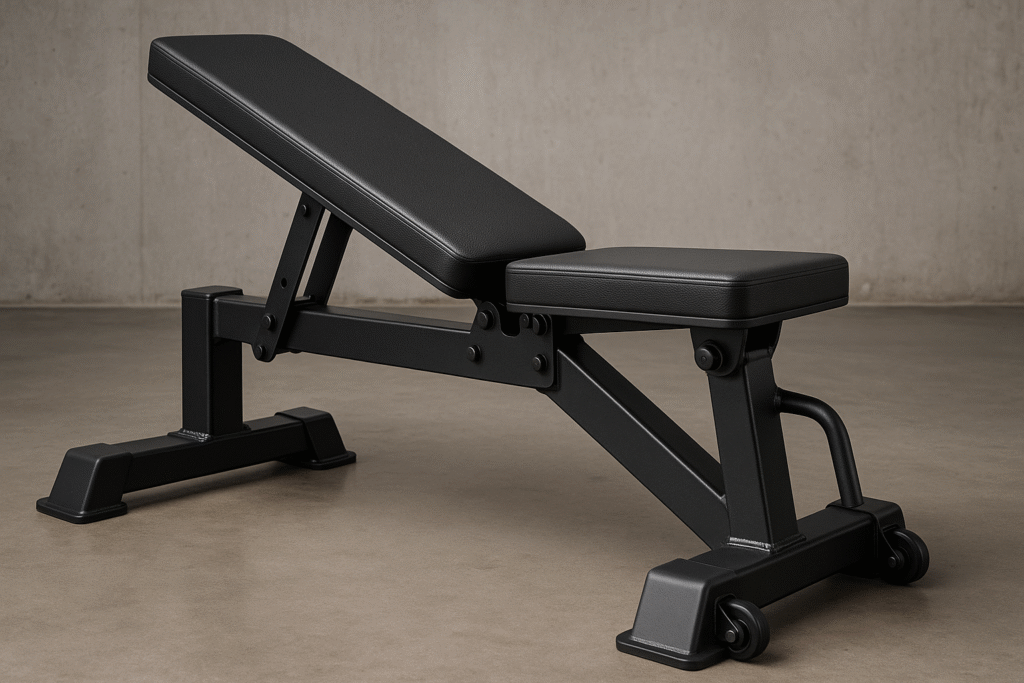
Think of the bench frame as the skeleton.
If it’s weak, nothing else matters.
Look for 11–12 gauge steel minimum.
That’s commercial-grade territory.
Cheaper benches use thinner steel, which might save money up front but usually ends in frustration.
A solid base design is just as important.
The wider the footprint, the less likely you’ll tip over when you kick up heavy dumbbells.
Tripod-style bases can work, but if the legs are skinny and the welds are sloppy, it’s a recipe for regret.
I once had a “bargain adjustable” bench.
Looked great online—sleek, shiny, all smiles.
But the hinge bent after a few weeks of 70-pound incline presses.
Every set after that felt like doing chest day on a seesaw.
Never again.
Adjustability: variety without fragility
We all want that sweet range of angles.
Flat, slight incline, mid incline, vertical.
Because chest pressing at 30° hits different than pressing at 60°.
But here’s the problem: every adjustment point is a potential weak spot.
That’s why ladder-style adjustments usually last longer than pull-pin systems.
The steel teeth lock in like a vault door, while pins sometimes wear out or rattle.
If you hear your bench clanking every time you move it, that’s your future telling you it won’t last.
Padding and upholstery
This is where people get fooled.
You sit on a brand-new bench and it feels soft, almost luxurious.
But a few weeks later, the foam is crushed and your back sinks in like an old couch.
What you really want is high-density foam—firm, supportive, and built to hold its shape under load.
When you press, your body should feel locked in, not sliding around like on a beanbag.
The upholstery matters just as much.
Quality benches use thick, stitched, anti-slip vinyl that resists scuffs from dumbbells, wipes clean fast, and doesn’t soak up sweat or odors.
That extra grip, especially when you arch for incline presses, saves you from wasting energy fighting the bench instead of focusing on the weight.
It’s a small detail, but it’s the line between a throwaway bench and one that stays solid for years.
A Wobbly Bench Is a Bad Bench
Forget wheels, folding legs, or weird attachments.
The real test of durability is stability.
Try this: sit on the bench, grab dumbbells, and shake your body slightly side to side.
If the bench wobbles or shifts, it won’t hold up when you start pressing serious weight.
A durable bench should feel like it’s bolted into the floor—even when you’re throwing around 100s for incline presses.
Because the last thing you need is your bench tipping just as you’re trying to lock out a heavy rep.
Commercial-grade vs. home benches
Here’s where lifters often get stuck.
Do you splurge on a commercial-grade bench or settle for a home model?
Commercial benches are overbuilt for a reason.
They’re designed to handle hundreds of users daily.
So if you’re training heavy with dumbbells four times a week, that extra sturdiness pays off big.
Home-grade benches can still be solid, but you have to be picky.
Brands like Rep Fitness and Rogue are known for building benches that feel commercial without completely draining your bank account.
Titan has budget-friendly options too, but their quality control can be hit or miss.
Check out a commercial incline bench online
Lessons From Years of Dumbbell Bench Fails
After years of trial, error, and more than a few sketchy workouts, here’s my rulebook:
- Spend once, cry once. Pay more upfront, and you won’t be replacing a bench every year.
- Check the steel. 11–12 gauge is your sweet spot.
- Test the stability. If it wobbles empty, it’ll wobble more loaded.
- Skip the gimmicks. The best benches don’t fold up like lawn chairs.
- Think long-term. Your bench should last longer than your favorite gym playlist.
Wheels, storage, and the “garage gym factor”
Here’s something nobody tells you until you trip over your own gear: where are you putting this bench when you’re done?
If you’re training in a tight garage gym or even a basement corner, wheels suddenly become your best friend.
But not the cheap, rattly wheels that feel like they belong on a grocery cart.
I’m talking about thick, rubber-coated wheels that roll smooth so you can drag your bench around without waking the whole house.
A durable incline bench should move easily but lock down firmly once you’re in position.
If it’s a pain to move, you’ll either leave it in the way or stop using it as much—and neither helps your training.
The truth about bench weight limits
Most brands will advertise some outrageous number like “1,000 lb capacity.”
Sounds great, right?
But here’s the catch: that number usually includes your body weight plus the dumbbells.
So if you weigh 200 lbs and press 100s in each hand, you’re already at 400 lbs total.
That “1,000 lb” suddenly doesn’t feel like as much wiggle room.
The real question isn’t just capacity—it’s usable stability under load.
Some benches technically “hold” the weight but flex like a diving board under stress.
That’s not durable—that’s sketchy.
Bench height and biomechanics
Durability isn’t just about whether a bench survives—it’s also about whether it actually supports you properly.
Most commercial benches sit at about 17–18 inches in height, which allows lifters to plant their feet firmly for pressing.
Cheaper benches often sit too high, and if your feet can’t drive into the floor, your whole pressing game suffers.
If you’re shorter, a high bench forces your feet to dangle or barely touch the ground.
That means less stability, less leg drive, and more stress on your lower back.
Durability should include being built to spec—because what’s the point of a bench that lasts forever if it puts you in bad positions from day one?
When a foldable bench is actually a good idea
Usually, foldable benches scream instability.
But there are exceptions.
Some higher-end brands design foldable incline benches that lock tight with reinforced hinges.
If you live in an apartment or have limited space, this can be a lifesaver.
Just remember—if a bench folds too easily, chances are it won’t hold up to years of dumbbell punishment.
Look for multiple locking points and steel hinges, not thin aluminum that bends under pressure.
Grab your home incline bench online
Long-term training and “aging with your bench”
Think about how your training will evolve.
Maybe right now you’re pressing 50s and just chasing that pump.
But what about two years from now when you’re stronger, heavier, and your dumbbells look like small anvils?
A bench that only feels solid under light to moderate weight will betray you when your numbers climb.
Durability means growing with you.
It should feel just as solid at year five with 100s as it did on day one with 40s.
That’s the kind of gear that earns respect—the stuff that doesn’t just survive your journey, but keeps up with it like a stubborn training buddy who refuses to quit.
RELATED:》》》Can I build a chest without the Barbell Bench Press? 16 effective ways
The bottom line
So, which incline bench is most durable for dumbbell training?
The one built like a tank—with thick steel, ladder-style adjustments, high-density foam, and a stable base.
Your bench should be your training partner that never flakes, never whines, and never gives up mid-rep.
Pick the right one, and ten years from now you’ll still be pressing away, smiling at the thought that you invested in gear that outlasted all your gym shoes and shaker bottles.