Most push workouts follow the exact same script.
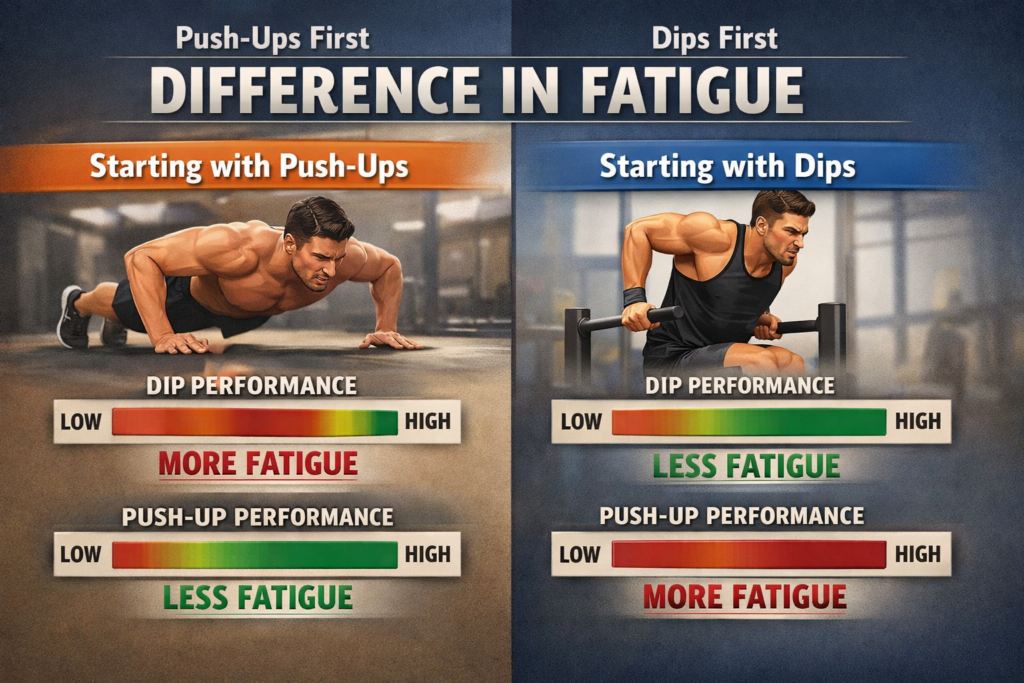
Push-ups come first.
Dips usually appear later in the session.
The chest warms up gradually, triceps begin to help, and the shoulders slowly join the effort.
It’s such a familiar rhythm that hardly anyone ever questions it.
But something interesting happens when the order flips.
Instead of lowering to the floor, the workout begins on the dip bars.
The body sinks between the rails, pushes back up, and within a few minutes the arms already feel involved.
When push-ups arrive later in the session, they don’t behave like a warm-up anymore.
They arrive after the arms and shoulders have already spent part of their energy.
Suddenly the exercise feels different.
Not heavier.
Just… shifted.
Fatigue shows up in places that normally stay quiet at the beginning of a push workout.
Why Fatigue Feels Different When Dips Come First
Imagine your arms have an energy battery.
Push-ups afterward still work.
But they start with less battery available.
That’s why fatigue feels rearranged rather than increased.
The Change Isn’t Strength — It’s Where Push-Ups Start to Burn
When push-ups open the session, the chest usually dominates the feeling.
The triceps participate but don’t scream for attention.
When dips come first, push-ups feel different almost immediately.
The triceps speak up earlier.
Front shoulders feel involved sooner.
Even the hands feel more loaded against the floor.
Push-ups don’t suddenly become impossible.
They simply feel like starting a run after already climbing a small hill.
A Quick Look at What Happens During a Dip
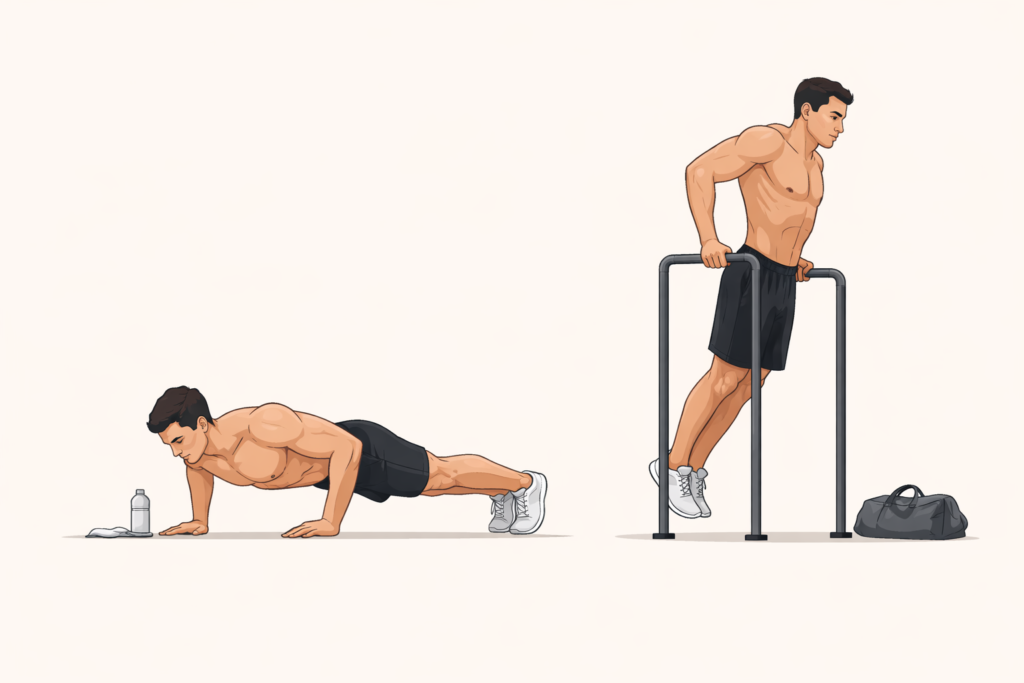
A dip is a pushing movement where the hands stay fixed on bars while the body moves up and down.
Imagine two sturdy rails at hip height.
You grab the rails.
Your arms straighten.
Your body hangs between them.
From there you lower yourself by bending your elbows, then push back up.
The chest, triceps, and front shoulders work together.
Compared to push-ups, dips usually allow the elbows to bend deeper and the shoulders move slightly behind the torso at the bottom.
That deeper angle is why dips often feel heavier even though body weight doesn’t change.
The movement simply places the joints and muscles in a different position.
Interestingly, some sports science research has pointed out that the bottom position of a dip places the shoulder in a state of end-range glenohumeral extension, where the upper arm travels behind the torso.
Researchers have suggested that this position can increase stress on the anterior shoulder structures if control is lost, particularly when fatigue accumulates during repeated dips (McKenzie et al., 2021).
That doesn’t automatically make dips dangerous.
It simply explains why control, depth, and shoulder positioning matter more in dips than in many floor-based pushing movements.
How I Approach Dips Without Annoying My Shoulders
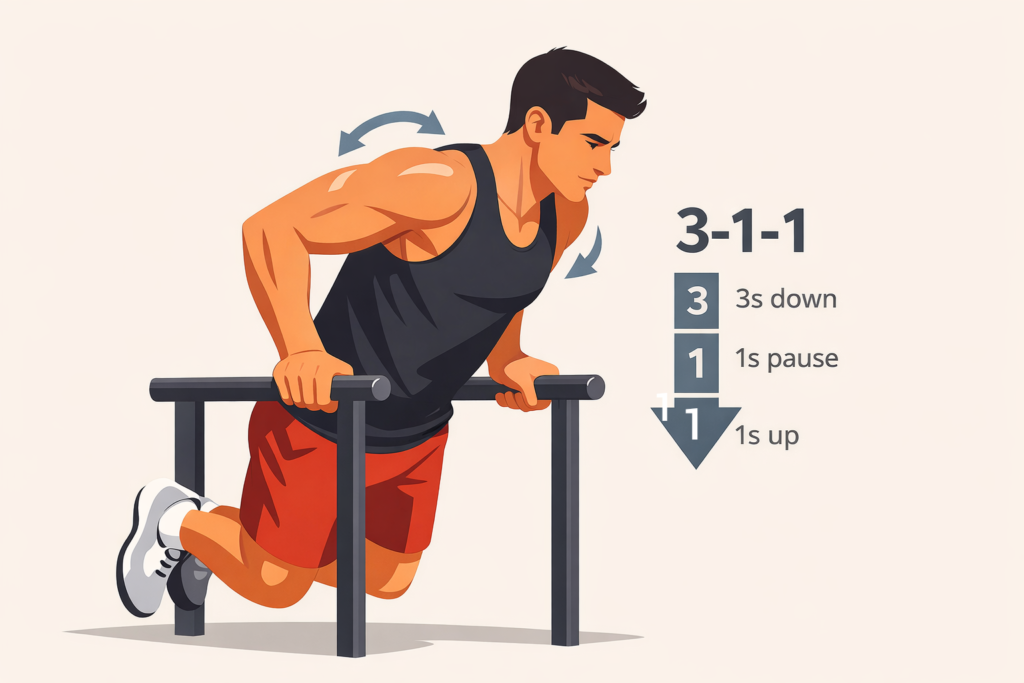
Dips reward control.
Dropping too quickly into the bottom position often makes the shoulders feel uncomfortable.
So I treat each repetition like a controlled descent rather than a fall.
Hands grip the bars firmly.
Shoulders move down and slightly back before the body starts lowering.
The torso leans forward a little, not completely upright.
Then the body lowers for about three seconds.
The bottom position feels stretched but not extreme.
From there I push upward smoothly until the arms straighten again.
If shoulders start creeping toward the ears or elbows flare outward, the movement instantly feels different.
That difference becomes one of the early clues that fatigue is building.
Why Push-Ups Suddenly Feel More Like an Arm Exercise
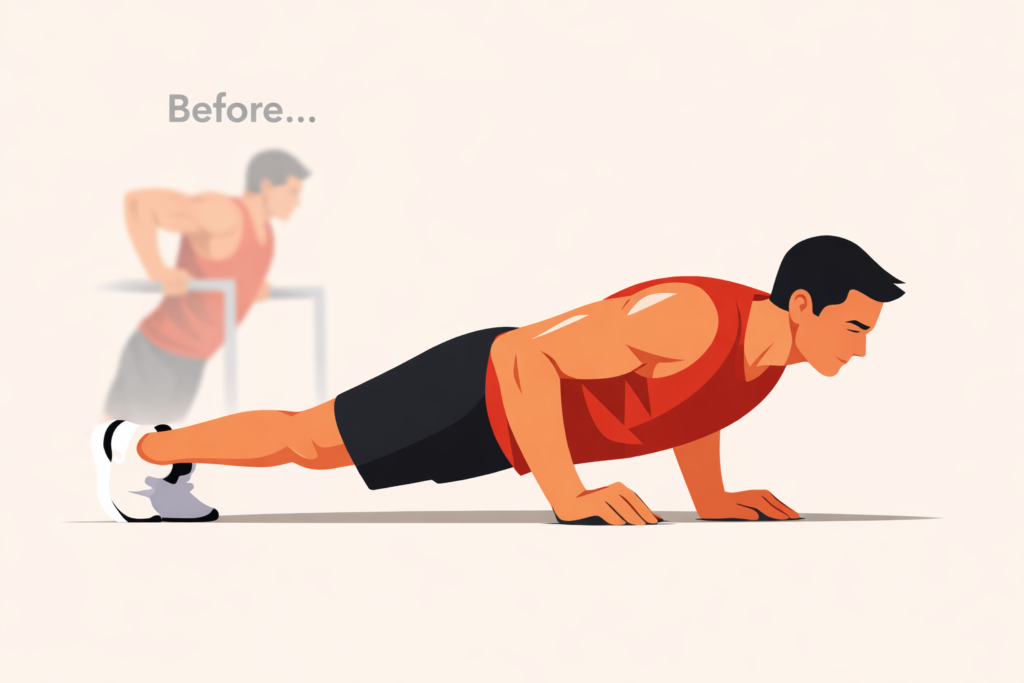
After dips, push-ups still work the chest.
But the sensation shifts.
Triceps feel responsible for more of the work.
The chest contributes, but it doesn’t dominate the feeling the way it does when push-ups begin the session.
The easiest way to describe it is this:
Push-ups usually feel like the chest presses the floor away.
After dips, push-ups feel more like the arms extending repeatedly while the chest helps.
That small shift changes how fatigue spreads across the workout.
Why Starting With Dips Moves Fatigue Around
Push-ups distribute body weight across a plank position.
The feet support part of the load.
The hands support part of the load.
The torso stays aligned.
Dips concentrate more responsibility in the arms and shoulders.
The body hangs between the bars.
The shoulders stabilize.
The elbows bend deeply.
The triceps extend the arms repeatedly.
Because dips demand more stabilization and deeper elbow bending, they drain certain muscles earlier.
When push-ups follow afterward, those muscles are already working.
So the push-ups feel like a continuation rather than a beginning.
Front Shoulders Start Working Sooner
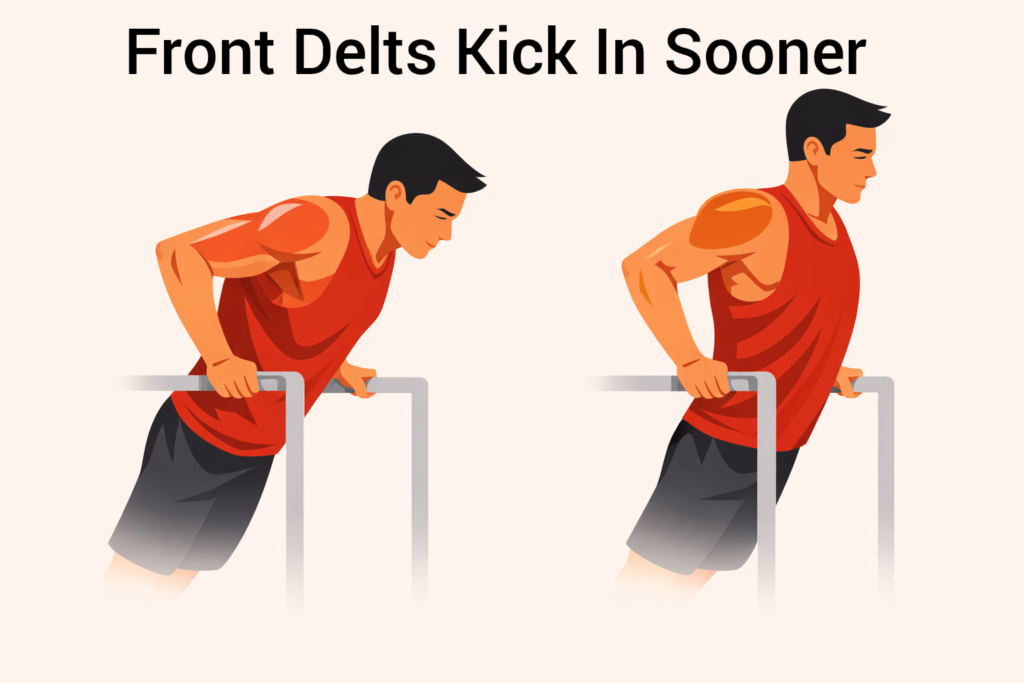
Another thing becomes obvious.
Front shoulders show up sooner.
Push-ups alone often let the chest lead the sensation.
But when dips come first, the shoulders are already stabilizing during that deeper dip position.
So by the time push-ups start, the shoulders already participate.
A slight forward lean during dips spreads the load more toward the chest.
A very upright dip shifts effort more toward triceps and shoulders.
Even small changes in torso angle alter how the rest of the workout feels.
What I Notice During The Session Itself
These differences appear during very specific moments.
The first push-up after dips already feels like the middle of a set.
The body doesn’t start from zero anymore.
The elbows begin bending with less freshness than usual.
During the lowering phase the chest still controls the movement smoothly, but the pushing phase takes slightly longer than expected.
Another small difference shows up around the shoulders.
Instead of feeling relaxed at the start of push-ups, the front delts already feel engaged as stabilizers.
The arms straighten, but the movement feels more deliberate, almost as if the body is checking its balance on every repetition.
Sometimes the last few centimeters of the push-up become the slowest part.
Not because the chest is exhausted.
But because the triceps already did a good amount of work during the dips.
Another detail appears in the elbows.
They tend to drift slightly outward sooner than they normally would at the beginning of a push-up session.
Keeping them tucked close to the torso suddenly requires more attention.
Even the transition between repetitions changes.
Instead of bouncing naturally from one push-up to the next, the body pauses for a fraction of a second at the top position.
That small pause happens almost automatically.
It’s simply the body reorganizing before the next repetition starts.
A Push Workout That Begins With Dips
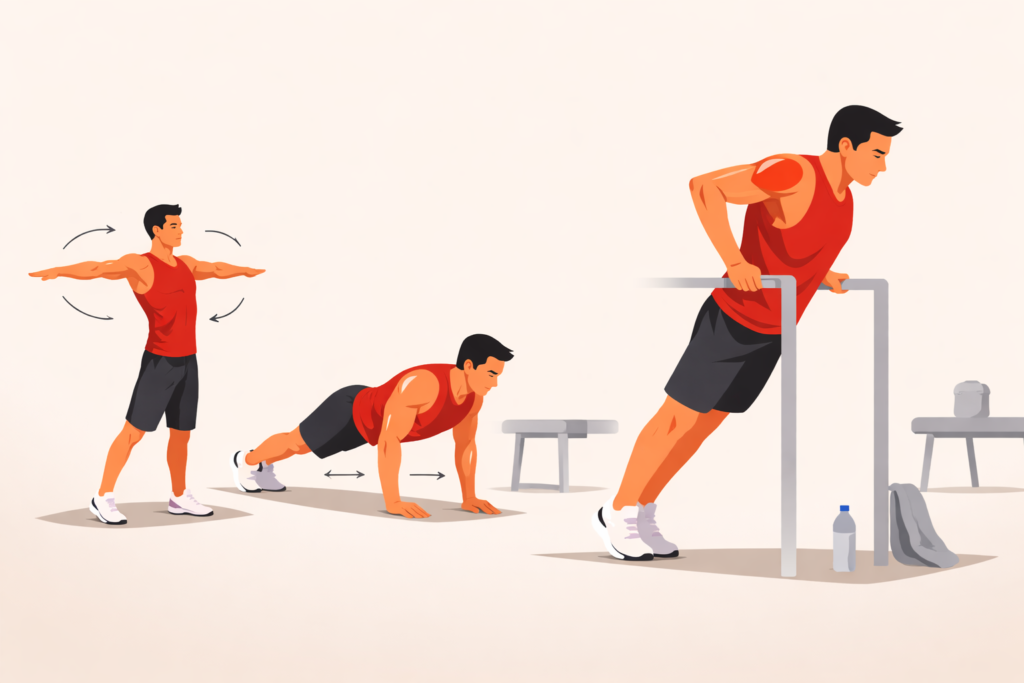
Here’s how a typical session unfolds when dips begin the workout.
The session begins with a few minutes of light preparation.
Arms move through relaxed swings to loosen the shoulders and elbows.
The upper back wakes up with a few slow pressing motions while the shoulder blades stay controlled and stable.
A couple of easy incline push-ups on a bench bring the chest and triceps into the movement without much effort.
Once everything feels ready, the dips begin.
The first round feels smooth and controlled.
Each repetition lowers steadily before pressing back up.
After a brief rest, another round follows.
This time the muscles already feel warmer and more involved.
Chest starts to engage more clearly.
Triceps begin to carry more of the effort.
A slightly longer break follows before the next round begins.
The movement is still controlled, but the last few repetitions slow down naturally.
Front shoulders now join the effort more noticeably.
Then push-ups enter the session.
The first set already feels like something that belongs in the middle of a workout rather than the beginning.
Triceps become noticeable much earlier than usual.
After a short reset, another round of push-ups follows.
Lowering feels smooth.
Pressing back up takes more focus.
Later a slower push-up variation appears.
Hands stay slightly wider than shoulder width.
Each repetition lowers under control before pressing back up again.
The movement stays deliberate and steady, creating a strong chest sensation without rushing through the set.
The session continues for a while longer before gradually winding down.
By the end, triceps feel thoroughly worked.
Chest feels engaged.
Shoulders feel tired but stable.
The fatigue has simply moved to different places compared with sessions where push-ups come first.
A Few Details That Make Dips Work Better at the Start
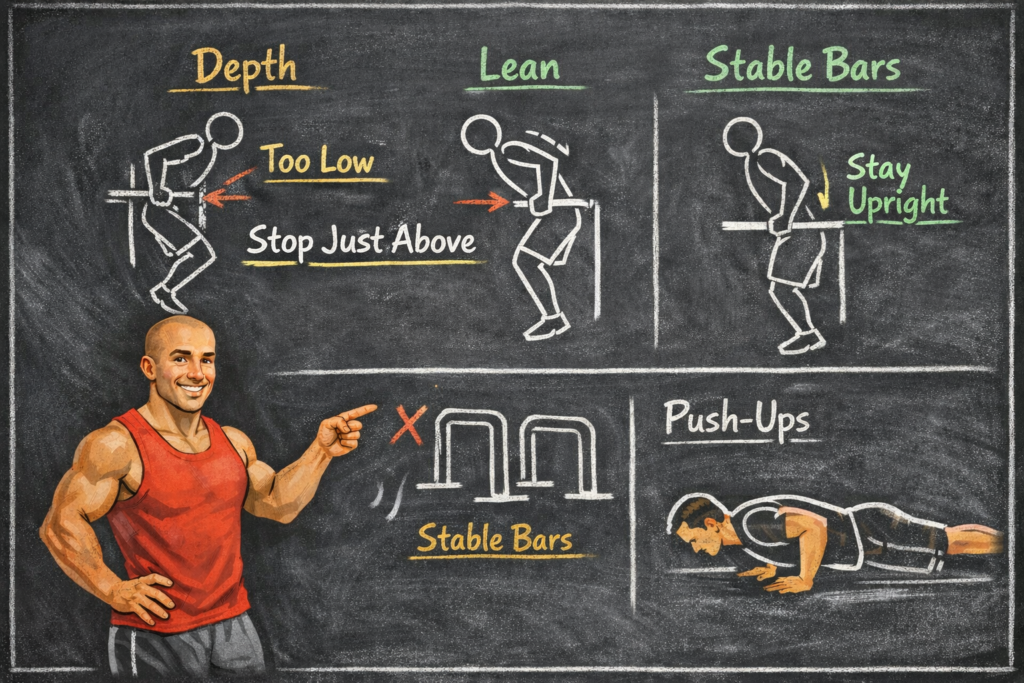
Starting with dips works well only when a few details stay under control.
Depth Matters
Going extremely deep too early increases shoulder stress.
Stopping slightly above the deepest point keeps tension in the chest and triceps without irritating joints.
Torso Angle Changes Muscle Involvement
Leaning slightly forward during dips encourages chest involvement.
Remaining perfectly upright places more responsibility on triceps and shoulders.
Even a small lean changes how the later push-ups feel.
Stable Bars Help More Than Expected
A solid dip station allows better control.
If the bars wobble, stabilizing muscles work harder and fatigue appears sooner.
That extra tension doesn’t always help the main movement.
How the Body Reacts When Dips Come First Too Often
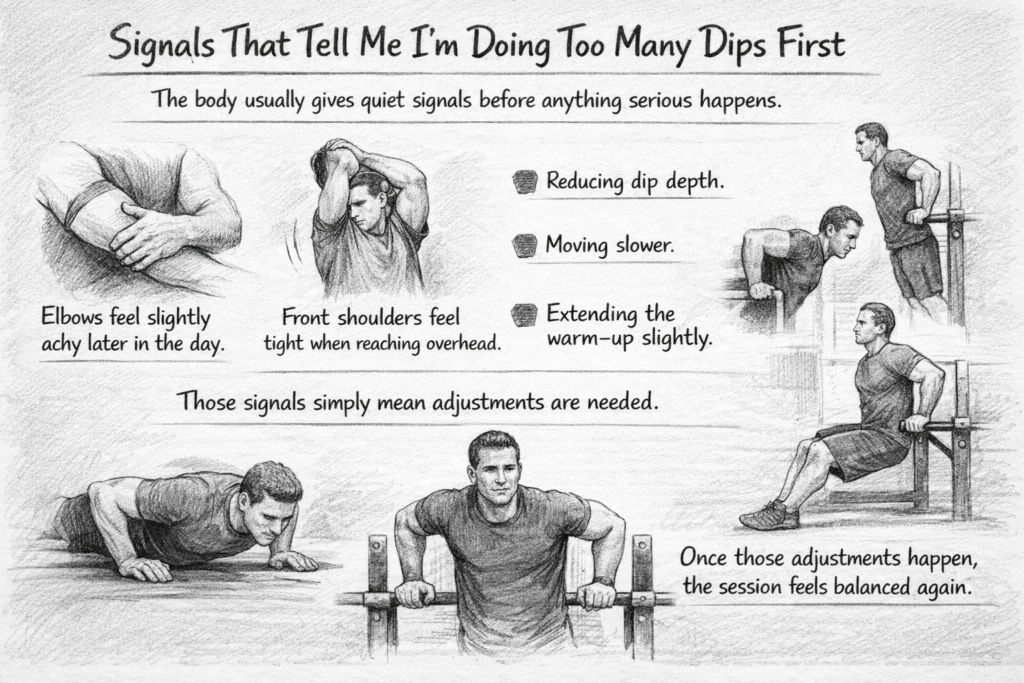
The body usually gives small signals before anything serious happens.
Elbows feel slightly achy later in the day.
Front shoulders feel tight when reaching overhead.
Push-ups begin to feel shaky earlier than usual.
Those signals simply mean adjustments are needed.
Reducing dip depth.
Moving slower.
Extending the warm-up slightly.
Once those adjustments happen, the session feels balanced again.
Push-Up Styles That Work Better After Dips
Certain push-up variations feel smoother after dips.
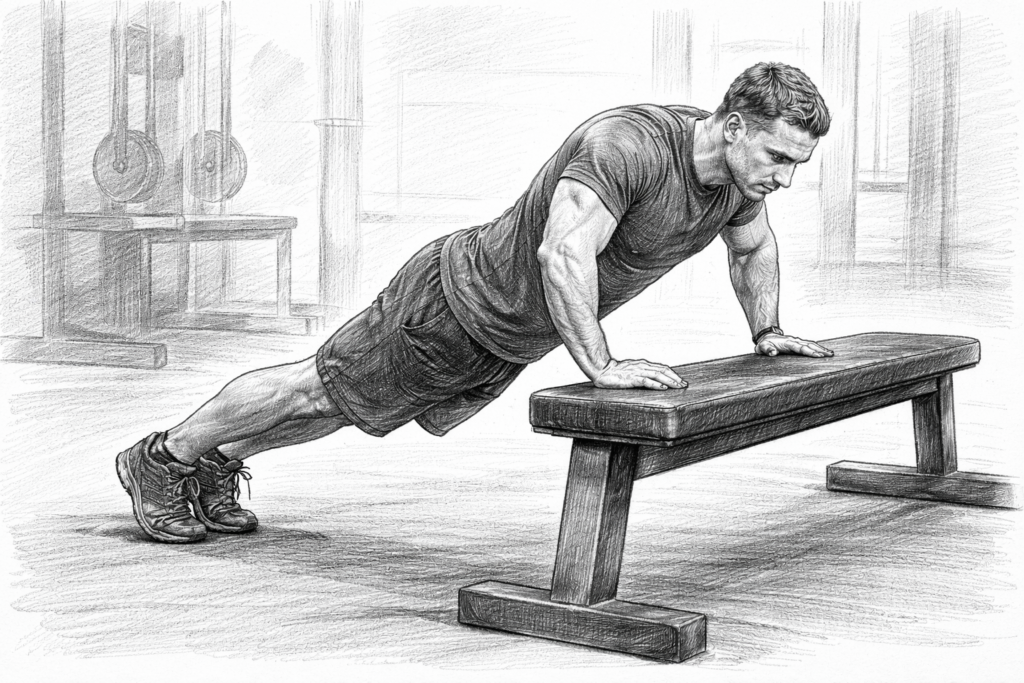
Incline push-ups on a bench reduce load and allow clean form.
Tempo push-ups with slow lowering increase chest involvement without rushing.
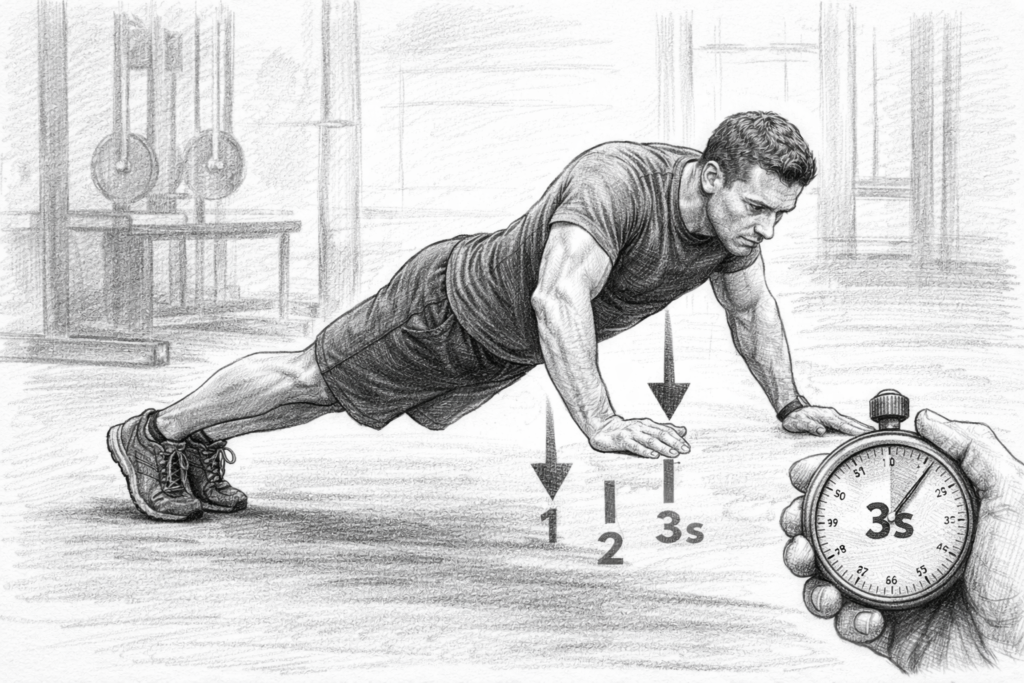
Push-ups with a brief pause at the bottom keep tension honest and prevent bouncing.
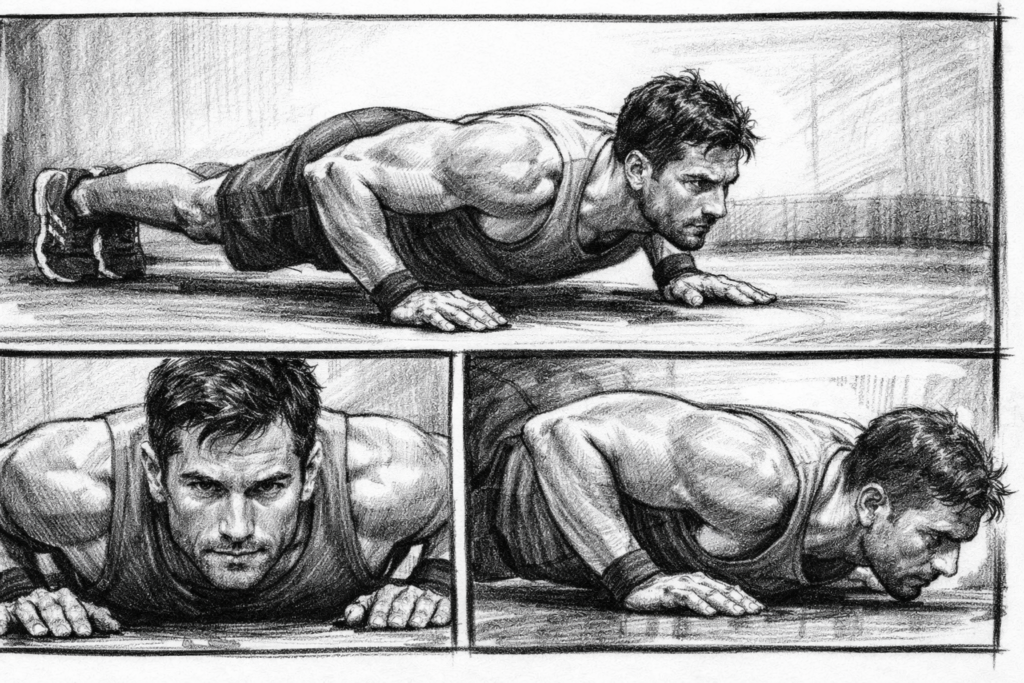
Choosing the right variation keeps the session productive even when dips begin the workout.
How The Session Feels Near The End
When push-ups open the workout, the end usually feels like chest fatigue.
When dips open it, the end often feels like triceps and shoulder stabilization fatigue.
So the closing movements change slightly.
Sometimes the session ends with controlled push-ups emphasizing chest.
Other times a short dip hold at the top position strengthens shoulder stability.
Holding the top of the dip for twenty seconds with shoulders down and arms straight trains control more than brute effort.
And control is what keeps the joints happy long term.
Why This Simple Change Is Surprisingly Useful
Opening a push session with dips shifts the workload toward triceps and shoulder stability early.
Push-ups afterward become a continuation of that effort rather than the main event.
That shift teaches something valuable about pushing movements.
Different joint angles change how muscles share the work.
The order of exercises simply redistributes fatigue across the session.
Once that difference becomes noticeable, it’s hard not to see it again during future workouts.
FAQs
Should dips always come before push-ups in a push workout?
Not necessarily. Starting with dips can shift fatigue toward triceps and shoulder stabilizers early in the session, but alternating the order across workouts can help distribute stress across different muscles and reduce overuse.
Can beginners start a workout with dips?
Beginners often benefit from building basic pushing strength first. Variations like bench dips, assisted dips, or incline push-ups can help develop the necessary stability before placing dips at the start of a workout.
Do dips train the chest as effectively as push-ups?
Both movements involve the chest, but their emphasis can differ. Dips often recruit more triceps and shoulder stabilizers, while push-ups tend to distribute effort more evenly across the chest and core.
Is it better to train dips and push-ups in the same workout?
Yes, they can complement each other well. Dips challenge deeper shoulder extension and arm strength, while push-ups provide a stable pressing pattern that helps accumulate additional volume without requiring equipment.