The dip belt is one of those gym tools that separates the “I just started” crowd from the “I mean business” ones.
Or at least, that’s what everyone thinks — until they actually start using it.
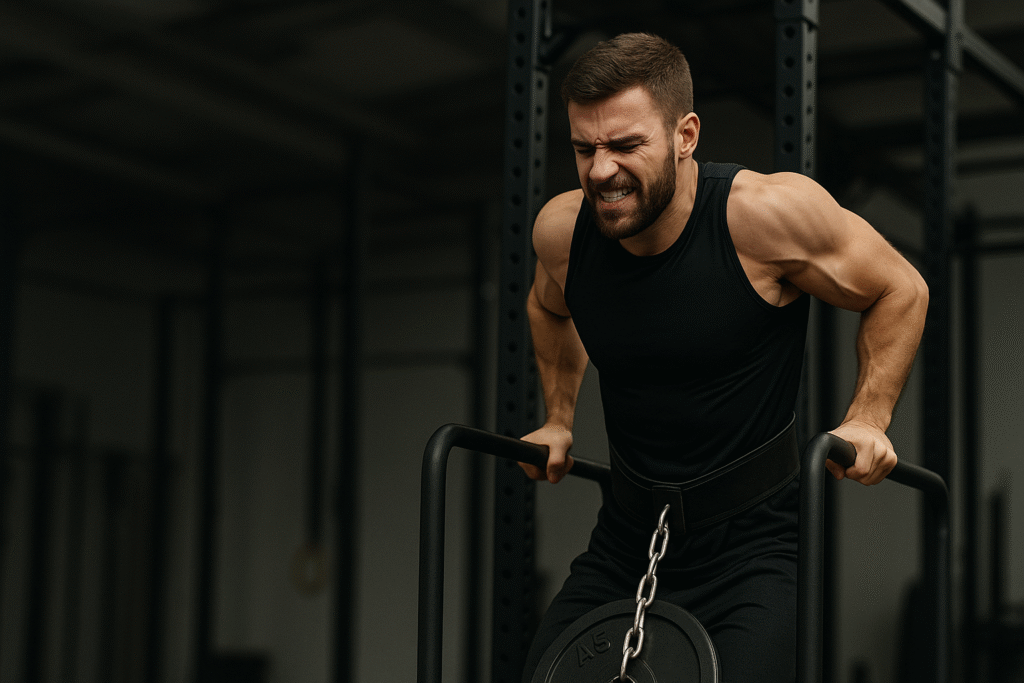
The moment you clip a plate, you feel powerful.
The chain digs into your hips, you brace your core, and you swear you’ve just entered a new training league.
But somewhere between the second rep and the third clank of that swinging plate, reality hits harder than the load.
You’re not going deeper.
You’re going shorter.
And the more you try to fix it, the worse it gets.
The day I learned my belt was smarter than me
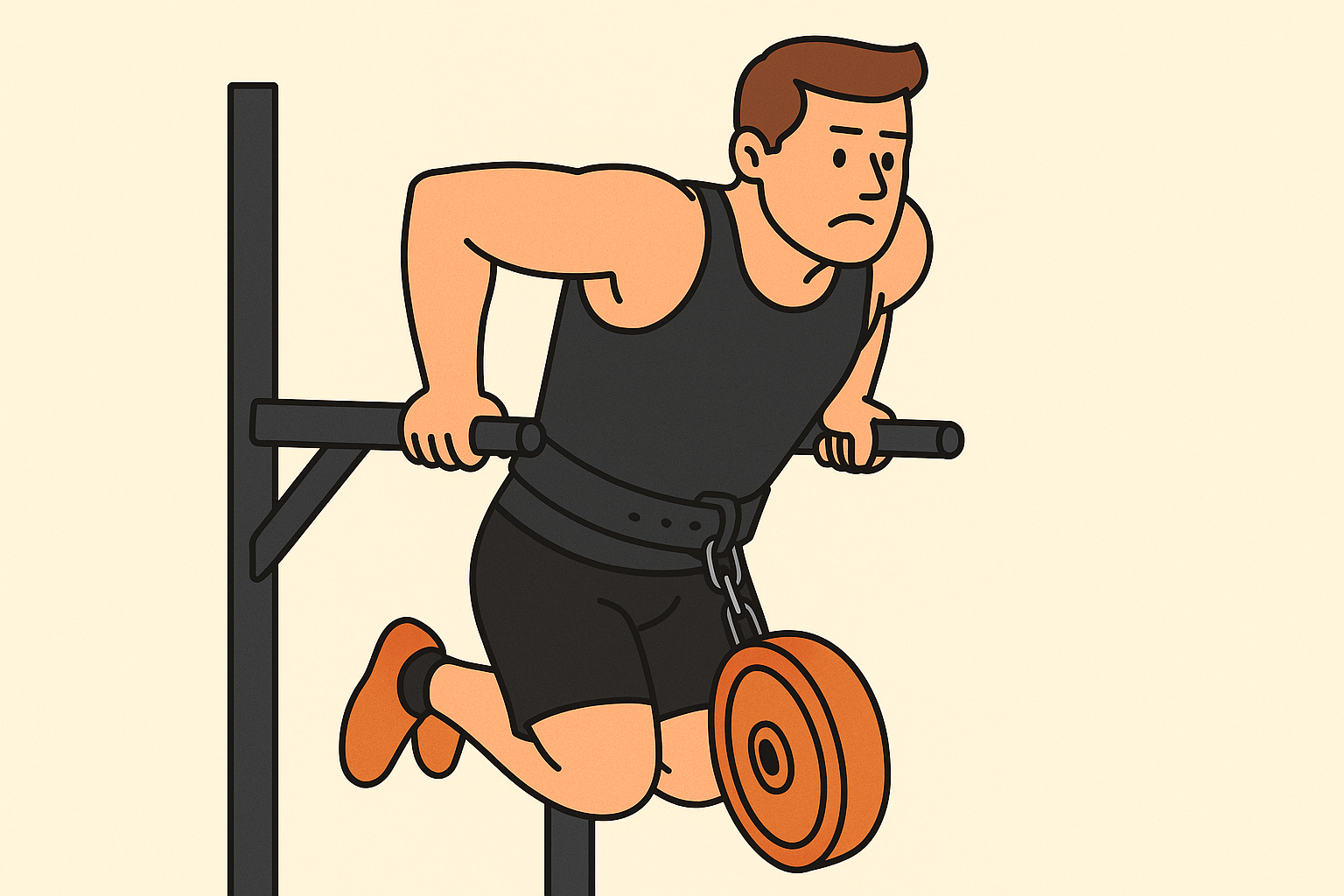
It happened on a Tuesday — chest and triceps day.
I’d been nailing clean bodyweight dips for months, so adding a plate felt overdue.
I strapped on my dip belt, tried to look casual, and went for it.
Rep one: solid.
Rep two: sketchy.
Rep three: the plate kissed my thighs, my knees tucked, and my range of motion turned into a polite shrug.
A guy nearby laughed, “Bro, looks like your plate’s trying to escape.”
He wasn’t wrong.
That plate was swinging like a hypnotic pendulum, dragging my hips forward every time I dipped.
It wasn’t bad strength — it was bad physics.
The weight pulled exactly where my hips needed to go, and my body compensated by shortening the motion.
It felt heavier, sure, but not in a productive way.
It was like doing squats while stepping on your shoelaces.
That chain slap you never forget
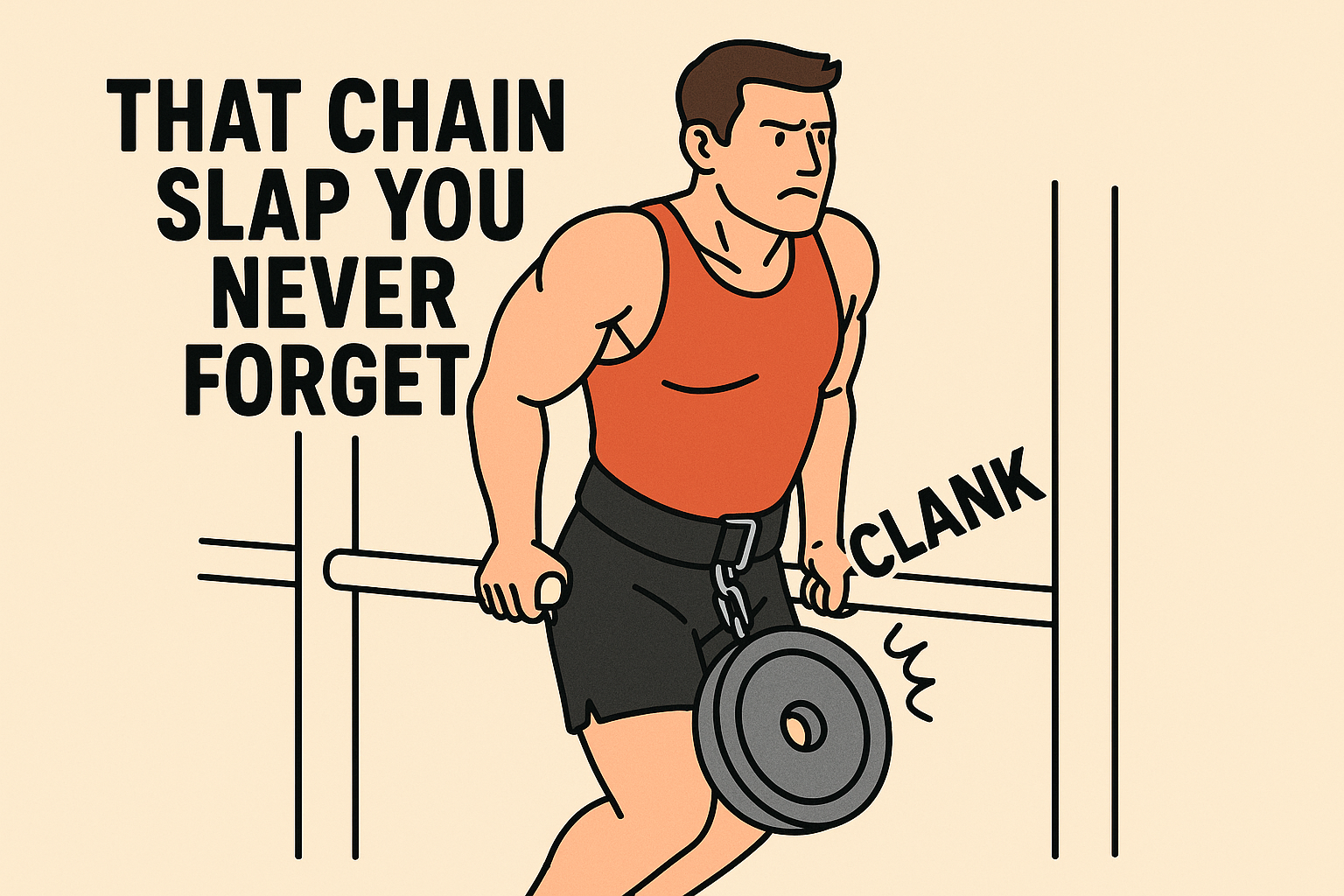
Every lifter has heard it: the metallic “clank” when your plate smacks the bars or your thighs mid-rep.
You tell yourself it’s just part of the grind.
But really, it’s your body screaming, “This setup makes zero sense.”
That sound means the chain’s too short or the plate’s too close to your centerline.
Both problems force your hips to tilt forward, locking your shoulders in an awkward half-press.
And when that happens, you lose what makes dips so good — the stretch at the bottom and the power from the push.
Half an inch of lost range might not sound like much.
But across dozens of workouts, that’s months of wasted tension.
And it’s the reason your “weighted dips” plateau while your unweighted ones still feel smooth.
The false sense of strength
Here’s the thing nobody likes to admit: heavy doesn’t always mean better.
Weighted dips can make you feel strong because they challenge your core, your grip, your whole body balance.
But if the setup’s wrong, all that extra tension goes into survival mode.
You’re no longer pushing — you’re managing chaos.
Every muscle is trying to stop you from tipping, swinging, or crushing your thighs with a 45-pound plate.
Meanwhile, your actual pressing muscles — chest, shoulders, triceps — are doing half the work they could.
That’s the illusion.
The weight feels harder, so you assume you’re stronger.
But the reps are smaller, the control’s gone, and the movement quality is sliding quietly downhill.
The partner test
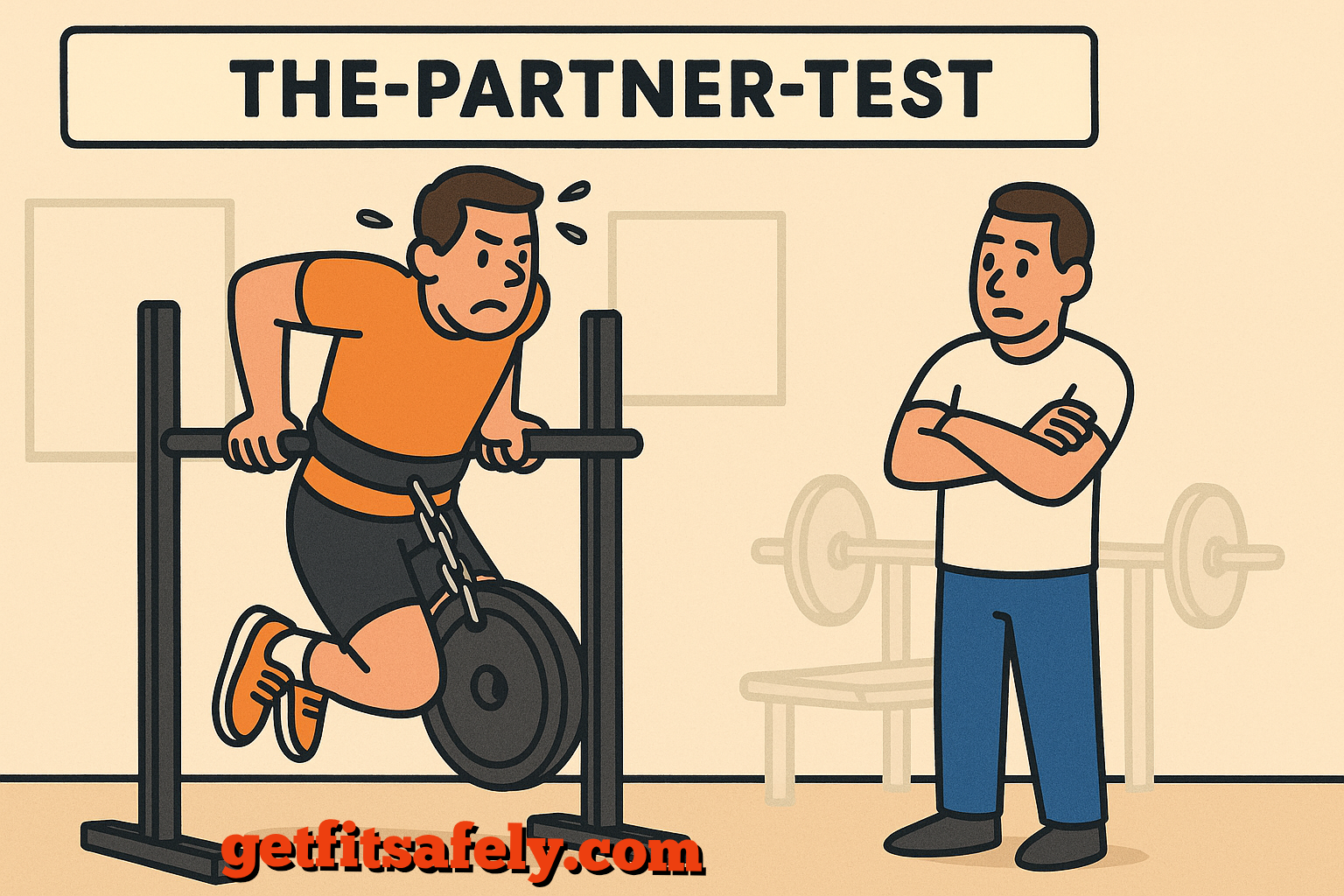
One of my training partners, Jason, learned this the hard way.
He’d just hit ten clean bodyweight dips, and I told him, “Alright, try it with the belt. Go light.”
He ignored the “light” part.
Loaded two plates.
Dropped into the first dip — smooth.
Second — shaky.
Third — his knees hit the plates, his hips folded, and he popped up red-faced saying, “Bro, that chain’s cursed.”
We checked the setup.
The chain was barely long enough to let the plates hang below his thighs.
Basically, he was doing dips while sitting on his own weight.
We fixed it — longer chain, smaller plates, slightly wider stance.
Next set?
Perfect.
He looked stable, deep, confident.
It wasn’t about being stronger.
It was about getting out of the belt’s way.
The silent killer: rhythm
Most people think the biggest issue is range.
But rhythm is the real dealbreaker.
Unweighted dips have this natural cadence — down, stretch, push, breathe.
Add a belt, and suddenly the rhythm’s gone.
You start anticipating the swing, bracing harder, holding your breath longer.
Your focus shifts from “push smooth” to “don’t get pulled forward.”
That mental switch alone kills flow.
Once your brain’s in defense mode, your muscles can’t express power the same way.
It’s like trying to sing while dodging punches.
When muscle-ups turn into full-on chaos
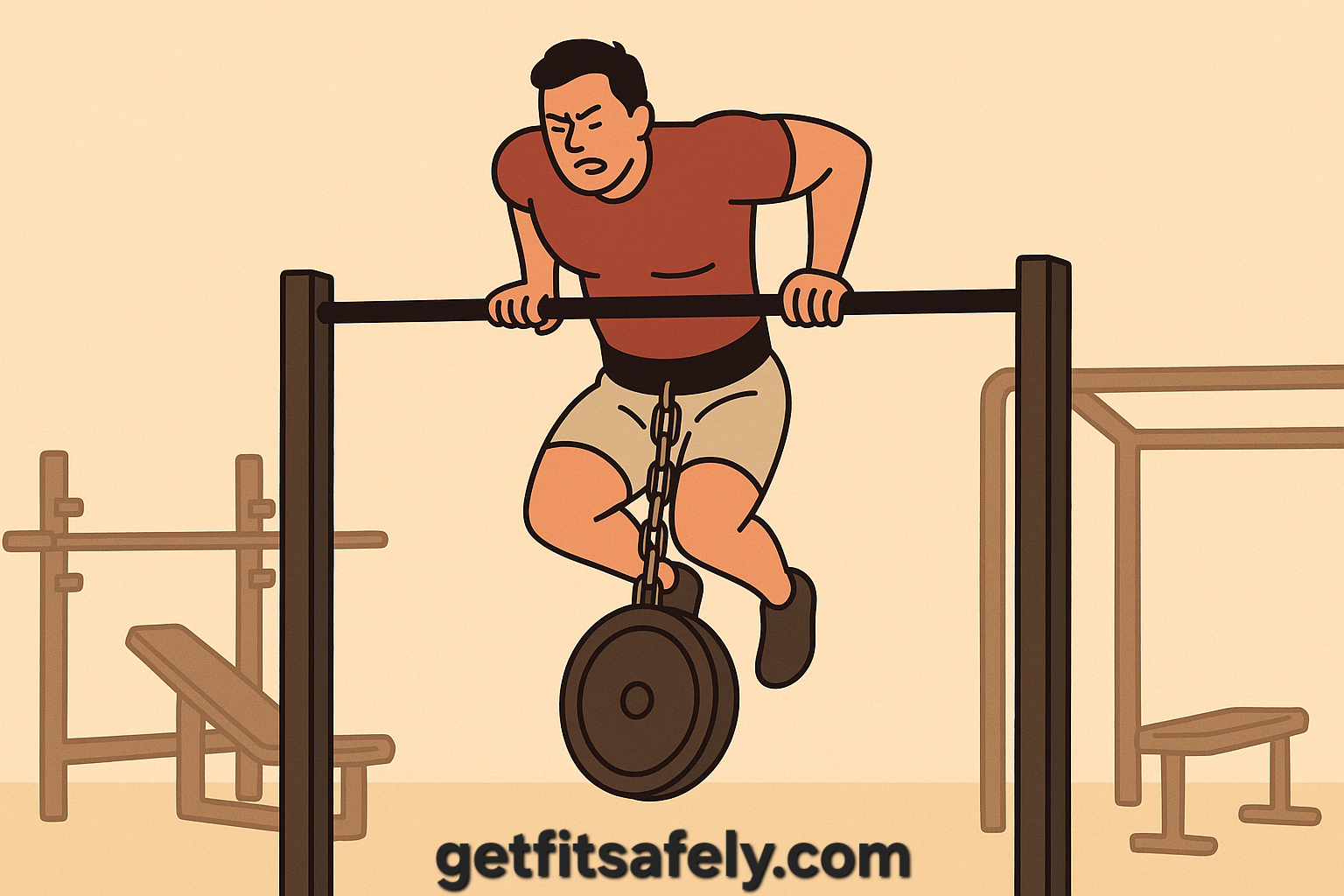
Weighted muscle-ups are supposed to be the elite move — the cherry on top of upper-body control.
But if you’re using a dip belt, you’re basically asking for turbulence.
The plate drags under your hips mid-swing.
The chain twists.
And suddenly, the clean pull-to-transition looks like you’re wrestling a kettlebell on a roller coaster.
Even experienced athletes lose their timing.
The hips can’t drive naturally, the chest hits too low, and the “up and over” becomes “up and stall.”
It’s not that you lost strength — it’s that the weight path no longer matches your movement path.
They’re literally working against each other.
The fix isn’t complicated:
a longer chain or a harness system that keeps the load tight to your body.
You’d be shocked how much better it feels when your gear stops fighting you.
How to make the belt your ally again
You don’t need to ditch the belt — you just need to make it less dumb.
Start by treating it like part of your setup, not an afterthought.
Here’s what separates the veterans from the plate-swingers:
- Chain hangs just below the thighs when standing.
- Plates move vertically, not forward.
- No part of the weight touches your body mid-rep.
- You can breathe naturally through the full motion.
- Your hips stay behind your shoulders at the bottom, not tucked forward.
That’s the sweet spot — strength and range.
Get that right, and suddenly your dips feel lighter even when the weight gets heavier.
Check out the full breakdown here:
Is it true that a chest routine built only around dips can actually blow up your pecs?
Final Thoughts
A few weeks after that Tuesday session, I went back to bodyweight dips — no chain, no plates, no drama.
And for the first time in a while, it felt effortless.
Like my body remembered how to move again.
That’s when I realized: the dip belt wasn’t the problem.
The problem was me trying to look advanced instead of moving well.
Now, when I see someone clipping on a belt too early, I smile.
Because I know exactly how that story ends.