The first time sleeves stopped feeling “different” after months of push-ups, it felt personal.
Not over-the-top personal, like a breakup.
More like “Wait… my arms are working hard, so why do they look exactly the same in every mirror I walk past?”
Push-ups are a legit base.
They build a lot.
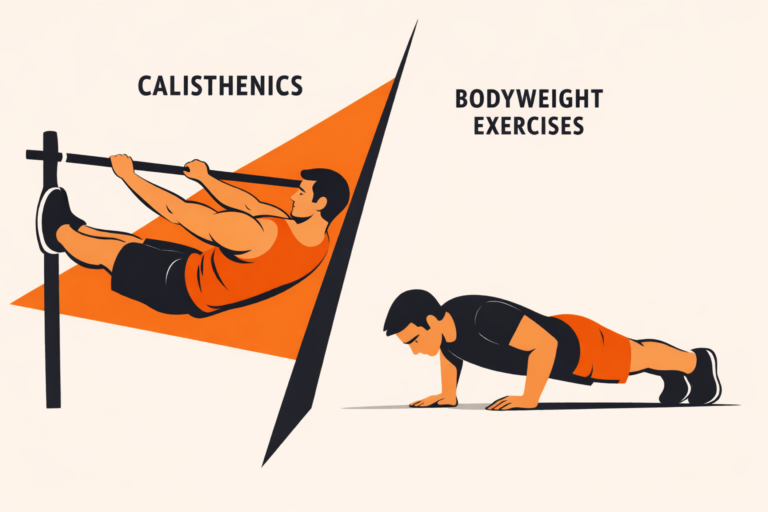
They also have a very specific bias, and I didn’t notice that bias until I compared them to other bodyweight arm exercises in the most annoying way possible:
isolating one variable at a time and refusing to let myself cheat the setup.
By the end, push-ups stayed in my routine.
They just stopped being the whole routine.
Arms finally started getting that “oh, hello there” look, without needing dumbbells, cables, or a gym membership with a smoothie bar that charges rent.
Why Push-Ups Still Matter as a Base
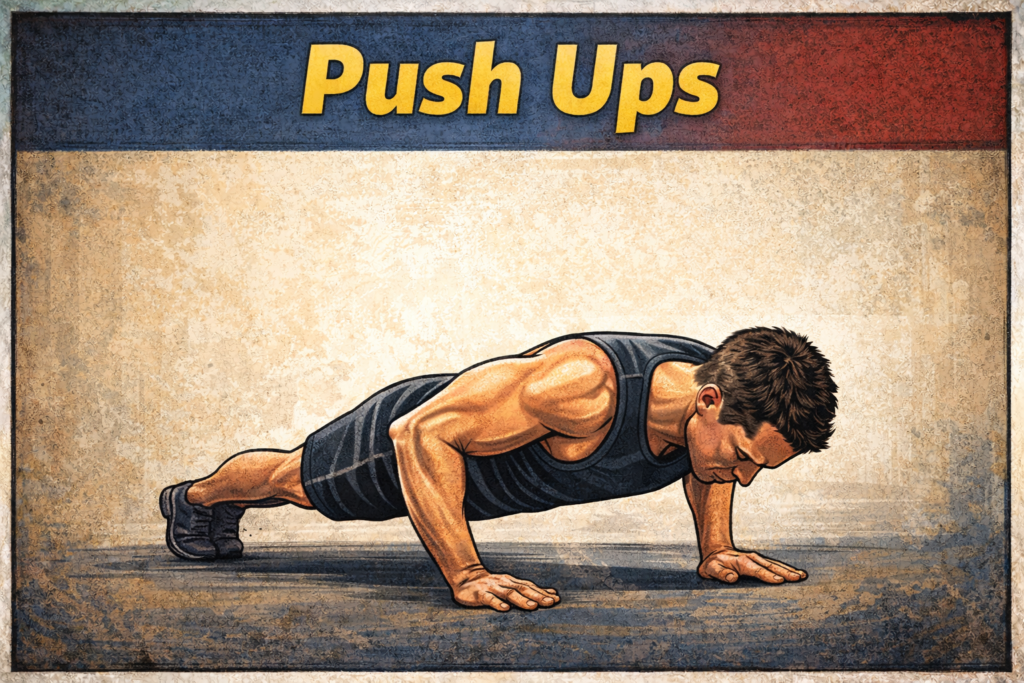
Push-ups are a “big bang for your time” movement.
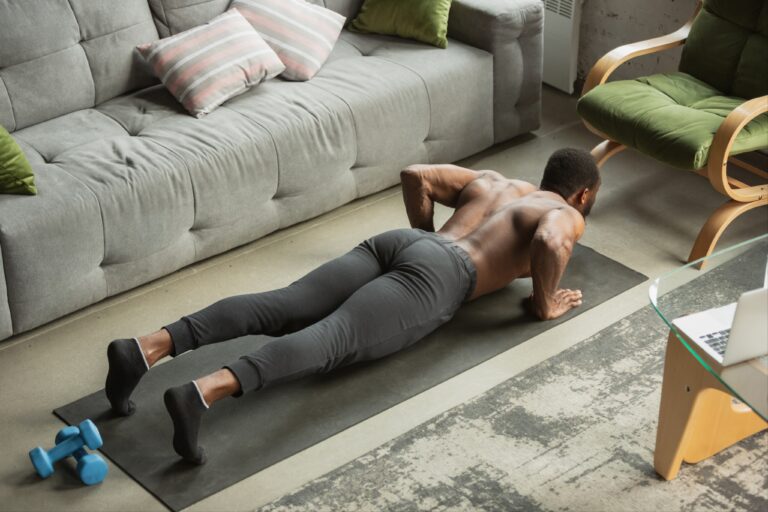
They train the chest, shoulders, triceps, and even your core because your body has to stay stiff like a plank you’re trying not to shake in public.
A standard push-up mostly overloads the triceps near the top half of the rep.
That’s the part where the elbow is moving from bent to straight, and the triceps is doing the heavy lifting to lock the arm out.
The catch is that the chest and shoulders often steal the spotlight.
When the set gets hard, the body naturally shifts effort into bigger muscle groups, and the triceps becomes the quiet intern doing extra work with no credit.
Here’s what my “push-ups only” sessions looked like when I was convinced they were an arm plan.
A quick warm-up of 3 minutes of arm circles, shoulder rolls, and a few easy push-ups that felt like nothing.
Then 5 sets of 18 reps.
Rest was 75 seconds, tempo was 2 seconds down, no pause, 1 second up, and every set ended with my chest feeling pumped and my triceps feeling… present, but not loud.
The day after, the soreness was mainly chest and front shoulders.
Triceps soreness was like a polite email, not a loud notification.
That’s when the obvious-but-annoying thought showed up.
If push-ups were truly hammering my arms, my arms would be the ones complaining.
The Simple Reason Push-Ups Didn’t “Finish” My Arms

Arms grow when they get enough tension in a way they can’t easily dodge.
Push-ups are great tension, but the body has multiple ways to distribute that tension.
If the chest is strong, it takes more load.
If the shoulders are strong, they take more load.
If the triceps are strong, great, but they’re sharing the job with two bigger coworkers.
A biceps problem also exists here, and it’s even simpler.
Regular push-ups barely train elbow flexion, which is the biceps’ main job.
The biceps can stabilize the shoulder a bit.
That’s not the same thing as actually challenging it like a curl pattern does.
So I basically had a plan that was “triceps sometimes, biceps almost never.”
Then I wondered why my arms weren’t growing like a comic book panel.
The Quick Map of What Actually Hits Biceps vs Triceps
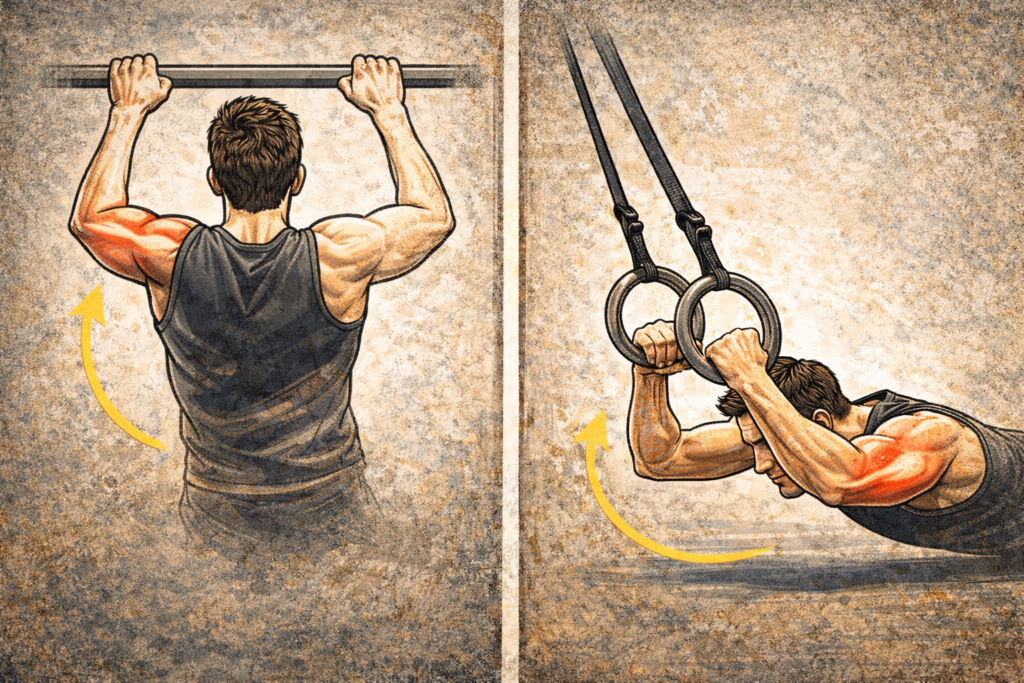
Biceps grow best when the elbow is forced to bend against resistance.
That means pulling variations, curl-like angles, and movements where your hands pull your body toward you.
Triceps grow best when the elbow is forced to straighten hard against resistance.
That means pressing variations, extensions, and movements where your body weight makes lockout brutally honest.
Push-ups are a press.
They are not an elbow-bend challenge.
That alone explains why “push-ups only” often becomes “nice chest and shoulders, and arms that look the same in a hoodie.”
What Changed Everything: Adding “Arm-Specific” Bodyweight Moves
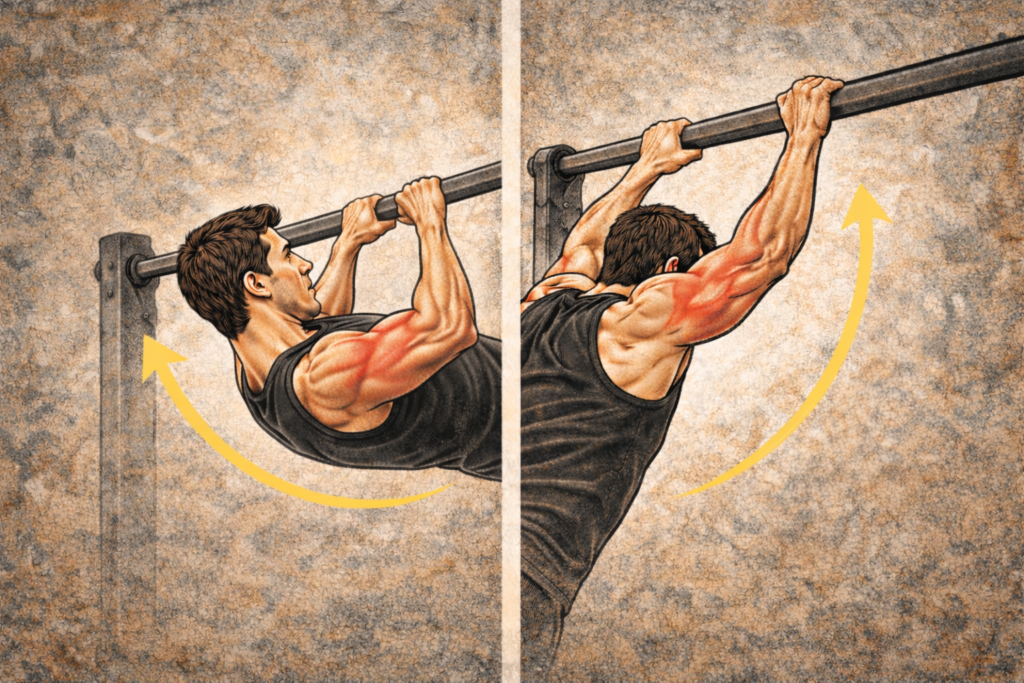
Once I stopped treating push-ups like the entire arm category, the fix was not complicated.
It was just more targeted angles that didn’t let the arms hide behind the chest and shoulders.
I kept push-ups as the base.
Then I plugged in bodyweight exercises that behave more like triceps extensions and biceps curls, using leverage and positioning instead of dumbbells.
The funny part is that the first time I did bodyweight triceps extensions, I thought I had discovered a new muscle group.
The burn was so local and so sharp that it felt like my elbows were sending a group text.
Push-Up Variants That Actually Shift More Work to the Triceps
A regular push-up is “balanced.”
If you want more triceps, you need to change leverage so the elbow extension becomes the main event.
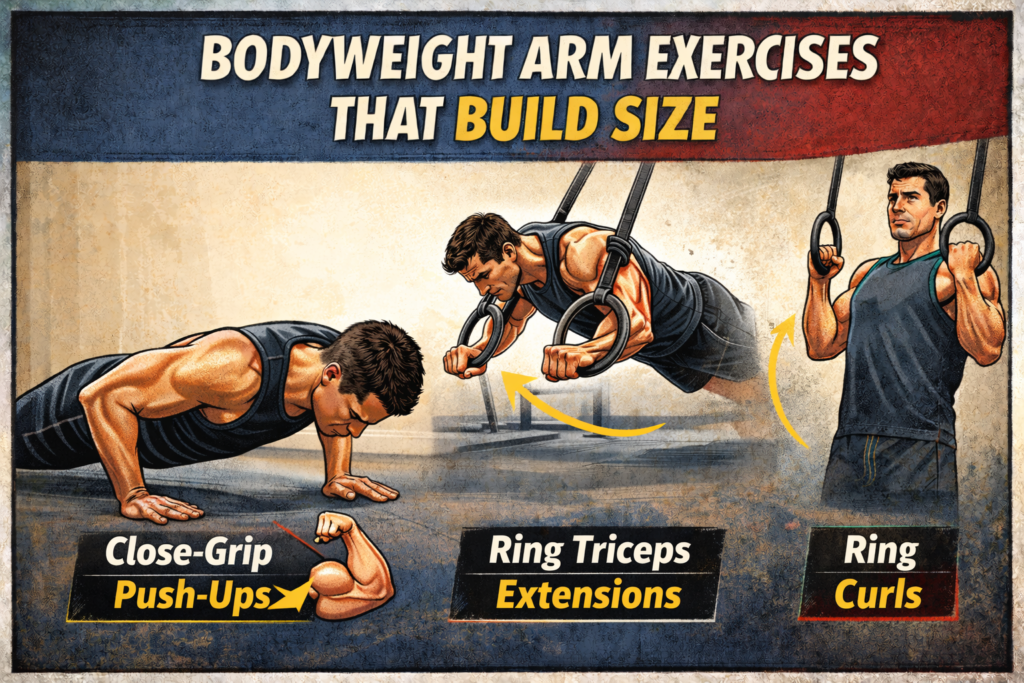
Diamond Push-Ups vs Close-Grip Push-Ups
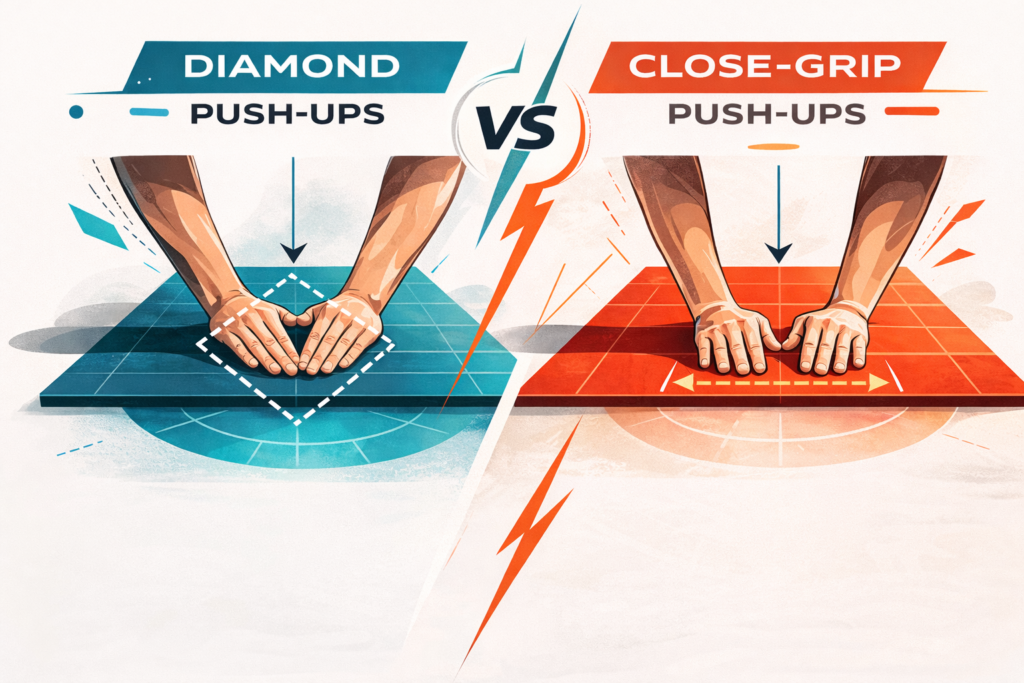
Diamond push-ups put the hands close together under the chest, with thumbs and index fingers forming a diamond shape.
Close-grip push-ups put the hands about shoulder-width or slightly narrower, without forcing the diamond position.
Diamond push-ups often light up the triceps more, but they can irritate wrists or shoulders if the setup is sloppy.
Close-grip push-ups are usually friendlier while still pushing triceps harder than a normal hand placement.
The exact way I ran the comparison was painfully specific.
A 6-minute warm-up, then 4 sets of 10 diamond push-ups with 90 seconds rest and a 3-0-1 tempo.
The first set felt strong.
The last reps of the third set slowed down like my arms were moving through wet sand, and the pump sat right above the elbow in that classic “triceps are doing paperwork” spot.
Two days later I repeated the same structure with close-grip push-ups.
The burn was still triceps-heavy, but it felt smoother on the wrists, and the reps stayed cleaner longer.
If diamond push-ups feel like your hands are being punished for their past life choices, switch to close-grip.
Triceps don’t care about your hand art project, they care about tension and effort.
Decline Push-Ups vs Regular Push-Ups
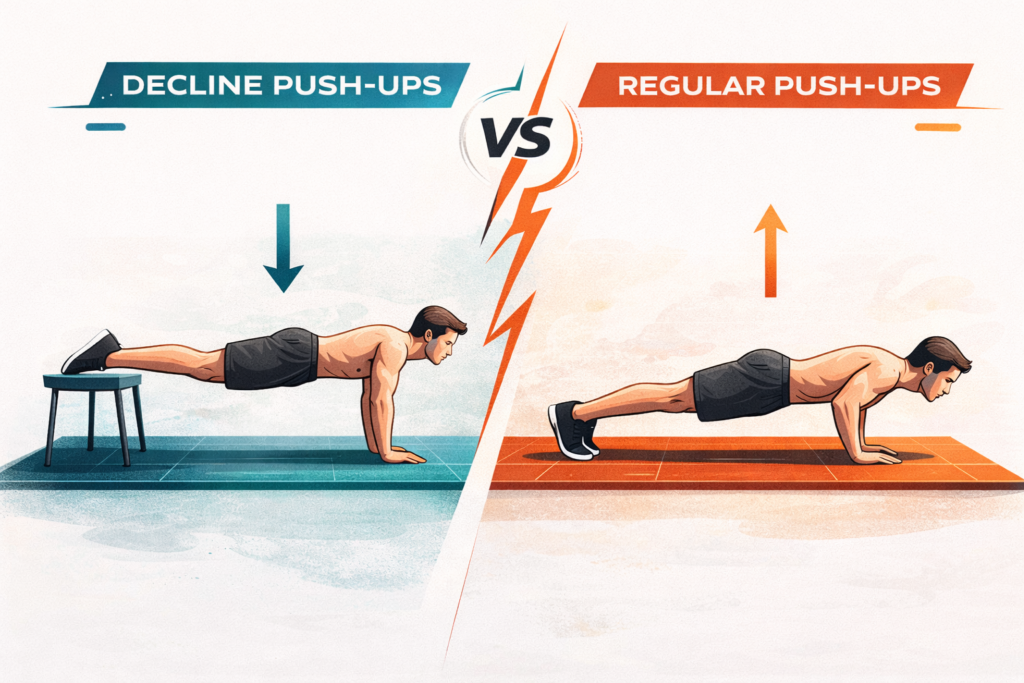
Decline push-ups put the feet on a bench, chair, or step, which shifts more load toward the shoulders and triceps.
This is basically the “gravity upgraded” version of a push-up.
A simple setup is feet on a chair about knee height.
Hands stay on the floor, body stays straight, and the forehead aims slightly in front of the hands rather than straight down.
My first time doing these seriously, I used 5 sets of 8 reps.
Rest was 2 minutes, tempo was 2 seconds down, 1 second pause at the bottom, then a strong push up.
By set four, the triceps were the limiting factor, not the chest.
The feeling was a deep fatigue near the back of the arm, and the lockout slowed down first, which is a pretty honest sign that the triceps were finally stuck doing the job alone.
Pseudo-Planche Push-Ups
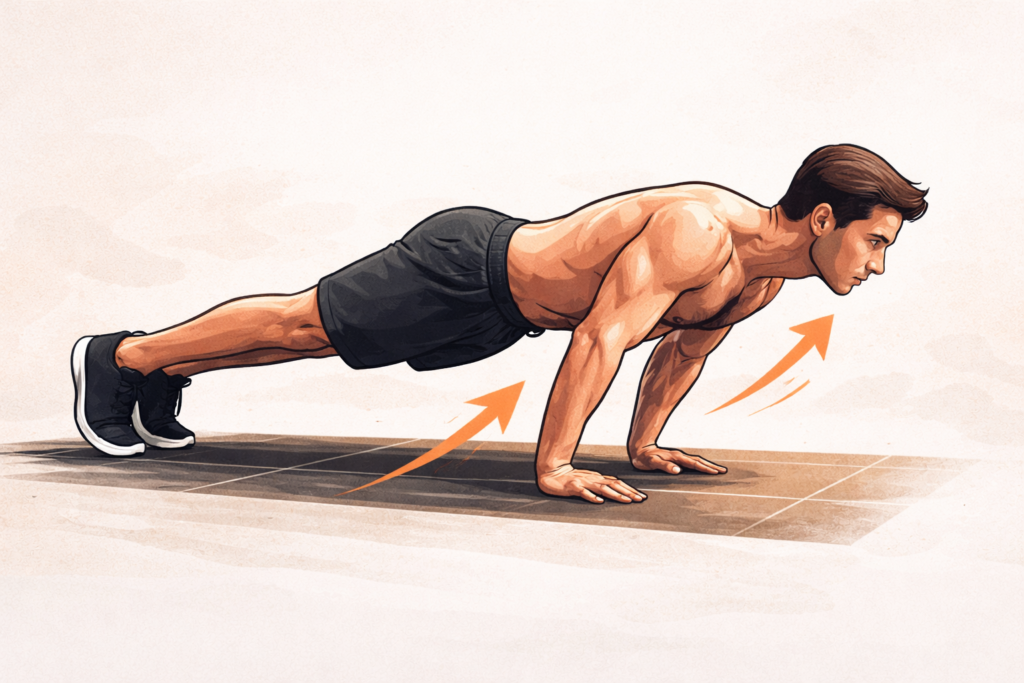
Pseudo-planche push-ups are not a planche.
They are a push-up where the shoulders lean forward so your hands are closer to your hips than usual, which makes your arms carry more of your body weight.
Hands go under the lower ribs or waist line instead of under the shoulders.
Then you lean forward slightly so you feel more load in the arms before you even start the rep.
This version made me respect geometry.
Even 6 reps felt like a different exercise, and the triceps burn had that “why is this so heavy” vibe by rep three.
I ran them as 6 sets of 6.
Rest was 90 seconds, tempo was 3 seconds down, tiny pause, then up with control, because flopping here is a fast way to make shoulders cranky.
The Triceps Moves That Finally Made My Arms Feel Like “Arms”
Bodyweight triceps-specific moves are where the biggest shift happened for me, because they remove the chest’s ability to dominate.
Bodyweight Triceps Extensions
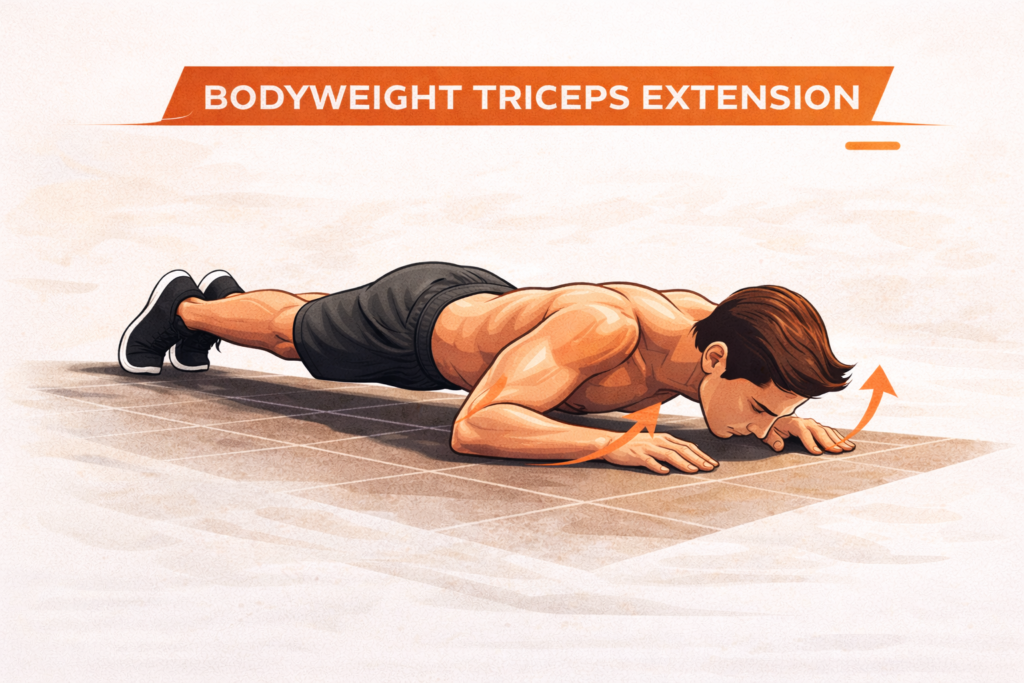
This is the closest thing to a triceps extension you can do with bodyweight.
You can do it on a countertop, a bench, a sturdy table edge, or even a wall if you need it easier.
Hands go on the surface, elbows point forward, and your body stays straight.
Then you bend the elbows to bring your forehead toward the hands, and you push back up by straightening the elbows.
If you want it harder, use a lower surface.
If you want it easier, use a higher surface.
The first time I did these on a bench, I tried 3 sets of 12.
Rest was 75 seconds, tempo was 3 seconds down, 1 second pause near the bottom, then up.
Set one felt fine.
Set two felt like my arms were learning a new language.
Set three turned the last four reps into a slow-motion argument with gravity, and the pump was so direct it was almost rude.
A small form note that matters a lot.
If the elbows flare wide, the movement turns into a weird chest press and the triceps lose their starring role.
Bench Dips vs Straight-Bar Dips
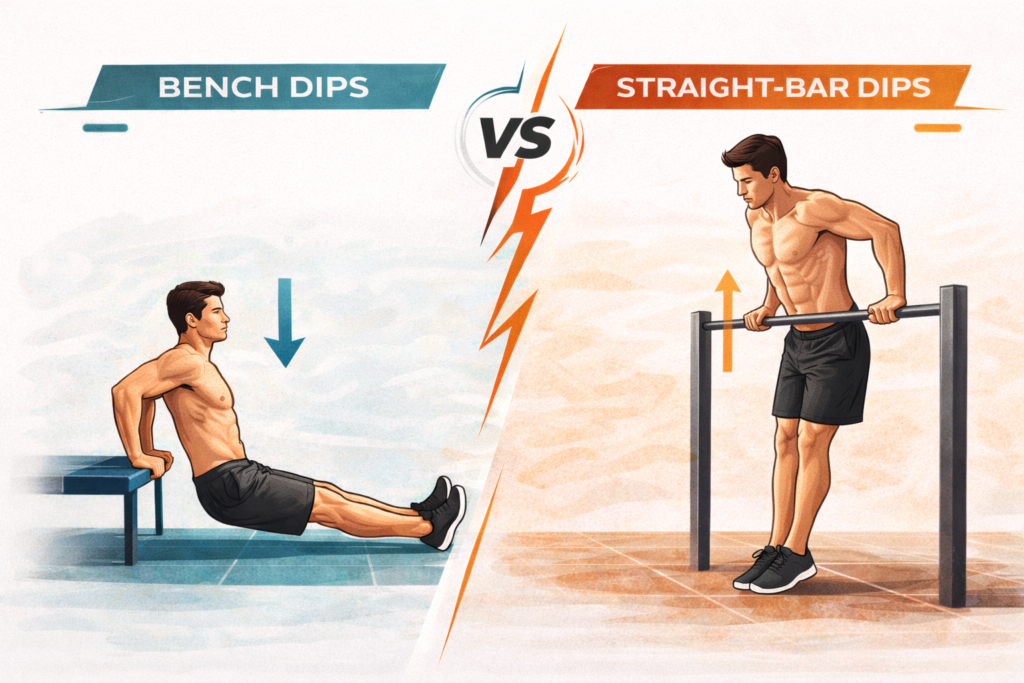
Bench dips are done with hands behind you on a bench and feet out in front.
Straight-bar dips are done on parallel bars or sturdy dip bars, with your body upright between the bars.
Bench dips are easy to set up, but they can put the shoulder in a deep extension position that some people hate.
Straight-bar dips usually feel more natural for the shoulder when done with good control, but they require equipment.
My bench dip test was 4 sets of 15.
Rest was 60 seconds, tempo was 2 seconds down, 1 second pause, then up.
The pump was real, but the front of the shoulder felt a little “tight” in a way I didn’t love.
It wasn’t pain, but it felt like a door hinge that needed oil.
Straight-bar dips were a different story.
I did 6 sets of 6 with 2 minutes rest, tempo 3 seconds down, pause, then up with a strong lockout.
Triceps took over immediately.
The bottom position felt stable, the lockout felt like the triceps had to sign the rep themselves, and the next day soreness was exactly where I wanted it.
If straight-bar dips aren’t available, ring dips are another option, but they demand more shoulder stability.
Close-Grip Pike Push-Ups as a Triceps Booster
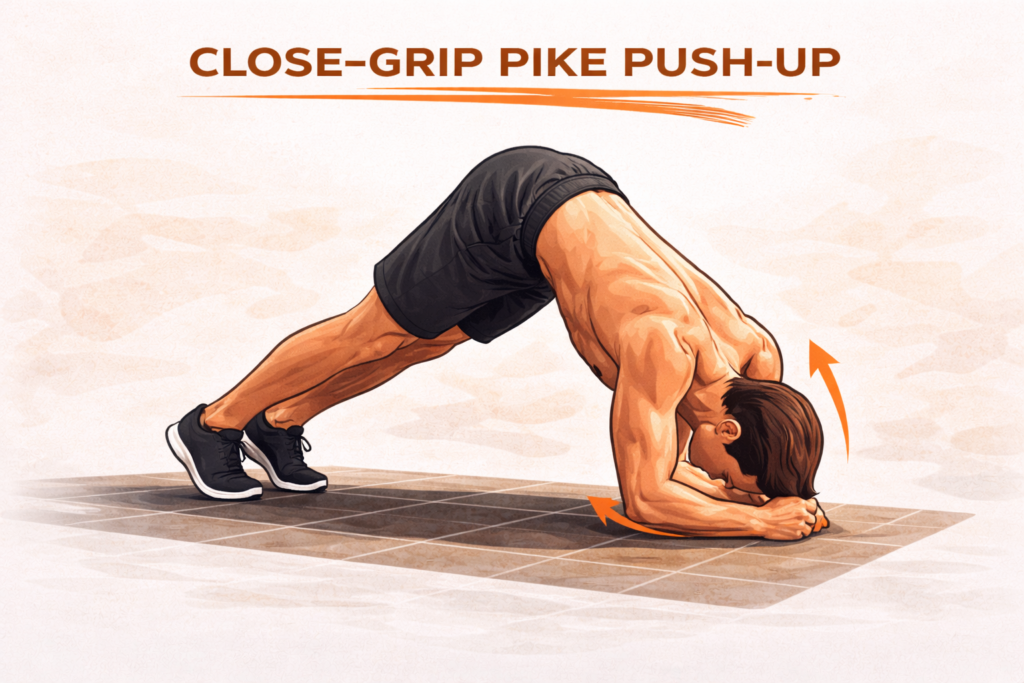
Pike push-ups look like a downward dog shape, with hips high and head moving toward the floor.
They are often thought of as shoulders, but with a close hand position they can hammer the triceps too.
Hands go slightly narrower than shoulders.
Elbows stay angled back, not flared, and the goal is to push the floor away hard at the top.
I used 5 sets of 8 with 90 seconds rest.
Tempo was 2 seconds down, pause, then up, and the last reps had that shaky “triceps are trying” finish that told me it wasn’t just shoulders doing the work.
Extra Triceps Bodyweight Exercises That Changed the Game
Push-up variants helped.
Extensions helped more.
But when I started layering other triceps-dominant bodyweight moves, the back of my arms finally stopped feeling “secondary.”
Ring Triceps Extensions (More Brutal Than They Look)
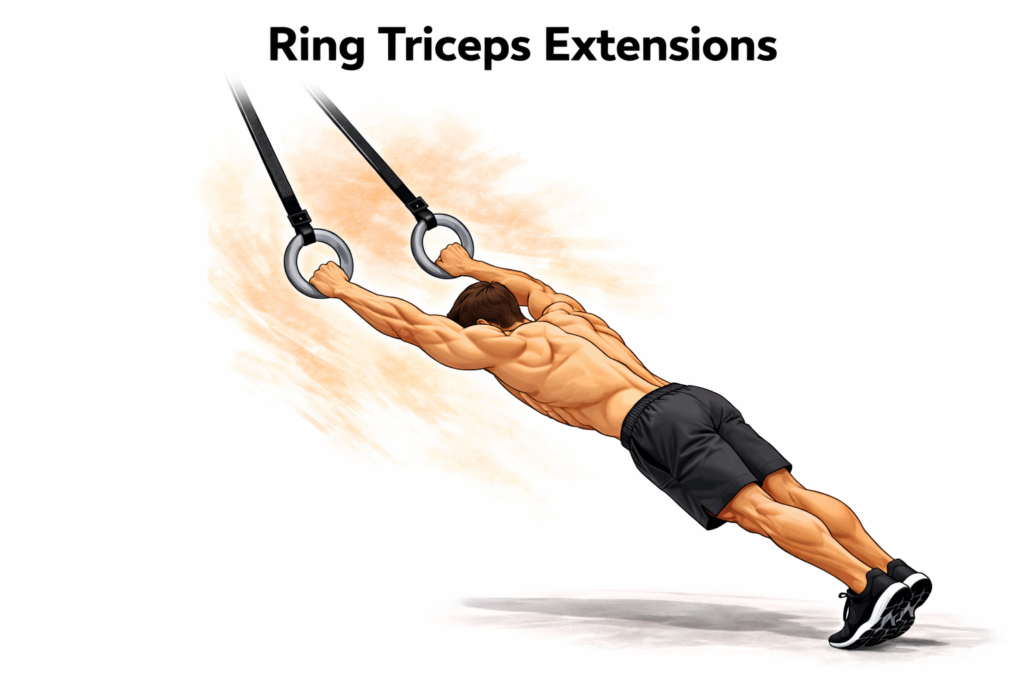
This is the same concept as bodyweight triceps extensions, but using rings instead of a bench.
And rings don’t forgive sloppy elbows.
You set the rings about waist height.
Lean forward with arms straight.
Then bend the elbows while keeping them pointed forward, not flaring wide like chicken wings.
The instability forces the triceps to stabilize and extend at the same time.
The first clean session I did was 5 sets of 8.
Rest 90 seconds.
Tempo 3 seconds down, 1 second pause when forearms are vertical, 2 seconds up.
By rep six of set three, my triceps were shaking in that very local way.
Not chest.
Not shoulders.
Just that thick band of muscle behind the arm doing the actual job.
If you feel mostly chest, your elbows are drifting out.
If you feel mostly shoulders, you’re leaning too far forward.
Single-Leg Elevated Bench Dips (Load Without Extra Weight)
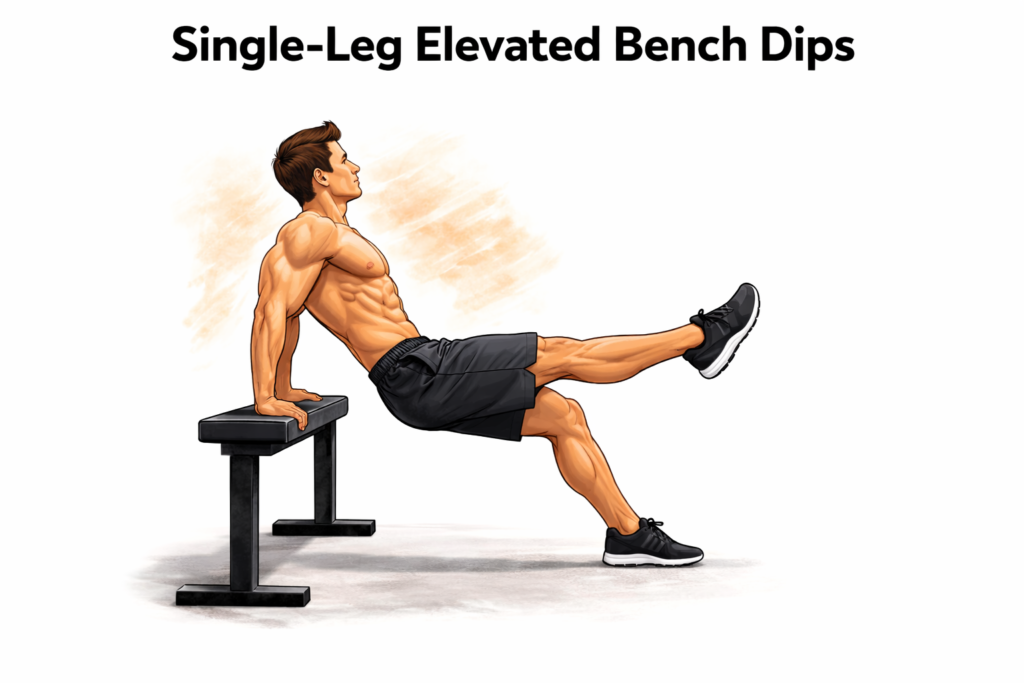
Bench dips can be too easy once you adapt.
Instead of adding plates, I elevated one leg.
Hands on bench behind you.
One heel on another bench or chair.
Other leg lifted off the floor.
Now your triceps have less help from the legs.
I did 4 sets of 12 per side.
Rest 60–75 seconds.
Tempo 2 seconds down, 1 second pause, controlled press up.
By rep nine the triceps were very clear about who was responsible for this decision.
The shoulder stayed happier because I limited depth to where upper arms were parallel, not dropping excessively low.
Bodyweight Skull Crushers on a Low Bar
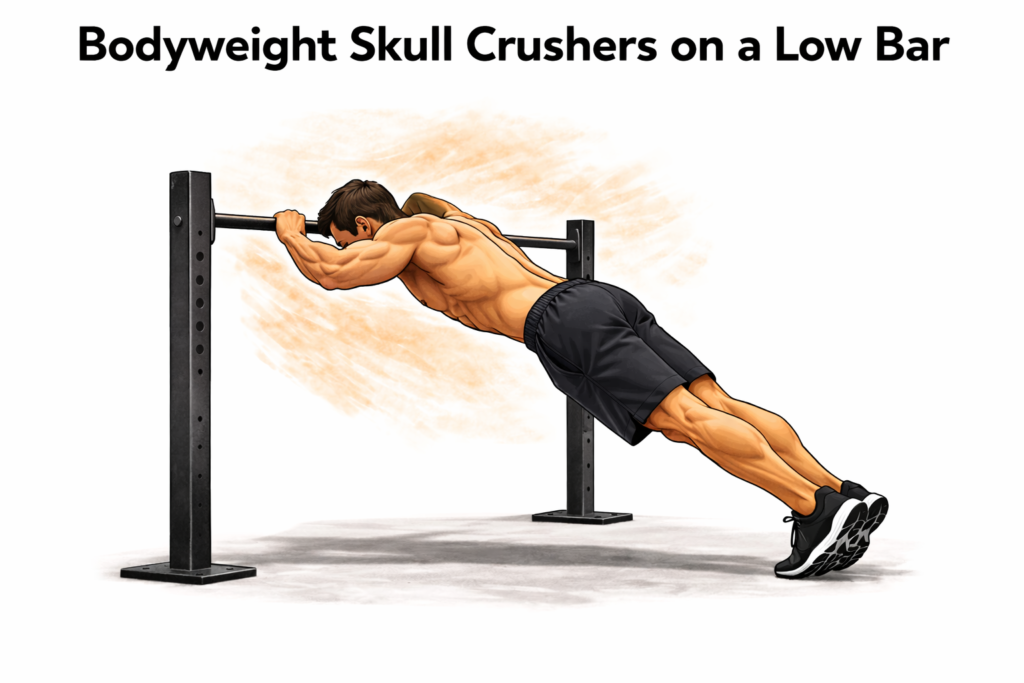
This is the closest bodyweight version of a classic skull crusher.
You use a low bar or Smith machine height if available, or even a sturdy table edge.
Hands shoulder-width.
Body straight like a plank.
Lower forehead toward hands by bending elbows only.
Then extend elbows to return.
The first time I lowered the bar height to just above knee level, 6 reps felt heavy.
I did 6 sets of 6.
Rest 2 minutes.
Tempo 4 seconds down, no bounce, 2 seconds up.
That long eccentric made the triceps feel stretched and loaded.
The pump was deeper than push-ups ever gave me.
Close-Grip Ring Push-Ups
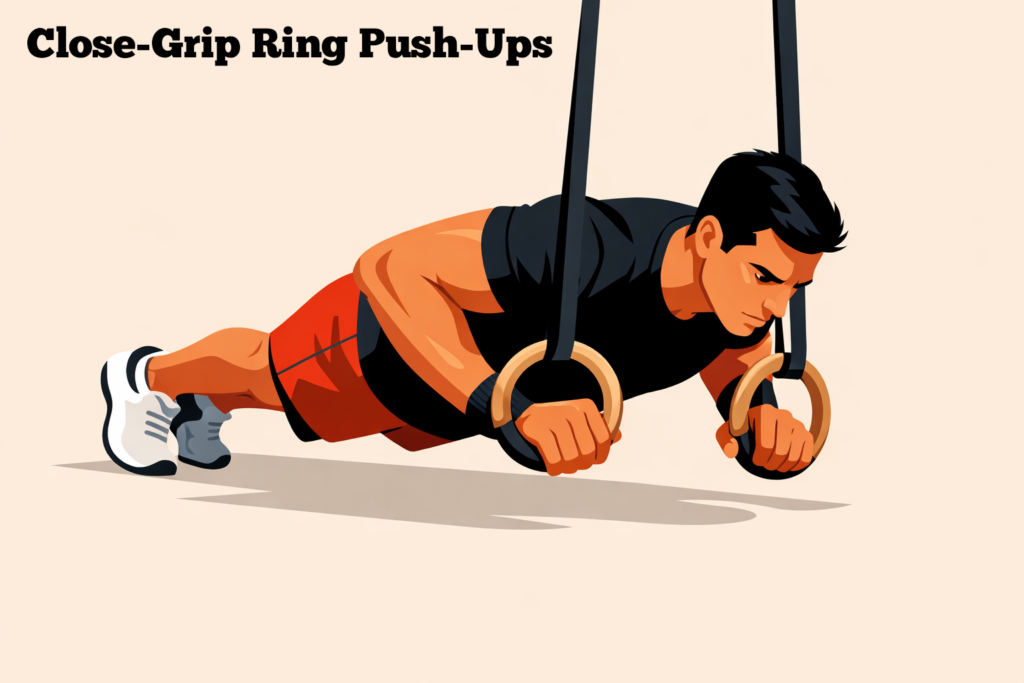
Rings add instability.
Instability forces smaller muscles to contribute more.
Close grip increases triceps demand.
Set rings just above floor level.
Keep hands close and elbows tracking back.
Lower slow.
Press hard and squeeze at lockout.
I ran 5 sets of 10.
Rest 90 seconds.
Tempo 3-1-1.
By set four the lockout slowed down noticeably.
That slowdown was pure triceps fatigue.
Now the Missing Half: Bodyweight Bicep Work That Actually Works
If you want biceps with bodyweight, pulling matters.
Not “pulling kind of happens,” but pulling where the elbow has to bend hard and the biceps can’t outsource the effort to bigger muscles.
The biceps is strongest when the palm is facing you, like a chin-up grip.
A neutral grip, like holding a hammer, can also hit biceps and brachialis hard.
Chin-Ups vs Pull-Ups for Biceps Feel
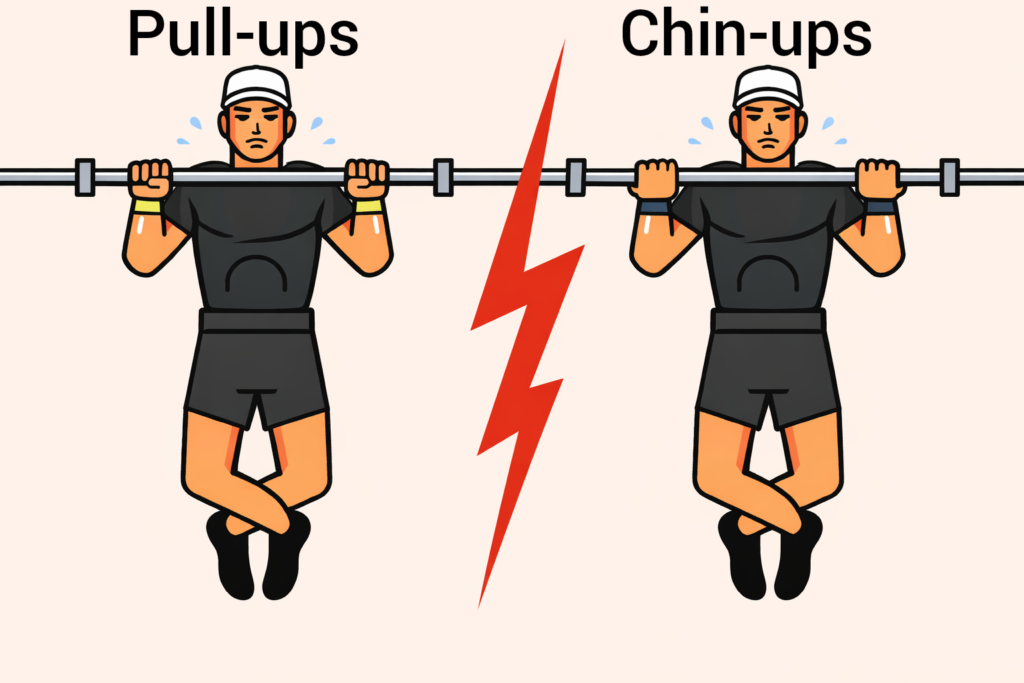
Chin-ups use a supinated grip, meaning palms face you.
Pull-ups use a pronated grip, meaning palms face away.
Chin-ups usually give a stronger biceps sensation, because that hand position lines up the biceps to assist elbow flexion more directly.
The first time I switched from pull-ups to chin-ups as my main pull, the difference was immediate.
My forearms still worked, my back still worked, but the biceps burn showed up earlier and stayed loud through the set.
A session that became a repeatable staple looked like this.
Warm-up was 5 minutes of dead hangs, scap pulls, and 2 easy sets of 3 chin-ups.
Working sets were 7 sets of 4 chin-ups.
Rest was 2 minutes, tempo was 2 seconds up, 1 second squeeze at the top, 3 seconds down.
By set five, the biceps felt thick and tired in a good way.
The last rep of set seven had a slow descent that made my arms feel like they were negotiating rent prices with gravity.
Inverted Rows With a “Curl” Intention
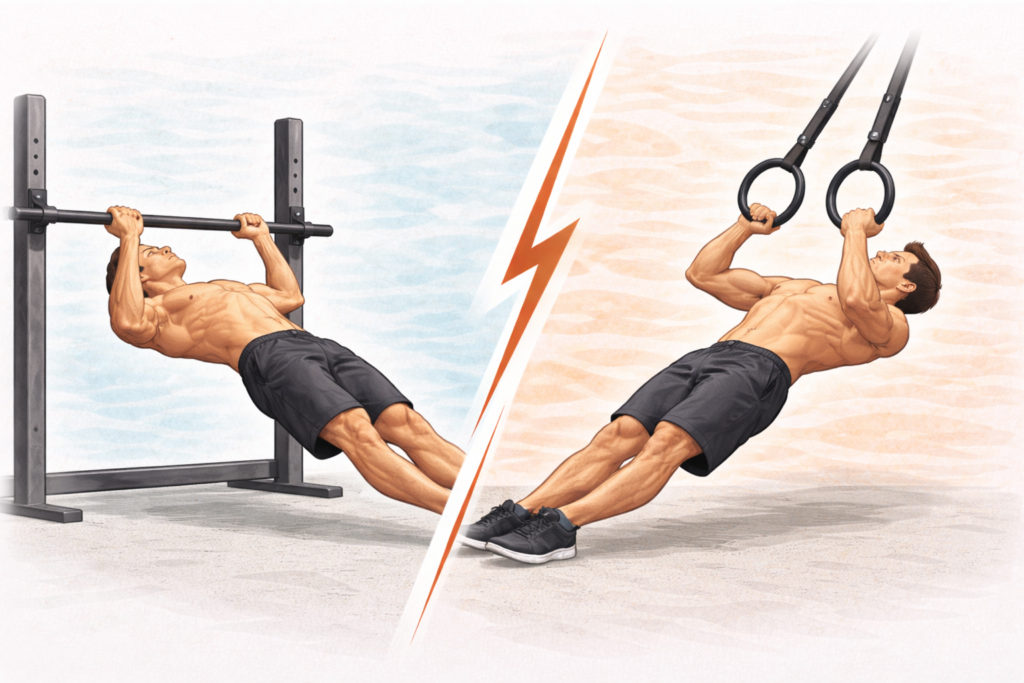
Inverted rows are done under a bar or rings, pulling your chest toward the bar while your feet stay on the floor.
Most people row with the back dominating, which is great, but it can reduce biceps focus.
To bias the biceps more, I used a closer grip and thought about pulling with the hands first.
That sounds abstract, so the practical cue is keeping elbows a bit tighter and pulling the bar toward the lower chest while squeezing hard at the top.
I did 5 sets of 10.
Rest was 90 seconds, tempo was 2 seconds up, 2 seconds squeeze, 3 seconds down.
The squeeze made the biceps show up.
Without the squeeze, the back did most of the job and the biceps felt like they were just holding the groceries.
Towel Rows and “Towel Curls” on Rings
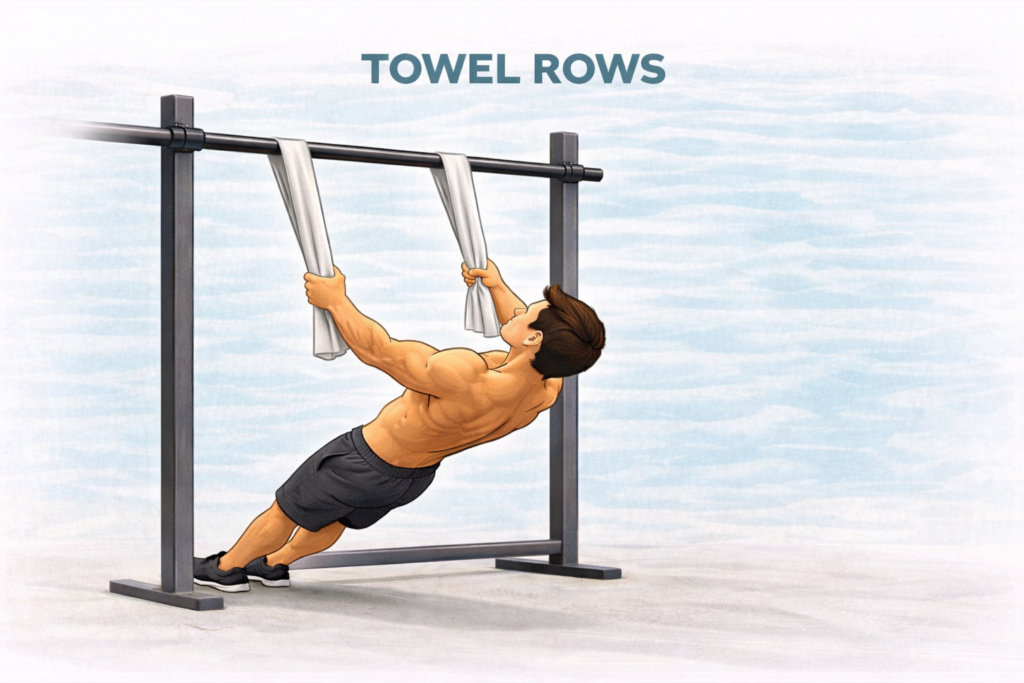
A towel draped over a bar or rings changes everything because it adds grip demand and changes wrist angle.
It also makes the biceps feel more involved because you’re squeezing and curling at the same time.
One of my favorites was a towel row with a slight supination, meaning trying to turn the towel as if you were rotating palms toward your face.
You don’t need to actually rotate much, you just need that intent so the biceps gets a bigger vote in the movement.
I ran 6 sets of 8.
Rest was 90 seconds, tempo was 2 seconds up, squeeze, then 4 seconds down, and the biceps burn was the kind that makes you stare at your arm afterward like it owes you money.
If rings are available, ring “curl rows” are even more direct.
You set the rings low, lean back, and curl your body up by bending the elbows, keeping the shoulders from doing a big shrug.
A clean 5 sets of 6 told me everything I needed to know.
Rest was 2 minutes, tempo was 3 seconds up, 1 second squeeze, 3 seconds down, and the last reps had that shaking biceps fatigue that normal rows never gave me.
More Biceps-Focused Bodyweight Exercises Beyond the Basics
Pull-ups, chin-ups, and inverted rows were already building strength.
Now the goal is shifting tension more aggressively toward elbow flexion.
This isn’t about adding new categories of exercises.
It’s about tweaking leverage and setup so the elbow becomes the weak link.
Just more direct loading where it counts.
Archer Chin-Ups
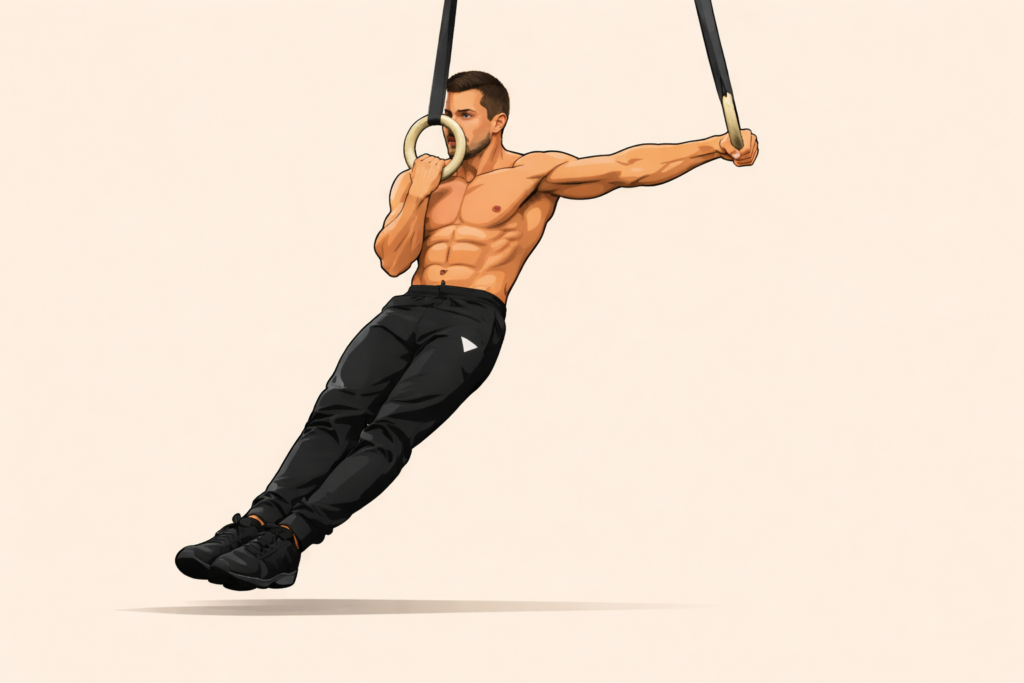
This is a progression that shifts more load to one arm without going full one-arm chin-up.
You pull up primarily with one arm while the other assists lightly.
Grip bar wider than shoulders.
Pull your chest toward one hand while the other arm stays more extended.
Alternate sides.
My first serious run was 5 sets of 3 per side.
Rest 2 minutes between sides.
Tempo 2 seconds up, 1 second squeeze, 3 seconds down.
The working-side biceps felt overloaded in a way normal chin-ups never did.
It wasn’t global fatigue.
It was focused elbow flexion strain in the best possible way.
Feet-Elevated Ring Curl Rows
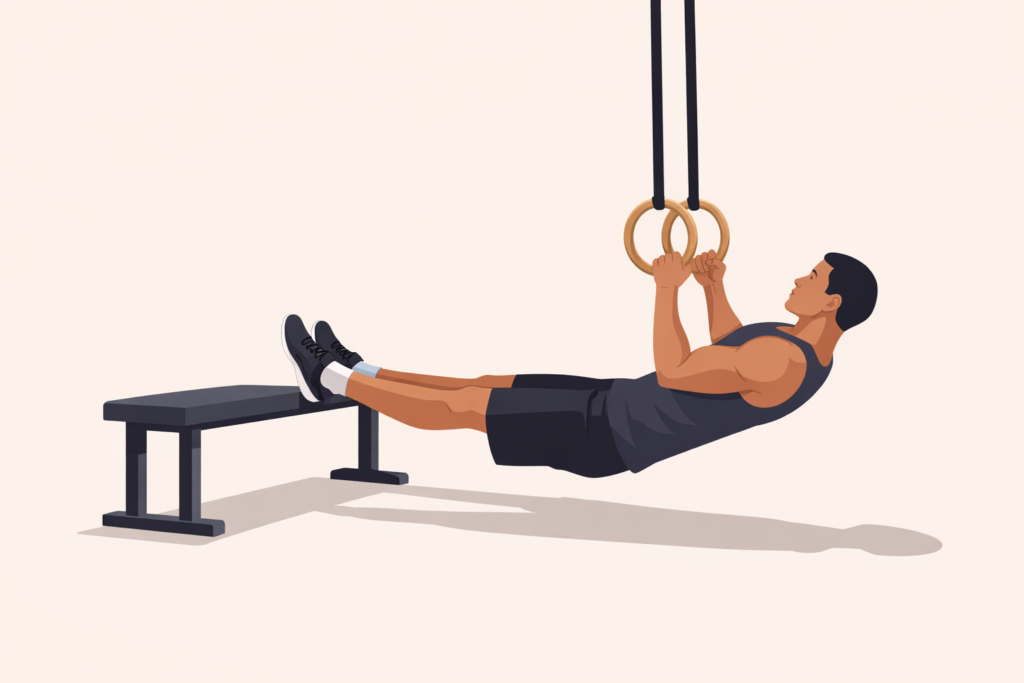
Normal ring curl rows are good.
Elevating the feet makes them serious.
Set rings low.
Heels on a bench so body is almost horizontal.
Curl yourself up by bending elbows, not shrugging shoulders.
The first time I tried this at near-horizontal, 4 reps felt honest.
I did 6 sets of 4.
Rest 2 minutes.
Tempo 3 seconds up, 2 second squeeze, 4 seconds down.
The negative alone made my biceps feel thick and fatigued.
Grip fatigue showed up too, but biceps were clearly the limiting factor.
Towel Chin-Ups (Grip + Biceps Combo)
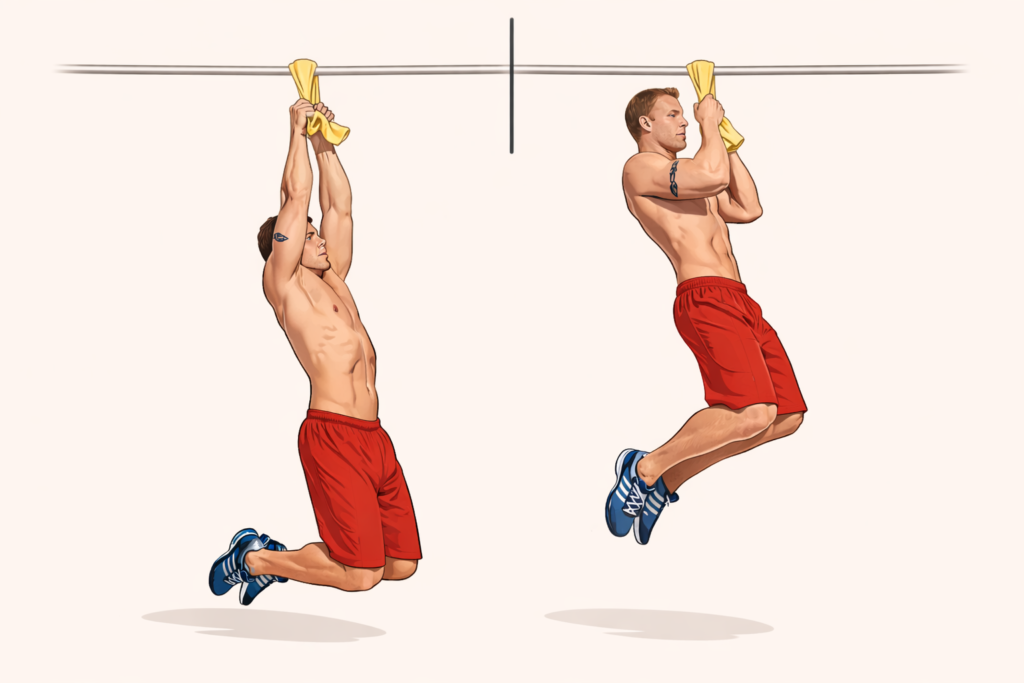
Throw two towels over a bar.
Grab each towel.
Pull yourself up like a chin-up.
Because the grip is neutral-ish and unstable, the brachialis and biceps both work hard.
Running 5 sets of 5 with 2 minutes rest exposed the difference quickly.
By set five, biceps were fully lit up.
Tempo 2 seconds up, 1 second squeeze, 3 seconds down.
The slow descent made it impossible to just drop.
Negative-Only Chin-Ups for Biceps Thickness
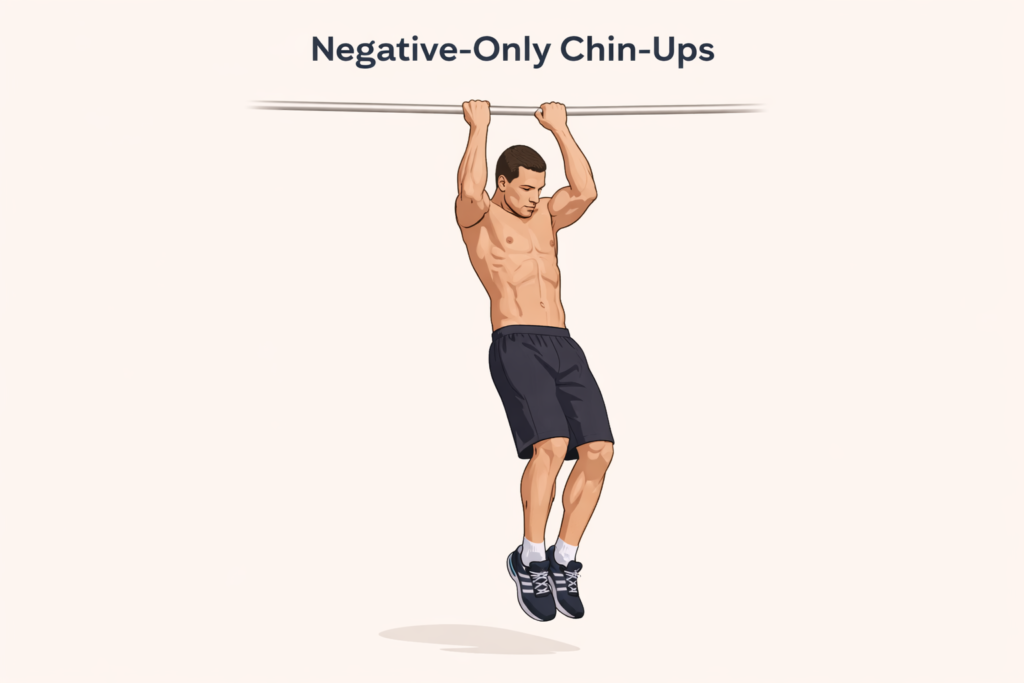
If you can’t yet do many chin-ups, negatives are gold.
Jump or step to the top position.
Lower slowly for 5–6 seconds.
I did 8 sets of 3 negatives.
Rest 90 seconds.
Each rep took about 6 seconds down.
That’s almost 18 seconds of tension per set.
By the end, the biceps felt swollen and slightly shaky when straightening the arm fully.
Close-Grip Inverted Rows with Supination
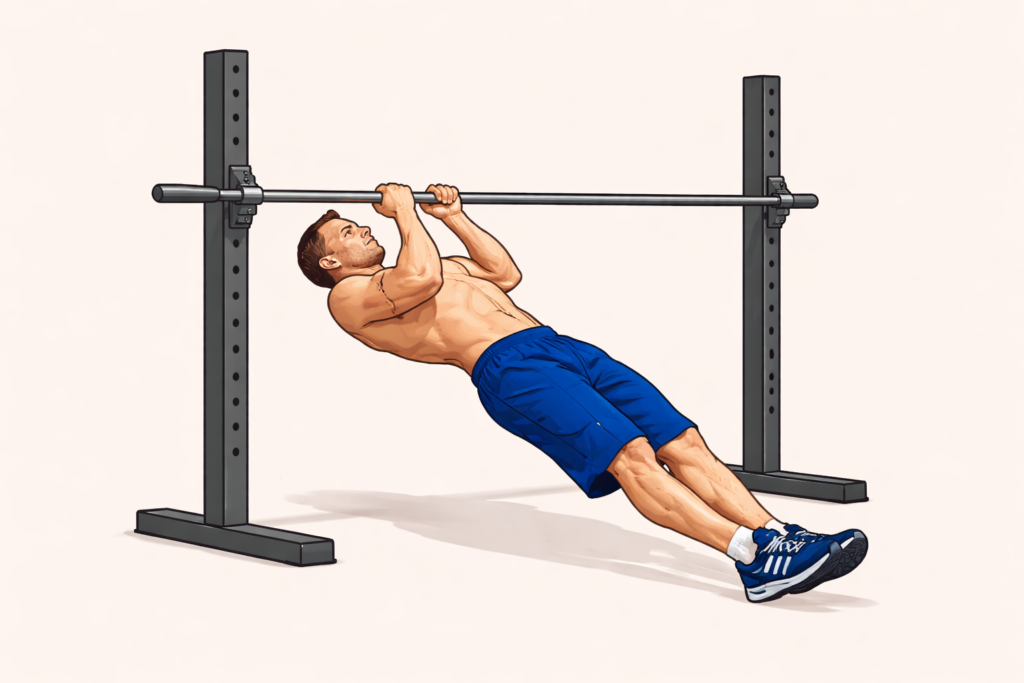
Under a bar.
Hands shoulder-width but palms facing you.
Pull chest to bar while rotating palms slightly inward as you rise.
This rotation cue activates biceps harder.
I ran 5 sets of 12.
Rest 75 seconds.
Tempo 2 up, 2 squeeze, 3 down.
Without the squeeze, back dominated.
With the squeeze, biceps were clearly responsible for the final inches.
Why These Extra Variants Made a Visible Difference
The biggest shift wasn’t volume.
It was specificity.
Extensions forced the triceps to own elbow extension.
Chin-ups and curl rows forced the biceps to own elbow flexion.
Leverage changes meant the arms couldn’t delegate work to bigger muscle groups.
Tempo control meant momentum couldn’t cheat.
Over time the sessions looked balanced.
Push base.
Arm-dominant accessory.
Pull base.
Curl-dominant accessory.
The arms finally felt like prime movers instead of assistants.
And that’s when sleeves started fitting slightly different.
Not overnight.
Not all at once.
Just steadily, session after session, because the muscles doing the visual work were finally doing the mechanical work.
Why Some Variants Stimulate Better: It’s Mostly Leverage and Range
The simplest way I explain this now is with a door.
Pushing near the hinge feels easy, pushing near the handle feels heavy.
Your joints work like that.
Small changes in hand placement, body angle, and elbow path change how “heavy” your bodyweight feels to a specific muscle.
A diamond push-up shifts the “handle” toward triceps.
A regular push-up lets the chest keep its hand on the handle too.
A chin-up gives biceps better leverage.
A pull-up still trains biceps, but it tends to feel more back-dominant because the grip and elbow path often invite it.
Range matters too.
If the elbow doesn’t fully bend or straighten under control, the muscle misses part of the job, and growth tends to be stingier.
That’s why slow eccentrics helped me so much.
A 3 to 4 second lowering phase forced the arms to stay involved instead of bouncing through the easiest parts.
My Actual “Push-Ups as a Base + Bodyweight Arm Work” Sessions
This is what a realistic session looked like when I stopped guessing and started repeating what worked.
It wasn’t fancy, but it was consistent and brutally easy to track.
Session A: Push Base + Triceps Focus
Warm-up was 6 minutes.
Shoulder circles, scap push-ups, 2 easy sets of 5 push-ups, then 10 seconds of plank just to feel braced.
Main push-up work was close-grip push-ups.
I did 5 sets of 12 with 90 seconds rest and a 3-0-1 tempo, stopping with about 1 to 2 reps left in the tank.
Then bodyweight triceps extensions on a bench.
I did 4 sets of 10 with 75 seconds rest and a 3-1-1 tempo, and the last reps were slow enough that I could hear my breathing getting louder.
Finish was dips if bars were available.
I did 6 sets of 5 with 2 minutes rest, 3 seconds down, pause, then a controlled push up, and the triceps pump felt like sleeves were slightly tighter right after.
Session B: Pull Base + Biceps Focus
Warm-up was 5 minutes.
Dead hang 20 seconds, scap pulls 8 reps, then 2 sets of 3 chin-ups with a slow lower.
Main work was chin-ups.
I did 7 sets of 4 with 2 minutes rest, 2 seconds up, 1 second squeeze, 3 seconds down, and the biceps were the first thing to fatigue.
Then ring curl rows.
I did 5 sets of 6 with 2 minutes rest, 3 seconds up, squeeze, 3 seconds down, and the biceps burn felt very “local,” not vague.
Finish was a towel row.
I did 4 sets of 8 with 90 seconds rest and a 2-1-4 tempo, and the grip fatigue was intense enough that my hands felt clumsy opening a water bottle after.
Conclusion: Push-Ups as the Base, Not the Whole Plan for Bodyweight Arms
Push-ups stayed because they’re efficient.
They’re also easy to progress by changing tempo, range, and leverage.
What changed was the role they played.
They became the foundation, and the arm-specific moves became the finish work that actually rounded out the look.
If I could go back and talk to the version of me doing endless push-ups for “arm growth,” I wouldn’t insult push-ups.
I’d just tell him he accidentally built a great base and forgot to add the parts that actually behave like biceps curls and triceps extensions.
Arms are simple like that.
They respond really well when you stop asking them to grow from exercises where they’re only doing part of the job.