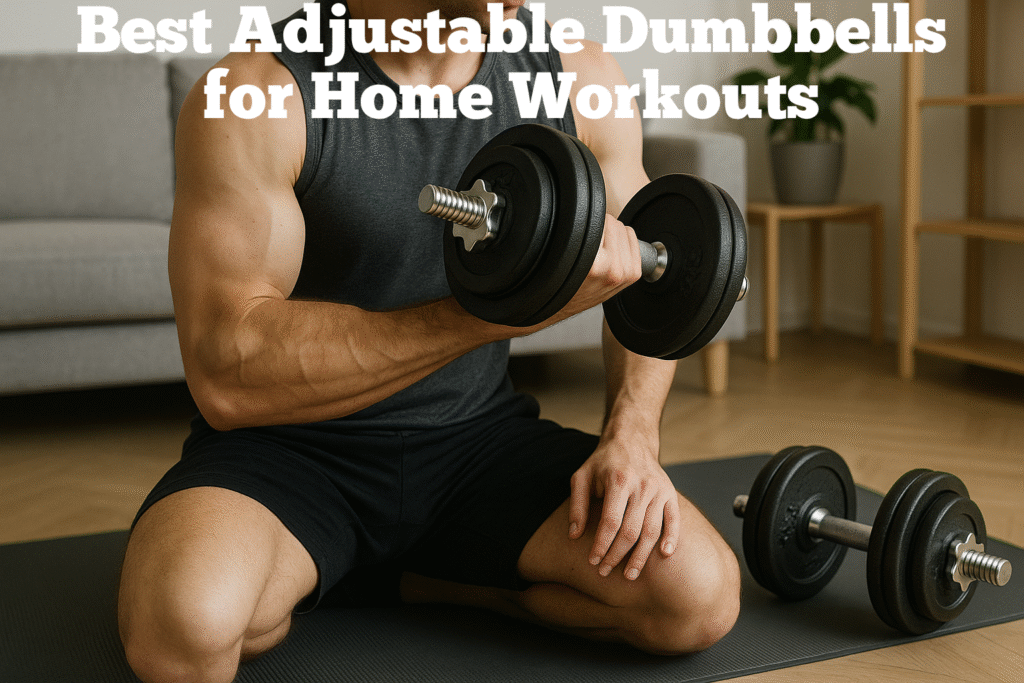
There comes a point when bodyweight workouts just don’t cut it anymore.
Push-ups, squats, planks — they’re awesome, but let’s be honest: you’re not getting jacked doing only those forever.
Your muscles need one thing to grow: progressive overload.
That sweet “add a little more weight each week and watch your body adapt” principle.
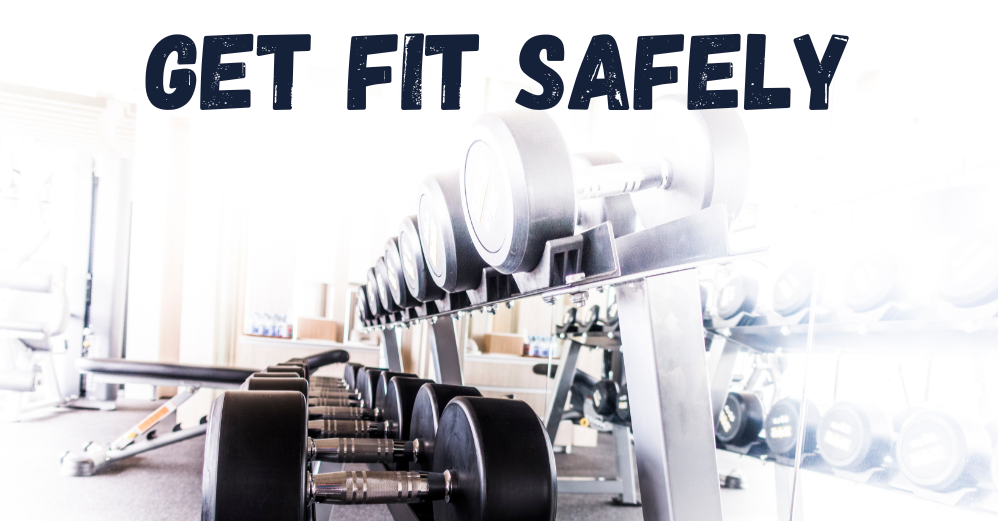
And unless you plan on filling your living room with 15 pairs of dumbbells, adjustable dumbbells are the lifesaver.
I’ve been there.
I wanted to train seriously at home but didn’t have the space (or budget) for a full rack.
Getting my first set of adjustables? Game-changer.
| Category | Pros | Cons | Best For | Price Range |
|---|---|---|---|---|
| Spinlock Dumbbells | • Very cheap •Indestructible • Unlimited weight if you buy more plates |
• Slow weight changes • Not great for supersets • Collars loosen if not tight |
Old-school lifters with patience | $50 – $120 |
| Selectorized Dumbbells (Dial or Pin) |
• Instant weight changes • Perfect for circuits & drop sets • Replace an entire rack |
• Expensive • Can break if dropped • Bulky for some movements |
Fast-paced, modern training | $250 – $500 |
| Hybrid / Compact Systems | • Mid-range price • More solid than plastic • Compact design |
• Limited max weight • Awkward increments |
Balanced option for home gyms | $150 – $300 |
Why progressive overload is non-negotiable
Your body is sneaky.
The set of curls that once had you shaking will feel like a warm-up in just a few weeks.
Progressive overload is what forces growth:
- Add weight.
- Add reps.
- Slow things down for more time under tension.
But let’s be real — the simplest, most satisfying way is to load more iron.
That’s why adjustable dumbbells are the home gym’s secret weapon.
Category 1: spinlock dumbbells
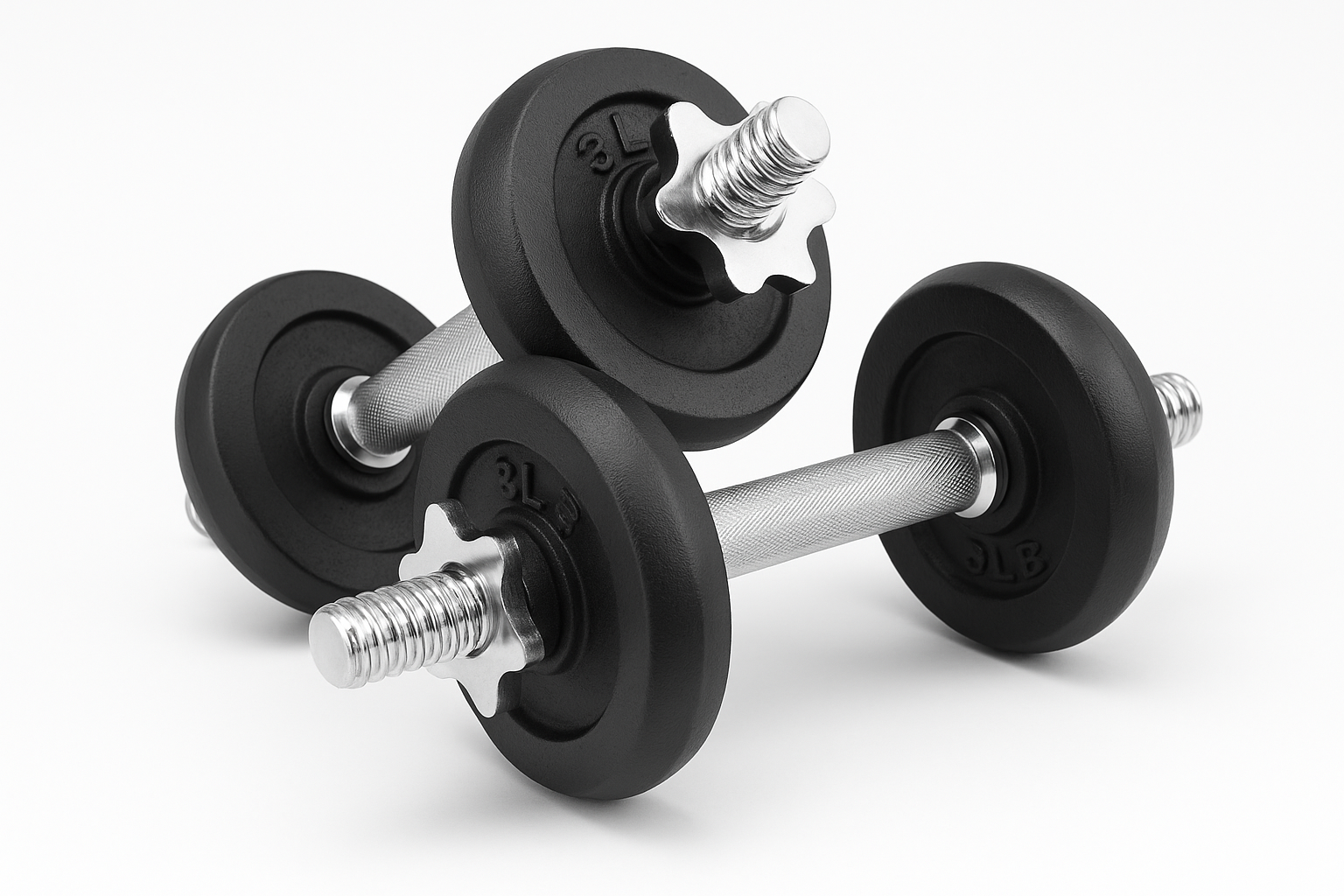
Old-school warriors.
A steel handle, iron plates, and those collars you twist until your wrists hurt.
Why they rock:
- Dirt cheap.
- Built to last forever.
- You can go as heavy as you want if you keep buying plates.
Why they suck:
- Changing weights takes forever.
- Forget about supersets or drop sets.
- Don’t tighten the collars properly and you’ll get plates clanking mid-set.
👉 Great if you’ve got patience and love old-school training.
I used them for a while. They work, but man, you better not be in a rush.
Category 2: selectorized dumbbells (dial or pin systems)
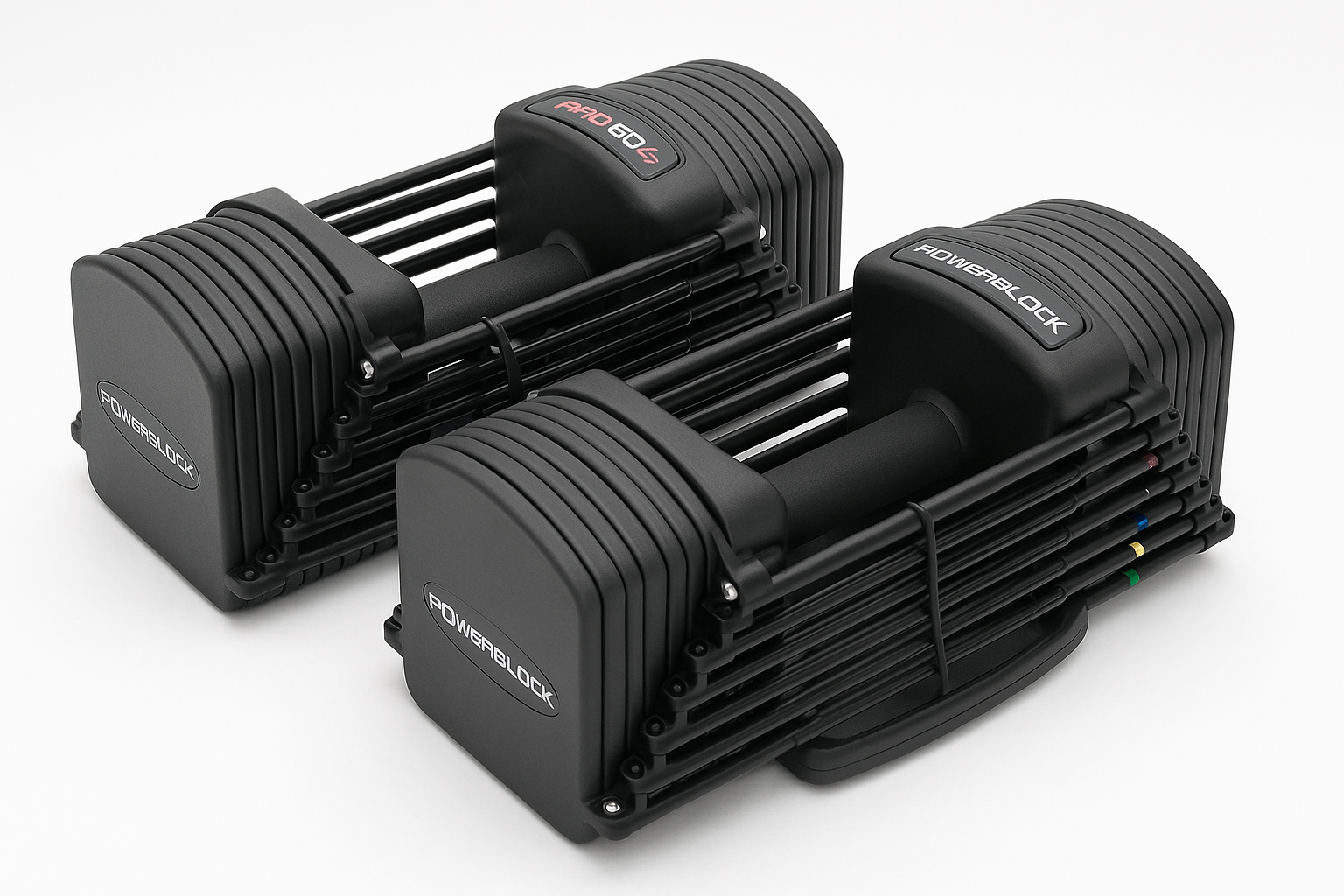
Now we’re talking future tech.
Twist a dial, move a pin, and boom — new weight in seconds.
Why they’re amazing:
- Instant weight changes.
- Perfect for high-intensity circuits and supersets.
- Replace an entire dumbbell rack in the footprint of a shoebox.
The downsides:
- More expensive.
- Drop them and you might cry.
- Some feel bulky for tight movements like close-grip curls.
👉 If you want smooth, fast workouts, these are the way to go.
The first time I tried them, it felt like I’d been driving a rusty old pickup and someone tossed me the keys to a Tesla.
Shop Adjustable Dumbbells on Amazon
Category 3: compact hybrid systems
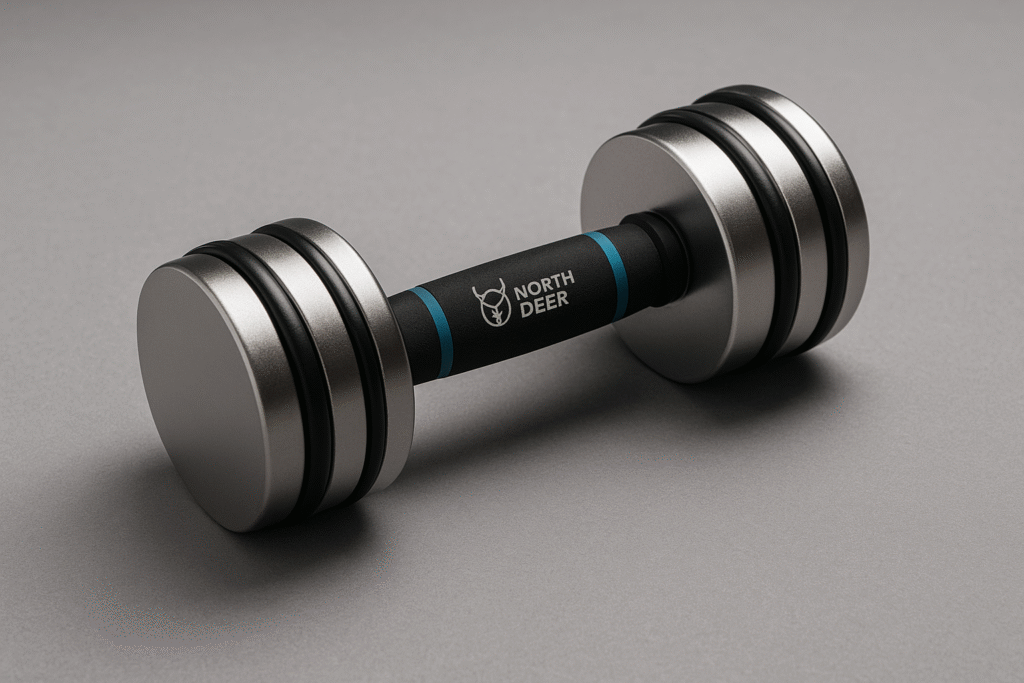
These sit in the middle.
Not as clunky as spinlocks, not as slick as high-tech selectors.
Why they’re solid:
- Mid-range price.
- Sturdier than plastic-heavy selectorized models.
- Compact, easy to handle.
Where they fall short:
- Don’t always go heavy enough.
- Weight jumps can be awkward.
👉 Perfect if you want balance: not too pricey, not too basic.
What really matters when choosing
Don’t fall for glossy ads.
Here’s what counts:
- Small increments: 2–2.5 lb jumps are way better than 5 lb leaps.
- Max weight: at least 45–55 lbs per hand. If you’re training legs and back, you’ll want more.
- Materials: steel > cheap plastic.
- Grip comfort: ergonomic handles matter more than you think.
- Size: compact designs are a lifesaver if you live in an apartment.
Full-body workouts at home
People think dumbbells are just for curls.
Wrong.
With one adjustable set you can hit everything:
- Chest: floor press, incline press, flys.
- Back: rows, Romanian deadlifts, bent-over raises.
- Legs: goblet squats, lunges, step-ups.
- Shoulders: presses, lateral raises, front raises.
- Arms: curls, skull crushers, kickbacks.
I’ve done entire months with nothing but my adjustables and a bench. Trust me, they deliver.
The killer combo with cheap add-ons
Want to turn your dumbbells into a full gym setup? Pair them with:
- Resistance bands for added tension.
- A foldable bench for incline and decline moves.
- A pull-up bar to smash your back.
- A kettlebell for dynamic, core-heavy training.
All that fits in less than a closet.
Common mistakes
- Only using them for arms → biggest waste ever.
- Skipping micro-loads → jumping too fast kills your form and progress.
- Ignoring balance and size → long dumbbells can mess with your range of motion.
- Training without a plan → random lifting is not training.
I made all of these mistakes. Once I fixed them, my progress shot up.
The hidden limits of adjustable dumbbells
They’re not magic.
Here’s where they fall short:
- Super heavy lower-body lifts.
- Certain chest presses if the heads are too wide.
- They don’t always “feel” as stable as fixed dumbbells.
If you reach that point, you might want a barbell or some heavier fixed dumbbells.
Who actually needs them?
- Beginners → start light, scale up slowly.
- Intermediates → need smooth progression and variety.
- Apartment dwellers → tiny space, huge results.
- Gym haters → you can build muscle without stepping into a crowded commercial gym.
Unless you’re already moving barbell-level weights, adjustables cover 90% of your needs.
Track your progress or waste your money
I keep a notebook.
Weight, reps, notes.
Three months in, I flip back and see I’ve added 15 lbs to my press. That’s the motivation that keeps me grinding.
Without tracking, even the best dumbbells are just expensive paperweights.
RELATED》》》 What’s the best way to pick dumbbells for training at home if I don’t have much space?
Conclusion
Want to save cash and don’t mind the hassle? Go spinlocks.
Want smooth, pro-level workouts? Go selectorized.
Want balance? Hybrids get the job done.
At the end of the day, the best adjustable dumbbell is the one you’ll actually use.
The one that makes you say: “Alright, time to add more weight.”
Progressive overload doesn’t stop.
And neither should you.
Whether you’re pressing in the living room, curling in the garage, or squatting on your balcony, strength is built one plate at a time.