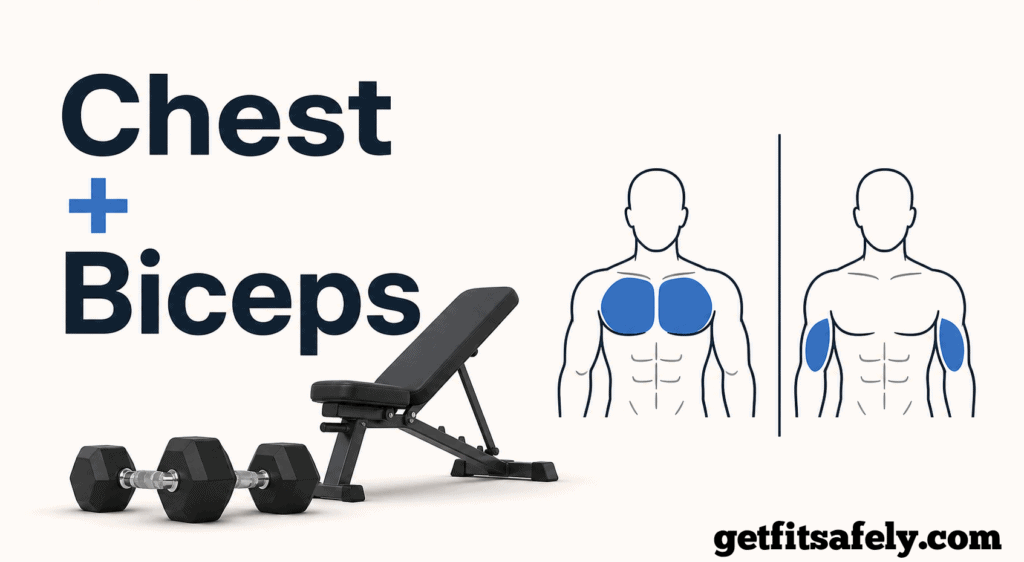
Chest and biceps together has a very specific kind of gym satisfaction.
I like this pairing because it keeps the workout clear without making the whole session feel scattered.
Pressing exercises train the chest.
Curling exercises train the biceps.
The muscles do different jobs, so the session does not turn into one giant traffic jam of tired triceps, sore shoulders, and random arm work slapped on at the end.
There is also a nice rhythm to it.
Chest work feels broad and powerful.
Biceps work feels more focused and easier to control.
That switch makes the workout flow better, especially when I want an upper-body day that feels productive without becoming messy.
1. Chest And Biceps Do Different Jobs, So The Workout Stays Cleaner
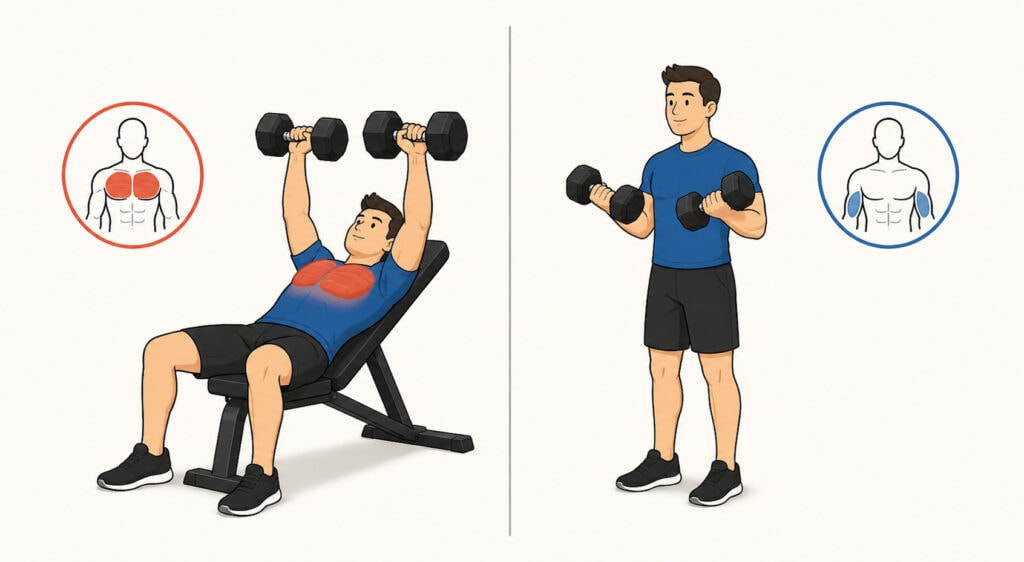
The chest and biceps work well together because they are responsible for different movements.
The chest helps move the upper arm across the body.
That happens during push-ups, dumbbell presses, bench presses, machine presses, and fly variations.
The biceps bend the elbow and help rotate the palm upward.
That happens during dumbbell curls, cable curls, preacher curls, chin-ups, and hammer curl variations.
This difference matters because one muscle group can work hard while the other mostly stays out of the way.
When I train chest and triceps together, the triceps are already involved in every press.
Then, if I add direct triceps work afterward, they get hit again and again like they owe somebody money.
Chest and biceps just feel easier to manage.
The pressing muscles handle their job first.
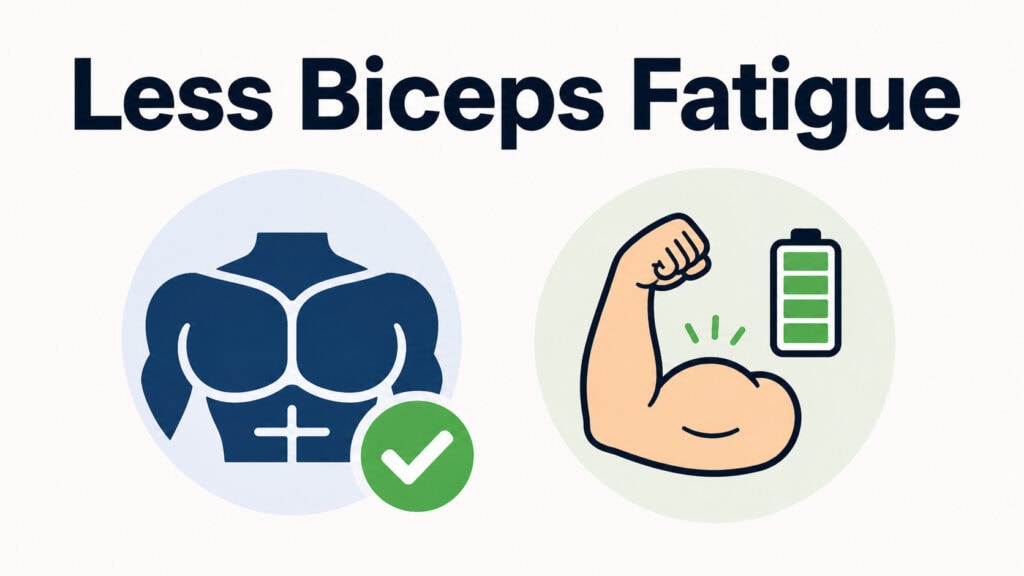
Then the biceps take over later without being heavily drained by the chest work.
Why Pressing Does Not Really Steal From Your Biceps
Take a dumbbell chest press.
I lie on a bench with a dumbbell in each hand, plant my feet, keep my upper back firm, and press the weights above my chest.
The chest drives the movement because the upper arms are moving inward and forward.
The triceps help because the elbows have to straighten.
The front shoulders assist because they help guide the arms.
The biceps are there, but they are not carrying the main load.
They are basically watching the action from the front row with a protein shake.
That is why curls after chest usually still feel strong and controlled.
The biceps have not been used heavily yet, so they can handle direct work with better focus.
Why This Makes The Session Easier To Organize
A chest and biceps day also feels easier to build.
I do not need to overthink it.
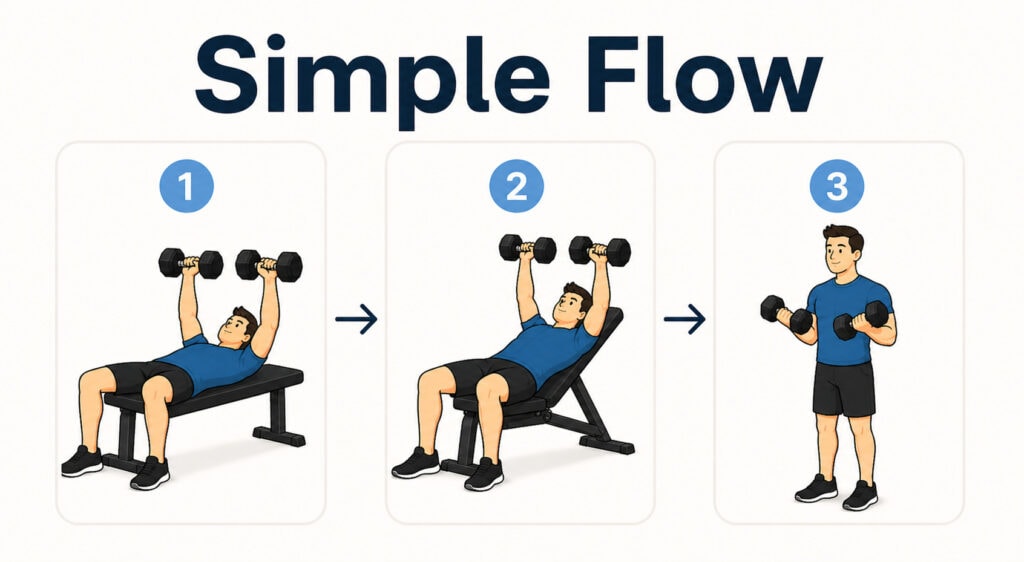
A solid session can start with a main chest press, then move into another chest angle, then finish with curls.
The order is simple because each part has a clear role.
A flat dumbbell press can be the heavier chest movement.
An incline press can train the chest from a slightly different angle.
A cable fly or pec deck can add a more focused chest contraction.
After that, curls train the arms directly.
Nothing feels random.
The workout has a path.
That alone makes the pairing feel more effective because I am not wandering around the gym collecting exercises like loose coins.
2. The Workout Gives Clear Feedback Without Needing A Huge Exercise List
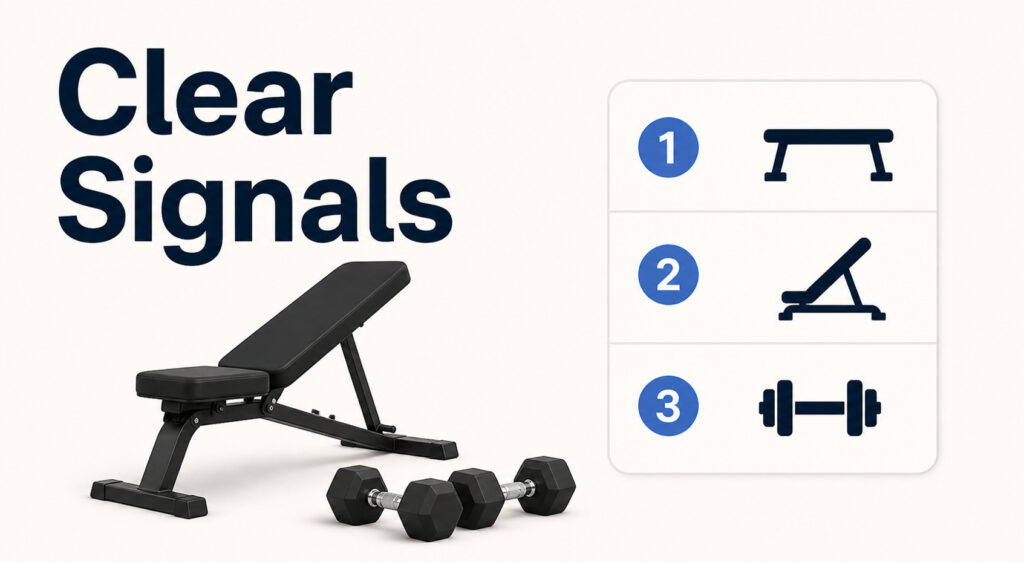
Chest and biceps together make the session easy to read while I am training.
That sounds like a tiny thing, but it changes the whole workout.
Some muscle pairings get blurry fast.
I press, pull, swing, adjust the bench, change the cable height, grab another handle, and after a while I am no longer sure whether I am training with a plan or auditioning for a gym equipment documentary.
Chest and biceps keep things more obvious.
Pressing movements tell me what is happening across the chest, shoulders, and triceps.
Curling movements tell me what is happening around the elbow and upper arm.
The feedback is cleaner because the exercises do not all compete for the exact same job.
When the chest section works well, I can feel the pressing pattern getting stronger and more stable.
When the biceps section works well, I can tell whether the arm is actually doing the work or whether my torso has decided to become a backup dancer.
That clarity makes the workout feel effective without needing a giant list of exercises.
Chest Exercises Give A Big Movement Signal
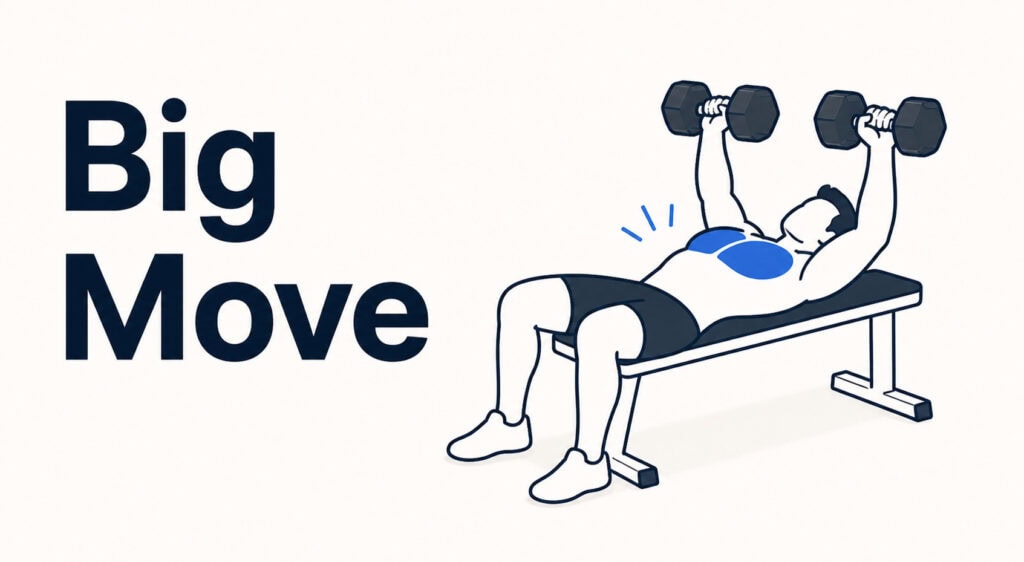
Chest training usually feels broad because the movements involve more than one joint.
During a dumbbell press, the shoulders move, the elbows straighten, and the chest helps bring the upper arms forward and inward.
During a push-up, the chest works while the shoulders, triceps, core, and legs help keep the whole body organized.
That is why chest work feels like a big upper-body task rather than one tiny muscle doing one tiny trick.
For someone newer to training, clean push-ups already teach a lot.
The body has to stay firm.
The shoulders have to stay controlled.
The chest has to contribute instead of letting the arms do everything.
For someone stronger, the movement can become harder with feet-elevated push-ups, weighted push-ups, ring push-ups, or push-ups on handles.
The important part is that the chest exercise gives a clear signal.
When the chest is involved and the movement stays controlled, the exercise is doing its job.
Biceps Exercises Give A Smaller, More Precise Signal
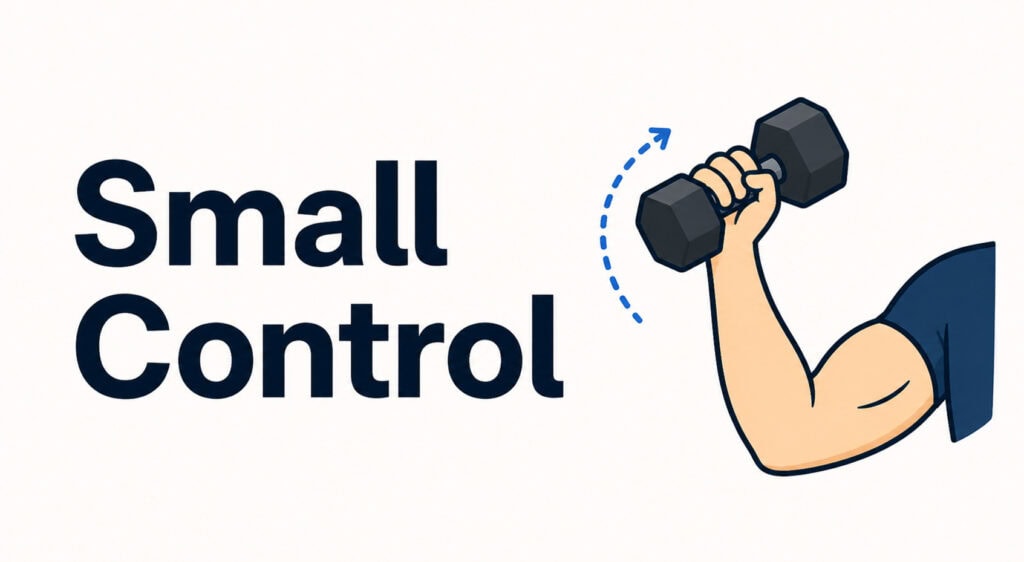
Biceps work gives a different kind of feedback.
Curls are smaller than presses, but that actually makes them easier to judge.
The goal is simple: bend the elbow and make the biceps do most of the bending.
That sounds basic, but plenty of people turn curls into a full-body group project.
The knees dip.
The hips swing.
The shoulders roll forward.
Suddenly the dumbbell curl looks like somebody trying to convince gravity through interpretive dance.
A cleaner curl is calmer.
The upper arm stays close to the body.
The wrist stays firm.
The dumbbell comes up without the whole torso joining in.
The weight returns down with control instead of being dropped like a hot pan.
This does not require massive dumbbells.
Actually, the biceps often work better when the load is light enough to control.
A curl should tell me something about the arm, not about how much momentum I can create before my lower back files a complaint.
3. The Triceps Get A Break, And That Can Make Chest Training Better
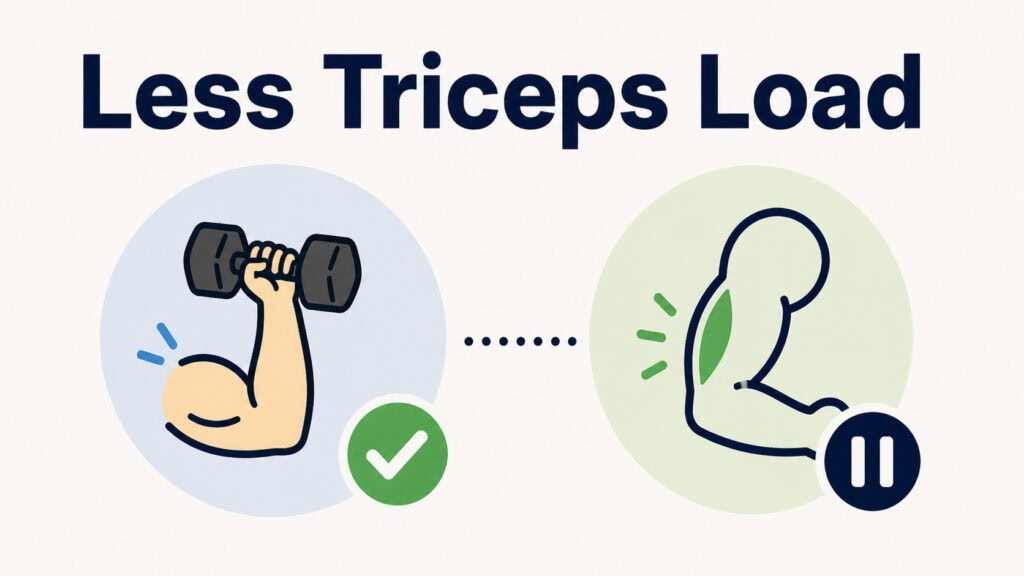
A bench press is called a chest exercise, but the chest is not alone.
The chest moves the upper arm.
The front shoulders help guide the movement.
The triceps straighten the elbows near the top.
Even the upper back matters because it provides a stable base.
That means a few hard sets of pressing already involve a lot of tissue.
If I start with barbell bench press, then add incline dumbbell press, then do push-ups, the triceps have already been working for the entire chest portion.
They may not be the main target, but they are definitely involved.
Adding direct triceps extensions after that can be useful in some plans, especially for people chasing triceps growth.
But it can also become too much when the goal is strong chest work and good recovery.
This is where biceps fit nicely.
They let the arms get trained without asking the triceps for another shift.
Why This Helps The Elbows
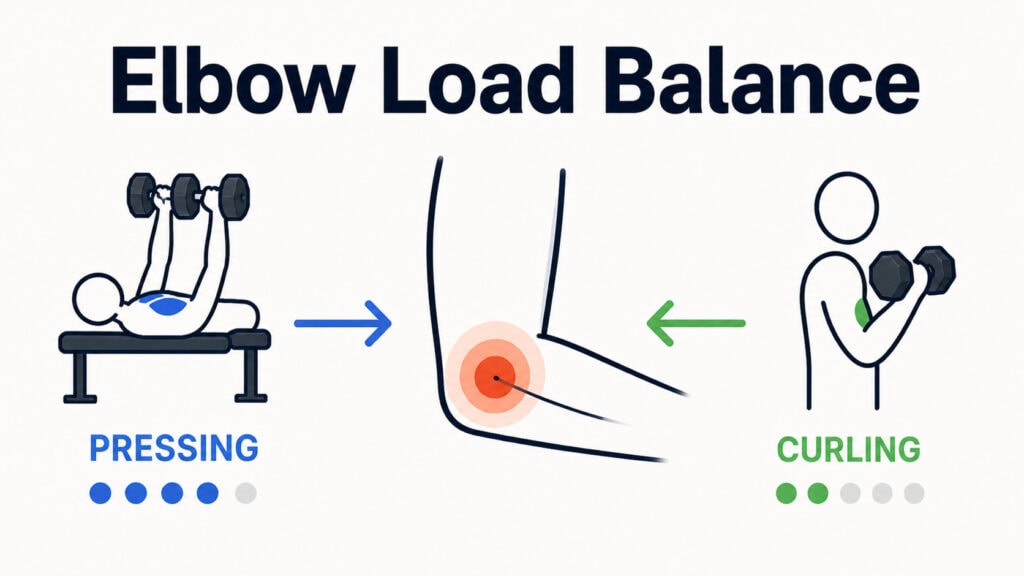
Elbows are funny.
They seem simple until they start complaining.
Then suddenly every press, curl, pushdown, and skull crusher turns into a negotiation.
When chest and triceps are trained together too aggressively, the elbow gets a lot of repeated straightening under load.
For some people, that is fine.
For others, it becomes annoying.
Chest and biceps change the stress pattern.
Pressing involves elbow extension.
Curling involves elbow flexion.
The joint still works, but the muscles around it are being challenged in different ways.
That can make the session easier to recover from.
I notice this especially when I am already doing push-ups, dips, or pressing variations during the week.
Keeping direct triceps work away from chest day can make the elbows feel less beaten up.
Pressing Belongs Near The Start When Chest Is The Priority
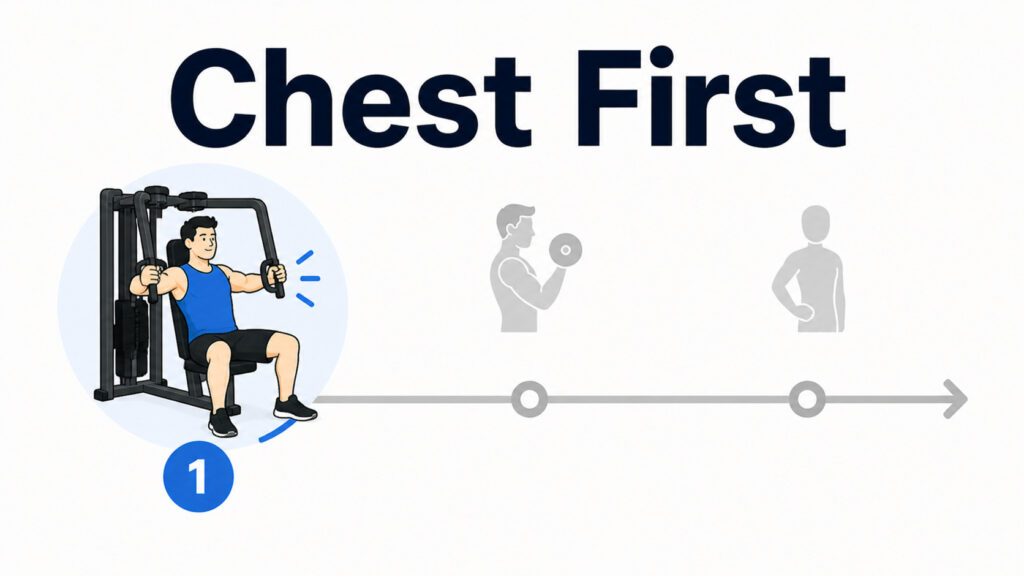
When I care about chest performance, pressing comes early.
That might mean a barbell bench press, dumbbell press, weighted push-up, or machine chest press.
The exact exercise depends on equipment, shoulder comfort, and the goal of the day.
Dumbbells are great because each side has to work on its own.
Machines are great when I want stability and less thinking.
Push-ups are great because they teach body control and can be adjusted easily.
Whatever I choose, I want the chest exercise to get my best focus.
That is harder if I have already tired my arms with curls.
Heavy curls can fatigue the forearms and make dumbbells less secure in the hands.
They can also make the elbows feel less stable.
That is why pressing first usually works better for a chest-focused day.
The Three Curl Variations I Like Most After Chest Work
After pressing, I want the arm work to have a clear purpose.
One curl trains the biceps directly, one challenges them from a longer position, and one brings the forearms and brachialis into the picture.
1# A Palms-Up Curl Gives The Biceps Direct Work
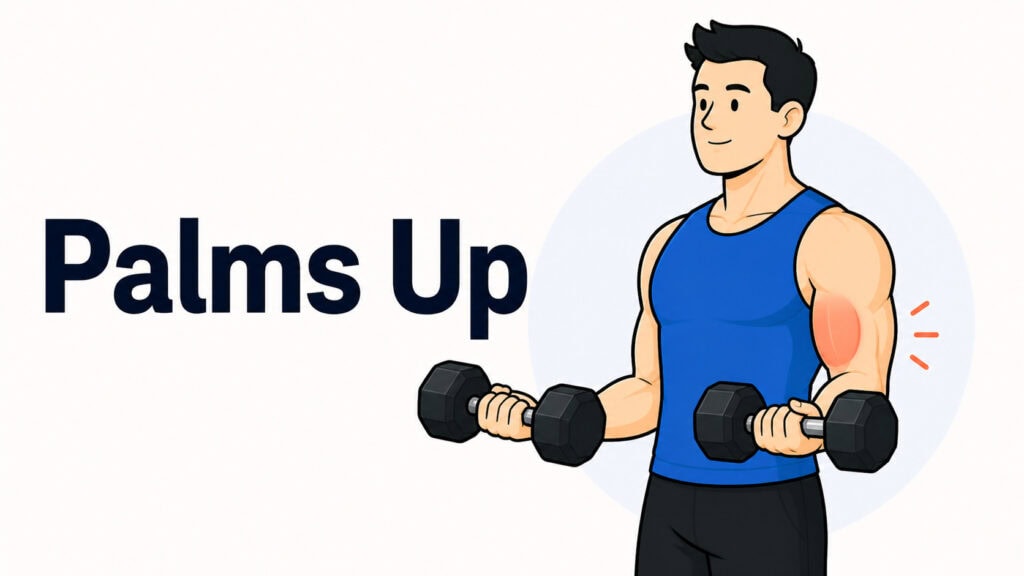
A standard dumbbell curl is still one of the best biceps exercises.
I stand tall, hold the dumbbells by my sides, and curl them while turning the palms upward.
The upper arms stay close to the body.
The wrists stay strong.
The dumbbells come up smoothly and lower under control.
This movement trains the biceps directly because the elbow bends and the forearm rotates upward.
That rotation matters because one of the biceps’ jobs is supination, which means turning the palm up.
That is why a palms-up curl often gives a stronger biceps contraction than a neutral-grip curl.
For newer lifters, lighter dumbbells usually teach the movement better.
Heavy dumbbells often teach bad habits very quickly.
The biceps are small compared to the chest, back, and legs.
They do not need heroic loads to get challenged.
2# An Incline Curl Adds A Bigger Stretch
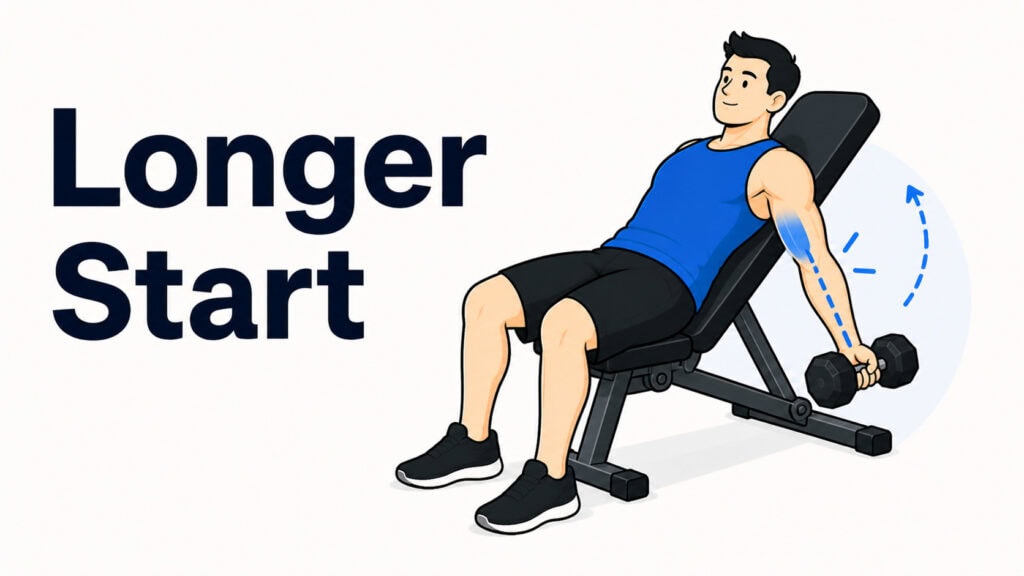
Incline dumbbell curls are harder than they look.
I sit on an incline bench and let the arms hang slightly behind the body.
That position puts the biceps into a stretched position before the curl begins.
The stretch makes the movement feel more demanding with less weight.
This is one of those exercises where grabbing the dumbbells used for regular curls can be humbling.
The arms start behind the torso, so swinging becomes harder.
The biceps have to work from a longer position.
That can be very useful for muscle growth because muscles respond well when they are challenged through a good range.
I use this exercise when I want the biceps section to feel more precise.
It is not the movement I choose when I am trying to rush through the end of a workout.
3# Hammer Curls Make The Arm Look Thicker From More Angles
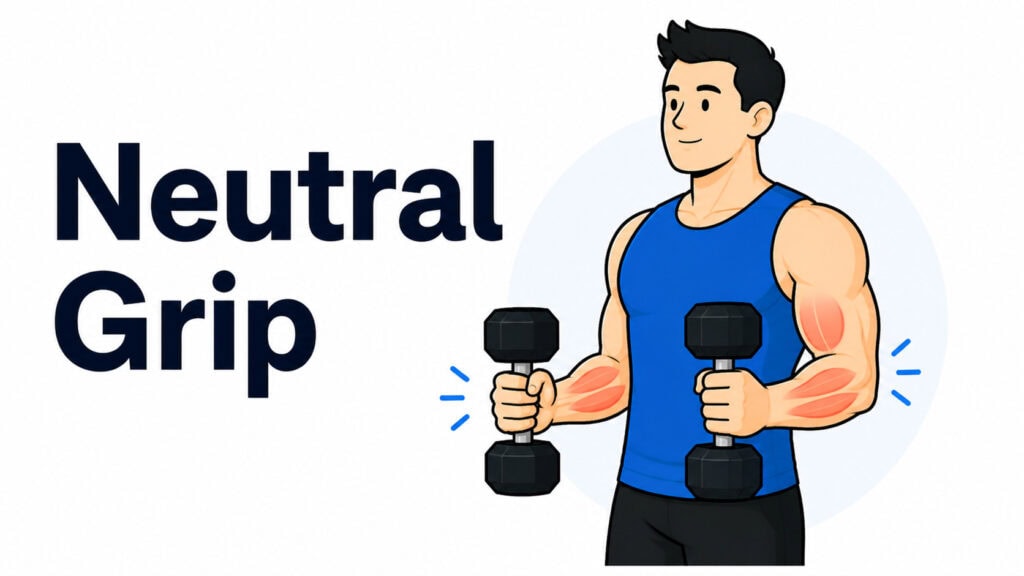
Hammer curls use a neutral grip, meaning the palms face each other.
This changes the arm work.
The biceps still help, but the brachialis and brachioradialis get more involved.
The brachialis sits underneath the biceps and helps bend the elbow.
The brachioradialis runs along the forearm and also helps with elbow flexion.
That is why hammer curls can make the arm look thicker, especially from the side.
They also tend to feel comfortable for many elbows and wrists.
I like using hammer curls after a palms-up curl because they finish the arm work from a different grip.
The movement is simple.
Hold the dumbbells like handles.
Curl without letting the shoulders take over.
Lower with control.
Repeat until the arms have had enough and the face starts making honest expressions.
Why Chest And Biceps Can Beat Back And Biceps When Arms Are The Priority
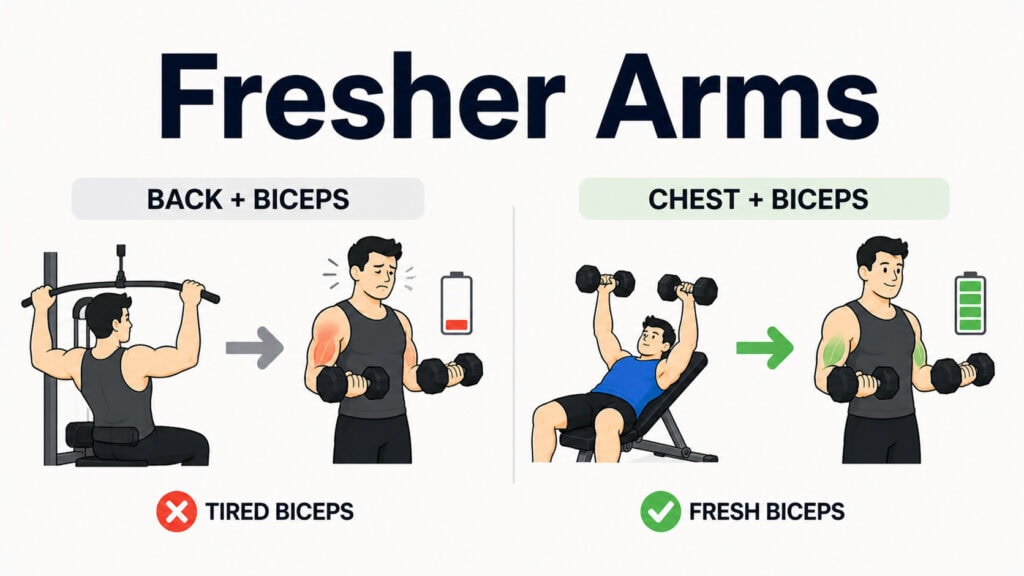
Back and biceps is a classic pairing.
It makes sense because pulling exercises involve the biceps.
Rows, pulldowns, chin-ups, and pull-ups all use elbow flexion.
That can be great when the goal is to train pulling muscles together.
But it also means the biceps may be tired before curls begin.
Chest and biceps create a different situation.
The biceps arrive fresher because chest pressing does not depend on them heavily.
That can make direct arm work stronger and cleaner.
Arm Growth Needs Direct Work That Actually Targets The Arm
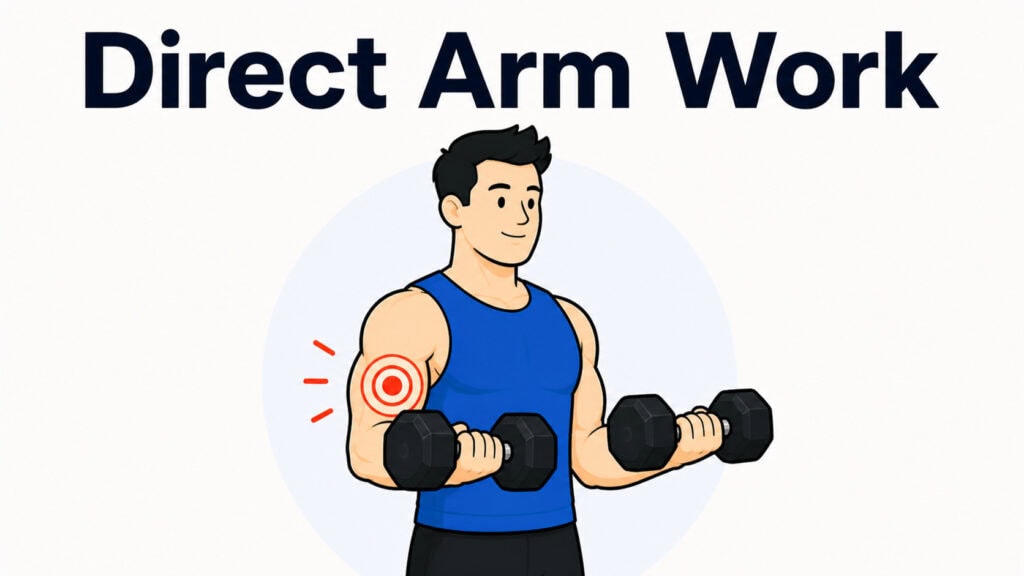
A lot of people assume biceps will grow enough from pulling alone.
Sometimes they do.
Other times, they need direct work.
The biceps are involved in back exercises, but the back is usually the main target.
Direct curls let the biceps become the target.
That means the exercise choice, body position, and effort all point toward the arm.
Chest and biceps make room for that.
The chest gets trained with pressing.
The biceps get trained with curling.
Neither one has to compete for the exact movement pattern.
That is one reason this pairing feels so clean.
How This Pairing Works In A Gym Session
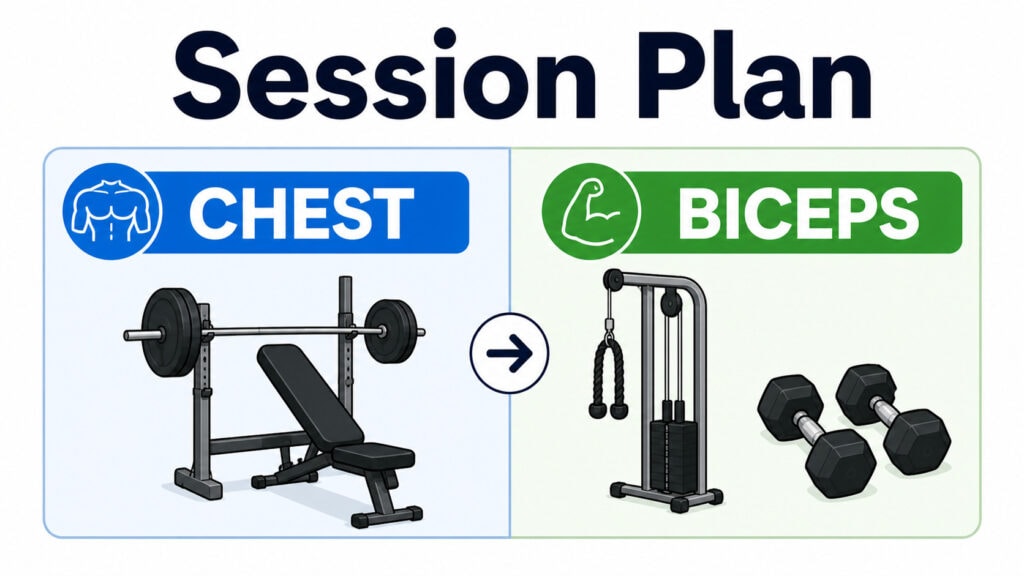
Inside the gym, this pairing works best when every exercise earns its place.
Chest Chapter: Big Press, Second Angle, Controlled Finish
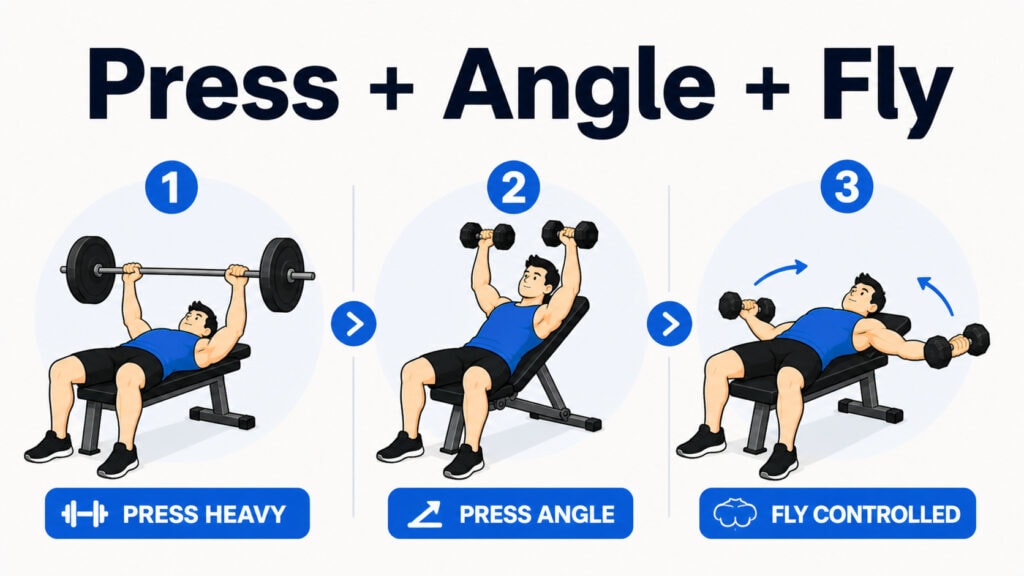
The chest portion begins with a press.
Flat dumbbell press is a great option because each arm works independently and the range can feel natural.
Barbell bench press allows heavier loading.
Machine press gives stability and can be friendlier when shoulders need a more guided path.
After that, I like an incline press or a machine press from another angle.
This keeps the chest work broad without making the session repetitive.
Then I use a fly movement.
Cable flys are excellent when available.
Pec deck is clean and easy to learn.
Dumbbell flys work too, but they require more attention to shoulder comfort.
By the end of this chest chapter, the pecs should feel trained from pressing and from a more focused arm-closing motion.
That gives the chest enough work before the biceps section begins.
Biceps Chapter: One Curl For The Classic Biceps Line, One Curl For Thickness
For biceps, I like pairing one palms-up curl with one neutral-grip curl.
The palms-up curl trains the biceps strongly because the forearm turns upward.
The neutral-grip curl trains the biceps plus the brachialis and forearm muscles.
Together, they cover the arm better than doing several versions of the exact curl.
A good combination could be incline dumbbell curls and hammer curls.
Another good combination could be cable curls and cross-body hammer curls.
Preacher curls and rope hammer curls can work well too.
The exact choices matter less than the reason behind them.
One curl should train the biceps directly.
The other should add a slightly different grip or arm position.
That keeps the arm section useful without making it bloated.
How To Choose Exercises Without Overloading The Joints
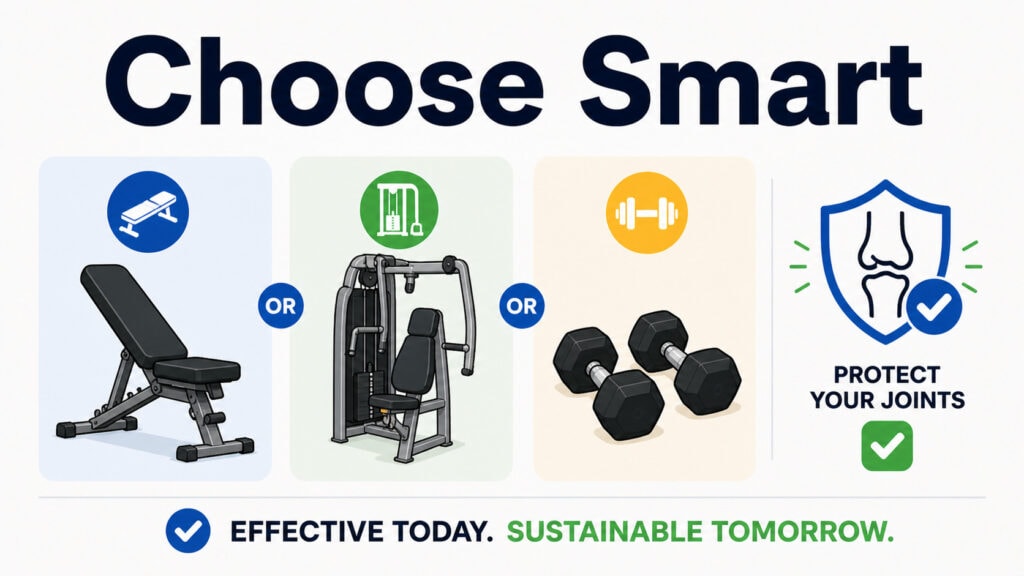
Chest and biceps together can be joint-friendly, but exercise choice still matters.
The goal is to challenge the target muscles while keeping the movement comfortable enough to repeat week after week.
When Shoulders Prefer A Different Chest Option
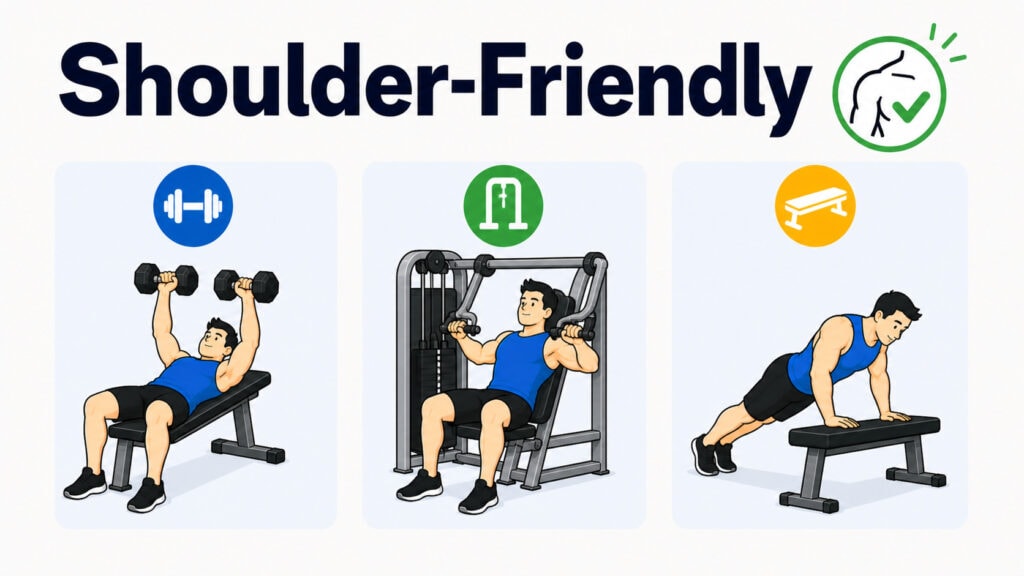
Some shoulders dislike deep dumbbell flys.
Some dislike heavy barbell pressing.
Some feel better with dumbbells because the hands can move naturally.
Others feel better with machines because the path is stable.
There is no honor award for forcing an exercise that annoys your shoulder every session.
If flat barbell bench press feels uncomfortable, dumbbell press may work better.
If dumbbells feel unstable, a machine press may be better.
If flys create pinching, cable flys with a shorter range or pec deck may be easier to control.
Push-ups can also be adjusted.
Hands on a bench make them easier.
Feet elevated make them harder.
Handles can allow a deeper range if the shoulders tolerate it.
The right chest exercise is the one that trains the chest hard without making the joints dread the next rep.
When Elbows Prefer A Different Curl
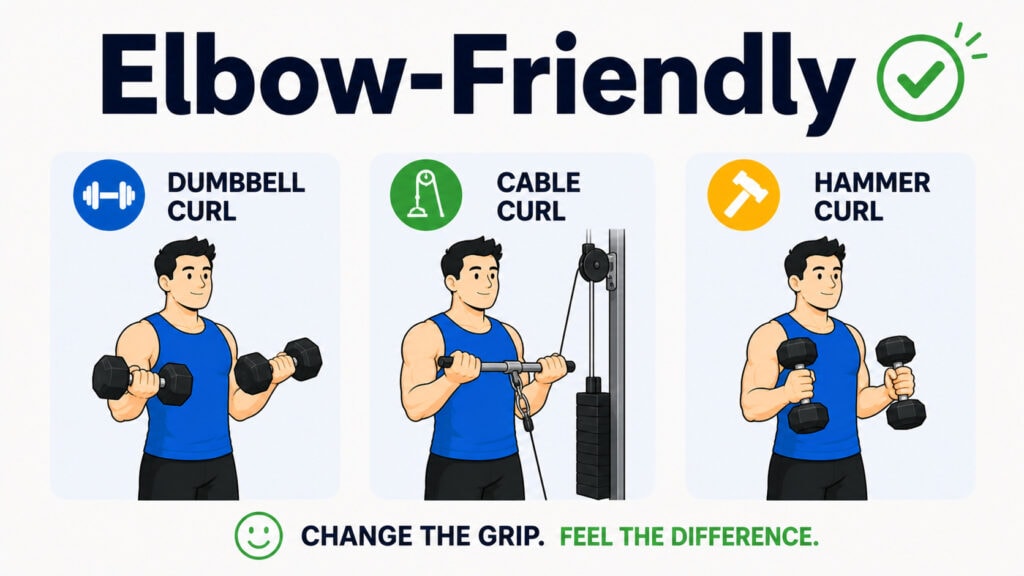
Elbows can be picky during curls.
Straight bars can bother some wrists and elbows because the hands are locked into a fixed position.
Dumbbells allow the hands to rotate more naturally.
Cables provide smoother resistance.
Hammer curls can be more comfortable because the wrists stay neutral.
If curls irritate the elbows, I usually look at three things.
The weight may be too heavy.
The grip may be wrong for that person.
The total amount of curling may be too high.
A lighter dumbbell curl done cleanly can beat a heavy curl that makes the elbow angry.
Cable curls can help because they remove some of the jerkiness.
Hammer curls can help because the neutral grip often feels more natural.
Training should challenge the arm, not turn the elbow into a tiny courtroom.
Conclusion: Chest And Biceps Work Because They Share The Session Well
Chest and biceps together works best when the workout stays honest.
A few good presses.
A few smart curl choices.
Enough effort to make the muscles work, but not so much extra junk that the whole session turns into a garage sale with dumbbells.
That is what makes this pairing useful.
It gives the workout direction without needing a complicated plan.
You know what each exercise is there to do, and that makes the session easier to repeat, easier to adjust, and easier to recover from.